Bobby Bahl / teleSys Software, Inc.
Forty-plus years in telecommunications. One company he built himself. A platform running on networks that connect more than a billion people. Bobby Bahl doesn't fit neatly into any category - which is exactly how he planned it.
Before anyone had a cell phone, before the internet was a household word, Bobby Bahl was at Sprint building the plumbing that made long-distance phone calls possible in America. That work - the first SS7 signaling network in the United States, and the Equal Access system that let callers choose their long-distance carrier - didn't make headlines. It just made telephony work. Which was precisely the point.
SS7, or Signaling System No. 7, is the protocol backbone that tells the global telephone network where to route a call, whether the line is busy, how to handle roaming. When Bahl built Sprint's SS7 network, he was constructing infrastructure most people would never know existed - and never need to, as long as it worked. It worked.
After Sprint, Bahl joined ITI, a telecom technology firm, as part of its management team. ITI was eventually acquired by Tandem Computers, giving him a view into both startup culture and enterprise absorption. He took notes. In 1997, with the telecom industry on the cusp of a massive shift - analog giving way to digital, proprietary hardware starting to look expensive and brittle - Bahl founded teleSys Software in San Mateo, California.
The founding thesis was specific: carrier-grade signaling, the kind of rock-solid performance that major telecom operators required, didn't have to run on proprietary hardware. It could be built on open systems. At the time, that was a provocative claim. The incumbents - Ericsson, Nokia, Siemens - had built entire empires on the assumption that only their proprietary systems could meet carrier-grade reliability standards.
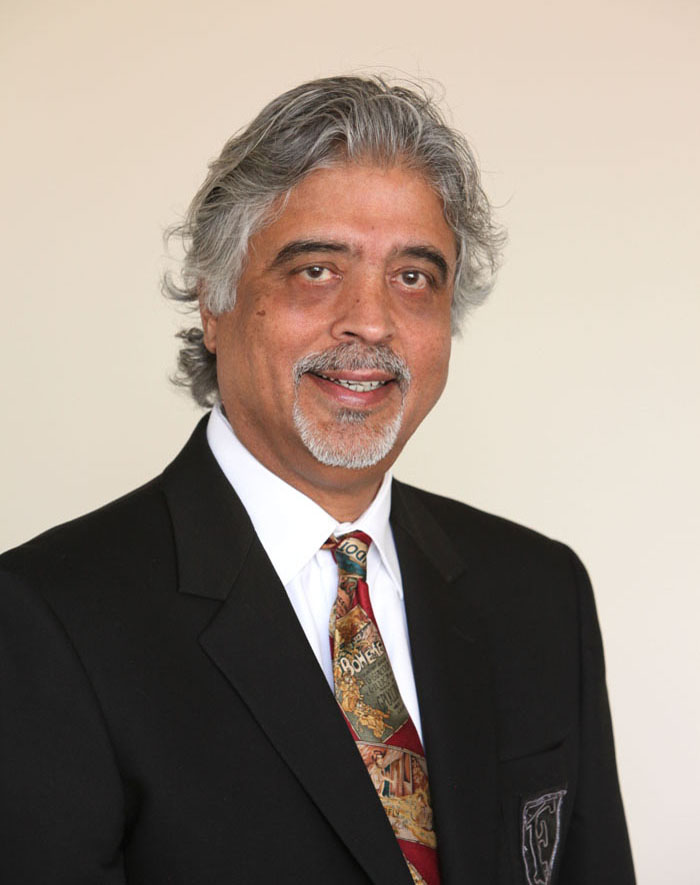
"Bobby led the deployment and implementation of the first SS7 network in the United States at Sprint."
- teleSys Software, Inc. / Company RecordTwo years after founding teleSys, Bahl delivered the first software-based, highly available signaling solution to AT&T Wireless. This was 1999. The industry expected proprietary hardware. teleSys showed up with software, running on open systems, at carrier-grade reliability. It wasn't a pilot or a proof-of-concept - it was a production deployment for one of the largest wireless carriers in the country.
That deployment became the template for everything that followed. teleSys's model was clear: build software that matched the reliability of hardware incumbents, run it on open systems, and charge accordingly. No venture capital. No flashy press releases. Just working software, installed and running at scale.
The company grew methodically. By the 2010s, teleSys had expanded from 2G and 3G signaling into 4G LTE - building out the MACH7 platform, a modular suite of signaling products that covers every generation of mobile network from legacy SS7 through to 5G. When operators needed to add a diameter signaling controller for LTE, they reached for MACH7-iDC. When security became critical and SS7 attacks began targeting global operators, teleSys had MACH7-iMCP - the signaling firewall that screens traffic in real time.
The MACH7 platform now spans core routing and control, fraud and security, and enhanced services. It handles roaming management, number portability, home routing, and border roaming gateways. Carriers in 80+ countries run it. The subscriber count it touches crossed one billion.
"We believe our customer's success is our success."
- Bobby Bahl, Founder & CEO, teleSys Software, Inc.Bahl describes the culture at teleSys as "people first" - not as a recruiting slogan but as a business decision. The company has 79 employees. 75% of them work in R&D and innovation. That ratio is unusual in enterprise software, where sales and customer success operations tend to balloon as a company grows. At teleSys, the product is the center of gravity.
The result is a company that looks nothing like a typical Silicon Valley software firm. No venture funding rounds. No acquisition by a larger player. No pivot to a subscription-adjacent revenue model. teleSys remains privately held, based in San Mateo, still run by its founder almost three decades after its founding.
That kind of continuity is rare in enterprise software. Most companies in teleSys's category have been absorbed - Ulticom, NetCracker, Openwave, Tekelec. Bahl built something that stayed independent. Whether that's a competitive advantage or a limiting factor probably depends on whether you're a customer (predictability is good) or an investor (liquidity events are good). Bahl's track record suggests he's optimizing for the former.
His executive team reflects the same pattern: deep technical specialists like CTO Sankar Chanda and VP of Software Development Anurag Srivastav, paired with commercial operators like Jonathan Harvey (President of Strategy & Growth) and Jan Kayser (VP of Strategy). COO Shaila Cook and CFO Ed Lee complete a leadership structure built for operational durability, not quarterly sprint cycles.
1997, San Mateo. Built a software-based, fault-tolerant telecom signaling platform on open systems hardware - a direct challenge to incumbent proprietary solutions.
Led the deployment and implementation of the first SS7 signaling network in the United States - the backbone protocol for global telephony routing.
Managed development and implementation of Equal Access, the nation's first long-distance network, at Sprint. The infrastructure that gave Americans a choice of long-distance carriers.
teleSys's MACH7 platform covers the full lifecycle of mobile network signaling - from the first digital networks of the 1990s through to 5G roaming security today.
Signaling Transfer Point for SS7/SIGTRAN routing - the core of legacy mobile signaling.
Signaling Gateway enabling protocol mediation and network interconnect across generations.
Diameter Signaling Controller with intelligent routing, address translation, and high-availability scaling.
Session Management Gateway for LTE core network signaling control.
Security Edge Protection Proxy for 5G roaming - protecting inter-operator traffic at the network boundary.
Signaling, SMS, and GTP firewalls. Real-time monitoring and screening. Illegal messages blocked or logged.
Number Portability and Home Routing solutions for subscriber data management.
Border Roaming Gateway - managing roaming signaling for subscribers traveling near network border zones.
Managed development of Equal Access at Sprint - the infrastructure that let Americans choose their own long-distance carrier for the first time.
Led deployment of the first SS7 signaling network in the United States. The protocol that became the global standard for telephony routing.
Founded a software-only signaling company when every incumbent said carrier-grade required proprietary hardware. Then proved them wrong at AT&T Wireless in 1999.
79 people. 100+ operators. 80+ countries. 1 billion+ subscribers. No venture capital. The math works because the product does.
Built signaling firewall products before the industry broadly recognized SS7 vulnerabilities as a critical security threat - now protecting operators globally from signaling-layer attacks.
Pioneered cloud-ready signaling software, enabling operators to migrate from bare metal to cloud infrastructure without sacrificing carrier-grade reliability.
The SS7 protocol Bahl helped build at Sprint in the 1980s is still the backbone of global telecom signaling today. He's now building its cloud-native successor.
teleSys's MACH7 platform spans five generations of mobile networks - 2G, 3G, 4G LTE, and 5G - maintained by a team of 79 people in San Mateo.
teleSys has been privately held since 1997 - no venture rounds, no IPO, no acquisition. In an industry defined by consolidation, that's its own kind of achievement.
The AT&T Wireless deployment in 1999 was the first proof that carrier-grade signaling could run on open systems software. It changed what the telecom industry thought was possible.
75% of teleSys's workforce works in R&D and innovation - a ratio that puts most "innovation-first" tech companies to shame.
Bobby Bahl's work on Equal Access at Sprint directly shaped how Americans experienced telephone competition in the 1980s. The ability to pick a long-distance carrier ran through infrastructure he managed.