The Operator Who Came for the Browser and Stayed for the AI
Inside Menlo Security's deliberate, data-driven ascent - and the executive who's now driving it.
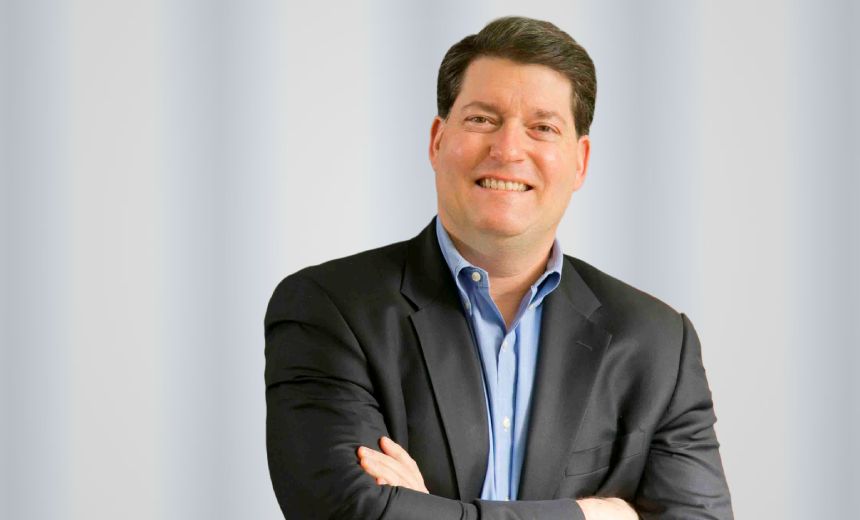
Bill Robbins arrived at Menlo Security in November 2024 not as a visionary founder, but as something rarer: a tested operator handed a running machine and told to push it harder. Fifteen months later, he was named CEO. The company had just crossed $140M in annual recurring revenue. The machine was running faster.
Robbins came up the long way. He graduated from Southern Methodist University in 1988 with a finance degree and spent the next three decades inside the rooms where enterprise security deals get made - first at Symantec, where he rose to Executive Vice President of Worldwide Sales & Services after leading the Americas and Asia Pacific. Then [24]7, where he ran operations. Then Nuance Communications, where he took EVP of Worldwide Sales. Then FireEye, then Mandiant through the acquisition, then Sophos. Each stop added a layer: a new region, a new go-to-market motion, a new style of customer relationship.
"I believed in browser security coming into its own, which I think we've seen play out."
Bill Robbins, CEO - Menlo SecurityWhen Menlo Security came calling, Robbins already had a thesis. The browser, he'd come to believe, was the true perimeter - not the firewall, not the endpoint agent, not the VPN. Every time a user opened a tab, they were operating in territory that legacy security tools couldn't fully see. Menlo's Secure Enterprise Browser sat directly in that space, intercepting and isolating web sessions before threats could reach the endpoint. Robbins had watched the idea mature. He wanted in.
His first mandate as President was precision work: strengthen operating discipline, accelerate go-to-market execution, build the kind of customer relationships that show up in retention metrics. The results were measurable. Net retention climbed above 120%. Net Promoter Score reached 67. Fortune 500 companies, eight of the ten largest global financial services institutions, and large government agencies now rely on Menlo's platform. Those numbers didn't come from hype - they came from a company that works.
The CEO promotion in February 2026 brought a sharper set of questions. Co-founder Amir Ben-Efraim moved to Executive Chairman, trusting Robbins with both the strategy and the execution. Robbins's answer to what comes next wasn't a splashy pivot - it was two words: quality and product innovation. "If we do both of those things," he said, "I believe we'll see the revenue growth."
What makes the moment interesting is the threat landscape Robbins inherited. The same browser that Menlo was built to secure is now the entry point for a new class of actor: autonomous AI agents. These agents browse the web, access APIs, pull data from legacy systems, and execute tasks at machine speed. They don't authenticate the way humans do. They don't know when they're being manipulated by a maliciously crafted webpage. They are, in cybersecurity terms, a new attack surface that arrived before the defenses did.
"The next billion web users won't be human."
Bill Robbins, CEO - Menlo SecurityRobbins has been direct about the implications. Half the data AI agents need sits in legacy systems without APIs. The other access point is the browser - the open internet, unstructured and full of adversarial content. Menlo's argument is that the platform it built to protect human users can protect AI agents too: intercepting prompt injections before they reach the model, preventing data exfiltration at the session layer, providing visibility into what agents actually do when they're browsing. It's the same architecture, aimed at a new kind of user.
The company's 2025 recognition as Google Cloud Security Partner of the Year for AI-driven threat prevention wasn't incidental. It reflected a deliberate positioning: Menlo is not just a browser security product - it's the security layer for an internet that moves faster than any human can watch. The acquisition of Votiro in 2024 extended that logic into file and data security, closing the loop on threats that enter through documents and attachments.
Robbins's career path, viewed in reverse, looks like preparation for exactly this moment. Symantec gave him scale - the experience of running worldwide sales across every major market. Mandiant gave him credibility in threat intelligence, the language spoken by CISOs who care about what's actually happening in the wild. Sophos gave him channel ecosystem fluency - the partner network through which most enterprise security actually gets sold. Menlo Security gave him a thesis that had already proven out, and a market that was just beginning to understand how large it could get.
What he brings to the CEO seat is an operator's instinct for the levers that matter. Not product vision alone, not sales charisma alone, but the integration: product improvements that create retention, retention that enables expansion, expansion that funds the next product cycle. The $140M ARR milestone was a checkpoint, not a destination. The agentic AI era is the next run.
Robbins doesn't spend time redefining what Menlo Security is. He spends it on what the company can do that competitors can't: deploy preemptive security through the browser of the customer's choice, protect managed and unmanaged devices alike, and now extend that protection to the AI agents running inside enterprise environments. The browser was the right perimeter to defend. The question Robbins is now answering is what comes after the browser - and whether Menlo gets there first.