An itch can make a patient an unwilling accomplice. Scratch the skin, damage its barrier, invite more inflammation, and the original itch acquires reinforcements. Bambusa Therapeutics has built its lead experimental medicine around this unpleasant little feedback loop. The company’s wager is that controlling the inflammation and interrupting the itch together could accomplish more than treating either pathway alone.
- The idea: two complementary antibody targets in one long-acting molecule.
- The evidence: early randomized eczema results, with 17 patients at the preliminary cutoff.
- The next hurdle: larger studies and a convenient injection that preserves the effect.
The scratch has a vote
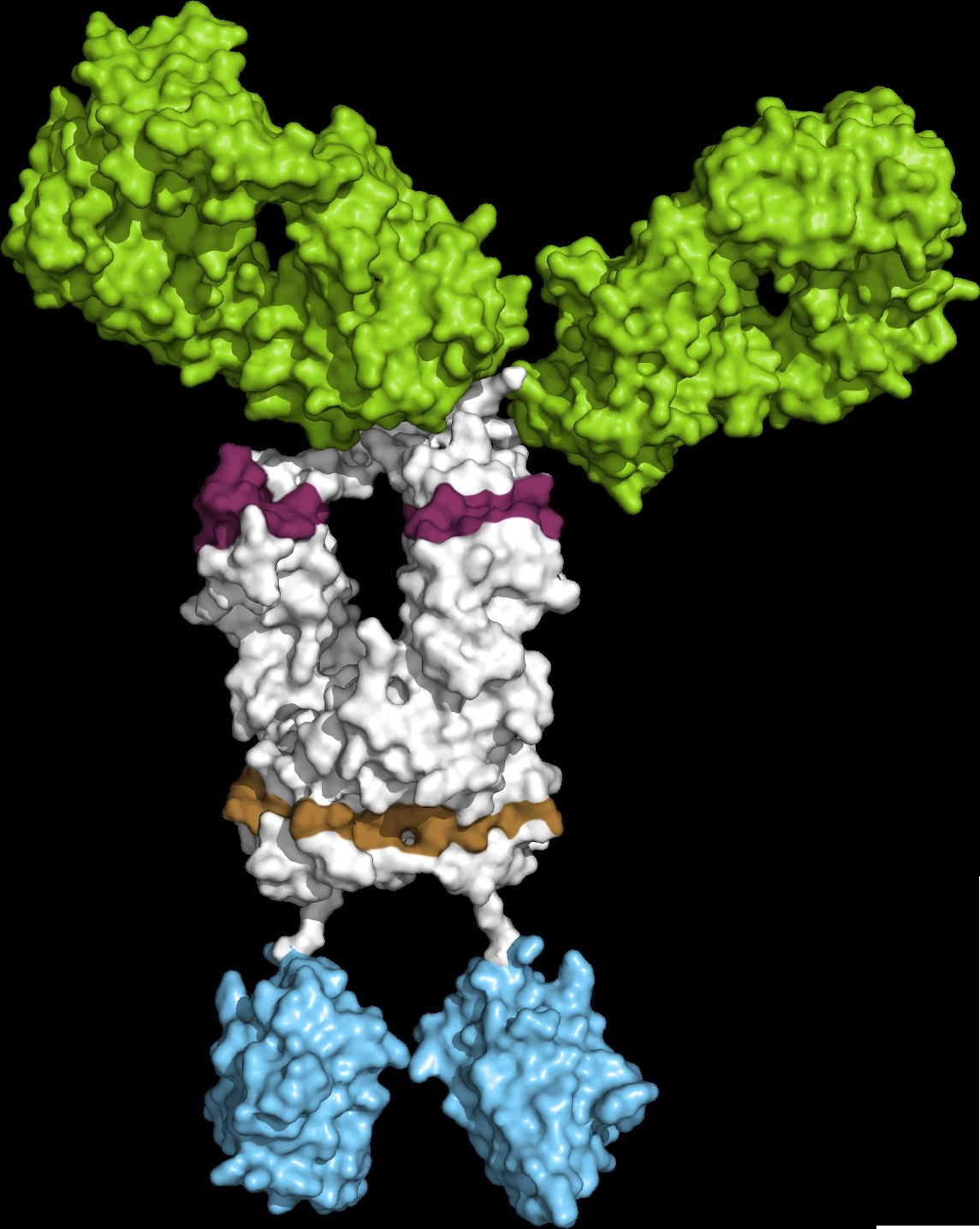
BBT001 targets IL-4 receptor alpha, written IL-4Rα, and the cytokine IL-31. The first helps transmit the Type 2 inflammatory signals associated with eczema. The second is involved in itch. The design treats scratching as part of the machinery of disease, rather than an annoying footnote to it. An antibody becomes a way to intervene in two connected processes.
There is established medicine on both sides of that proposition. Sanofi and Regeneron’s Dupixent inhibits IL-4 and IL-13 signaling through IL-4Rα. Galderma’s Nemluvio blocks IL-31 receptor alpha. Bambusa is pursuing its own dual-target approach in one antibody. That gives it a clear place in a crowded market: a challenger seeking better combined symptom control and durability. A clever design, however, does not settle a clinical comparison.
Seventeen patients, a much larger question
In July 2026, Bambusa reported preliminary results from a randomized, double-blind, placebo-controlled atopic dermatitis cohort. At the June 8 cutoff, 12 patients had received BBT001 and five had received placebo. Participants had moderate-to-severe disease and had not previously received biologics targeting the same pathways or JAK inhibitors. Treatment was intravenous, every two weeks, over a four-week period.
The company reported placebo-adjusted improvements in the Eczema Area and Severity Index, or EASI, beginning at Week 1. Its table showed a 35.56% reduction at that visit and a 78.95% reduction at Week 6. It also reported itch improvements as early as Day 1. For a company targeting two connected problems, evidence of activity in both matters.
Magnitude of placebo-adjusted EASI reduction. Company-reported exploratory results; 17 patients at cutoff. These percentages are not response rates.
The denominator deserves equal billing. Seventeen patients can reveal a signal; they cannot establish how a medicine will behave across thousands of people and years of treatment. Safety and tolerability were the primary endpoints. Efficacy measures were exploratory. The participants’ treatment histories also matter: these findings do not establish the same result in people whose earlier biologics failed.
Bambusa reported no conjunctivitis cases in this small cohort and low immunogenicity. Those observations justify further investigation, rather than a claim that the risks have disappeared. The sensible excitement here concerns a testable possibility. The company still has to turn an early pattern into dependable evidence.
The injection is part of the invention
On October 1, 2026, the first patient received subcutaneous BBT001 at a research center in New Zealand. The cohort plans to enroll up to 45 patients across the United States, Australia, Europe and New Zealand. It evaluates 12 weeks of treatment, with five doses of either 360 mg, 720 mg or placebo. Moving under the skin is a practical milestone for a chronic therapy.
Bambusa reported an approximately 33-day BBT001 half-life and is exploring maintenance dosing as infrequently as every three months. Half-life describes how long a drug persists; it does not automatically dictate a successful prescription schedule. The high-concentration formulation and clinical studies must establish whether convenience can accompany sustained control.
“Subcutaneous dosing represents an important step in advancing BBT001 as a differentiated, long-acting and convenient therapy for patients with atopic dermatitis.”
Thang Ho / October 1, 2026
A second target for the airways
BBT002 uses the same IL-4Rα target, paired this time with IL-5. That second target connects the program to eosinophils, immune cells involved in Type 2 inflammation. The candidate is being evaluated in COPD and chronic rhinosinusitis with nasal polyps. Bambusa sees opportunities across other diseases, although each additional indication needs evidence of its own.
At the American Thoracic Society meeting in May 2026, the company reported preliminary healthy-volunteer data showing sustained biomarker effects for at least eight weeks after a single dose, and an approximately 29.4-day half-life. These are pharmacology findings, rather than proof of fewer COPD exacerbations or better breathing. The reported plan anticipated COPD topline results by year-end 2026 and nasal-polyp results in the first half of 2027.
The money buys more questions
Founded in May 2024, Bambusa announced approximately $15 million in seed financing that September, followed by approximately $90 million in Series A financing in February 2025. RA Capital led the latter. A further Series A-2 was announced in November 2025 to advance BBT003 and BBT004 and strengthen development infrastructure. Its announcement did not attach a dollar amount.
Capital raised, not a treatment price or audited development cost.
The company is an investor-financed drug developer. Patients are its intended beneficiaries; its current medicines reach people through clinical research. Commercial value depends on development and approval. BBT003 and BBT004 remain preclinical, aimed at gastroenterology and autoimmune disease. The pipeline extends the business beyond eczema without making those programs finished products.
Speed needs somewhere useful to go
Founder and CEO Shanshan Xu previously led global external innovation at BioNTech. Bambusa’s account credits her with identifying the Biotheus immunology molecules that became its foundation. Her medical training, doctorate and MBA suggest a career spent crossing boundaries between science and transactions. Co-founder Thang Ho brings clinical pharmacology and integrated development experience. Helmut Jeggle is also a co-founder and board member.
Bambusa describes a culture of speed, creativity and execution, and reported moving two programs into clinical testing within its first year. The useful lesson for other builders is narrower than “move faster.” Start with complementary mechanisms and a persistent user burden, then test each promised benefit. Here, relief, durability and delivery all require answers. For Bambusa, the most persuasive next chapter will be written by patients.
Follow the experiments
Explore the company website, its pipeline and newsroom, or follow Bambusa on LinkedIn. Trial details: BBT001 and BBT002.