A staffing agency makes a promise twice. First, it tells an employer that someone will turn up and do the work. Then it tells that person they will be paid. Between those promises sits a surprisingly large administrative country: applications, assignments, signatures, hours, taxes and invoices. Avionté Staffing makes software for that country. Its business becomes easier to understand when you follow the paycheck.
- The buyer: staffing firms that need recruiting and financial operations to work together.
- The proposition: carry the same information from candidate record to placement, time entry, payroll and billing.
- The useful test: ask for a demonstration using your awkward transactions, including corrections.
The paperwork after the promise
Consider an ordinary assignment. The recruiter knows the worker, the job and the agreed rate. Someone else approves the hours. Finance calculates the pay and sends the employer an invoice. Each handoff introduces a question: are we still talking about the same worker, assignment and terms? An agency can recruit beautifully and still spend Friday afternoon correcting Thursday’s information.
AviontéBOLD links applicant tracking and customer relationship management with onboarding and back-office operations. Recruiters manage candidates and client contacts; workers complete documents; payroll and billing use the placement and time information. Reporting gives managers a view across those activities. The practical attraction is fewer occasions to type an answer that another department already possesses.
- 01OrderEmployer demand
- 02PlaceRecruiter + candidate
- 03WorkDocuments + hours
- 04Pay / billWorker + client
The distinction matters because Avionté sells to staffing businesses, rather than simply to companies hiring their own employees. Temporary assignments create recurring operational work. An agency may need to manage many workers, clients, locations and pay arrangements simultaneously. Software that understands those relationships has a different job from a résumé filing cabinet.
A booth, a trailer and a recession
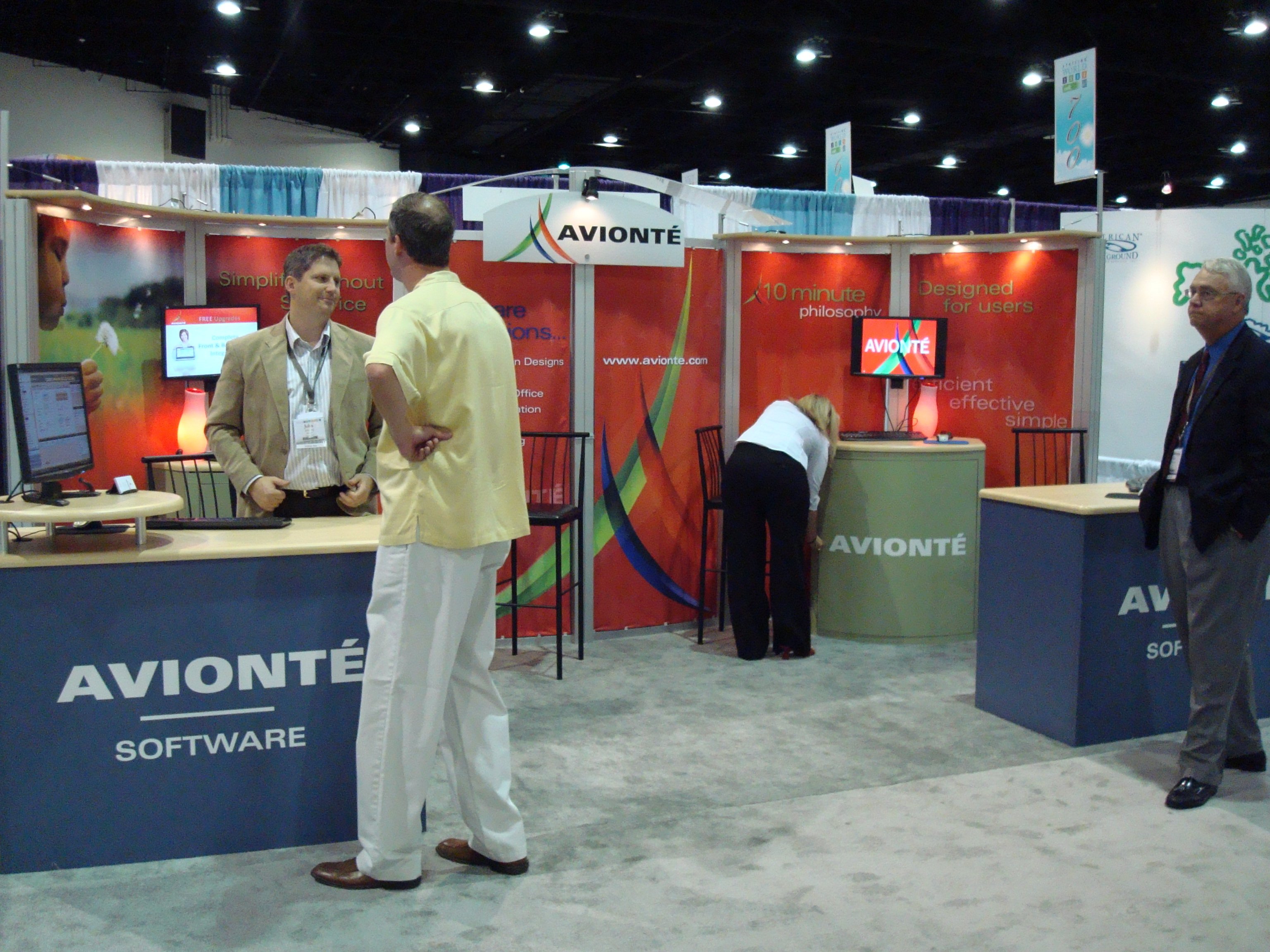
Avionté began in 2005. Its original name was Ándale. In 2007, its first customer went live and the company attended Staffing World in San Antonio. The booth was second-hand; founder John Long towed it from Minnesota behind his minivan. The archive has the pleasing absence of startup theatre. Here was a software company whose exhibition logistics involved a trailer hitch.
Long’s anniversary interview puts the founders’ starting pool at roughly $43,000 and describes later credit-card debt running into hundreds of thousands. These are his recollections. The small opening cheque was followed by a much less comfortable financing burden.
The company’s retrospective says its lean operation helped it keep serving customers through the Great Recession while larger rivals cut back. By 2014, Long was considering investors. Serent Capital’s offer of growth resources as part of its investment helped persuade him, he recalls. Long retained ownership. The useful lesson is about choosing what capital brings into the business: people and operating help can matter alongside the cheque.
“We didn’t need to raise money.”John Long, announcing the Serent Capital investment
Buying the missing sides of the triangle
The platform’s expansion follows a clear pattern. COMPAS, acquired in 2018, helped advance web-based recruiting technology. BOLD launched in 2019. In 2021, Avionté acquired WorkN, taking a mobile staffing partner into the company. In 2023, it acquired SimpleVMS, extending toward the employer who orders contingent labor.
Those purchases map three participants: agency, worker and employer. The WorkN acquisition announcement described an existing integration and customers already using it. Buying the partner offered a route to expand mobile access across Avionté’s customer base. SimpleVMS brought vendor management into the picture, where employers manage staffing suppliers and contingent labor workflows.
The worker-facing app, now presented as Avionté Mobile, can carry the agency’s branding. Workers can complete onboarding documents, view assignment information, communicate and access pay details. For the recruiter, self-service changes the workload. A worker who retrieves a document independently leaves one fewer routine request waiting on someone’s desk.
Integration is also a competitive claim made by other vendors. Bullhorn One connects front-office rules with pay and bill workflows and offers integrated payroll through Greenshades. TempWorks likewise markets recruiting, payroll and invoicing together. Avionté belongs in that staffing-platform contest. Its combination of BOLD, mobile worker engagement and SimpleVMS is the configuration to examine, rather than accepting a broad claim of uniqueness.
Six weeks is a long time to retype a business
Noor Staffing gives the argument a concrete setting. Its Avionté case study describes a legacy proprietary system without bulk import capability. Acquiring another agency meant entering employee records individually. The bottleneck was mundane and consequential: the deal could close faster than the records could move.
The case study credits standardized templates, field mapping, validation and Noor’s own implementation team. Its reported two-day example concerns acquisition data entering an existing customer environment. It should not become a universal promise about moving an entire agency onto unfamiliar software. The transferable idea is a repeatable migration process: agree the fields, prepare the records and validate the result before urgency arrives.
What the quote has to cover
Avionté sells subscriptions and related services through a sales-led process. Agencies need a quote for their configuration. Its published service descriptions make the budget more concrete: user setup fees, electronic-signature document bundles, custom reports and custom feeds can all affect the bill. Onsite trainer travel is separately billable when selected.
Implementation descriptions include configuration, assisted database conversion, verification and up to three parallel processing weeks. That last detail deserves attention. A parallel run asks whether the new system reproduces the operational result the agency expects. An attractive screen is easy to admire; reconciled payroll is harder evidence.
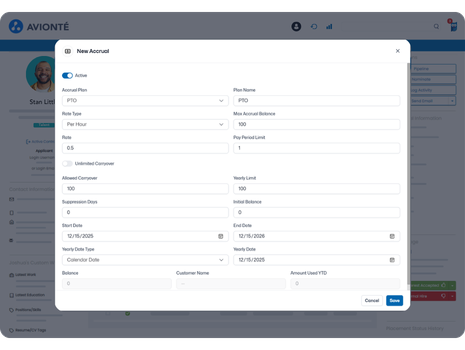
Avionté also introduced standalone BOLD Back Office in June 2024. Enterprise agencies can use its time entry, payroll and billing capabilities with other front-office platforms. The company’s broad-platform ambition therefore leaves room for a narrower buying decision: fix the financial workflow while keeping the recruiting system.
In March 2025, SmartFund added Kanmon-powered financing. It addresses another staffing problem: access to capital when an agency needs to support work. Software and financing sit beside one another here, but a lending decision deserves its own examination of terms. A subscription quote cannot answer the borrowing question.
AI meets the record underneath
Avionté announced an Anthropic and Amazon Web Services-based AI integration in March 2025. Its current product pages describe job-description generation, PIXEL screening, interview tools and candidate discovery. The matching agent ranks candidates already in the database, supplies match reasons and lets recruiters adjust weights such as skills, location or pay.
That is useful specificity. A recruiter can inspect why a person appeared and change the criteria, rather than merely receiving a mysterious shortlist. The operational question remains whether the underlying records describe the candidate accurately. An adjustable ranking does not repair missing skills, stale availability or an incorrect rate. Agencies need review habits alongside automation.
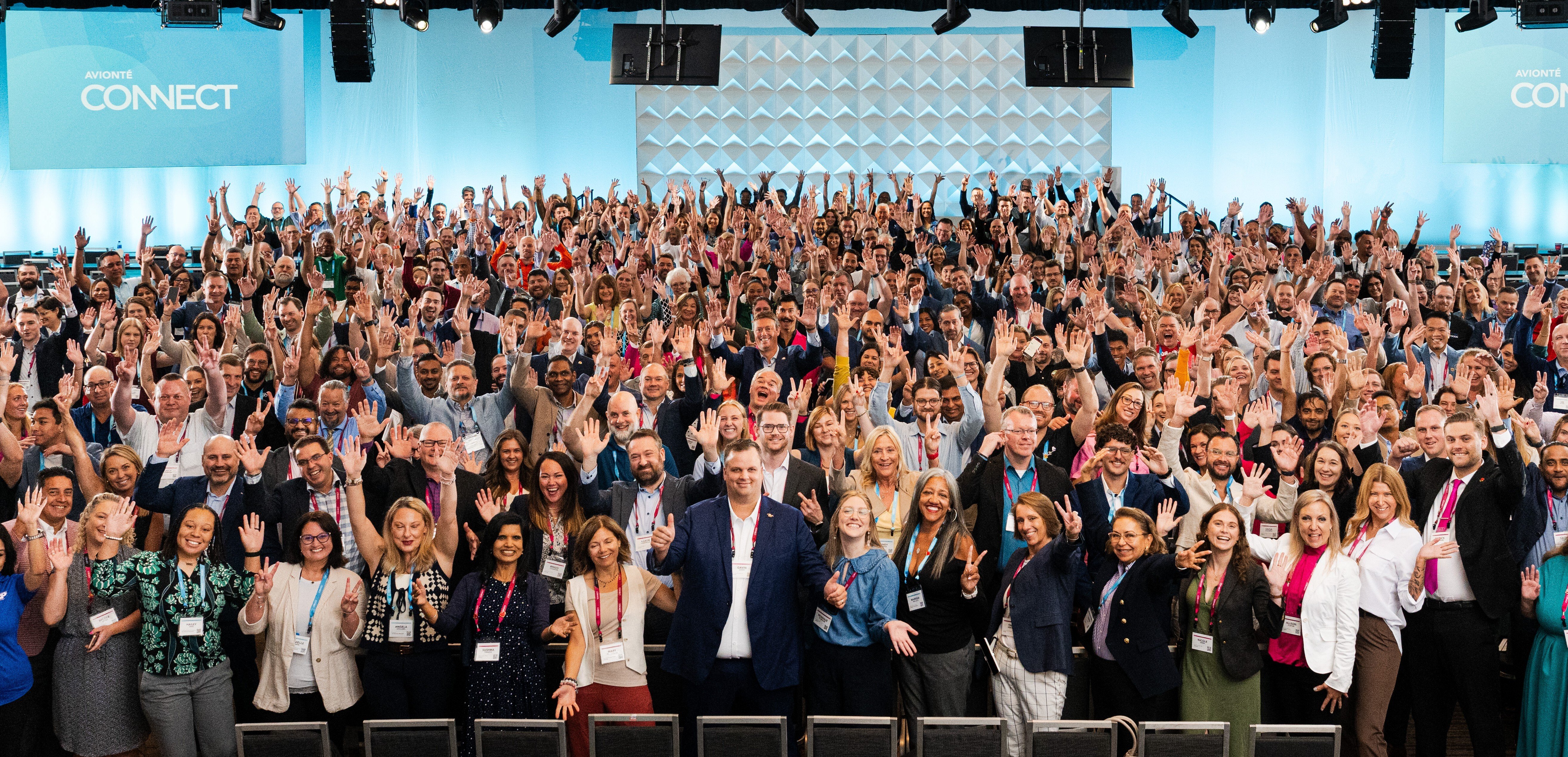
The company makes room for that human side. CONNECT began as a small user gathering. Its Hope Foundation supports community volunteering, and its stated values include integrity and accountability. In 2026, the leadership page names Dirk Izzo as CEO. His brief includes customer outcomes and the responsible use of AI - a sensible pairing for software that influences work and pay.
Try the awkward transaction
For an agency evaluating Avionté, the most revealing demo would follow one real assignment from application through invoice, then introduce a correction. Who approves the changed hours? What reaches payroll? What does the worker see? Which record changes when the client disputes a charge? These are editorial buying tests, not claims about automatic outcomes.
The fit is strongest when staffing complexity makes repeated handoffs expensive. A recruiting-only team has fewer reasons to purchase the entire operating workflow. An agency with inconsistent data, little training time or workers reluctant to use an app will need to address those conditions to capture the benefit. Connectivity provides a route; people still have to use it.
Avionté’s interesting wager is that the placement belongs inside a longer transaction. Once you see the business that way, payroll, mobile engagement and employer orders stop looking like peripheral features. They become the remaining parts of the promise. Friday is an exacting judge.
Open the workflow
Explore the products, watch the demonstrations and meet the company.