Payroll is a peculiar sort of software. Nobody wakes up longing to buy it, yet every employer must get it right. A booking app may be forgiven for an awkward calendar. A payroll system that misplaces a tax payment has offended arithmetic, government and Friday afternoon all at once. This explains why the feature that looks obvious on a product roadmap can consume years, specialists and, by Salsa’s estimate, more than $40 million when built from scratch.
The useful version
- What Salsa does: supplies the APIs, screens and operators behind a platform’s own branded payroll product.
- Who buys it: vertical SaaS, workforce, HR, staffing and next-generation payroll companies.
- The promise: a pilot in roughly one month with one engineer, then deeper customization as demand appears.
- The proof: HoneyBook launched contractor payroll in about a month; Mangomint reported double-digit conversion in its first 30 days.
- The catch: speed depends on good worker data, a committed product owner and real appetite to operate a payroll business.
The software already knows
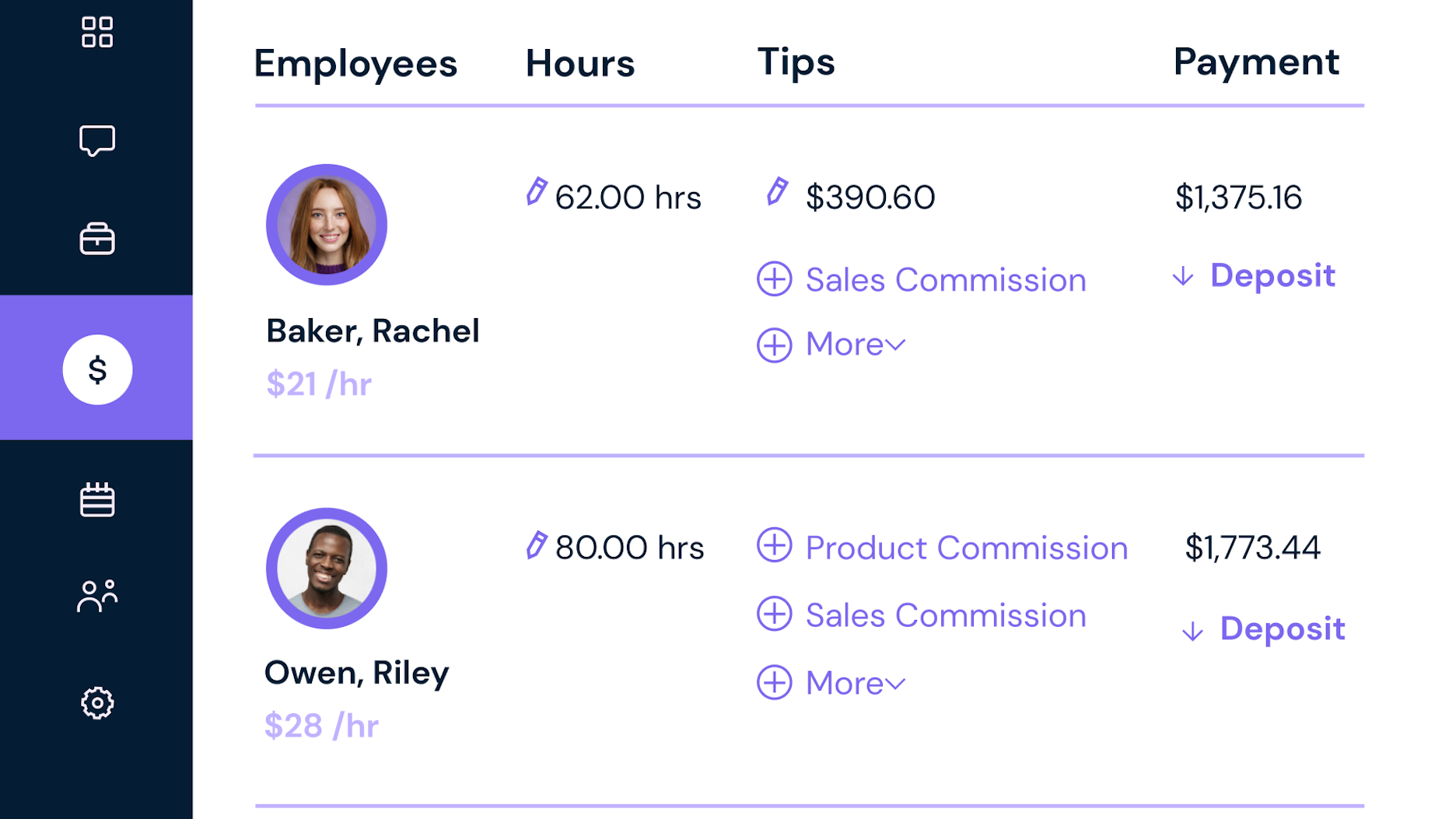
Consider a salon. Its management software knows who worked, how many hours they worked, which services they sold, what tips they earned and whether commission applies. Then payday arrives and the owner exports that beautiful knowledge into a spreadsheet, massages it, and feeds another system. The intelligence is present. The connection is not.
Salsa’s thesis is that the salon platform should become the payroll interface. So should the time clock used by a retailer, the ERP inside a woodworking shop and the client system used by an independent photographer. Salsa sits underneath them. It calculates wages and withholding, files and remits taxes, moves money, checks employers, manages documents and returns records through APIs, webhooks and embeddable screens. The host platform keeps its name on the door.
A figure Salsa uses for a custom payroll build, before the pleasure of maintaining it through every rule change.
One engineer, roughly one month to pilot - the company’s public commitment, not a universal law of physics.
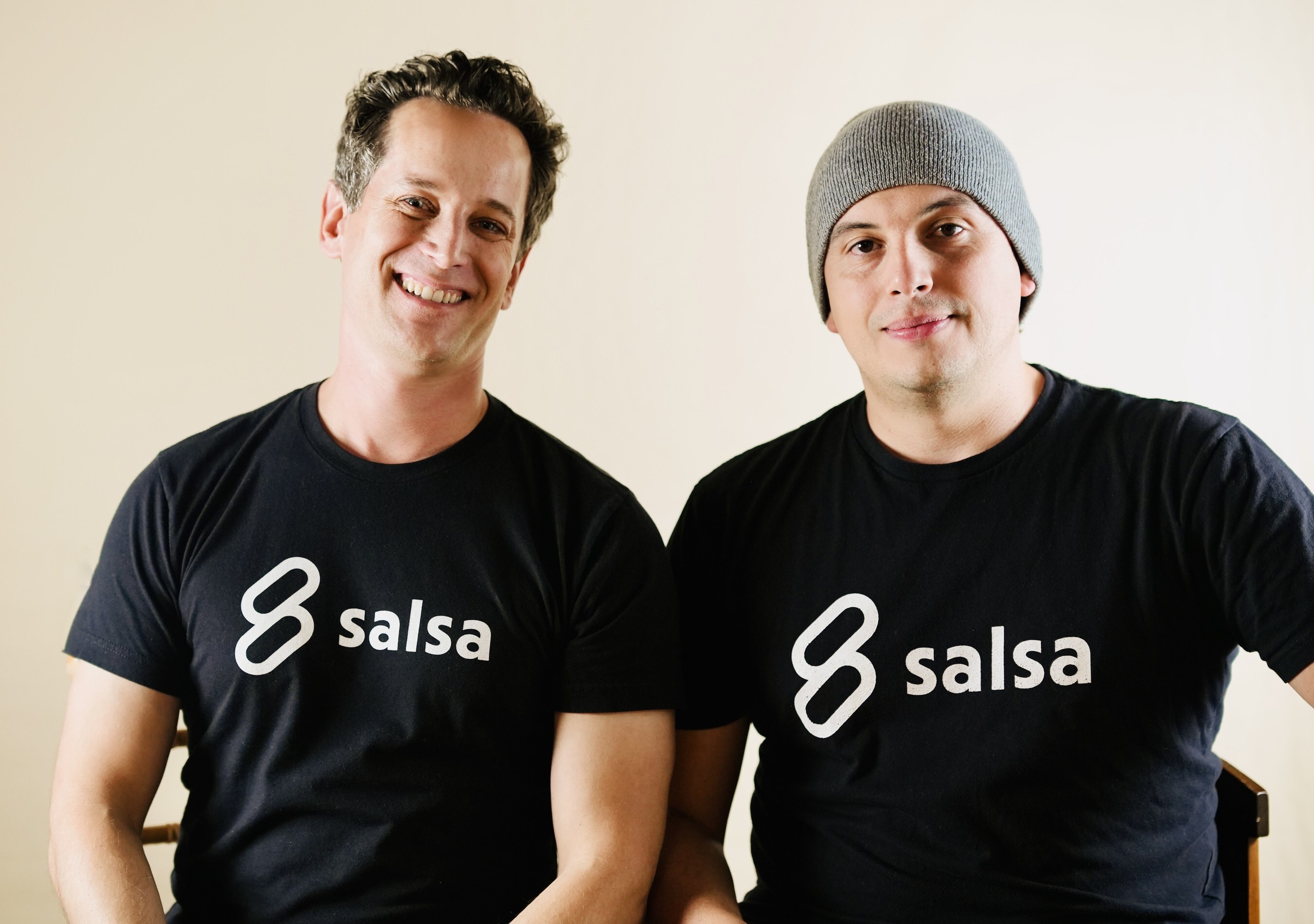
One founder saw the storefront. The other saw the boiler room.
John Kramer had helped build HoneyBook, the client-management platform for independent businesses. He saw how adding financial tools could turn useful software into the operating system of a customer’s working life. Juan Barroso had built a payroll engine spanning ten countries, sold it to Intuit and then spent six more years engineering payroll systems. One understood distribution; the other understood the machinery. They founded Salsa in 2021.
The combination matters because embedded payroll is not a developer stunt. Clean endpoints are necessary, but the alarming moments happen after the demo: a bank account fails verification, an employer arrives with historical workers, or a state changes how paid-family-leave contributions are taxed. Salsa’s February 2026 release, for example, automatically accounted for new treatment of employer-paid PFML premiums. The feature is not glamorous. Neither is a fire exit.
“Payroll should be responsive, not rigid.”Salsa’s product principle
What failed first was the false choice
Early embedded payroll often offered two doors. Behind one sat prebuilt components: fast, sensible and stubbornly generic. Behind the other sat raw APIs: flexible, expensive and hungry for engineers. Salsa calls its answer “progressive complexity.” A customer can begin with Salsa Express, placing configurable screens inside its product, then replace particular screens with interfaces built on Salsa Advanced APIs. The same operational foundation remains below.
Mangomint, which makes software for salons and spas, shows why the sequence is clever. It piloted payroll with Express, learned from early customers, then invested in its own interfaces where distinctiveness mattered. Within 30 days of launch, it reported double-digit conversion. The pilot did not merely save engineering time. It bought evidence. Evidence is cheaper than conviction and generally gives better product advice.
The customer who changed its mind
GlossGenius had payroll on the long-term roadmap. Its salon owners were still spending more than an hour each week moving pay data among systems and spreadsheets, but payroll looked like a hungry project. Salsa helped put the first payroll run in customers’ hands just over a month after integration began. GlossGenius went “all-in,” not because a strategy memo became more eloquent, but because the distance between idea and evidence collapsed.
HoneyBook offers an even neater loop. Kramer’s former company served independent professionals who often paid contractors through Venmo, checks or spreadsheets. Conventional payroll flows assumed W-2 employees and imposed irrelevant setup. Salsa built a contractor-first route and embedded multi-factor authentication to HoneyBook’s requirements. The beta launched in about a month, while the underlying system preserved a path to W-2 payroll later.
Trez supplies the cautionary version. It had already built with another payroll provider. The first thing to fail was not calculation, but flexibility: the components lacked the granularity and multi-user access required by accountant power users. Trez moved to Salsa, which added migration tooling and configurable components. Its product went on to process millions of dollars in wages. A payroll API is only as useful as the business model it does not prevent.
The revenue is attractive. The obligation is the product.
For a vertical platform, payroll can add recurring revenue and make departure inconvenient in the honest sense: customer, worker and financial records finally agree. It may also improve sales. A buyer comparing two salon systems or two care platforms is likely to notice which one removes a weekly export.
But the sale is leveraged in both directions. One integration can reach many employers; one mistake can reach all of them. Salsa’s differentiation is therefore less “we have an API” than “we remain in the room.” Case studies repeatedly describe product collaboration, launch support, migration, onboarding and optional payroll-specific customer service. A fitness platform that evaluated several vendors reportedly chose Salsa because the team behaved like a partner before the contract was signed. Features tied. Conduct broke the tie.

The copyable part is sequencing
A software company need not copy Salsa’s tax engine to copy its method. Start where your product already holds uniquely useful data. Launch the smallest complete workflow with prebuilt pieces. Measure adoption before polishing every bespoke screen. Replace components only where customers can feel the difference. Keep compliance machinery separate from interface ambition. Most importantly, assign an executive sponsor and a product owner: Salsa itself says its best partners bring high conviction, dedicated people and a willingness to invest.
The method is less convincing when the host platform has thin worker data, no natural payroll workflow or no intention of supporting a financial product after launch. It also weakens where Salsa lacks country or edge-case coverage. U.S. and Canadian infrastructure is not the world, and even elegant abstractions meet jurisdictional facts. A team shopping for a passive plug-in may discover it has bought an active business.
Strong fit
- Rich time, pay or worker data
- Visible customer demand
- A committed product owner
- Payroll as a durable revenue line
Weak fit
- No owner after launch
- Unsupported geography
- Thin or unreliable source data
- A checkbox feature with no operating plan
By April 2025, investors had put $30 million behind Salsa, including a $20 million Series A led by Altos Ventures. The money funds an unfashionable advantage: more automation for ugly cases, more country and industry depth, and more humans who know why a payroll run is stuck. The company’s most useful achievement is not that it made payroll easy. Payroll resists that compliment. Salsa has made the hard parts belong to fewer people.