payroll-api
(11)
Kurt Lin Found a Business in the Way of His Business
A payroll connection kept getting in the way of Kurt Lin’s first fintech app. He and his co-founders turned the obstacle into Pinwheel, then spent years making a complicated business feel simple.
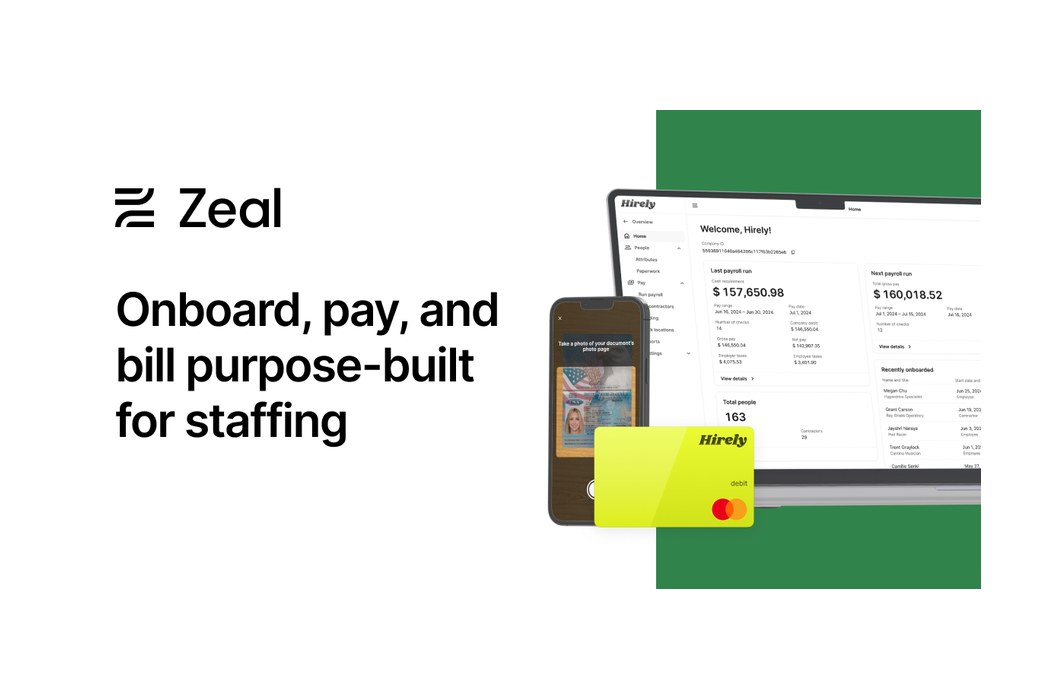
Zeal Found the Payroll Problem Hiding Inside the Shift
The founders went looking for a way to pay a fast-moving W-2 workforce and found a hole in the software stack. Now Zeal sells the plumbing to the platforms with the same problem.
The Price of Waiting for Friday
Payactiv built a business around a peculiar gap: people can finish the work on Tuesday and still pay to reach the money on Friday. Its answer began at a New Jersey construction company and now runs through payroll systems, cards and digital wallets.

The Company You Never See on Payday
Worklio lets payroll companies and software platforms put their own name on the pay run. Its wager is that the least visible company in the transaction can be the one doing the most consequential work.
The $40 Million Feature Hiding in Plain Sight
Salsa thinks the largest bill in a small business should live inside the software that already understands the business. Its trick is not making payroll disappear - it is deciding who should have to see the machinery.

Andrew Brown Is Making Payroll Boring - On Purpose
After selling an ebook startup to Google, the engineer chose a stranger second act: rebuilding payroll so well that millions of people never have to think about it.
Eazipay
Eazipay is a Lagos-based payroll and payment automation platform that lets African businesses run payroll, remit taxes and statutory contributions, and pay their teams in about five minutes. Founded in 2021 and backed by Y Combinator (W22), it also offers payroll APIs for banks and neobanks and financial-wellness tools such as early wage access for workers.
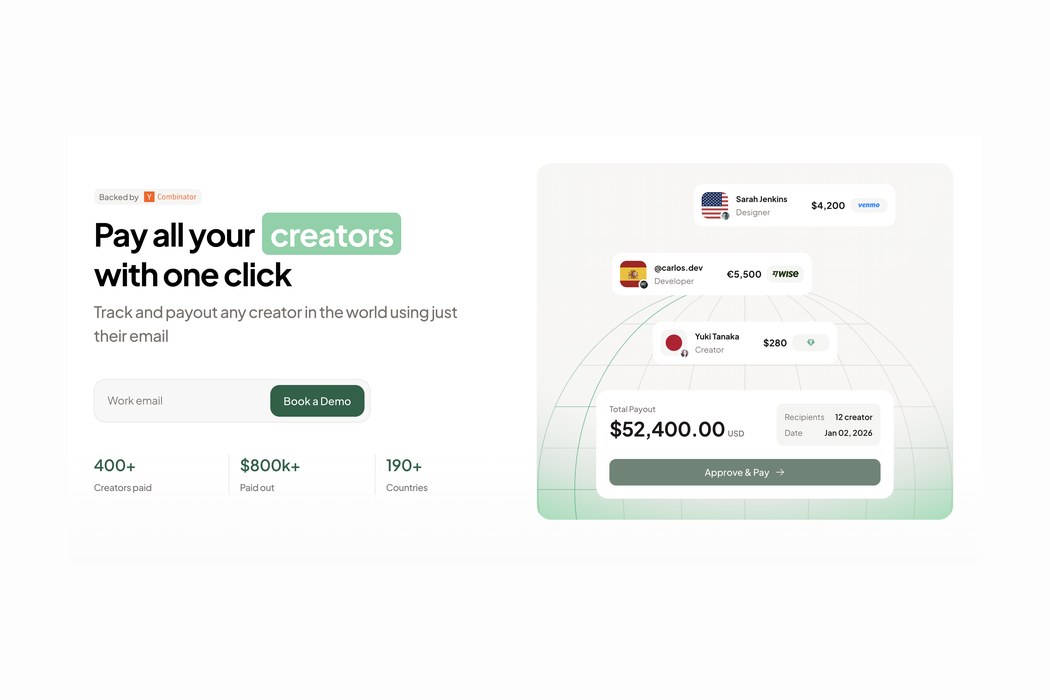
Grade (YC W26)
Grade is a San Francisco fintech (YC Winter 2026) building an API and platform for performance-based payroll. Instead of paying by the hour, companies use Grade to pay creators, contractors, and AI agents based on results - tasks completed, targets hit, work delivered - while Grade automatically tracks performance, calculates payouts, and handles KYC, tax forms (including DAC7), invoicing, and global payments across 190+ countries. Founded by repeat founders Lotanna Ezeike (ex-Barclays, ex-XPO) and James Heaney, the company reports $10M+ paid out and named customers including Astra AI, Valid, and Hayai Learn.
Check
Check is a New York-based fintech that provides embedded payroll infrastructure, letting software platforms build and sell their own payroll product through a single API. It handles the hard parts - tax calculation, money movement, tax filing, and multi-state compliance - so vertical SaaS, HR, and workforce-management companies can offer payroll without becoming payroll experts. Backed by Stripe, Thrive, Bedrock and Index, Check powers payroll for platforms like Wave, Homebase, Housecall Pro and 7shifts.

Pinwheel
Pinwheel is a New York-based fintech that builds the payroll-data and income connectivity layer behind a fairer financial system. Its APIs and embedded tools let banks, credit unions, and fintechs offer one-click direct deposit switching, income and employment verification, and bill management - helping institutions win and keep 'primacy' (becoming the account where a customer's paycheck lands). Pinwheel is one of the few players in the space operating as an FCRA-compliant Consumer Reporting Agency, and it connects to roughly 1,800+ payroll and HR platforms covering nearly all U.S. workers.

Jaimeson Rice
Jaimeson Rice is the CEO of Pinwheel, the New York fintech that has positioned itself as the income layer for financial services, connecting banks and fintechs to over 1,500 payroll platforms covering nearly 80% of U.S. paychecks. He stepped into the top job in July 2025 after three years as the company's CFO and chief of staff, succeeding co-founder Kurtis Lin. A Princeton engineer and Harvard MBA who passed through Goldman Sachs and Bain before founding his own SaaS CRM startup, Vlaris, Rice is now steering Pinwheel through marquee wins with KeyBank, Robinhood, DoorDash, and MoneyLion and the launch of its Switch Kit and Bill Navigator products.