Avi Jacoby has spent much of his working life dealing with things that move. Aircraft. Industrial technology. Goods on their way to a customer. In one photograph from his painting practice, however, the action is wonderfully small: a raised hand, a brush, green leaves taking shape against an orange background. The picture offers a useful introduction to an executive whose résumé needs more than one column.
At Fabric, where he became CEO in 2022, Jacoby works on automated fulfillment. The company develops the robots and software that help retailers store goods, retrieve them and prepare orders. Its territory includes the spaces behind the shopping experience: storage racks, workstations, dispatch points. These are places most customers never see, although their dinner may depend on what happens there.
The painter and the operating executive make an interesting pair. A canvas gives its maker boundaries. A warehouse does, too. Each requires decisions about what goes where. The comparison suggests a way to read the career: follow the spaces, the materials and the people involved in each kind of work. The different chapters retain their own purposes.
A valley, a canvas, a second beginning
Jacoby, who uses the nickname Jack, was born in Kibbutz Gonen in 1961. He lives in Timrat, in the Jezreel Valley. When he retired from the Air Force in 2010, he began developing his oil-painting skills. Landscapes and portraits became his subjects; local exhibitions followed in 2015. The people and surroundings of his life had found another form of expression.

That chapter changes the scale of the profile. Corporate biographies collect positions. A painting portfolio collects things someone has chosen to look at. It gives this story a place beyond the office and a practice beyond the title. The valley is part of his account of himself, rather than an attractive setting attached to a business biography after the fact.
His education adds another dimension. He studied architecture at the Technion and diplomacy and security at Tel Aviv University. Architecture brings questions about proportion, circulation and the use of space. A security-and-diplomacy degree belongs to a different set of questions about institutions and decisions. In Jacoby’s case, both sit alongside a military career that ended at the rank of brigadier general.
The work between the machines
The corporate sequence began with Better Place, where he held executive management positions between January 2011 and April 2013, including chief operating officer. He joined Stratasys in November 2013 and became its executive vice president of global human resources and training in February 2014. His responsibilities there included organizational culture and the development of HR processes and infrastructure.
That is a revealing detour in a robotics story. An industrial company needs more than equipment specifications. It needs people who understand their responsibilities, training that makes sense, and an organization capable of working across functions. Jacoby’s Stratasys role placed those concerns directly in his remit. The machines were part of the business; so was the way people learned to work together.
Later, Fabric’s operations job brought a long list of practical responsibilities: site planning, deployment, production, logistics, supply chain, program management, service operations and global technical support. Read that list slowly and the glamour of a robot video gives way to the ordinary labor of implementation. Someone has to deliver the equipment. Someone has to install it. Someone has to answer the call afterward.
He had joined Fabric as chief of staff in 2018, then led its Israel market before becoming COO in 2020. By the time he took the top job, he had worked inside several parts of the organization. That sequence matters because the next chapter required changing how the company offered its work to customers.
Let the retailer hold the keys
In July 2022, Fabric announced a move away from its earlier fulfillment-service model toward providing technology that retailers could operate. Jacoby succeeded founding CEO Elram Goren. Customers wanted greater control over their own facilities and operations. A company that had offered an operated service was adjusting to buyers who wanted its hardware and software in their hands.
The change came with a workforce reduction of 40%, about 120 people. It was a consequential beginning to his tenure. The neatness of a strategy diagram should never conceal what a reorganization means for the people whose jobs disappear. Both facts belong in the account: a change in the product model and a substantial reduction in the team.
The underlying commercial question is easy to understand. A retailer may want help with the machinery while keeping responsibility for its premises, staff and customers. Those choices determine the relationship with an automation supplier. Ownership of the order remains a daily concern even when software is doing more of the coordination.
A change in responsibility, with hardware and software at the center of the new model.
For Jacoby, that placed implementation at the center of the story. The supplier needs a product that works within someone else’s operation. The buyer needs confidence that the equipment, software and support will fit its way of doing business. A sale begins a relationship with a working building, a working team and an existing set of expectations.
The ceiling is part of the brief
Jacoby has publicly emphasized flexibility in retail fulfillment. That word becomes concrete when a retailer considers automation inside an existing space. Ceiling heights vary. Columns interrupt the floor. Workstations and dispatch points need sensible positions. A building can be deeply indifferent to a technology company’s preferred dimensions.
Fabric’s January 2024 patent announcement concerned storage for different tote sizes within the same shelving unit. The problem is almost comic in its plainness: products arrive in different dimensions, while a uniform container can reserve expensive space for empty air. A storage system needs to account for what is actually being stored.
That is where the architecture degree becomes an interesting detail in Jacoby’s biography. The concern with space is visible in the company’s work, regardless of whether his education caused it. There is a practical elegance in equipment that accommodates an awkward room. The room already exists. Its owner would quite reasonably prefer to keep it.
“placing inventory close to the consumer and automating the operations.”
Avi “Jack” Jacoby, November 2022
His description of Fabric’s partnership with Reply put proximity and automation together. The agreement connected Fabric’s robotic fulfillment with Reply’s supply-chain execution platform. Integration belongs in this story because a warehouse is a conversation among systems. A movement has to correspond to an order, an inventory record and the next step in the process.
In a March 2024 interview, Jacoby discussed deploying technology within available space or as a standalone micro-fulfillment center. His explanation linked closeness to customers with fulfillment time and the economics of the supply chain. The appeal of a nearby operation has to survive the cost of running it. A short trip is useful; a workable business still needs the rest of the arithmetic.
There is more than one career in the picture
Fabric received two company recognitions in June 2023: inclusion in the inaugural XB100 list from XPRIZE and Bessemer Venture Partners, and a Top Supply Chain Products Award. They mark a chapter in the business during Jacoby’s leadership. The work behind them belonged to a team, including the people developing, deploying and supporting the technology.
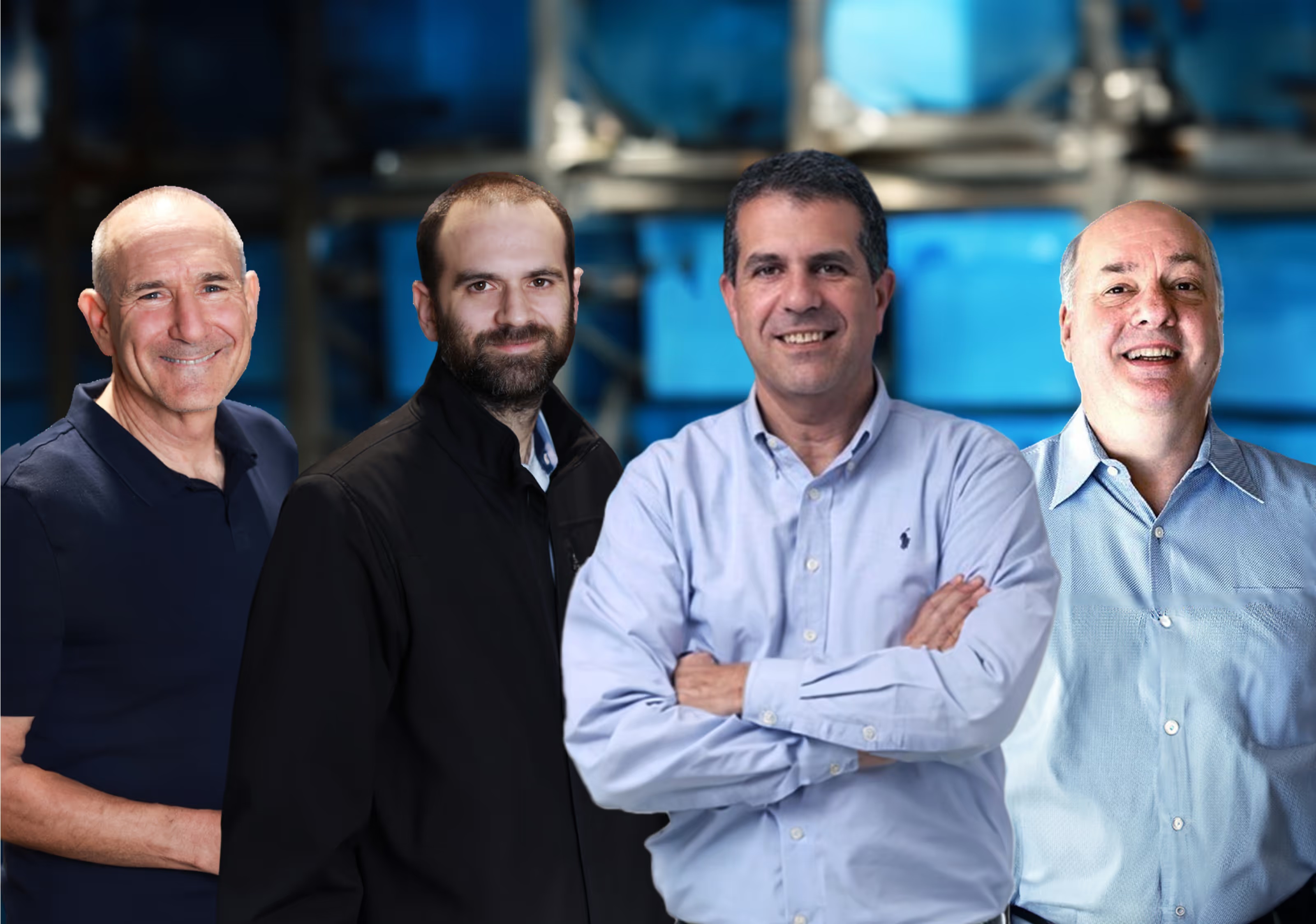
In March 2024, Fabric announced that Curt Avallone would join Jacoby as co-CEO, based in the United States. Avallone brought experience building retail e-commerce operations. The announcement paired an executive steeped in Fabric’s operations with one whose background included grocery businesses. Jacoby welcomed the collaboration and its ambition to serve grocers internationally.
The team photograph makes that part of the story easier to see. Jacoby stands with Avallone and Fabric co-founders Ori Avraham and Shay Cohen. A personal profile can focus attention on one career while keeping the company’s shared work in view. The product has several authors. The leadership has several kinds of experience to draw upon.
The next instruction
Fabric’s September 2025 launch of Orchestra added a software chapter to that work. The suite is designed to coordinate inventory, labor, customer experience and robotics. Its Ops Pilot component offers conversational access to operational information; its Digital Planogram deals with inventory placement and replenishment. These are tools for the people making decisions around the automation.
The questions are familiar even when the interface is new. What needs attention? Where should the stock go? How does someone joining the team learn the operation? They return the profile to Jacoby’s earlier work in training and organizational infrastructure. A robot can complete a movement while the person managing the shift still needs a clear next instruction.
Viewed across these chapters, Jacoby’s career has an unusual breadth without requiring a heroic explanation. Aviation, architecture, organizational work, fulfillment and painting are all present. They involve different kinds of responsibility and different measures of success. The interest lies in following the actual transitions, including the difficult ones, and noticing the practical work each role contains.
Back at the canvas, the task is smaller and entirely visible. A brush moves through a bounded space. A picture gradually takes shape. It is a fitting last image for this particular biography: room for a working life, room for another practice, and a person whose title tells only part of the story.