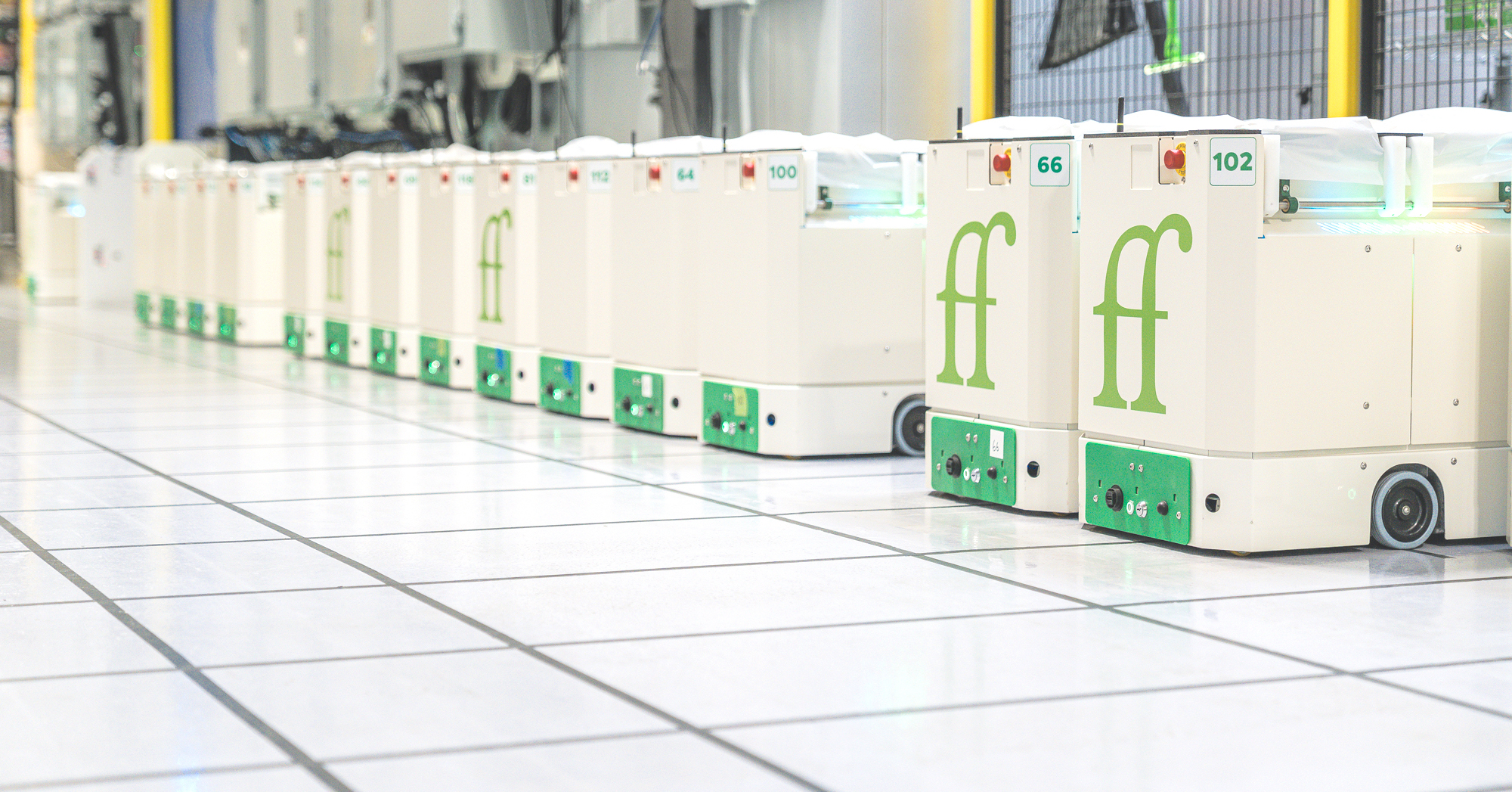
A robot walks into a walk-in freezer
Here is a fact about online grocery that the grocery industry would prefer you not dwell on: for a long time, the business lost money on a startling share of the orders it filled. Fulfil looked at that broken arithmetic and reached an unusual conclusion - the fix is not a better coupon, it is a warehouse full of robots.
Online grocery has always had a dirty secret. Delivery is convenient for you and expensive for everyone else. The most expensive step is not the driving - it is the picking and packing, the part where a human being walks the aisles of a store or a warehouse assembling your order, one item at a time, dodging other shoppers and occasionally substituting your oat milk for something you did not want. Do that at scale, in a business with grocery-thin margins, and you have a machine for converting revenue into losses.
Fulfil Solutions, a Mountain View company founded in 2017 by Gilad Almogy, spent several years in stealth building an answer. The answer is a fully automated fulfillment system: robots that receive an order and, within minutes, pick every category of grocery item - dry goods, produce, refrigerated, frozen - and pack them into bags ready for a waiting delivery driver. No human hands in the aisle. The company's shorthand for what it does is blunt: "Zero labor pick and pack, all temperatures and categories, item level data and control."
The "all temperatures" part is where the engineering gets interesting, and where Fulfil separates itself from a crowded field. Plenty of automation can move a box of cereal from shelf to tote. Far less of it can operate reliably inside a freezing enclosure, handle a bag of grapes without crushing it, and track a carton of eggs down to its expiration date. Fulfil built proprietary hardware, custom actuators, and cold-environment robotics to do exactly the parts of grocery that are hardest to automate. It started with the hard problem, which is scary but has a nice property: competitors cannot copy it over a weekend.
Under the covers sits the sort of technology stack you would expect from a deep-tech robotics company - artificial intelligence, machine learning, computer vision, and sensor fusion, all pointed at the surprisingly difficult task of identifying, inspecting, and manipulating physical grocery items. Every item is scanned and tracked, which turns a warehouse into a live database. That data is not just for the robots. It is how Fulfil promises real-time inventory accuracy and, notably, a way to fight food waste: know exactly what you have and when it expires, and the freshest goes out while the oldest gets flagged before it spoils.
The business model is worth pausing on, because it explains the strategy. Fulfil does not really sell robots. It sells fulfilled orders. Its automation lives inside micro-fulfillment centers - the industry calls them "dark stores" - that pick and pack a retailer's online orders so that retailer can offer same-day delivery and pickup without lighting money on fire. When you sell an outcome rather than a machine, you get to own the hard integration work and, ideally, a stickier relationship.
The proof of concept has a satisfyingly literal quality to it. Fulfil's launch partner is The Save Mart Companies, and its first automated dark store is a former Lucky supermarket in Mountain View that was gutted and reborn as a robotic micro-warehouse. It now powers a same-day delivery and pickup service called Lucky Now. A dead grocery store, in other words, came back as a warehouse full of robots - which is either a tidy metaphor for the industry's future or just a very efficient use of existing real estate. Probably both.
Not only does it make online grocery retailing profitable while meeting customer expectations, but also prioritizes social and environmental responsibility by cutting carbon emissions.
Fulfil emerged from stealth in February 2023 with a $60 million Series B round led by Eclipse Ventures, with participation from Khosla Ventures and DCVC. That is a specific kind of investor roster - the deep-tech, patient-capital, hard-problems crowd rather than the growth-at-all-costs crowd - which tells you something about how long and how capital-intensive this bet is. You do not automate the produce aisle on a two-year timeline.
President and CEO Mir Aamir runs the company day to day. The founding chairman, Gilad Almogy, is a familiar name in Silicon Valley deep tech; he also founded Ultima Genomics, the low-cost DNA sequencing company. The mission Fulfil states for itself is earnest and, refreshingly, specific: improve food access, reduce food waste, and help grocers - built on the tidy premise that "food is life and technology should make life better."
Whether robots can genuinely make online grocery profitable at scale is still an open question, and Fulfil is one company among several - Ocado, AutoStore, Takeoff, Fabric and others - chasing versions of the same prize. But Fulfil's wager is clear-eyed. Instead of subsidizing the broken step, it is trying to eliminate it. If the economics work, the freezer full of robots is not a novelty. It is the new back room of the grocery store.