Assaf Glazer had spent years teaching cameras to notice things. At Applied Materials, the things were defects on silicon wafers. At home, after the arrival of his son Udi, the subject became considerably less cooperative. A semiconductor stays where you put it. A baby has other commitments.
The project that became Nanit began with this collision between professional expertise and family life. Glazer had the training to build a camera system and a new reason to want one. The household supplied a problem that his working life had prepared him to investigate. It would do so again, years later, in the kitchen.
Today, Glazer is the co-founder and CEO of Vinst, which builds AI tools for home cooks and turns recipe collections into cookbooks. Between the two companies came culinary school and professional cooking. His career has changed industries, countries and working clothes. The recurring interest is easier to follow: how do you make technical knowledge useful in the middle of an ordinary day?
The engineer brings his work home
Before there was a consumer camera to sell, there was a researcher learning how to interpret images. Glazer worked at Wales Ltd. on operational research for defense systems, then at Applied Materials on image classification and process control. The work involved finding patterns in what a camera could see and making those patterns useful to somebody responsible for a process.
He completed his doctorate at the Technion in 2013, specializing in machine learning and computer vision. Parenthood gave that expertise a different setting. In his account of Nanit’s beginnings, Udi’s arrival prompted him to look for a monitor that could offer more than a picture. The products he encountered left him wanting more.
There is a revealing piece of understatement in how he describes the beginning: Nanit really started out of curiosity.
Curiosity can sound pleasantly idle. Here it involved taking a technology developed in industrial and academic settings and asking whether it belonged above a crib. The question was personal before it became commercial.
A better question over coffee
A useful camera still needed a useful place in the room. Glazer took parents out for coffee and asked about the monitors they already owned. He wanted to know where they put them, how they used them and why they had chosen a particular model. These were questions about people’s arrangements, rather than an invitation to admire his algorithms.
The resulting design work included the viewing angle, the cables and the shape of the camera itself. The team considered more than 200 design directions for the camera. They chose a form reminiscent of a pillow, intended to feel gentler in a nursery than a conventional security camera. The enclosure had to belong in the room as well as hold the electronics.
“Building things.”
Assaf Glazer’s two-word LinkedIn introduction
That small biography leaves plenty of room for the less glamorous parts of building. Where will the cable go? Will the device obstruct somebody reaching into the crib? Does the information make sense at a glance? A doctorate does not make those questions disappear. In this case, listening to parents helped put them on the list.
A camera leaves the university
Glazer joined the first cohort of the Runway Startup Postdoc program at the Jacobs Technion-Cornell Institute. The program gave research a route toward a company, with mentorship and financial support alongside the technical work. Nanit took shape in that setting, linking his Technion training with the consumer market in New York.
He built the company with Tor Ivry and Andrew Berman. Ivry was a familiar collaborator: he and Glazer had worked together at Applied Materials from 2004 to 2010. Their shared experience helped carry the imaging work into a different product. Berman joined them as a co-founder, bringing another member into the team that would put the camera on the market.
Nanit launched publicly on June 15, 2016, with $6.6 million in startup funding. In May 2018, it secured a $14 million Series B led by Jerusalem Venture Partners, with participation from existing investors. Later that year, Nanit Plus appeared in TIME’s Best Inventions selection. The idea had acquired the machinery of a consumer business: a physical product, software, investors and customers.
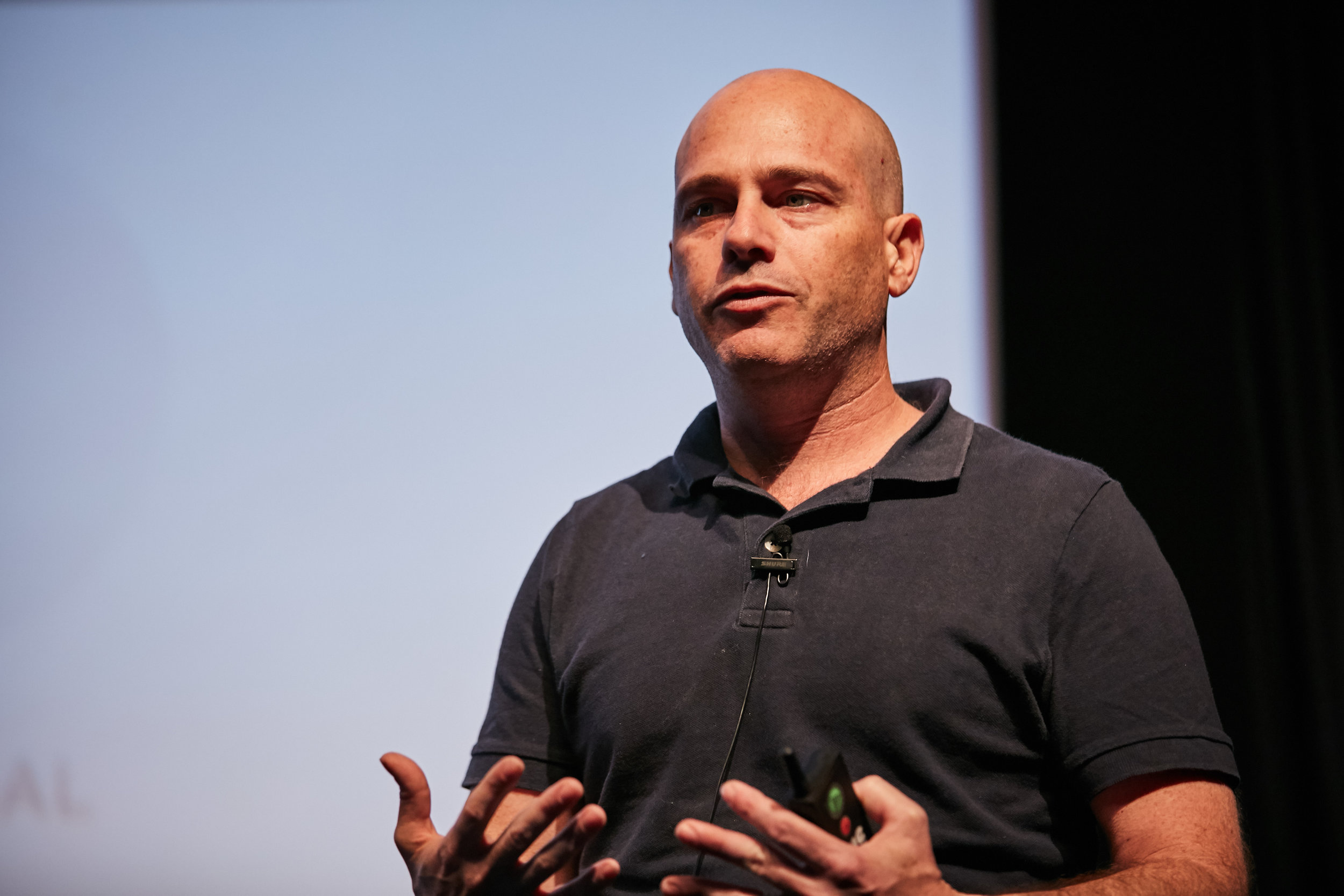
Glazer’s public appearances from that period place him comfortably among both researchers and entrepreneurs. At the 2018 LDV Vision Summit, he praised the meeting of technical expertise and company builders. That combination had practical meaning for him. Getting a research idea into somebody’s home requires more kinds of knowledge than the idea itself.
The founder changes rooms
A company’s founding story can follow its founder around long after his working day has changed. Glazer remains associated with Nanit, where he was the founding CEO. His more recent interviews concern another venture, Vinst, and the education that happened between the two. The culinary diploma is an unusually literal addition to the résumé.
While living in New York, preparing food for his family drew him further into cooking. He subsequently pursued culinary training and worked professionally in restaurants. For someone with years of technical credentials, this meant entering a field where knowing how to learn could help, but could hardly substitute for learning the work.
There was an earlier hint of the interest. Asked in 2018 for his favorite New York restaurant, he named Timna in the East Village. A restaurant recommendation is hardly a business plan. It does make the later turn feel less like a theme selected for a second company and more like an interest that had been allowed to occupy a larger part of his life.
In his later account of leaving Nanit, Glazer also stresses the importance of agreement about a company’s direction. His lesson is that founders and investors should understand where they want a venture to go beyond the next milestone. A financing round can settle the immediate question of resources while leaving a longer conversation about purpose unfinished.
A familiar colleague, a different table
For Vinst, Glazer teamed up with Chen Fisher, previously Nanit’s senior vice president of R&D. They had already worked together on a consumer technology business. Fisher also brought a love of baking, including experience running a weekend pop-up coffee shop. Technical history and a shared interest in food gave them more than one reason to work together again.
Startup Nation Central records Vinst’s founding in October 2022. Its early description was an AI-powered cooking companion. By the time of Glazer’s 2025 interviews, he was explaining how software could help people manage recipes and cook at home. The intended setting was familiar: a kitchen where the phone was already doing several jobs.
A browser, a timer, a calculator, a place for notes: the phone arrives with plenty of duties. Adding another application only helps if it makes the work easier. Glazer’s cooking experience supplies a way to ask that question from inside the task. Dinner also has a deadline, even when nobody has arranged a board meeting about it.
- 01GatherPhotos, links, notes
- 02ArrangeRecipes and pictures
- 03KeepA printed cookbook
What a recipe is worth keeping
Vinst’s current website gives the work a physical destination: a family cookbook. Users can import recipes from photographs, links and notes, organize them, add pictures and order a printed book. A digital version remains available. The technology handles part of the gathering and arranging; the finished object can sit on a kitchen shelf.
The choice of a book is telling. A recipe is a set of instructions, but the decision to preserve a particular recipe can involve the person who made it or the occasion when it was served. Vinst’s offer gives those collections a form that can be handed to someone. The company invites contributions from family and friends through its mobile app.
This makes Glazer’s second company easier to understand alongside his first. Both address something people already care about in their homes. The engineering has to fit around that attachment. A camera’s enclosure and a cookbook’s pages belong to different manufacturing worlds, but each will be judged somewhere more demanding than a product presentation: in use.
The next bus, please
In March 2026, Glazer published an essay about approaching business and life as learning problems. His example was his son’s regular bus trip to a climbing gym. The journey was familiar; the transit application still required repeated input. He imagined a smaller AI-built tool that would simply show the next bus arrival.
The example puts his interest in AI at a human scale. The person who knows the routine also knows which choices are unnecessary. Glazer argues that practical knowledge can help shape simpler software, and that companies should connect knowledge across departments when deciding what to build. The bus is a compact illustration of a larger organizational argument.
It is also an appropriate place to leave him: looking at another ordinary piece of family life and wondering why the available tool makes it harder than it needs to be. The crib led to a camera. Cooking led to training, restaurant work and Vinst. Now a familiar journey supplies another question. Somewhere between the research and the next meal, there is still something to build.
Continue the conversation
- Vinst: cooking tools and cookbooks
- Assaf Glazer on LinkedIn
- Glazer’s essays on Medium
- The birth of Nanit: Glazer’s original account
- Cornell Tech: Nanit’s 2016 launch
- Nanit’s conversation with its co-founders
- Scales of Success: the founder’s next chapter
- Technion Alumni: from CEO to restaurant cook
- Watch: Glazer’s conversation on Aggaeus
- Read: his March 2026 essay on AI