The Dispatch
A bridge can't tell you it's sick. His software can.
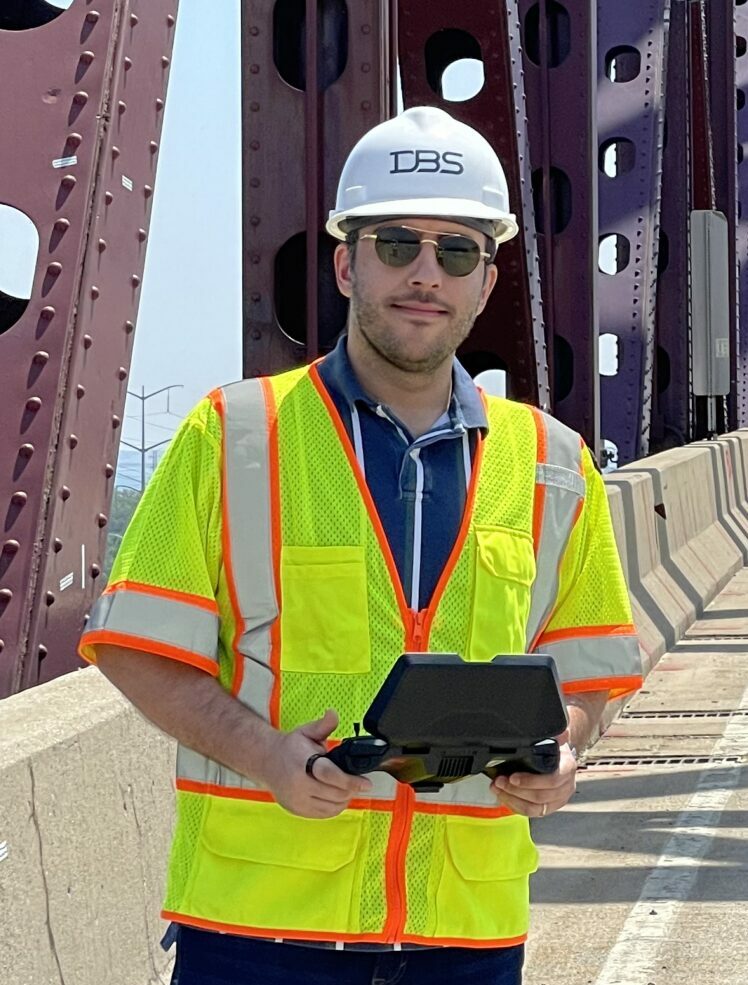
Drive over a bridge and you trust it without thinking. Ali Khaloo thinks about it constantly. As CEO and founder of Aren, the New York company he spun out of Cornell Tech, he has spent more than a decade on a single stubborn question: how do you know, objectively and early, that a piece of civil infrastructure is starting to fail?
The traditional answer is an inspector with a clipboard, a flashlight, and a trained but human eye. Khaloo's answer is a digital twin. Aren's platform swallows raw data from drones, video, laser scanners, infrared cameras and surface sensors, then stitches it into a 3D, high-resolution model of a structure and its health over time. On top of that model, machine learning finds the cracks, the corrosion, the spalling concrete - and ranks what matters. The pitch is blunt: a cost-effective, automated and objective way to de-risk inspection and lower the lifecycle cost of an asset.
It works on the things most of us never look at twice. Bridges. Dams. Airport runways. Cooling towers. The hardware of modern life, much of it aging, much of it inspected on schedules written before computer vision existed. Aren's bet is that the next inspector is partly silicon, and that the owners of these assets would rather know what breaks next than discover it the hard way.
Khaloo's path to that bet ran through three countries' engineering programs. A bachelor's degree from the University of Tehran. A master's in structural engineering at Tufts. A PhD in structural engineering at George Mason. Then a postdoctoral fellowship at Cornell University, landing him on the Cornell Tech campus in New York through the Runway Startup Postdoc program - a fellowship built to push PhD scientists out of the lab and into founding companies. Aren is what came out the other side.
A cost-effective, automated and objective approach to de-risk the inspection and assessment of civil infrastructure - lowering the life cycle cost of an asset.- Ali Khaloo, on what Aren is for
Before he was a founder, he was a research scientist with a specialty in seeing. His academic work reads like a slow march toward Aren. In 2018 he published a study on inspecting the Placer River Trail Bridge by flying a drone over it and building a 3D model from the images - a paper that has been cited more than 280 times and looks, in hindsight, like a working prototype of his company. Earlier work tackled the unglamorous but essential problems underneath: segmenting noisy 3D point clouds of infrastructure, calibrating finite element models against real test data. Taken together, more than 20 papers, over 1,000 citations, and an h-index of 12.
He also learned to make AI small. Before Aren, Khaloo worked as a senior research scientist at a venture-backed startup, building deep-learning algorithms for real-time object detection on computationally limited devices - including smartphones. It is one thing to detect damage on a server farm. It is another to do it on a phone in the field, where the bridge actually is. That constraint - intelligence that runs where the structure stands - threads through everything Aren does.
The recognition has followed the work. In late 2023, xyHt Magazine named him to its list of "24 Young Geospatial Professionals to Watch in 2024." Aren was named Demo Day winner at BuiltWorlds' Infrastructure Conference for its AI-powered digital twin platform. And his team won the inaugural Drone Challenge run by Abertis, one of the world's largest toll-road operators, for a system that pairs drones with 2D/3D computer vision and automated damage quantification to make roadways safer. His patents - several of them - cover the core trick: getting a machine to generate and analyze 3D models of structures the size of dams.
How It Reads A Structure
Three layers, one living model.
Capture
Drones, video, laser scanners and infrared sweep the asset. Raw data, every angle, surface and sub-surface.
Model
The data fuses into a high-resolution 3D digital twin - the structure's health, captured and tracked through time.
Decide
Machine learning flags damage and structural mechanics ranks it - predictive maintenance and capital plans, not guesswork.
His most-cited paper flew a drone over a bridge and turned it into a 3D model. The rest of his career has been turning that idea into a company.- The throughline
What makes Khaloo unusual is not that he uses AI. Everyone says they use AI. It is that he comes at infrastructure from the structural mechanics side first and the software second. He is a civil engineer who learned to code the camera, not a coder who discovered bridges. That ordering matters when the stakes are a span carrying traffic rather than an ad served to a browser. When a concrete bridge fails, it is not a metric that dips. Khaloo has spent his career on the side of the problem where being wrong has weight.
Aren raised $2 million in seed funding in November 2021, on top of roughly $277,000 in pre-seed support from Cornell's Runway program. He runs it from New York alongside co-founder and COO Edgar Martinez Ceja. The company sits at the intersection the market keeps circling back to - artificial intelligence, computer vision, property technology, enterprise SaaS - but pointed at a problem older than software: the slow, invisible decay of the structures we depend on and ignore.
The aspiration is unglamorous and enormous. Lower the lifecycle cost and the failure risk of the world's aging civil infrastructure by making condition assessment objective, automated and continuous - so the right asset gets fixed before it fails, not after. It is the kind of mission that does not trend. It just holds up the road you drove in on.