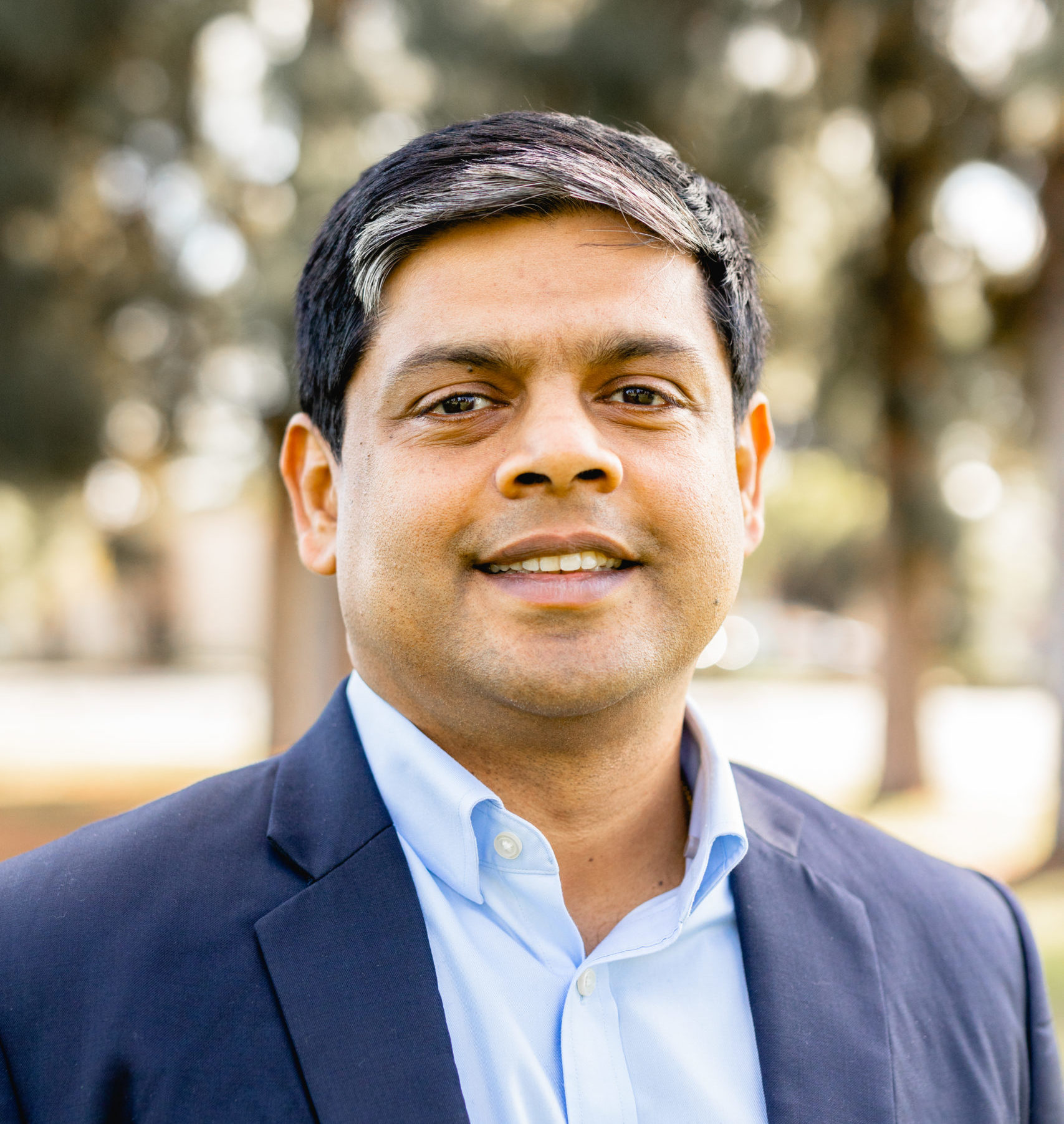
There are roughly $6 trillion in foreign exchange transactions every single day. Most people call that commerce. Arjun Jayaram calls it a problem waiting to be solved. The settlement of those trades - the actual moment when banks exchange value - still takes up to two days in most markets, carries enormous counterparty risk, and runs on infrastructure stitched together across decades. Jayaram saw the gap and, in 2016, founded Baton Systems to close it.
The company's core insight sounds almost obvious in retrospect: currencies and securities are already digital. The bottleneck is not that assets need to become digital. The bottleneck is that each institution holds its own digital ledger, and those ledgers don't talk to each other cleanly. Baton built the connective tissue - a real-time interoperability layer that lets banks settle across ledgers in minutes using commercial bank money, not central bank reserves. That distinction mattered enormously to the industry, and it's why Jayaram could claim, without exaggeration, that "nobody else has cracked settlement using commercial bank money."
"Currencies and securities are already digital. The problem has not been the digitisation of assets - it's moving digital assets across different ledgers."- Arjun Jayaram, Founder & CEO, Baton Systems
Baton's platform now supports critical post-trade cash and securities operations, processing nearly $30 billion in value each day for clients that include seven of the nine largest western banks. The CORE platform has facilitated the settlement of over three trillion dollars across both cleared and OTC markets. Those are not marketing numbers. They are the kind of numbers that put you on Federal Reserve task forces and ISDA working groups, both of which count Jayaram as a member.
Before any of this, Jayaram built a career that reads like a tour of Silicon Valley at its most restless. He worked at Sybase and BECOME.COM, learning the foundations of software architecture and team management. Then he co-founded Compass Labs in 2009, a machine-learning advertising platform, before the phrase "machine learning" was in every pitch deck. The company used social media behavior to identify purchase intent - genuinely ahead of its time. Yahoo acquired it. Jayaram absorbed the lesson: build something technically hard, solve a real problem, and the exits take care of themselves.
Post-acquisition, he turned up at Twitter managing anti-spam operations. The job title sounds narrow. The reality was anything but. Fighting spam at the scale of a global social network means building probabilistic systems to catch bad actors moving fast through a massive, constantly shifting landscape. It's pattern recognition under pressure, with real stakes. It was, it turns out, excellent preparation for thinking about settlement risk.
The average FX trade takes two days to settle. During that time, both sides carry counterparty risk - the exposure that the other party defaults before the trade completes. Across the industry, this risk runs into the tens of billions of dollars daily. Baton's payment-versus-payment model eliminates that exposure by completing the exchange simultaneously, in under three minutes.
From Twitter, Jayaram moved to Dwolla as Vice President of Technology, getting deep into the mechanics of payments infrastructure - how money actually moves at the institutional level. By 2016, he had enough domain knowledge, enough relationships, and enough frustration with the status quo to start Baton. The founding thesis was clear: you don't need to replace a bank's core systems. You need to build the layer that makes those systems interoperable. "The problem is not the technology," he has said. "It's the coordination."
Baton's early go-to-market was methodical. Jayaram targeted the FX market first - high volume, high risk, and well understood enough that banks could evaluate a new solution against clear benchmarks. By the time Baton launched commercially in Q1 2018, HSBC and JP Morgan were already on board. Within a year, the platform had settled $2 trillion in FX transactions across 20+ currencies. In December 2021, Baton powered the world's first interbank riskless FX settlement outside of CLS - the kind of milestone that typically takes decades to pull off.
"Nobody else has cracked settlement using commercial bank money. This entire process happens in under three minutes."- Arjun Jayaram, Risk.net Interview
What makes the Baton story technically remarkable is the 100 person-years of development that went into it - not just in software engineering, but in the complex legal work required to make real-time settlement legally binding across jurisdictions. Jayaram has cited this specifically when asked about competitive moats. The barrier isn't clever code. The barrier is having done the work that nobody wants to do but everyone needs done.
Jayaram's view on distributed ledger technology has evolved with the industry - and his measured take has earned him credibility precisely because he hasn't been a zealot about it. In 2018, he said the industry had "moved past the hype." In 2019, he warned that DLT "does not provide the single silver bullet for all of the industry problems as it was hyped out to be." And yet Baton uses DLT where it genuinely helps - for shared permissioned ledgers, settlement automation, and interoperability between existing systems. The technology is a tool, not a thesis.
That pragmatism extends to Baton's product philosophy. Jayaram does not pitch banks on replacing their core systems - a conversation that would end immediately. He pitches on adding real-time visibility and control on top of what already exists. The typical first implementation takes four to six months. ROI, he insists, comes within the first year. For financial institutions weighing the operational risk of any change to settlement infrastructure, that timeline matters enormously.
In 2026, Jayaram has been vocal about what comes next: the shift to T+0 settlement across most asset classes. His prediction - that global RTGS and settlement systems will move toward real-time within five years - is no longer fringe. The US Securities and Exchange Commission moved to T+1 equity settlement in 2024, and Jayaram has described this as "necessary but not sufficient." The infrastructure Baton has built is designed for a world where settlement happens in real time, and where instant payment rails like FedNow and RTP are standard plumbing, not exotic experiments.
The investor story has been clean. Trinity Ventures led a $12M Series A in 2019, joined by Alsop Louie and Commerce Ventures. A further $4M arrived in early 2020, taking total funding to $19.1M. For a company selling to the largest banks in the world, the capital efficiency is striking. Baton has not needed to raise massive rounds because it has built something institutions will pay for. That is, again, the Jayaram approach: solve the hard problem first, let the commercial case follow.
What drives Jayaram is an idea that sounds simple and is profoundly difficult to execute: the financial system should work in real time. Not tomorrow. Not end of day. Now. Every hour that a trade sits unsettled is an hour of unnecessary risk carried by someone. Eliminating that risk - quietly, without fanfare, in the basement of global finance - is the work. He is mid-stride in the middle of it.
Career Path