At six o’clock on an Arizona summer evening, the sun is still everyone’s business. The pavement is hot. Buildings have spent the day absorbing heat. Air conditioners keep working. On August 2, 2026, between six and seven, Arizona Public Service customers needed a preliminary 9,164 megawatts of power. APS reported that it met the demand while maintaining reserves. That single hour is a useful way into this company. Electricity must arrive when people need it. A generous supply at lunchtime cannot, by itself, cool a bedroom after dinner.
- APS generates, buys and delivers electricity to nearly 1.5 million Arizona homes and businesses.
- Nuclear, solar, batteries and customer flexibility do different jobs on its grid.
- Growth is testing both its clean-energy plans and customers’ budgets.
The moon once got a vote
The business began with a rather wonderful exception. In 1886, Japanese immigrant Hachiro Onuki, later known as Hutchlon Ohnick, persuaded two mining men to help establish Phoenix Illuminating Gas and Electric Company. Its street-lighting promise allowed a break when the moon supplied enough light. The modern utility traces its origins to that enterprise. The APS name arrived in 1952.
“except when sufficiently lighted by the moon.”
A clause in the original lighting franchise
Today’s service territory covers parts of 11 Arizona counties. Customers include households, shops and large industrial operations. APS is the principal subsidiary of investor-owned Pinnacle West, rather than a municipal department. Its business combines power generation, wholesale purchases, transmission and neighborhood distribution. Arizona’s Corporation Commission oversees retail rates. The bargain is public oversight of a company providing an essential service.
A nuclear plant drinks the city’s leftovers
Consider Palo Verde, the nuclear station APS operates with six other utility owners. Its cooling water comes from treated municipal wastewater. In a desert, that detail matters: electricity production and urban plumbing become parts of the same system. The plant’s reactors provide carbon-free electricity regardless of whether the sun is shining.
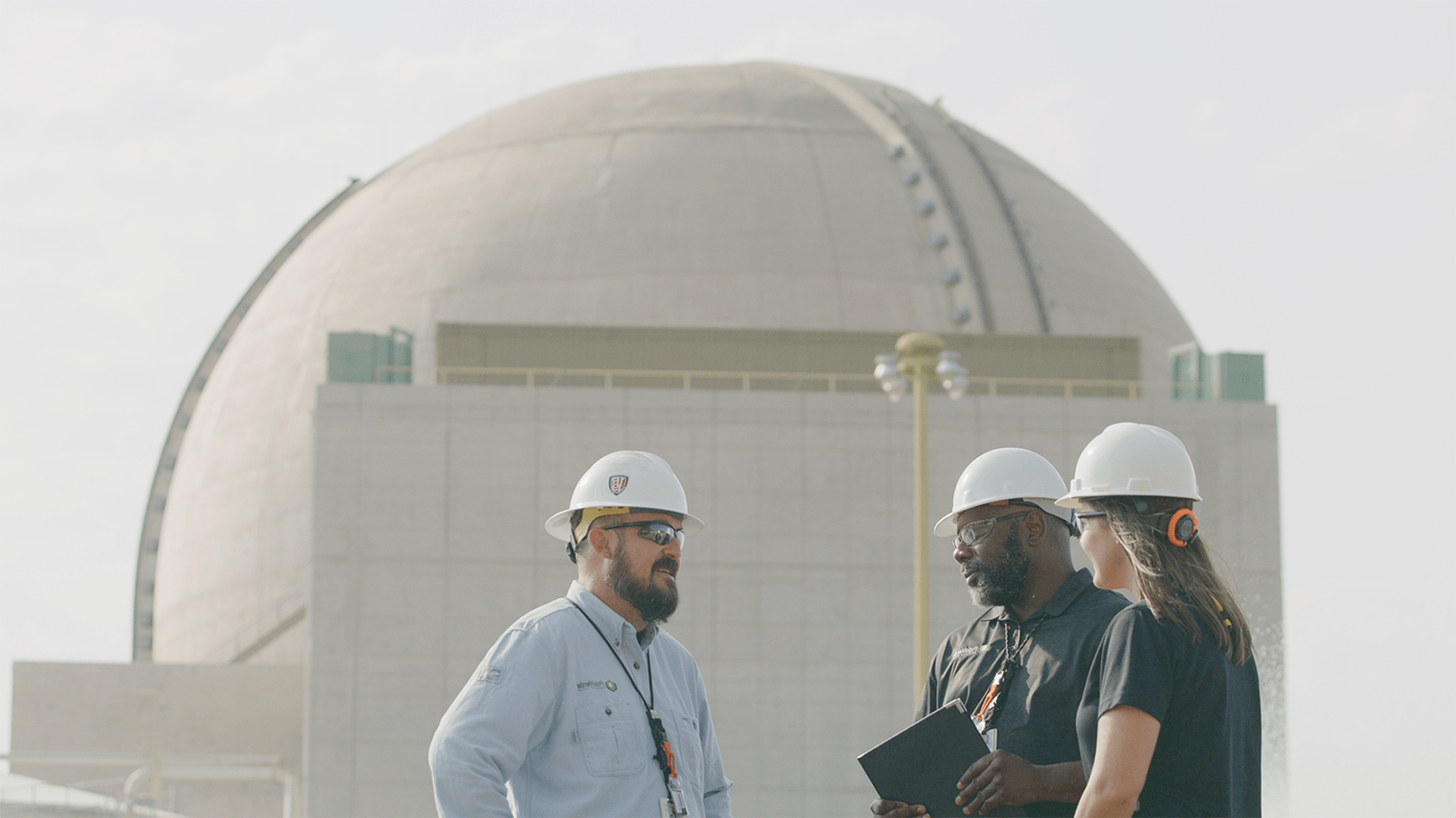
That is a different advantage from selling another solar installation. APS has experience operating a nuclear fleet, maintaining a delivery network and assembling resources that work together. Salt River Project and Tucson Electric Power are regional peers, sometimes partners. Most households cannot simply switch among them as though comparing mobile carriers; service territory generally determines the utility.
The thermostat joins the fleet
Some of APS’s useful equipment belongs to its customers. Cool Rewards connects enrolled smart thermostats so small, temporary temperature adjustments can reduce demand together. In September 2024, APS reported more than 90,000 participating thermostats and roughly 140 megawatts of demand reduction. Participants could override an adjustment without penalty. The company was buying flexibility, a few degrees at a time.
A customer can apply the same timing lesson without joining a program. APS’s Time-of-Use 4pm-7pm Weekdays plan charges more for energy during those weekday hours. Moving laundry, dishwashing or pool pumping can help. The company’s comparison tool uses actual consumption to evaluate plans. That is a better starting point than assuming a cheaper off-peak rate guarantees a cheaper bill.
Same electricity. Different hour.
The limitation is ordinary life. A household with little control over its schedule may struggle to shift demand. Medical needs and safe indoor temperatures come first. APS also offers income-qualified Energy Support discounts, with eligibility rules and monthly caps. Saving money can require choosing a different program, rather than simply trying harder.
The battery lesson came with smoke
Storage addresses another timing problem: charge a battery when electricity is available, discharge it later. But the early history deserves room beside the promise. On April 19, 2019, smoke was reported at APS’s McMicken battery facility in Surprise. About three hours later, shortly after a door was opened, an explosion injured first responders.
The subsequent technical investigation described cascading thermal runaway and accumulated flammable gases. The installed suppression system could not arrest that cascade. The initiating cause was disputed. The practical lesson is broader than a defective component: a storage system needs protection against failure spreading, hazardous gases building up and responders encountering an explosive atmosphere. Batteries also have finite duration. Installed power alone does not tell you how long they can carry a difficult evening.
The bill is part of the machine
Reliability has a price. In February 2024, the Corporation Commission approved a rate decision with an estimated typical residential bill impact of about eight percent. These proceedings determine how investment, operating costs and allowed returns enter customers’ bills. Owned infrastructure and long-term power contracts both create obligations that outlast a summer.
Affordability also has a safety dimension. An April 2026 settlement over APS’s disconnection practices totaled $7 million, funded by shareholders. It restored a 95-degree heat hold outside the existing summer disconnection moratorium and required notification improvements. APS did not admit wrongdoing. Keeping electricity available involves billing procedures as well as generating equipment.
The plan changes when demand does
In August 2025, APS changed its 2050 aspiration from zero-carbon to carbon-neutral, allowing offsets for remaining emissions. By October 2026 it was planning to operate Four Corners, its last coal plant, beyond the earlier 2031 exit. APS says its modeling supports customer savings and reliability; the plant’s lease permits operation through 2038. Continuing coal also means continuing emissions.
Meanwhile, APS, SRP and TEP are studying new nuclear sites. Their June 2026 update said a requested federal grant had not been awarded, but work continued. No construction decision or reactor choice had been made. Costs, schedules, financing and supply chains still matter. The useful idea to copy from APS is matching resources to the hours they must serve. Copying its equipment without its contracts, operating skills or regulatory arrangements would miss much of the system.
APS has announced more than $33 million in automatic November bill credits, about $14 for a typical residential account. The amount varies with usage.