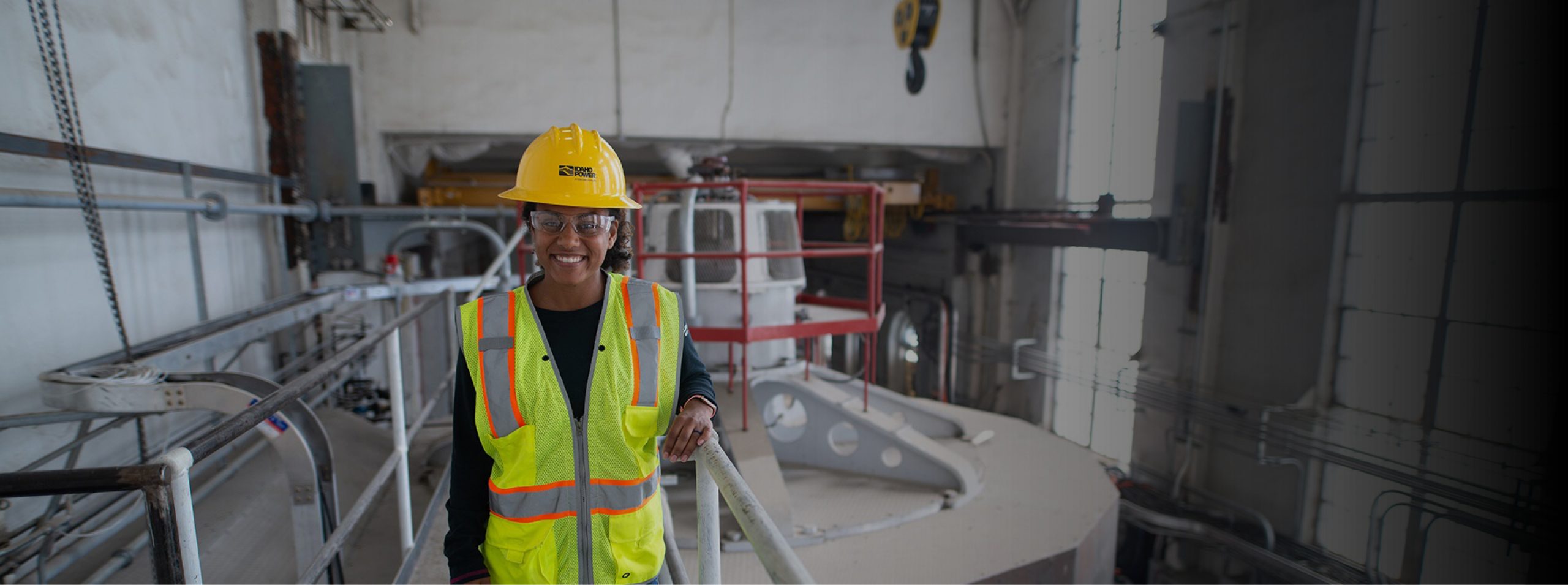
At Idaho Power’s Cascade plant, hydro maintenance specialist Terry Crowell found a generating unit small enough to inspire affection. “You want to hug the unit; it’s pretty tiny,” he told the company’s employee publication. Cascade has just over 12 megawatts of capacity. In the electricity business, apparently, that counts as cuddly.
The remark captures something easily missed in discussions about energy: a power system is a collection of particular machines, in particular places, maintained by people who know their habits. Idaho Power’s next chapter depends on making those machines work together as the region around them grows.
- Hydropower gives Idaho Power an established base of generation.
- Batteries and transmission help match electricity to the hours and places that need it.
- Growth brings construction bills, regulatory scrutiny and choices about who pays.
A company assembled from trouble
Idaho Power began operating in 1916, after five predecessor companies were consolidated. The origin was less romantic than a lone inventor beside a waterfall. The National Park Service’s engineering history describes ruinous competition, financial distress and networks that needed connecting.
In the Boise Valley, competitors had sold service contracts at extremely low rates, sometimes without controlling the generation needed to supply them. One predecessor entered receivership in 1913. Electricity had customers; the businesses supplying it still struggled to pay their bills. Idaho Power’s early work included joining transmission systems and eliminating duplicate facilities.
That history matters because today’s company still solves a coordination problem. It generates and buys electricity, moves it over transmission lines, and distributes it to homes, businesses and farms. Its expertise spans river operations, electrical engineering, maintenance, forecasting and the regulatory work that turns a proposed project into an operating asset.
The afternoon is the problem
Consider an irrigation pump. It does useful work, but its usefulness does not guarantee a convenient schedule. In summer, pumps and air conditioners can want electricity together. A utility must serve the resulting peak even if that level of demand lasts only a fraction of the year.
Idaho Power’s reported summer peak reached 3,793 MW on July 22, 2024. Its winter record, set that January, was 2,719 MW. The difference helps explain why a discussion about electricity supply quickly becomes a discussion about timing.
Batteries address part of that mismatch. They charge when demand is lower and discharge when customers need more power. In June 2026, Idaho Power brought another 250 MW of batteries online. That figure describes power capacity, not how many hours the batteries can sustain it.
Storage shifts electricity. Something still has to generate it.
Two regions. Different seasons.
Boardman to Hemingway, or B2H, tackles geography. The approximately 290-mile, 500-kilovolt transmission line will connect eastern Oregon and southwestern Idaho. The Pacific Northwest’s winter demand and the Mountain West’s summer demand offer an opportunity to share resources across seasons.
The line is designed to carry up to 1,000 MW in either direction. Idaho Power owns 45%; PacifiCorp owns 55%. Construction began in 2025, with operation scheduled for late 2027. The concept appeared in Idaho Power’s resource planning in 2006. Even allowing for the scale of the undertaking, this is a long time to wait for a wire.
Engineering was only part of the work. The company revised its route following community input. Permits, land rights and legal challenges shaped the project’s calendar. The practical lesson for anyone building consequential infrastructure is specific: listening can change the route, and a route on paper is a long way from permission to build.
The bill arrives before the benefit
Idaho Power reported $1.083 billion in capital expenditures for 2025, excluding allowance for funds used during construction, an accounting measure associated with financing. In July 2026, its parent retained a forecast of $1.3 billion to $1.5 billion for the year. Those are company-wide construction figures, not the price of B2H or the June batteries alone.
As an investor-owned utility within IDACORP, Idaho Power sells electricity under regulated rates. Regulators review costs and the return investors may earn. Customers cannot generally swap to a neighboring utility as they might change mobile carriers. Affordability therefore depends heavily on planning, oversight and execution.
The hydroelectric fleet is a distinctive inheritance, but water does not remove uncertainty. Drought can reduce generation. Transmission can be delayed. Batteries need charging energy. Idaho Power’s current plans include natural gas investment while it evaluates the technologies needed for its longer-term clean generation aspiration.
Pay the pump to pause
Customers have a role beyond receiving the bill. Irrigation Peak Rewards offers credits to farmers who allow temporary pump shutoffs during extreme peak use. Efficiency incentives support improvements to existing pumping systems. Businesses can investigate equipment incentives; households can use account tools and energy-saving programs to understand and reduce consumption.
The transferable idea is to examine expensive hours before buying more capacity. A business with flexible equipment schedules can ask what work can move. A farm must also consider crop needs, water delivery and operating constraints. Interruptions only help when the customer can tolerate them; a theoretical saving is useless if the practical cost is larger.
Leading that work is Lisa Grow, president and CEO since June 2020. She joined Idaho Power in 1987 after studying electrical engineering. Her career connects the company’s plant-level technical knowledge with decisions about what the system should become.

A smaller retail map, a larger grid
In May 2026, Idaho Power and Oregon Trail Electric Cooperative sought approval for a distribution-system transfer with a $154 million base price. Roughly 20,000 Oregon customers would become cooperative members. Idaho Power would retain generation and major transmission assets. The proposed transaction targets an early 2027 close, subject to approvals.
That distinction brings the story back to the machinery. Who sends a household its bill can change while the broader network remains interconnected. At Cascade, someone still has to inspect the generating units. Across the region, someone must arrange for the right amount of electricity to arrive at the right time.
Follow the current
Watch: a closer look at Bliss Dam. Explore irrigation programs and B2H project updates.