The trouble began with instruments and water. In February 2011, a cold spell reached El Paso, and equipment inside the desert city’s power plants froze. Generators shut down. Rolling blackouts followed. Here was an awkward discovery for an electric company: a system built to produce enormous amounts of power could be undone by the small things it depended on.
- A 2011 freeze prompted $4.5 million in repairs and winterization.
- Solar plus batteries now helps EPE shift electricity into hours when it is needed.
- A home battery pilot tests whether local capacity can arrive faster than conventional expansion.
The small things froze first
El Paso Electric’s response was concrete. It repaired and improved winter protection at older plants, spending a reported $4.5 million. Newer generating equipment incorporated cold-weather protection. The useful lesson was almost embarrassingly practical: inspect the little dependencies before buying another big machine.
When Texas froze again in 2021, EPE had more ways to respond. Its Montana station could burn fuel oil when natural gas became difficult to obtain. Its connection to the Western grid allowed purchases beyond the region. El Paso also experienced less severe conditions than other parts of Texas. Preparation mattered; so did geography and the weather itself.
Instruments and water
Rolling outages
Repairs + winterization
That distinction matters to anyone hoping to copy the result. Insulation cannot create an available fuel supply. A grid connection cannot conjure spare electricity if neighboring systems are short, too. The transferable habit is to trace failures across equipment, fuel and outside supply, then prepare for their overlap.
A streetcar company with a very long extension cord
EPE began operating in 1901 as the El Paso Electric Railway Company. Its streetcars initially relied on mules; electric trolleys replaced them in 1902. By 1925, producing and distributing electricity had become the central business. The company changed its name accordingly. Transportation had introduced the region to a product with considerably more uses than moving passengers.
Today EPE generates, transmits and delivers electricity across West Texas and southern New Mexico. Its October 2026 announcement puts the customer count at approximately 473,000. Homes, shops and public institutions share a system that stretches from Hatch to Van Horn. Its expertise sits in the connections: power stations, purchased supply, transmission, substations and the lines reaching individual customers.
This is a regulated territorial business. Most customers cannot shop for another utility using EPE’s wires. Rates and investment recovery face regulatory review. The company earns money selling electricity, including wholesale power, while planning infrastructure expected to work for years. Its meaningful differences include its Western grid connection and regional supply portfolio. They do not amount to a retail sales pitch against interchangeable competitors.
“My request to the community is, get to know us again.”
Kelly Tomblin / 2020 interview
The financial risks have teeth. EPE entered bankruptcy in 1992 after nuclear investment, rate constraints and unsuccessful diversification helped strain the business. One diversification was furniture manufacturing. In 2020, Infrastructure Investments Fund acquired the utility in a transaction valued at $4.3 billion, including debt. Commitments included keeping its headquarters local and dedicating $100 million to regional economic development over specified periods.
Sunshine needs a night shift
The desert offers sunshine. Customers require electricity on a schedule of their own. Milagro, near Santa Teresa, tackles that mismatch. EDF announced commercial operations in September 2025: 150 megawatts of solar capacity, measured on the panels’ DC side, paired with a 75-megawatt AC battery system rated for four hours. EPE buys the project’s electricity under a 20-year agreement.
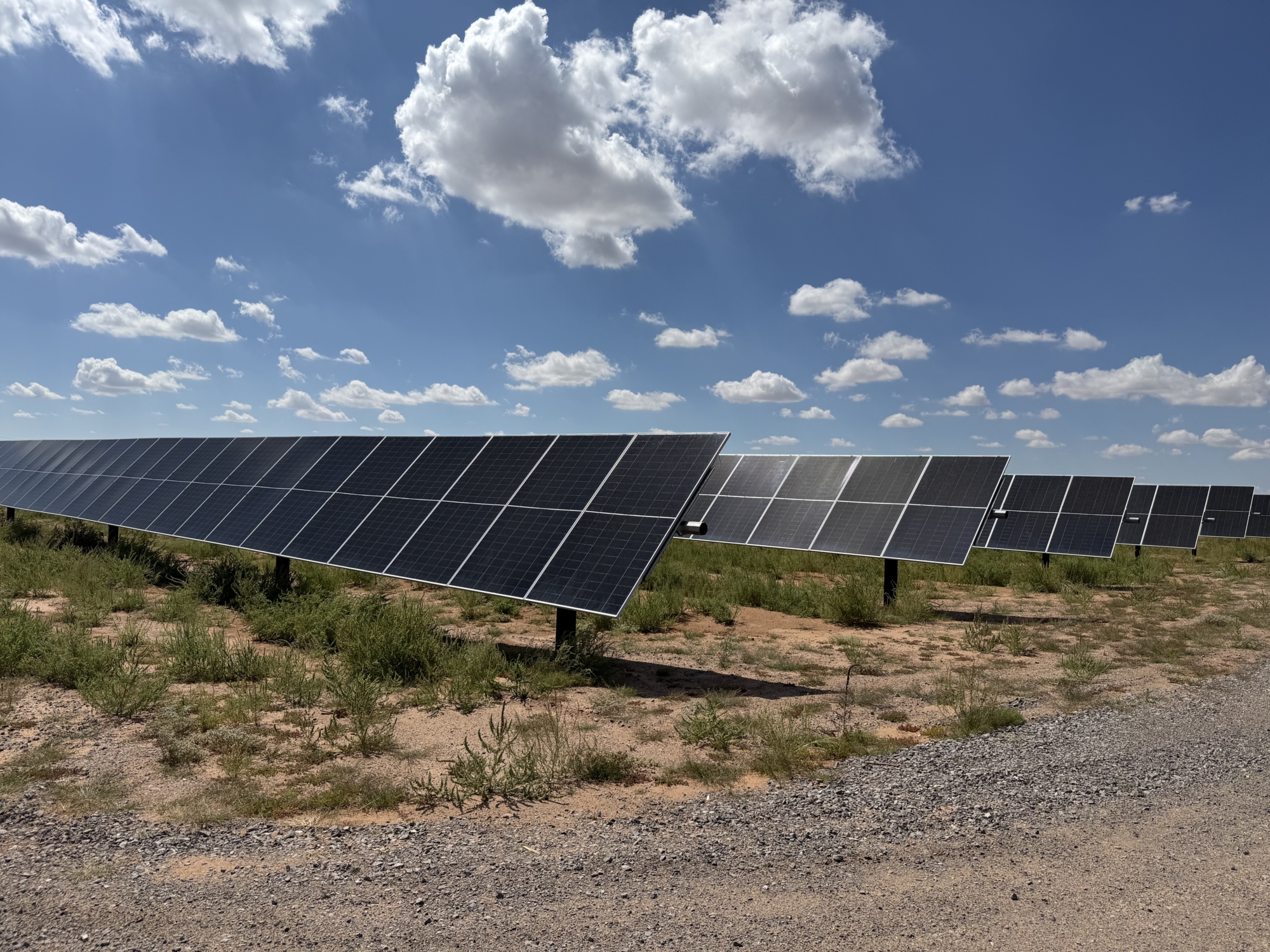
Four hours at 75 megawatts means a nominal 300 megawatt-hours of storage. Power measures delivery speed; energy measures how much can be delivered. The battery can help cover an evening ramp. It cannot sustain that full output indefinitely through a prolonged shortage. Nor should the panel and battery ratings be added together and advertised as continuous supply.
Four hours at rated battery output. A finite reserve, useful at the right time.
Your yard joins the grid
In March 2026, EPE announced the first installation in its Base Power home battery pilot. The procurement sought up to 10 megawatts of residential storage. These batteries give the utility dispatchable capacity in selected areas where conventional expansion is constrained, while providing participating homes with backup.
The offer deserves a careful read. Qualifying Texas homeowners can host batteries with installation and maintenance at no cost. The first 500 installed homeowners were offered $250 per battery, up to $500. Base’s published terms specify ten years of hosting; early removal can cost $250 per battery. EPE remains the electricity provider. Backup duration depends on consumption and the system installed.
There are less involved ways to participate. Texas Shared Solar offers subscriptions without rooftop equipment, including access for renters. Its residential Community Solar program is currently listed as fully subscribed. Energy-efficiency programs offer another route: qualifying improvements, discounted products and income-based assistance vary by state. Customers should start with the program for their address.
The bill arrives, too
Reliability has a price, and permission to spend does not automatically mean permission to recover every dollar. In February 2026, EPE said its rate filing sought recovery of approximately $1.55 billion in infrastructure investment. It reported receiving a 9.4 percent authorized return on equity against a requested 10.7 percent. Those are the company’s account of the decision and its investment argument.
That same month, EPE announced roughly $40 million in Texas fuel refunds, tied to surplus generation sales, for March through May bills. The contrast captures utility economics: building capacity costs money; having capacity at the right moment can return value.
Eli Viamontes is scheduled to succeed Kelly Tomblin as CEO on November 9, 2026. He inherits a familiar assignment: prepare for the bad hour without making every ordinary hour unaffordable. The frozen instruments of 2011 remain a useful place to start.