AJ Osborne used to visit the Idaho Statesman building on school trips. Years later, he returned with a rather different assignment: buy the place and work out how to fill it with storage units. A childhood destination had become a property deal. The newspaper building would keep much of its familiar face; behind it, the business would change almost completely.
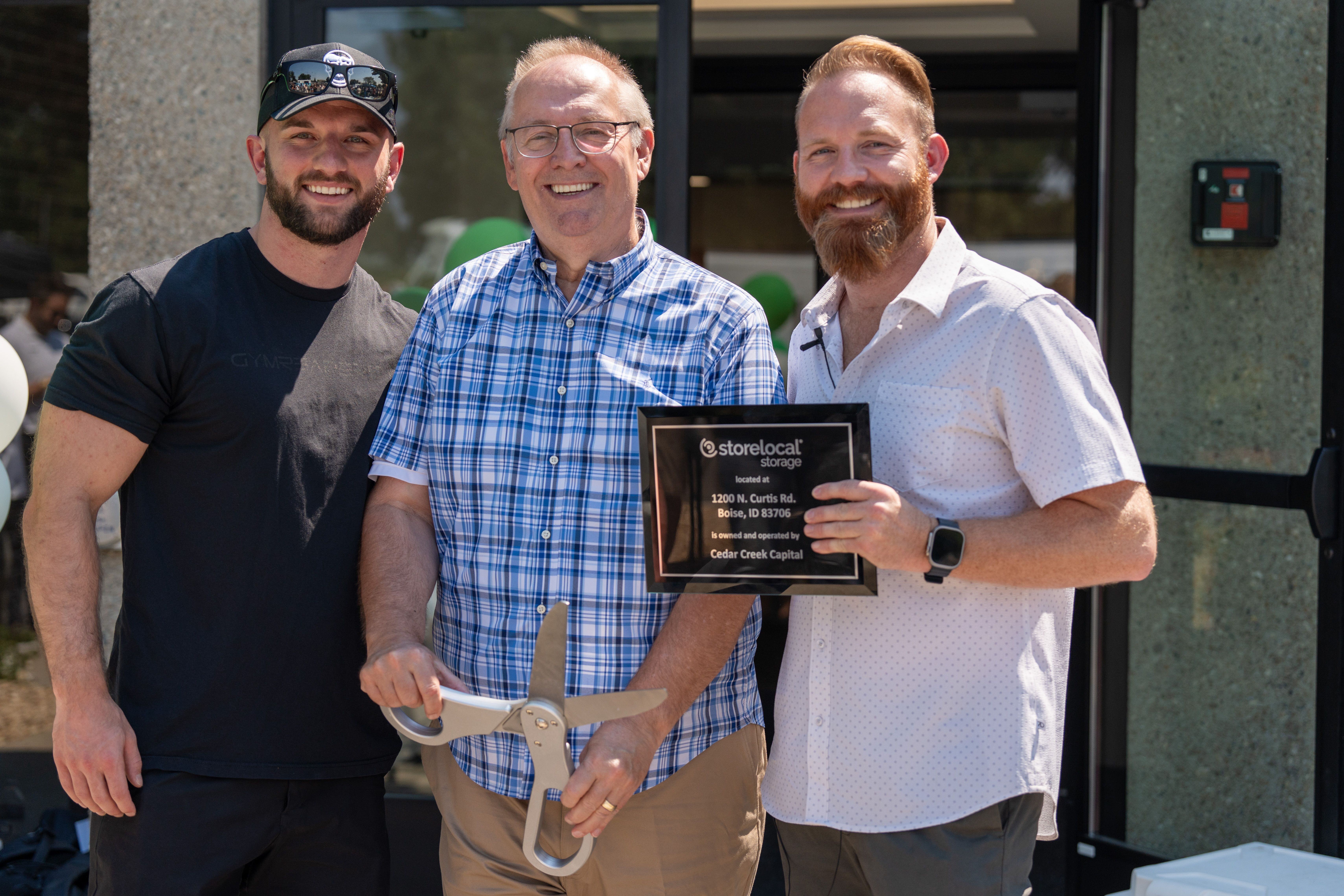
Osborne and his father, Ron, helped convert the Boise landmark into Storelocal Storage. The project earned the 2024 Conversion Facility of the Year award. It is a useful place to begin with Osborne, because it puts his ideas into concrete, hallways, doors, and an old building that refused to make the job straightforward.
There is something pleasingly literal about turning a newspaper office into a place for keeping things. Yesterday’s news has always had trouble leaving the house. Osborne, however, is interested in what happens after the joke: who finds the building, how they rent a unit, what they pay, and whether the whole operation works when its owner goes home.
How much of a property’s performance can its operator actually change?
The insurance salesman’s arithmetic
Before storage, there was insurance. Osborne followed Ron into the trade, having watched his father sell policies around Idaho. Ron had grown up without running water in a small farming community. Insurance gave him a way to change the family’s circumstances. For his son, selling was familiar work with an unusually persuasive example sitting across the table.
AJ’s early career at Aflac included a job processing claims. By his own account, he was terrible at it. His employers found that clients liked him, though, and steered him toward sales. It is an agreeable career correction: sometimes the person who should not be trusted with the paperwork should be introduced to the customer.
He enjoyed selling and earned well. Yet a larger income left him with a problem he could describe in very small words. Stop working, stop earning. The size of a commission did little to change that relationship. He wanted recurring revenue that could keep arriving without another appointment in his diary.
He and his wife, Tessa, had already learned to live cautiously. Early on, her restaurant tips helped support them; later, they continued living on a fraction of what came in. An unpredictable income made restraint practical. The savings gave them something to invest.
A business education, with a detour to Brazil
Osborne grew up in rural Idaho, with mountains and backcountry fishing close at hand. His education moved quickly: he passed his high school equivalency test, attended Brigham Young University’s Idaho campus, and earned a Bachelor of Arts in Business. He also spent two years in São Paulo on a mission, living with Brazilians and learning Portuguese.
The language became familiar enough that he began dreaming in it. He wanted to stay; his parents wanted him to return and finish school. The episode adds a welcome complication to the picture of an Idaho property investor. Long before discussing software with storage owners, he had practiced the more basic work of finding his way in someone else’s world.
What the roll-up door conceals
Storage offered Osborne a combination he liked: a property that could produce recurring income, and a business whose performance could be improved. His father and a partner had bought a small Idaho facility before the 2008 financial crisis. The family’s storage work grew from those early purchases into a much broader operating business.
The attractions did not make every purchase a success. Osborne has talked openly about losing money on his first deal. It is a useful detail in a career now expressed through portfolio totals. He learned the work through transactions, including one that would look less attractive in a celebration slideshow.
His emphasis gradually settled on the systems around the property. He has discussed documenting work, assigning it to people equipped to do it, and examining how a founder spends the day. A business that relies on its owner to make every decision has an obvious limit: the owner.
For Osborne, the operating details include marketing, pricing, and turning an inquiry into a paying customer. A facility can have available units and still be hard to discover. A full building can still have poorly managed prices. These are the kinds of gaps he looks for when considering an underperforming property.
His interest in visibility is especially revealing. Customers do not inspect every option in a market. They choose among the options they find. A better website, clearer information, and a smoother rental process can therefore matter alongside location. Osborne’s version of property investing leaves a surprisingly large role for the customer’s impatience.
A newspaper building has opinions
The Statesman conversion gave those ideas a physical test. The property covered roughly 115,000 square feet. Keeping the exterior familiar while remaking the interior involved an architect, a construction team, and partners supplying doors, access technology, and software. Buying the building was only the beginning of the job.
The conversion took three years, a year longer than expected. The team had planned to open in phases, but fire suppression requirements complicated that ambition. Such details put some welcome weight beneath the phrase “value-add.” A spreadsheet can accommodate a new layout in seconds. A building generally expects a longer conversation.
Osborne’s connection to the place was personal, but the outcome depended on a group of specialists. His father was part of it; so were architect Chuck Tookey, Forge Building Company, Janus International, and Tenant Inc. The building’s second use required a collection of people who understood different parts of the first.
The independent owner’s software problem
Osborne’s interests extend into the tools storage businesses use. He co-founded Tenant Inc. and helped establish Storelocal, a cooperative intended to give independent operators access to services and capabilities they might struggle to assemble alone. He wants smaller owners to have a chance to compete with much larger organizations.
That ambition explains why a conversation about his properties can turn into a conversation about technology. Software connects the rental process with the daily work of managing units and customers. When those pieces fit poorly, the owner has more work to do and the customer has more opportunities to give up.
There is an understandable tension here. Osborne runs a growing investment business while advocating tools for other operators. His answer is that a more capable independent sector benefits the wider industry. He sees room for a substantial company and for smaller owners with access to useful infrastructure. The cooperative is a practical expression of that view.
“I’m a total self-storage nerd.”
AJ Osborne, on his chosen subject
The teacher still has properties to run
His public work has its own machinery: the Self Storage Income podcast, YouTube videos, a newsletter, conference appearances, and books. The Investor’s Guide to Growing Wealth in Self Storage appeared in 2020. Growing Wealth in Self-Storage 2.0 followed in 2024, extending the instruction into a changed market.
The topics are often reassuringly specific. A 2025 live-event discussion brought Osborne together with Travis Morrow and Lance Watkins to consider where smaller investors could operate alongside larger firms. The emphasis included market analysis and technology. These are working questions for an owner, even when the microphone makes them sound like a media product.
Teaching also keeps Osborne in contact with other people working in the field. He has described education as a source of opportunities, relationships, and better operators for the business. The audience and the portfolio serve related purposes. Explaining the work gives him more ways to meet people who do it.
Learning to send the shorter update
One of Osborne’s more candid lessons concerns investors. He initially sent updates as an operator might speak to another operator: detailed explanations of what was happening at the property. He came to recognize that investors needed a clearer account of what those developments meant for their money and their timing.
More detail had sometimes produced more confusion. He has since argued for concise, consistent communication, including an early acknowledgment when a problem is still being worked out. He also distinguishes between matters his team can control and conditions it cannot. The change is modest in appearance and substantial in responsibility.
It suits a founder who enjoys explaining things to admit that explanation can become excessive. Knowing a business well does not automatically make another person understand it. Sometimes the difficult professional skill is deciding which fifteen minutes of your fascinating account the listener can comfortably live without.
A fishing trip belongs in the calculation
By September 2026, Osborne was discussing purchases from developers who had completed facilities and then struggled to obtain longer-term financing. He described buying below replacement cost and expected more opportunities ahead. These were his judgments about a difficult market, with financing and the ability to operate figuring heavily in the discussion.
Outside those conversations, his newsletter makes room for a smaller itinerary. In June 2026, he wrote about looking forward to time with his children, fly fishing, and a family barbecue at his father’s house. Ron remains both a parent and a business partner. The family connection runs through the work and through the weekend.
That is a useful way to read Osborne’s interest in recurring income. He has spent years building businesses meant to loosen the connection between each hour worked and each dollar earned. A former newspaper building in Boise now holds part of that effort. A day fishing with his children gives it a destination.