The origin story begins with a locked door. One Sunday, Anna Luisa Schaffgotsch travelled to her office to collect documents and arrived without her key card. Retrieving it meant a two-hour round trip. Irritation supplied the first question: surely there was a better way to get into a building. Her search turned up implants. The door soon became the least interesting part of the idea.
Schaffgotsch started wondering what a small device beneath the skin might do beyond proving identity. Could it carry useful information? Could it read a signal from inside the body? Those questions joined two halves of her working life. She had studied biosciences and biotechnology, then built commercial experience around bioinformatics and pharmaceutical supply chains. She understood enough science to see the possibility and enough business to know that possibility needs a buyer, a pathway and a reason to exist.
In April 2019, she founded Impli in London. The company began with a personal implantable device that stored medical identity information on a digital platform. It launched in January 2020. Two months later, the world closed.
A launch with terrible timing
The first product had taken a year to build. The pandemic made its planned route untenable almost immediately. Schaffgotsch later described the sequence with bracing economy: the company launched in March 2020 and shut down in March 2020. A neat sentence can disguise an ugly stretch of calendar.
Impli did not disappear. Its team redirected the technology toward clinical biosensing and spent six months working punishingly long days. Funding was absent through much of the crisis. The original product changed, but the underlying curiosity survived: useful information could be gathered closer to its source, and a device could make that information available at the moment it mattered.
“Putting something into the world that isn’t already there - that fascinates me.”Anna Luisa Schaffgotsch
Her response to the setback offers a sharper lesson than the usual hymn to stubbornness. She held the premise firmly and the product lightly. There is a difference. A founder can spend years defending the first answer to a good question, or keep the question alive long enough to find a better answer. Impli chose the latter.
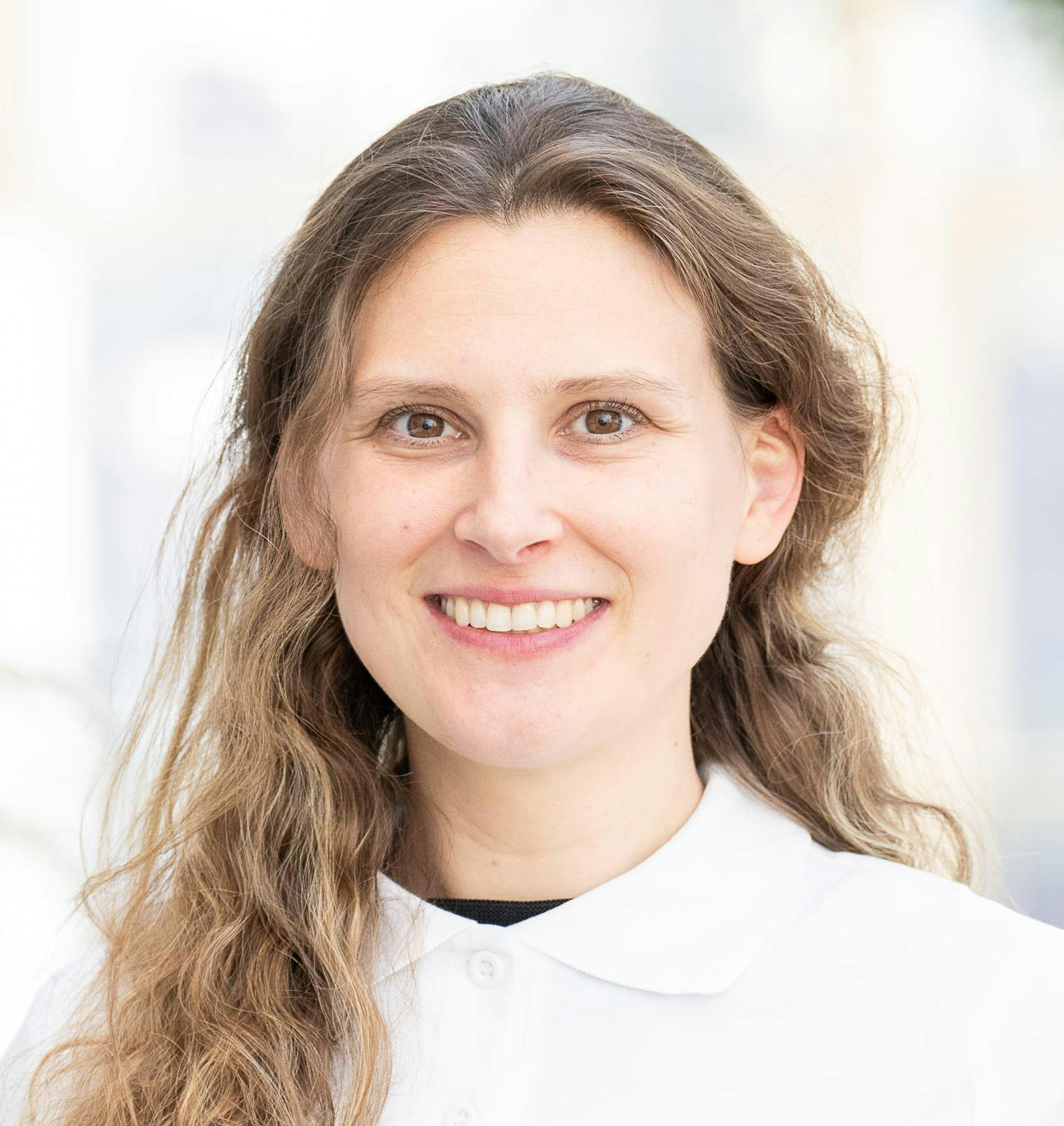
The founder at the intersection
Schaffgotsch did not grow up expecting to become an entrepreneur. At university, a business module interrupted the bioscience syllabus and she fell for the activity of making an idea concrete. She has said that she writes business plans for fun, a confession so wonderfully specific that it doubles as a character sketch. Some people complete crosswords. Schaffgotsch apparently relaxes with market structure.
Her formal training supplied depth. She earned a BSc with honours in Nutrition and Food Sciences from the University of Nottingham, followed by an MSc in Biotechnology at Imperial College London, with a focus on synthetic biology and biophysics. Her commercial apprenticeship came next: developing strategy for a German bioinformatics startup and helping scale the European business of an American pharmaceutical supply-chain company. Public profiles also place her at TraceLink.
That combination explains her most transferable advice. In life sciences, research without a business case can become expensive knowledge. A business case without research can become expensive fiction. The work belongs at the intersection, with each side able to withstand serious questions from the other.
Name it plainly
A complex technology still needs a crisp account of whose problem it solves.
Earn the claim
The commercial story should become stronger as the research becomes more rigorous.
Keep deciding
Schaffgotsch favours progress and warns that sitting too long on information can stall a company.
Build the pack
Advocates, colleagues and partners carried Impli through the period when certainty was scarce.
Her 2023 working routine makes the intersection visible. She would arrive at Scale Space in London around eight, get coffee and spend an hour reading the latest peer-reviewed work in Impli’s field. At nine came what she called “Zoom-mania”: the lab check-in, urgent decisions, hiring, investment conversations, data gathering and the work of directing a company whose parts stretch across borders.
A company with two maps
Impli’s geography is part of its operating system. London puts the company near Imperial College, research talent and clinical collaborators. Schaffgotsch has praised the short distance between the White City campus and nearby institutions because difficult work becomes easier when collaborators can actually meet. Switzerland brought a different set of advantages: manufacturing capability, specialist programmes and a life-sciences network around Lausanne.
The company joined Biopôle’s Vanguard Accelerator in 2021, using the programme to integrate into the Swiss ecosystem and meet the people it needed rather than replay general startup lessons. Impli AG was registered in Switzerland in 2022, with Schaffgotsch as president of its board. By 2023, she was describing the Swiss production base as essential to the company’s progress.
Illustration only. Impli’s thesis is that a sequence can reveal a pattern that isolated readings miss.
This is a practical model for frontier companies. Instead of asking which famous city ought to appear beneath the logo, ask what the work requires. Put research near research, manufacturing near manufacturing and the company near people willing to share hard-won expertise. Impli became less a headquarters than a deliberately assembled route between capabilities.
The human infrastructure
Schaffgotsch’s public language returns repeatedly to teams, advocates and ecosystems. During the pandemic, supportive people kept telling the Impli group that a route forward existed. She has called the team her proudest achievement and observed, without ornament, that there is no company without one. Several colleagues stayed for years through the unfunded stretch.
That emphasis complicates the popular portrait of founder endurance. Endurance is often drawn as an individual with heroic lung capacity. Schaffgotsch completed a triathlon, so she knows something about lungs. Yet her company’s survival story is social. People supplied perspective when a bad month could masquerade as a final verdict. Partners contributed knowledge the company could not manufacture alone. Investors and accelerators opened rooms. The founder kept the group moving, but the group made movement possible.
“I’m most proud of our team and the way we pull together. There is no company without a team.”Anna Luisa Schaffgotsch
Her own advice to young entrepreneurs holds urgency and restraint in the same hand. Act quickly. Expect pressure. Hear feedback you would prefer not to hear. Keep going when someone says the idea is crazy. She also warns against working so hard that perspective collapses. The founder who once described days running from seven in the morning until midnight also learned to make room for joy.
For Schaffgotsch, joy has a list. She keeps a bucket list and works through it. By 2022 it had produced trumpet lessons, a triathlon and plans for a ski tour in the Dolomites. The trumpet is a delightful counterweight to the lab: another complicated instrument, another signal produced by breath, patience and repeated embarrassment in private.
Seven years of useful motion
Schaffgotsch founds Impli in London, turning an interest in implants into a company.
The first product launches, the pandemic closes its route, and the team redirects toward clinical biosensing.
Impli enters Biopôle’s Vanguard programme and establishes a Swiss corporate presence.
The company reports $1.2 million in pre-seed funding; Schaffgotsch joins the Venture Leaders Medtech cohort.
A £1.4 million NIHR i4i award backs a 30-month consortium programme around Impli’s BEAM biosensor.
By June 2026, the company had secured a £1.4 million NIHR i4i grant for a 30-month programme bringing together Impli, Imperial College Healthcare NHS Trust, King’s College London, Fertility Europe and specialist manufacturer TTP. The goal is to move the BEAM microneedle biosensor from prototype toward first-in-human clinical validation. The award gives Impli funding, a defined programme and something deep tech always needs more of: a structured way to turn a claim into evidence.
Schaffgotsch has also begun writing publicly about the strategic choices behind Impli: why the company chose its first market, how mission meets commercial reality and what responsible building looks like in a personal field. The move suits a founder who enjoys the architecture of a business plan. It opens the notebook without pretending the messy middle has become tidy.
The forgotten key card remains useful because it is so modest. No thunderclap arrived. A practical inconvenience met a mind prepared to keep asking questions. The first answer opened a door. The next suggested a company. The pandemic rejected the first product, but the larger idea kept travelling, from London laboratories to Swiss manufacturing networks and into a consortium built to test what comes next.
Schaffgotsch’s story is still in the evidence-building chapter. That may be the most honest place to leave it. Deep tech advances through claims that survive contact with experiments, institutions, regulators, budgets and time. Her particular talent has been to keep those worlds in conversation. The signal is rarely one dramatic moment. It is the pattern made by many stubborn, intelligent decisions in sequence.