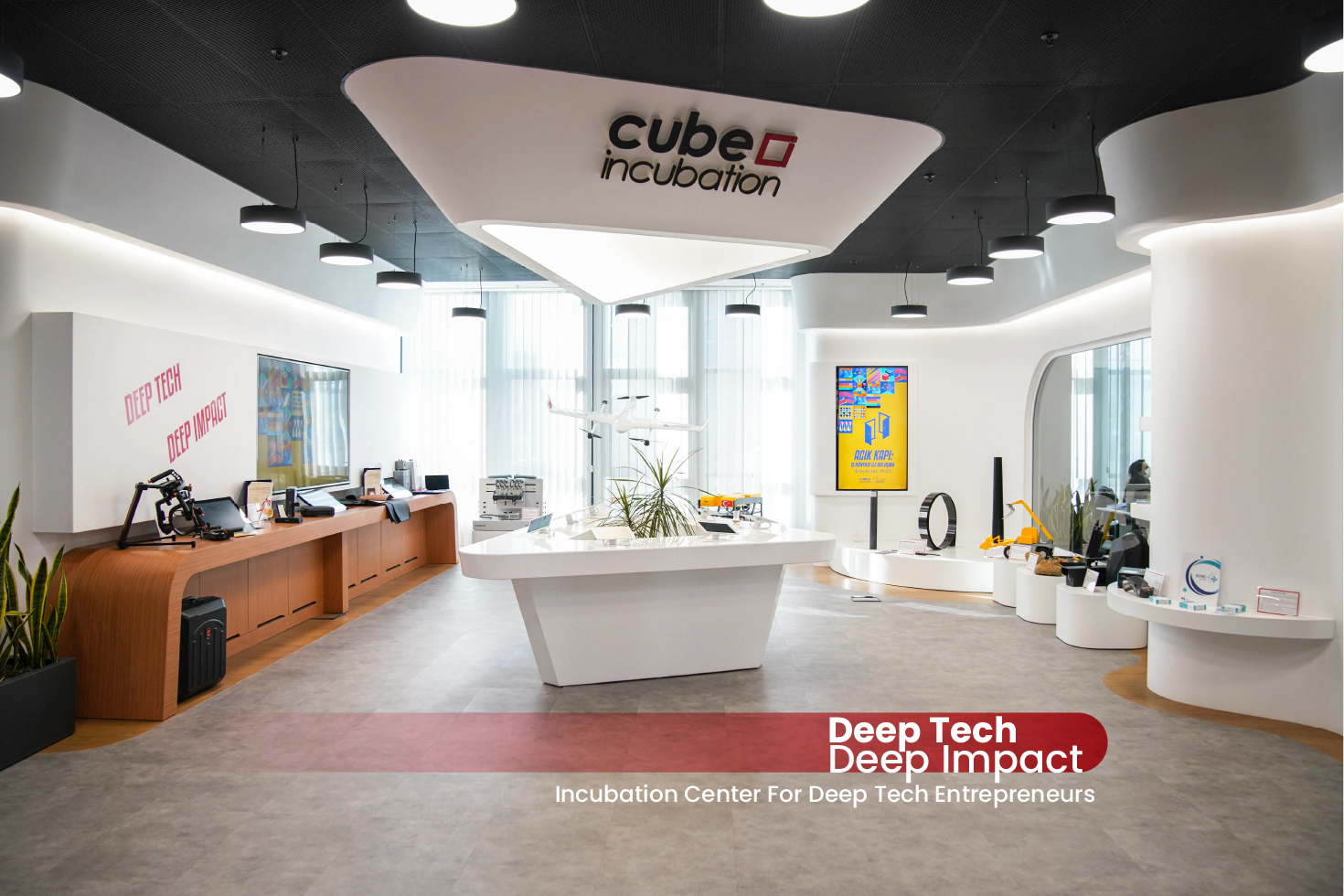
A clean room is an awkward thing to put on a startup’s shopping list. Before the first reliable customer arrives, a young technology company may need controlled laboratory space, specialist equipment and people who know what to do when an experiment misbehaves. Cube Incubation, the entrepreneurship arm of Teknopark İstanbul, has built its proposition around that uncomfortable interval between an interesting idea and something a buyer will pay for.
Its menu makes the point with unusual clarity: laboratories, clean rooms, an assembly workshop and a dark room for quantum studies sit alongside mentoring and investor introductions. The address matters because the neighbors matter. Founders work within a technology park whose industrial relationships can help them find expertise, test a proposition and meet companies with a reason to care about the result.
Cube began operating in 2014. Its stated purpose is to support deep-technology entrepreneurship, with programs organized around a venture’s stage, sector and international ambitions. In practice, that means working on two problems at once: making the technology function and making a company out of it. A working device can answer the first question while leaving the second almost untouched.
The expensive part comes before the applause
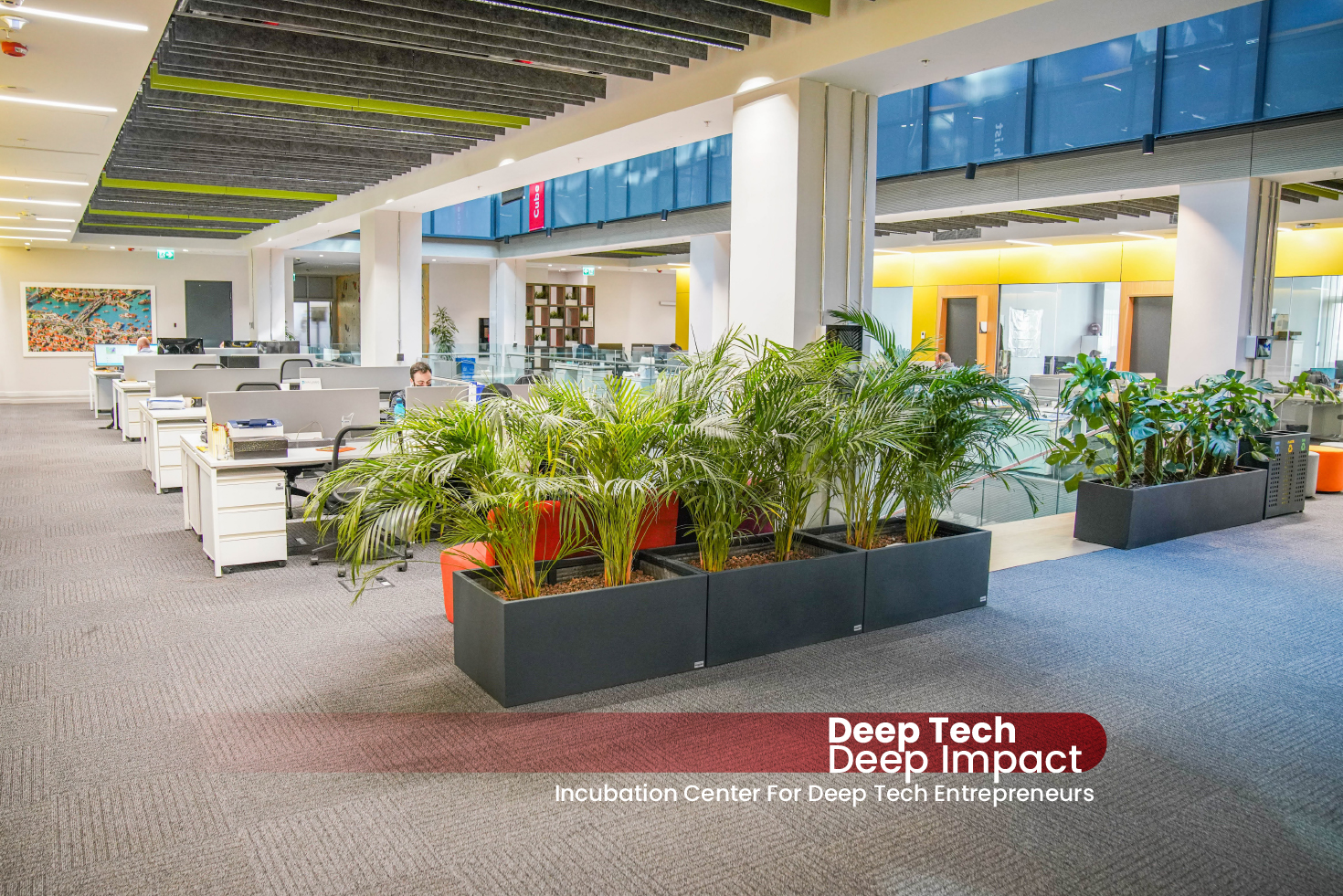
In September 2021, Teknopark İstanbul opened a new, 10,000-square-meter center for Cube after investing more than 100 million Turkish lira. The announcement put more than 25 million lira into the biotechnology floor alone. Those are historical investment figures in the currency of the time, not estimates of what the same construction would cost today.
The opening announcement also described plans for 12 wet and dry laboratories and eight clean rooms, alongside space for more than 250 entrepreneurial groups. It was a substantial physical commitment to businesses whose development work could require considerably more than a laptop. The shared-space model lets founders seek access to infrastructure without first financing an entire facility themselves.
Money for buildings and money for startups were separate parts of that announcement. Teknopark İstanbul said it had begun work on a 105 million lira deep-technology venture investment fund, aimed at ventures in prototyping, sales and growth. The distinction is useful: a room in an incubator, an introduction to an investor and an investment are three different things.
Before the company, then up to three years inside it
The front door opens before incorporation. Cube’s pre-incubation program runs online for six months and targets individuals or small teams with an idea or project that is not yet ready to become a business. Its curriculum includes business models, research techniques, intellectual property and presentation skills. Mentoring and performance discussions lead toward a demo day.
That sequence gives an applicant something concrete to do with an uncertain idea. Research the problem. Explain the business. Learn to describe the proposed product to somebody outside the founding team. A demo-day presentation is the visible endpoint, but the preparatory work is the more transferable part of the offer.
The dedicated incubation program addresses technology companies being established or less than three years old. It offers support for up to 36 months, with a roadmap adjusted to each venture’s level and needs. Training spans sales, finance, manufacturing, law and management. Office access, meeting rooms, laboratory facilities and investor preparation sit in the same package.
Idea, research, business model
Young technology companies
Industrial MVPs and prototypes
Separate program options, not a compulsory sequence.
Applicants should read the specific offer carefully. Cube’s broader facilities material also describes an 18-month office arrangement, while the dedicated incubation page specifies a longer support window. A founder’s useful unit of comparison is the actual program agreement: duration, workspace, equipment access and participation requirements belong together.
The first customer is part of the curriculum
Founder accounts explain what those business-development services can mean. BacPolyZyme founder Dilek Kazan describes learning how to think commercially and bring scientific work into the market. Her biotechnology company works with biological materials and processes; the incubator’s contribution, in her telling, included infrastructure and a connection to industry.
“They enabled us to become part of industry and commerce.”
Dilek Kazan, BacPolyZyme founder
From Cube’s published testimonial, translated from Turkish
B2Metric co-founder Murat Hacıoğlu makes a similar point about a different product. His company develops AI analytics software, including applications for insurance and finance. He credits Cube with helping the team understand the steps toward its first customers, market research and sales techniques while development continued.
CET founder Ömer Güven, whose business develops performance epoxy systems, describes access to companies and meetings that helped create opportunities for pilot applications outside the park. These are founder testimonials published by the incubator, so they are best read as accounts of particular experiences. Their common thread is clear enough: scientists and engineers can need help organizing a sale as much as organizing an experiment.
A factory problem beats a vague innovation brief
Cube’s corporate programs bring that customer question into sharper focus. HAVELSAN Jet Cube targets defense, dual-use and AI ventures, both incorporated and unincorporated. Its published 2026 offer describes six months of support, including technical mentoring, testing and measurement access, product validation, investor meetings and customer matching.
HAVELSAN’s potential role as a first customer is particularly significant. The program links technical development to the possibility of entering a larger company’s supply chain. That is a commercial opportunity rather than a guaranteed order, but it gives founders a more specific audience for their product decisions than an all-purpose networking event would.
Cube Hangar Pro, run with Turkish Aerospace, or TUSAŞ, goes further into the factory. The nine-month online accelerator is aimed at unincorporated teams developing an MVP or prototype in digital transformation. Its brief includes predictive maintenance, AI-assisted quality inspection, manufacturing software and robotic deburring or polishing.
Even the inspection examples are concrete: checking markings, hole positions and dimensions on manufactured parts. The program describes technical feedback from TUSAŞ specialists, prototype-development support and a demo day. A founder can compare an actual technical capability with an actual industrial task. That specificity is something other accelerator operators could copy without copying Cube’s building.
Who pays for the helping hand?
Cube operates within Teknopark İstanbul’s institutional structure. Its offer combines workspace, shared infrastructure, training and partnerships with public support programs and established companies. Some services are explicitly free; others involve rent or facility charges. Treating every desk, laboratory session and accelerator as one free bundle would miss how the offer is assembled.
The current BİGG Cube program lists free open-office space, company-formation support and electronic-signature services, alongside mentoring and access to technical facilities. It operates through a consortium that includes İstanbul Ticaret University, Kocaeli TTO, BTM Tekmer, Kuveyt Türk, Architecht and Neohub. The program page reports 85 ventures that have received grants or investment through its work.
There is a second price: participation. Cube’s FAQ sets out attendance expectations, including 60 percent general attendance and full attendance at monthly performance meetings, subject to communicating an excuse. Training and mentoring participation feed into renewal and graduation decisions. This is a working program with obligations attached to the support.
The same FAQ says Teknopark İstanbul does not claim rights in participants’ intellectual property. Admission considers technical substance, market need, commercial potential, team competence and finances. An applicant turned down can revise the project and apply again. For founders, the practical lesson is to arrive with a defensible problem and enough commitment to use the resources.
The Cube moves into the city
Physical proximity took another form in April 2023, when Cube Beyoğlu opened through a partnership with Beyoğlu Municipality. Its setting near İstiklal Avenue brought incubation into a historic urban building. The announced thematic areas included digital art, simulation, gaming, augmented and virtual reality, and mobile applications.
That was a different brief from the clean-room end of the operation. The satellite center arranged space for ventures at different stages, with a terrace for socializing. It demonstrates how the same institution can organize a place around different kinds of founders, rather than expect every company to use the same facilities in the same way.
Within Istanbul’s market, İTÜ Çekirdek offers another route to technology incubation, acceleration and investor exposure. Cube’s distinctive proposition is the combination of specialized physical infrastructure and Teknopark İstanbul’s industrial relationships. A team should compare those resources with its next development milestone. A company whose main need is customer acquisition may value a different program from one that needs laboratory access.
The next harvest has an application deadline
On September 3, 2026, Cube published Teknopark İstanbul’s call for HASAT2026, planned for December. The announcement advertised a 100 million lira investment and support pool and opened participation to entrepreneurs across Turkey. Applications were invited through September 21.
The package includes planned office discounts, free offices for selected ventures, company-formation assistance and patent support. Four finalists are slated to receive direct investment. These are announced opportunities attached to selection, not a statement that every applicant receives funding. The event adds a national gathering point to the day-to-day work of incubation.
For a prospective founder, Cube is most legible as a collection of specific answers: a room to run an experiment, an expert to question the design, a program to organize the company and a meeting with a possible buyer. The useful next step is equally specific. Name the thing stopping the project from reaching its next milestone, then check which part of Cube’s offer can help remove it.
Visit, apply, watch
Explore Cube Incubation, its programs, news and blog. Follow LinkedIn, X and Instagram.
▶ Watch the English introduction ↗▶ B2Metric co-founder Murat Hacıoğlu’s interview ↗▶ Co Print co-founder Fatih Kazım Duymaz’s interview ↗