Elizabeth “Ela” Jaworski has a habit of walking toward the part of the job she has not mastered yet. During a doctorate in biochemistry and molecular biology, that meant looking past the papers that might come from a new RNA-sequencing technique and asking whether the technique could become a product. After graduate school, it meant learning to fly a plane. Then, having helped build one science company, she joined a fellowship that put her into clinical settings and asked her to begin again.
The résumé can make this look tidy: University of Florida, University of Texas Medical Branch, ClickSeq Technologies, TMC Biodesign, XN Health. The lived version was less obedient. Each move required Jaworski to exchange fluency for curiosity. A researcher had to learn customers. A sequencing entrepreneur had to learn hardware. A founder trained at the molecular scale had to listen to doctors describe problems measured in beds, shifts and hospital workflows.
That willingness to become a beginner is the connective tissue in her career. It also explains why her second company is centered on a piece of anatomy that does crucial work while attracting little daily attention: the diaphragm.
Chapter one
A graduate student notices a door
Jaworski entered the University of Texas Medical Branch in 2013 and completed her doctorate in 2018. Her research moved through RNA biology and virus evolution. In Andrew Routh’s laboratory, she worked with sequencing methods designed to avoid some of the awkward steps in conventional library preparation. The scientific output included papers on ClickSeq, Poly(A)-ClickSeq and the rapid evolution of defective viral RNAs. The commercial question arrived alongside the science: could a method developed for research become a tool other laboratories would pay to use?
She had no previous experience in product commercialization. So she joined Enventure, a Houston organization that helped life-science researchers explore entrepreneurship. She learned the language of proof of concept, customer need and funding while the thing itself was still taking shape. Support from UTMB helped move development forward. ClickSeq Technologies became a company, and Jaworski became its CEO and co-owner.
In a 2025 founder panel, she described the outcome with the contained delight of someone who knows how much work hides behind a small sentence: “The company’s still around. We have a kit on the market, which was really exciting.” Then she explained why she did not remain inside the achievement. She “wanted to do something more hands on mechanical.”
“I wanted to do something more hands on mechanical.”Elizabeth Jaworski, on moving beyond her first startup
It is tempting to treat a first company as a template. Jaworski seems to have treated it as tuition. ClickSeq taught her that a sound technique does not automatically produce a usable business. Someone must translate between inventors, customers and institutions. Someone must tolerate the embarrassing questions that accompany every new commercial vocabulary. For a scientist-founder, the willingness to ask them may be a more practical advantage than charisma.
Changing scale
From molecules to rooms full of machines
The next classroom was TMC Biodesign, a one-year fellowship at the Texas Medical Center’s innovation program. Biodesign begins with observation and unmet needs rather than a cherished invention. Jaworski was joined by Lance Black, a physician, engineer and former Air Force flight surgeon, and Mehdi Razavi, a cardiologist and medical-device innovator. XN Health grew from that collaboration in July 2021.
Their chosen problem concerned the relationship between a ventilator and the diaphragm. Mechanical ventilation pushes air into the lungs when a person cannot breathe independently. During that assistance, the diaphragm can remain inactive and weaken. XN Health is developing a system that stimulates the phrenic nerves through the breathing tube, causing the diaphragm to contract while ventilation continues. The company’s concise ambition is to keep that muscle participating rather than waiting idly for its old job to return.
The founder’s translation test
Can the team explain the same idea to a bench scientist, a critical-care physician, a grant reviewer and an investor without losing the truth between rooms?
The device matters, but the method by which the team chose and refined the problem says more about Jaworski’s development as a founder. In 2022, XN Health took part in the NSF I-Corps Northeast Hub regional program and reported completing more than 80 physician interviews. Eighty conversations are enough to bruise a favorite assumption. They are also enough to reveal recurring language, workflow constraints and the difference between a clever mechanism and a tolerable tool.
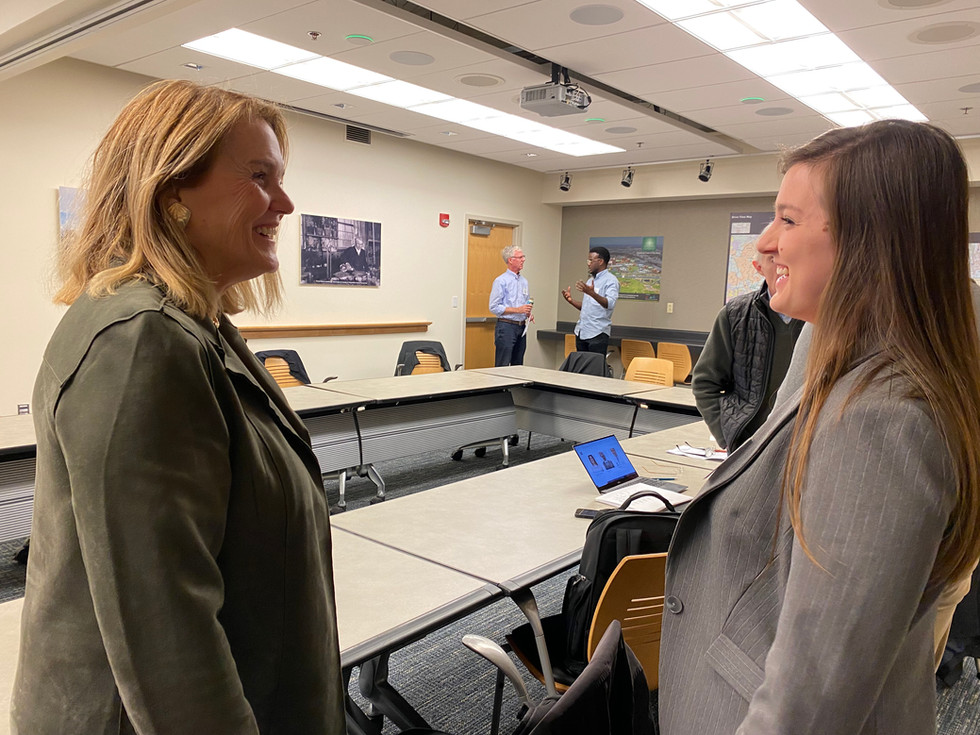
At that JumpStart NJ gathering, Jaworski was photographed in conversation rather than behind a lectern. Her comment from the event was equally revealing: “Meeting experienced investors and mentors is invaluable. They provide a ton of experience and mentorship, and feedback is always important.” It is a modest statement, nearly plain enough to miss. Yet it captures the operating posture behind I-Corps, accelerator programs and a long pitch-competition circuit. A founder does not merely broadcast. She lets other people alter the work.
The evidence ladder
Progress arrives in uncinematic pieces
XN Health’s early record is a sequence of specific, limited advances. HAX provided pre-seed support and a base in Newark. The company completed animal studies in 2022 that supported the feasibility of its stimulation approach. It entered Creative Destruction Lab. At the Texas A&M New Ventures Competition, it placed third and collected several sponsor prizes for services and investment consideration. In 2023, Jaworski won the TiE New Jersey Women’s Pitch Competition and traveled to Singapore to represent the chapter at the global event.
In December 2023, XN Health said it had closed an undisclosed seed round involving UCeed, Princeton Alumni Angels, Atlanta Tech Angels and Mayo Clinic. The next publicly documented step was less theatrical and more consequential: in 2025, the company received a $274,841 NSF STTR Phase I award, with Jaworski named principal investigator and the Texas Heart Institute named as the research institution.
The work attached to that award is concrete. The project calls for optimizing stimulation parameters, developing automation for prolonged use and validating an external prototype in a large-animal study. There is no shortcut hidden in the grant language. It is a list of things that must function, repeatedly, under scrutiny.
A useful contradiction
Precision without the paralysis of perfection
Jaworski’s personal site lists several core values. “Value independent thinking.” “Focus, dig deep, and filter out the noise.” “Find excitement in challenging situations.” The line that best fits her record is the most provocative for a scientist: “Remember perfection doesn’t lead to innovation.”
Precision and perfectionism are easy to confuse. Precision makes a protocol reproducible. Perfectionism can keep the protocol from meeting a customer. Jaworski’s two-company education has required both rigor and release: test the chemistry, publish the result, package the kit; observe the clinic, interview the people, build the prototype; gather evidence, then expose it to the next group capable of finding a flaw.
“Focus, dig deep, and filter out the noise.”One of Jaworski’s published core values
Her private pilot license gives the philosophy a pleasing physical form. Flying is not casual about detail. It also does not permit endless deliberation once a decision is due. A checklist converts accumulated knowledge into action. Jaworski pursued the license after finishing her doctorate, describing it as a new challenge in discipline and mental resilience. The detail resists becoming a neat metaphor only because it is already so apt.
By 2025, speaking on a panel about founder-led medtech companies, she could introduce herself through two acts of translation. First, virus-evolution research became a sequencing company with a kit. Then a biodesign fellowship became XN Health. Her expertise is real, but so is her pattern of leaving its comfortable center.
The work ahead
A founder’s job is to keep the bridge standing
Medical devices develop at the pace of evidence, engineering and regulation. XN Health remains in that long middle, where promising data has to become a robust system and a robust system has to survive further testing. Jaworski’s role spans those boundaries. She is CEO, fundraiser, translator and principal investigator, working alongside colleagues whose clinical and engineering backgrounds fill gaps that biochemistry cannot.
That collaborative structure may be the quiet lesson worth stealing. The popular founder story prizes singular vision. Jaworski’s record prizes useful connections: a professor and a student recognizing commercial potential; a scientist joining an entrepreneurship community; a biodesign cohort pairing different disciplines; physicians giving interviews; mentors applying pressure; research institutions supplying facilities and expertise.
Her stated mission is to “push the envelope to create new pathways for life science innovation.” The envelope is less romantic up close. It looks like a protocol, a patent filing, a conversation after a pitch, a revised prototype and another round of testing. It looks, in other words, like a career spent making science travel.