Eric Murphy has a useful word for the end of an announcement: “Onward!” It appears beneath his public thanks to colleagues and investors, a small verbal shove after the formal business is done. For someone whose career includes co-founding Fount Therapeutics, Kinnate Biopharma, Alterome Therapeutics and Sidewinder Therapeutics, the word has a certain economy. There is usually another beginning waiting.
In April 2024, that beginning came with a camera. BiotechTV visited Alterome’s San Diego office after the company announced a $132 million Series B financing. Murphy, then its co-founder and CEO, answered questions from Brian Orelli. Afterward, he thanked the interviewer on LinkedIn and described the pleasure of emerging from stealth mode. A private company had acquired a public story, and its founder was helping tell it.
Two years later, Murphy was leading Sidewinder, another company he had co-founded. It announced a $137 million Series B in April 2026. The numbers invite a quick tale about fundraising. His career offers a slower, more interesting one: a scientist spends years inside other people’s institutions, begins creating institutions of his own, and keeps doing it alongside other people. The co- in co-founder carries considerable weight here.
Before the first founder title
Murphy’s education ran through the University of California: a bachelor’s degree in biochemistry at Davis, then a doctorate in biological sciences at Irvine. His postdoctoral training took him to The Scripps Research Institute, where he worked with David Cheresh. The academic route comes first in his biography, before any financing round or executive title. Research was the original occupation; company building arrived later.
From 2005 to 2011, he held research positions at UC San Diego. Next came the Genomics Institute of the Novartis Research Foundation, where he was a research investigator from 2011 to 2014. He became director of discovery biology at Samumed in 2014, then held global research strategy and external innovation responsibilities at Crown Bioscience from 2016 to 2017.
Read in sequence, those appointments give the later founder chapters their context. He moved through academic research, an industrial research institute and company leadership before taking on a founder’s responsibilities. The changing titles record an expanding remit. They also resist the convenient idea that an entrepreneur’s biography begins on the day a company receives its name. Murphy had already spent more than a decade in research appointments before Kinnate.
- 2003Scripps
- 2005UC San Diego
- 2011Novartis GNF
- 2014Samumed
- 2016Crown Bioscience
- 2018Kinnate
The business behind the science
Kinnate appointed Murphy chief scientific officer in January 2018. He also served on its board from that month until March 2020. Those are two different seats at the table: one concerned with the scientific organization, the other with the company’s governance. His career was now being measured in institutional decisions as well as research work.
The early corporate history contains a detail that tends to disappear from founder profiles. Kinnate and Immanate were previously under common control of Fount Therapeutics; they merged in April 2019, with Kinnate as the surviving company. A Fount subsidiary provided management services, including accounting, human resources, technology and facilities. Even a company built around research needs someone to arrange the decidedly unromantic machinery of being a company.
That detail makes the word founder feel more concrete. A laboratory idea needs an organization capable of keeping records, paying people and maintaining a place to work. The romance of discovery has an accounts department. Murphy’s association with Fount and Kinnate places him inside that organizational chapter, before Alterome became the company most readily attached to his name. Starting again was already part of the record. The next company would come with another name and another set of responsibilities.
Alterome steps into view
Alterome’s public launch arrived in January 2022 with a $64 million Series A led by OrbiMed. Murphy and Ryan Corcoran were its co-founders. Murphy was named both chief executive and chief scientific officer. Combining those titles put business leadership and scientific leadership under the same name at the outset.
By November, the company had added more than $35 million in an extension, bringing its funding to nearly $100 million. Colt Ventures and OrbiMed co-led that financing, with the existing Series A investors participating. The two announcements belong together. The initial launch established a company with backing; the extension recorded another decision to put resources behind its work.
Then came the April 2024 Series B, led by Goldman Sachs Alternatives. Josh Richardson and Uwe Schoenbeck joined the board alongside the financing. These were changes to the organization as well as its balance sheet. A founder’s company acquires more people with a formal role in shaping what happens next.
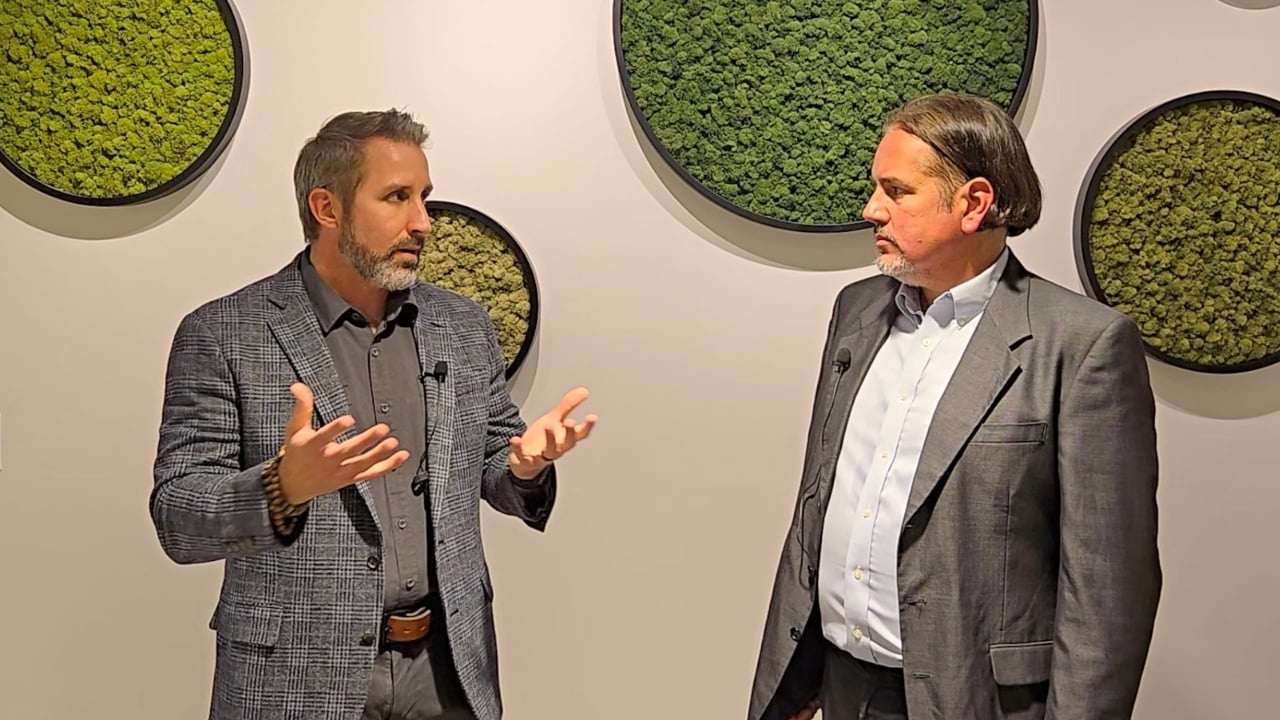
Murphy’s interview that month brought the process into view. There he was, discussing the experience of raising money, in the office of the company he had helped create. The setting was modest enough to suit the subject: two people talking, lapel microphones attached, an announcement now requiring an explanation. A large number makes a headline. A conversation gives the person behind it somewhere to stand.
Three announcements, one growing organization
Announced round sizes in US dollars. Bar lengths use $35 million for the extension, which exceeded that amount.
An award with a plural in it
In October 2024, Goldman Sachs included Murphy among its 100 entrepreneurs recognized at the Builders and Innovators Summit in Healdsburg, California. The gathering brought together founders and CEOs from different industries. For a scientist who had become a repeat founder, it was recognition in a business setting, beyond the research institutions that formed the early part of his career.
His response pointed back toward his colleagues. He credited the “entire Alterome team’s hard work and commitment.” It is a brief phrase, but a useful one to hold beside the company announcements. The person named in the award was talking about a group. The scale of an organization cannot be read from the size of its founder’s photograph.
Another 2024 result gives that group a different kind of presence. Alterome appeared in the San Diego Business Journal’s Best Places to Work rankings, in the small-employer category. The listing recorded 29 employees and placed the company seventeenth in that category. The rankings drew on employee surveys and information about employers’ policies and working environments. Here the company was visible through the people working inside it.
An entrepreneurial honor and a workplace ranking ask different questions. Placed together, they make the Alterome chapter less dependent on a single executive. One recognizes a named leader; the other concerns a shared working environment. A profile can accommodate both without turning either into proof of a perfect company. They are two concrete entries in the same year.
“Onward!”
Eric Murphy’s public sign-off
The next company, familiar company
By April 2025, Alterome had named Jung Choi CEO. Murphy’s current leadership role is at Sidewinder, where he is co-founder, chief executive and a director. A founder remains part of a company’s history when its executive leadership changes. His biography now requires both names: Alterome explains an important chapter; Sidewinder explains his present position.
Sidewinder was founded in 2023 with backing from OrbiMed. Corcoran is also a co-founder and director there. That recurring partnership is one of the more distinctive connections in Murphy’s career. The companies have different names, but two names on the founding side remain familiar.
The latest chapter has its own sequence of institutional steps. In January 2026, Sidewinder announced a licensing agreement with Lonza’s Synaffix. Murphy joined a panel at the Longwood leaders meeting in San Francisco that month, discussing adaptation to the funding environment and opportunities for innovation. Partnership work and the public conversation about capital were proceeding alongside each other.
In April, Sidewinder closed its $137 million Series B, co-led by Frazier Life Sciences and Novartis Venture Fund. The company reported $162 million raised in total. Its board expanded with the financing. For Murphy, the setting was another young San Diego company; the responsibilities included a familiar mix of collaborators, investors and decisions about the organization’s next stage.
A Series B co-led by Frazier Life Sciences and Novartis Venture Fund.
A career with room for other people
Away from the financing announcements, Murphy’s public biography includes mentoring early founders and career scientists. Life Science Cares lists him on its board of advisors. These are smaller entries than the executive appointments, but they belong in the story because they describe where some of his attention goes beyond the company he leads.
There is also a more informal San Diego appearance: a 2022 episode of Biotech & Breweries with Mission Brewery founder Dan Selis. The conversation included entrepreneurship, fundraising and the local community. It placed a company founder alongside a brewery founder, an agreeable reminder that business conversations need not always come with a lectern. A city can introduce its working lives to one another over something less solemn than a conference badge.
Murphy’s biography also mentions training at the gym and on San Diego’s trails. The detail needs no elaborate symbolism. It puts the person outside the sequence of laboratories, board memberships and financing rounds for a moment. A career may be recorded in titles, but an afternoon can have a different itinerary.
His story now stretches from a California science education to repeated company formation, through Alterome and into Sidewinder. The dates show how long the preparation took. The recurring collaborators show how much of the work has been shared. And the public appearances show a founder explaining what comes next while another company takes shape around him. The sign-off has survived the changes of title and company. Onward seems to have found steady employment.