Before the billion users, there was Crazy Frog. Andrey Doronichev sold little pieces of mobile entertainment when a phone that could play a video was still something to show your friends. It is a pleasingly undignified beginning for a career in which the phrase “Director of Product at Google” would eventually appear. Technology likes to dress its history in solemn clothes. Sometimes the history has a ringtone.
Doronichev’s work has since included mobile YouTube, Google’s virtual reality efforts and Stadia. Today he is the co-founder and CEO of BIOPTIC, building AI research tools. His public life also includes investing, a community for entrepreneurs, a San Francisco house shared with fellow technologists, and a book about changing direction. The recurring action is surprisingly simple: he reaches a position of competence, then finds another place to be inexperienced.
That habit makes his career more interesting than a list of promotions. Some bets became part of everyday life. Others failed to attract the audience their builders expected. Doronichev has discussed both. He has also attempted singing in public, which offers a particularly efficient way of discovering how little a corporate title can do for you.
A computer with room for possibility
Born in Moscow in 1982, Doronichev grew up while the world around his family was being rearranged. His parents came from academic backgrounds. As a child, he found computers absorbing: first a terminal at his mother’s workplace, then an Enterprise 128 home computer with BASIC and cassette storage. His mother taught him to program. Games could arrive as printed code, to be typed into the machine before anything entertaining happened.
He remembers laboriously entering a Snake game and then watching it run. The reward was unusually tangible: lines he had typed had become something alive on a screen. Later, setting up other people’s PCs became paid work. At a school with a strong computing curriculum, he found other children who shared his interests. By graduation, he had written his own 3D rendering software.
There is an early version of his later working preference here: a difficult project, a small group of interested people, and a result you can actually demonstrate. The machine had little memory. It left plenty of room for ambition.
The phone was already a computer
In 1999 he began working at an internet service provider, starting with customer support and moving into software. University and work ran alongside one another. He graduated from the Moscow Institute of Electronics and Mathematics in 2005; he would later add executive business education at Berkeley Haas.
His early mobile ventures included Tapok.ru, distributing games, ringtones and videos. Those products were small, but they offered a close view of people discovering the internet through their phones. He subsequently moved to Prague and worked on an online property venture called Ripid. It closed. A successful beginning had not supplied a permanent exemption from bad outcomes.
Reading about Google gave him another idea: join the people already building at the scale he wanted to understand. He sent an application and joined in 2007. For someone accustomed to making his own businesses, taking a job was a form of apprenticeship. His route into a large company began with the wish to learn how to make larger things.
One hundred million reasons to persist
By March 2009, he was the product manager for YouTube’s mobile applications. The team was in London; he was initially in Dublin, travelling between the two while his UK arrangements were settled. Smartphones were young, connections were uneven and expensive, and a small screen looked to sceptics like a fairly good argument against watching video.
Doronichev had already seen people pay for brief clips. YouTube had an enormous catalogue. The problem, as he understood it, was giving people a workable way to reach it. Nokia mattered alongside the emerging smartphone platforms. A mobile strategy had to meet the phones people actually owned.
On July 7, 2010, he announced an updated mobile website as YouTube passed 100 million mobile video playbacks a day. Larger touch targets, search suggestions, playlists and familiar viewing controls were part of the work. The grand story of a platform expanding into people’s pockets consisted of many such small accommodations.
Then came the official YouTube app for iPhone and iPod touch, announced under his name on September 11, 2012. Mobile viewing had reached a billion views daily. The launch added more videos, a channel guide, better discovery and sharing. These were team achievements, built by engineers, designers and product colleagues. Doronichev’s part was helping turn the proposition into something people could use.
Two launch posts. Ten times the viewing.
A cardboard invitation to another world
Having helped a small operation grow, he began to miss starting things. “At my core, I’m an entrepreneur,” he has said. There is a particular irony in doing a job so successfully that it becomes a different job. A growing product acquires meetings, structures and responsibilities. The person who enjoyed building its first version may discover that success has promoted him away from his favourite work.
Virtual reality offered another beginning. In 2014, Doronichev helped launch Google Cardboard, working with colleagues who saw a way to turn a phone, lenses and a cardboard viewer into an inexpensive introduction to VR. He was one of the product managers on the launch. The roughness of the object was part of its charm: a possible future arrived looking like something rescued from the recycling.
The work grew into a broader portfolio, including Daydream, YouTube VR, Tilt Brush and Earth VR. In his own retrospective, Doronichev has acknowledged that his expectation of VR becoming the next mobile-sized industry was wrong. It is a useful admission from someone whose earlier mobile conviction had worked out so handsomely. A correct forecast does not make the next forecast correct.
At my core, I’m an entrepreneur.Andrey Doronichev
A game worth waiting six months for
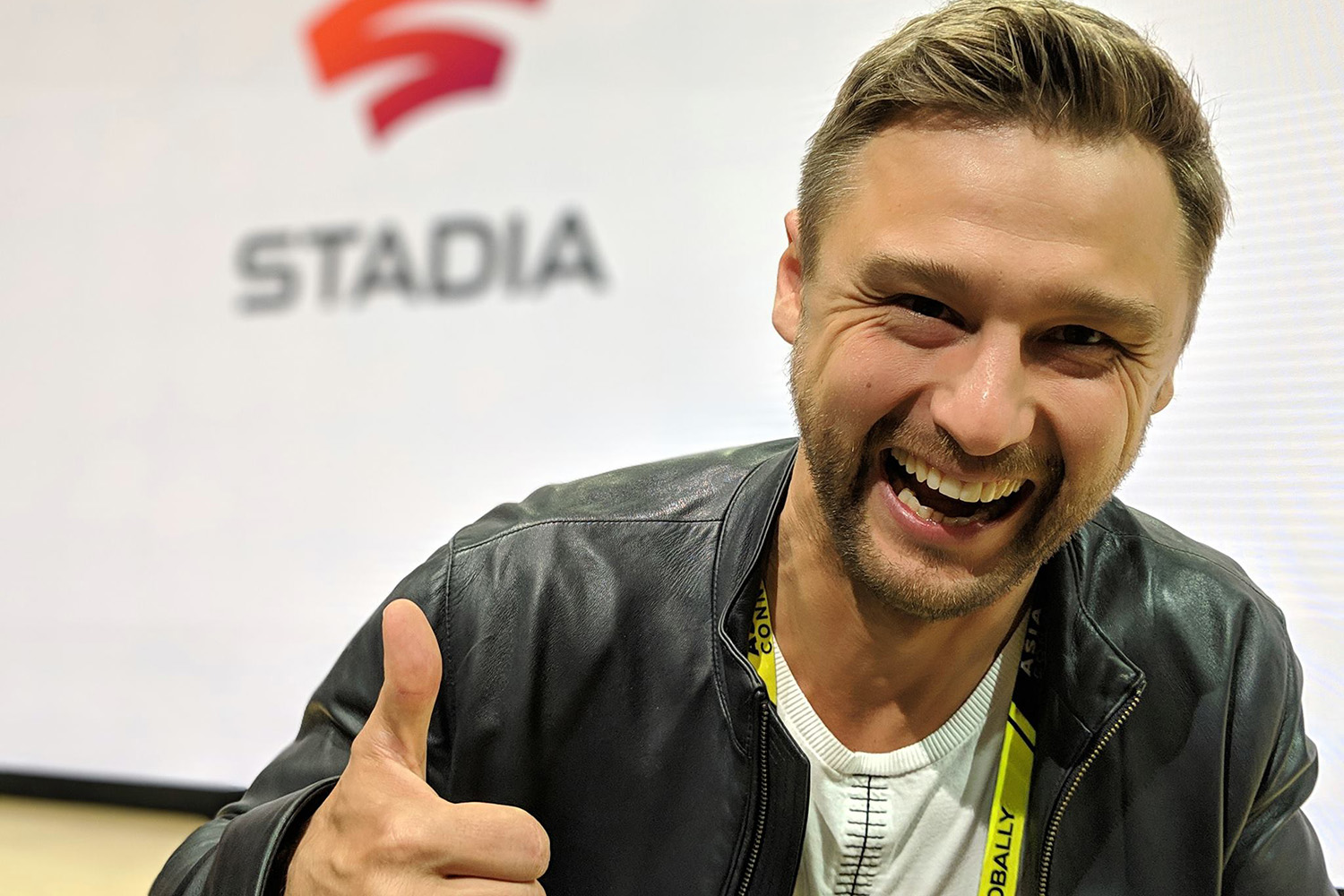
Stadia extended his interest in interactive worlds. He led product work on its consumer experience, aiming to make games accessible through streaming. The attraction was personal as well as technical. As a boy, he had worked to buy Star Wars: TIE Fighter, only to discover that his computer could not run it. A hardware upgrade, and the chance to play, came six months later.
“My job here is to make that delay into zero,” he said in 2019. It was a compact description of the ambition: remove the distance between wanting to play and playing. Stadia’s servers ultimately went offline in January 2023. Doronichev had already left Google in 2021 after fourteen years. The product’s ending belongs in the account alongside its technical promise.
A house with a useful question in every room
His interest in bringing people together also had a physical address in San Francisco. DobryDom took its name from his childhood nickname and the Russian word for house. By May 2022, nearly a hundred entrepreneurs, investors and aspiring technologists had passed through the four-storey townhouse over five years.
The community included people from Ukraine, Belarus, Georgia and Russia. A shared language made introductions easier. Residents gathered for breakfasts and moved between flats; the circle spread into neighbouring buildings and an online chat. The appeal was practical: people nearby had experience you could ask about.
He also co-founded Mesto, an online community for Russian-speaking entrepreneurs and professionals. His investment interests have included companies such as Grammarly, PandaDoc, Coda and FlutterFlow. Shishir Mehrotra, Coda’s co-founder, had been his mentor at YouTube. The relationship is a welcome complication of the usual investor story: sometimes the person receiving your backing has already taught you a great deal.
The microphone does not read your LinkedIn
After appearing in a documentary about Silicon Valley, Doronichev encountered the familiar objection to a success story: perhaps its protagonist was simply an exception. He chose a public experiment in something he could not already do well. He would learn to sing and play guitar, aiming to perform in local bars.
He worked with a vocal teacher, published recordings and received criticism. Product habits followed him into the music: make an early version, show it to people, consider their responses, work with collaborators and try again. He treated his teacher as a partner and enlisted other creative specialists. Experience in software could organise the process; the singing still required practice.
The episode has a comic advantage over a management seminar. An audience can hear the gap between aspiration and execution. No amount of confidence improves a note already sung. For a person accustomed to expertise, choosing a visible apprenticeship involves a useful surrender of status.
A new version, with the old curiosity intact
In 2022 he founded Optic, initially applying AI to digital authenticity. Its work included identifying copied material in the NFT market. The team later developed AIorNot, which became a separate company under another leader. BIOPTIC emerged from a further change of direction, retaining the founding team’s interest in searching large bodies of information.
Today Doronichev works with co-founders and specialists including AI leader Vlad Vinogradov and engineering leader Roman Doronin. The company’s team works from San Francisco and Dubai. Building again means combining his product experience with other people’s expertise, while accepting that an earlier career supplies only some of the answers.
His 2026 book, A New Version: Change Yourself Without Betraying Yourself, brings that pattern into print. It proposes approaching personal change through values, a vision, small experiments and evidence before a large decision. Russian and Ukrainian editions are offered through his book shop. The method is recognisably that of someone who has spent years bringing unfinished ideas into contact with an audience. In September, he announced a London discussion of the book with Andrey Movchan and questions from readers. Another format, another audience willing to put an idea to the test.
A billion users would have made a comfortable final paragraph for a professional biography. Doronichev keeps adding chapters. The next one may require a new team, a different subject or an uncomfortable amount of practice. His career suggests he is prepared to take the beginner’s seat again. At least this time, there need not be a ringtone.
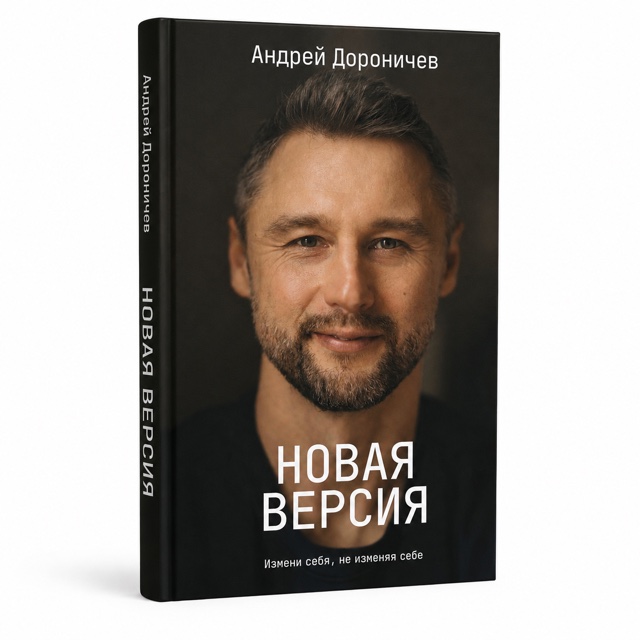
Change Yourself Without Betraying Yourself.
A career habit, now in 176 pages.
Read, watch, follow
Visit Doronichev’s personal site, read his blog or explore A New Version.
Follow him on LinkedIn, Instagram, X, Facebook and Telegram.
Watch: early ventures and the road to GoogleMore to explore: Inside Google Stadia · Life at DobryDom · His approach to product leadership