Before Amira Barkal announced a company with $76 million in backing, she was a student finishing somebody else's unfinished work. Roy Maute had left their Stanford laboratory to start a business. Some experiments still needed doing. Barkal helped bring the project to publication. Years later, when the two became co-founders, they had already passed a useful test: they knew what it was like to depend on each other when a piece of research needed finishing.
It is a modest beginning for a founder story. No sudden handshake over a dazzling pitch. No napkin promoted to a historical document. Just colleagues, an incomplete project, and the slow accumulation of trust. That earlier collaboration helps explain how Barkal became the principal founder of Pheast Therapeutics, and why her career is more interesting than the job title on any one business card.
The public milestones are substantial: two Stanford degrees in 2021, a national graduate research award in 2022, a company launch that April, and a place on the 2023 Forbes 30 Under 30 list. But the connective tissue is work shared with other people. Her story keeps returning to the same question: what happens after a researcher has something worth taking further?
Eleven weeks in Oregon
In June 2011, Oregon State University announced a summer research class of 60 students. Barkal appeared among the participants from Lake Oswego. The program lasted 11 weeks and finished with a public symposium. It offered sustained work alongside a faculty mentor, giving students a chance to find out whether research suited them before committing a career to the proposition.
There is something appealingly practical about that arrangement. A person can like science as a subject and discover that the daily work asks something rather different. Eleven weeks gives an interest room to become an occupation, or to reconsider the invitation. For Barkal, the summer is an early, dated point on a path that would lead from Oregon State to Stanford.
She earned a bachelor's degree in biochemistry and biophysics at Oregon State. By 2013, she was working at Harvard and had returned to visit her former department. The geography of her early career was already widening: Oregon, Boston, and eventually California. Long before there was a venture-backed company to introduce, there were institutions, collaborators, and another research environment to learn.
A full-time research program, a faculty mentor, and a public symposium at the end.
The colleague who finished the work
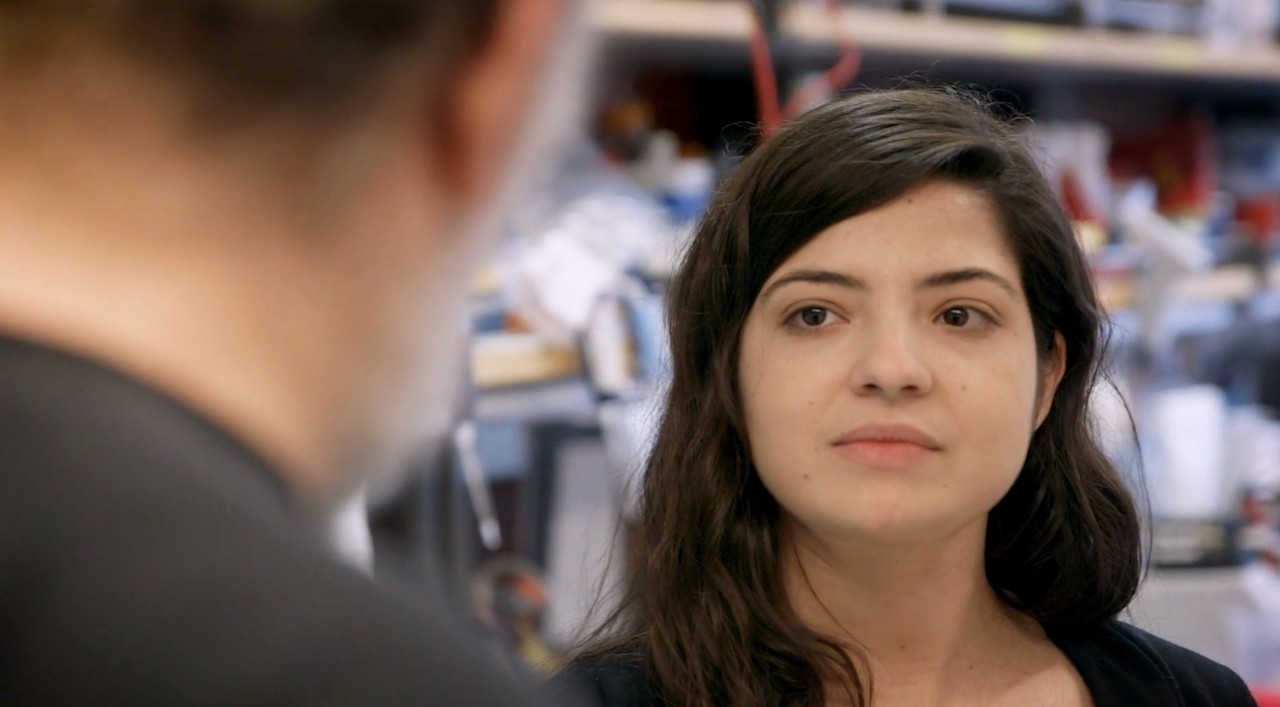
At Stanford, Barkal worked in Irving Weissman's laboratory. Maute was a postdoctoral researcher there during part of her doctoral training. Their overlap was brief, but it left a concrete record of cooperation: he taught her some laboratory techniques, and she helped complete research he had begun before leaving to build Ab Initio Biotherapeutics.
A laboratory has its own version of a reference check. People see who follows through. They see what happens when an experiment refuses to cooperate, or when a colleague's departure leaves work behind. In Barkal and Maute's case, the relationship survived the move from adjacent research projects to separate careers. Familiarity had something firmer beneath it than a conference introduction.
Their later founding group also included Weissman and Ravi Majeti. Both brought experience building Forty Seven Inc. Barkal brought the research around which the new venture would form. The group combined different stages of professional life: a recent doctoral researcher, senior academic founders, and a scientist who had already spent time running a young company. Nobody needed to have the same résumé.
A paper acquires a second life
In 2019, Barkal was the lead author of a paper in Nature that became foundational to Pheast. The contribution statement records her work in unusually useful detail: she wrote the manuscript, conceived and designed the experiments with Weissman, and carried out experiments with collaborators. Authorship here describes several kinds of labor, from planning to execution to explaining the result.
Publication is a recognizable destination. A reader can point to a journal, a date, an author list. Forming a company asks for a different sort of continuation. A result must become something a group of people can organize around. The researcher acquires new colleagues, new obligations, and a larger audience with rather different questions.
Barkal completed her M.D. and Ph.D. at Stanford in 2021. By April 2022, she was writing publicly as Pheast's principal founder and interim CEO. The distance between those two descriptions is short on a calendar and considerable in responsibility. Graduate work and company formation had overlapped, bringing an unfinished entrepreneurial education alongside the completion of her formal one.
Her launch essay argued for keeping the scientists behind foundational discoveries involved in what followed. That is a useful clue to the choice she made. The work would continue with its originators in the room. A published paper could travel into another institution without leaving all the people who understood its beginnings behind.
- 2011Oregon State summer research
- 2019Lead-author paper in Nature
- 2021Stanford M.D. and Ph.D.
- 2022Pheast's public launch
The expensive business of continuing
On April 26, 2022, Pheast announced a $76 million Series A. ARCH Venture Partners and Catalio Capital Management led the financing. Barkal introduced the business under a title with a built-in time limit: interim CEO. Even at the announcement, the word allowed for an organization that would change.
The number deserves attention, and a little restraint. It describes capital raised by a company. The more revealing personal fact is that Barkal was taking on a founder's responsibilities while continuing her professional training in Boston. The two commitments ran alongside one another. There was no tidy interval reserved solely for becoming an entrepreneur.
The launch also had an unexpectedly public afterlife. Pheast appeared on Nasdaq's Times Square display. Barkal shared her pleasure on LinkedIn: “Looking forward to the months and years to come.” A laboratory project had reached a Manhattan screen. The company's name, at least, had learned to occupy a very different kind of space.
Thanking the one-and-only
A few weeks before the launch, Barkal received the Harold M. Weintraub Graduate Student Award. She was one of 13 recipients in 2022. The award recognizes graduate research, with submissions assessed for quality, originality, and scientific significance. It acknowledged the academic work that preceded the business, giving the year two distinct kinds of professional recognition.
Her response had a lighter touch than an awards biography usually permits. “I'm thrilled to be a Weintraub awardee,” she said, thanking the committee, her mentors, and “the one-and-only Irv Weissman.” Even in a short statement, the thanks ran outward. The advisor appeared as a person, with a little affectionate emphasis, rather than merely another distinguished name in the paragraph.
“I'm thrilled to be a Weintraub awardee.”
Amira Barkal · 2022
Other recognition followed, including the Forbes list and the Silicon Valley Business Journal's Women of Influence. The awards mark different parts of the same career: research, entrepreneurship, and participation in a regional business community. They make a satisfying collection of milestones. The work that earned them remains easier to understand through the people and projects than through the collection itself.
The timing gives those milestones some texture. The research award arrived after graduation, recognizing work done during her student years. The company announcement looked forward, inviting investors and prospective colleagues into a venture still taking shape. One spring held both a review of what she had completed and a commitment to work that would take years. It is a familiar feature of an academic career, carried into a business: the acknowledgment often arrives just as the next demanding piece of work begins.
Learning to build beyond the bench
By September 2023, Barkal was appearing as Pheast's chief development officer on a conference panel about talent recruitment and retention. The subject was a telling addition to her public work. A company needs capable people to join, and reasons for them to stay. Building one brings questions that cannot be answered with another experiment.
In May 2024, she returned to an academic setting as a seminar speaker at Northwestern. The movement between campuses and company life continued. Her career had acquired a commercial dimension without losing its connection to the places where researchers train, present work, and question one another. The different rooms required different introductions, while the professional relationships continued across them.
Pheast now lists Barkal as principal founder, scientific advisor, and board director; Maute serves as CEO. Her stated remit includes advising on research and development strategy. The arrangement gives the founding researcher a continuing role as the organization develops. It also makes the old interim title read rather neatly: a description of one chapter, with room already left for the next.
Return, then, to the unfinished project in Weissman's laboratory. Barkal helped a departing colleague finish work. Later, that colleague joined her in building a company. Between those moments sit degrees, a publication, financing, and a great many other people's contributions. The early episode supplies a human scale for the whole story. Before they had a business to run together, they had learned that they could get something done together.