Alexander Torrey had ordered hand soap. What arrived was a box about the size of his kitchen table. Inside was a replacement for a pump bottle that had committed only one offense: it was empty. The pump worked. The container worked. Into the rubbish it went, along with the packaging required to deliver its successor.
Torrey lived in an apartment building with 500 units. He began doing the arithmetic. Suppose everyone in his building followed the same routine. Suppose everyone in the five apartment buildings he could see did, too. A small domestic irritation became a supply-chain question. The soap had reached its destination; the system had produced a great deal of unnecessary work along the way.
That story helps explain a career whose company names do little to explain one another. There was umano, an Athens clothing business he founded with his brother Jonathan. There was The Rounds, which delivered household essentials and retrieved their reusable containers. Now there is AIC, America’s Innovation Corporation, where he and operations scholar Gad Allon are working on component manufacturing. Shirts, soap, and the parts inside robots make an unusual shopping list.
Look at the operations behind them, however, and the relationship becomes more interesting. Each business asks what can be done with something already present: a child’s drawing, a perfectly serviceable bottle, a manufacturer’s knowledge. Torrey keeps finding reasons to look again at things other people have finished looking at.
Two brothers and thirteen cameras
Torrey graduated from the University of Georgia’s Terry College of Business in 2009. His early career included intelligence work at the CIA and a year in Afghanistan. He has described the appeal of a small, motivated team organized around a mission. It is an experience he still brings into conversations about company building, although the products and settings have changed considerably.
In 2011, he and Jonathan started umano in Athens, Georgia. Their parents were teachers, and the brothers wanted a business that supported children’s creative education. They put children’s drawings on adult clothing. A purchase funded a backpack filled with supplies for a child. The artwork was the product’s reason to exist, giving its young creator a place in the transaction beyond being its beneficiary.
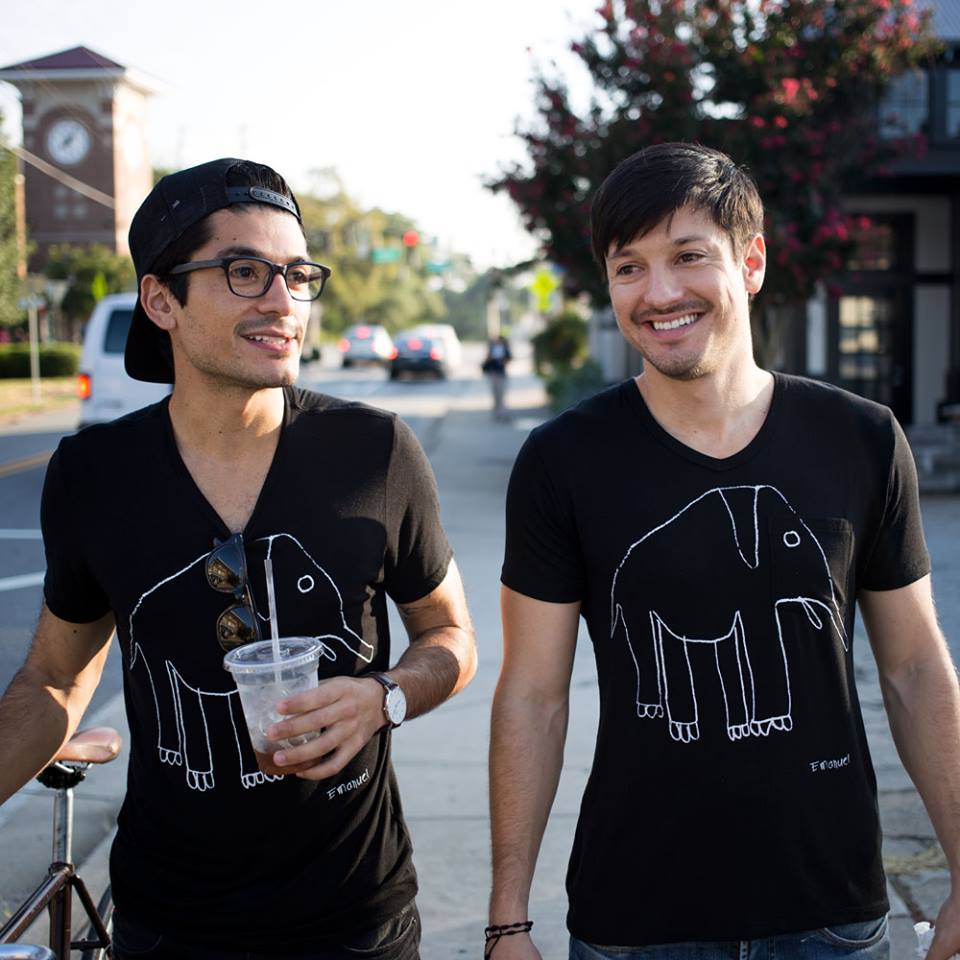
In November 2015, the brothers appeared on Shark Tank. Mark Cuban and Lori Greiner agreed on-screen to invest $150,000 for a 20 percent stake. Pitching was familiar territory by then. Thirteen cameras pointed at them were a less familiar addition to the meeting. When the episode aired, they watched with friends and family at an Athens bar, where the televised agreement brought cheers.
The quieter measurements mattered, too. In the company’s first three years, it had given away 10,000 backpacks. In 2015 alone, it gave away more than 10,000. By July 2016, umano was reporting over 20,000 donated. Those numbers describe the company’s progress at the time. They also show the administrative reality behind a cheerful shirt: every sale carried another piece of work to complete.
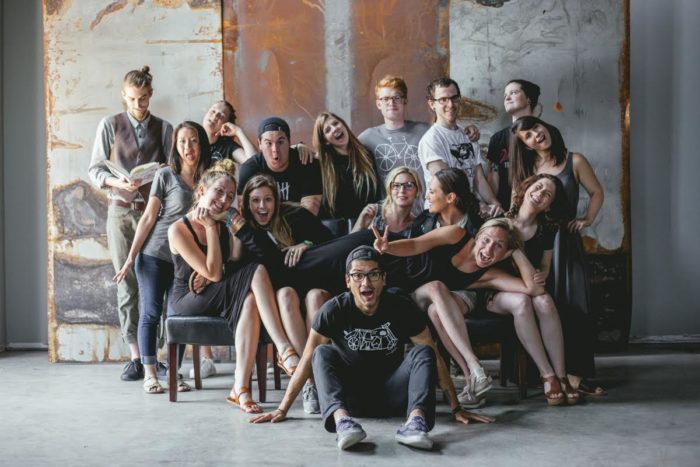
A working lunch at umano in 2016 came with Chinese takeout, a shared table, and whiteboards covered in goals, charts, and doodles. Interns described an atmosphere of open communication and respect. Torrey’s own description of his attachment to the business was less corporate: “I don’t go to work; I go to umano.” The sentence has the enthusiasm of a founder whose calendar has become indistinguishable from his company.
A milkman with a return route
His career also passed through Chicago advertising agencies. At DDB and We Are Unlimited, he directed brand strategy for McDonald’s, including work on a Super Bowl advertisement. At MKTG, part of Dentsu Aegis, he led strategy for consumer brands. By 2019, he had been an entrepreneur in residence at Techstars and was a first-year MBA student at Wharton, joining Dorm Room Fund’s student investment team.
The Rounds began in Philadelphia in 2019. His co-founder Byungwoo Ko became part of the answer to the household-restocking problem. Torrey’s account of the hand-soap delivery gives the business a pleasingly modest beginning. There is no need for a revelation on a mountaintop when a delivery driver can bring the question to your door.
The model borrowed something familiar from the milkman: a regular visit, a reusable container, a return journey. The Rounds delivered staples in packaging that could be collected and refilled. Households became part of a recurring neighborhood schedule. The company had to manage the outward movement of goods and the inward movement of empties, giving the return trip an actual job.
By 2022, the service was operating in Philadelphia, Washington, Miami, and Atlanta. Deliveries were grouped by neighborhood, with small fulfillment centers supporting electric cargo-bike routes. Torrey explained that making the rounds on the same day each week helped avoid repeated single-delivery trips. The name was a description of the work, which is rather more helpful than a name needing its own presentation.
Atlanta offered a personal connection. Torrey had grown up in North Atlanta and attended UGA. When discussing the city’s expansion in 2023, he emphasized retention: people who signed up stayed. The service also included local suppliers, making its routes a way for neighborhood products to reach neighborhood households. Familiarity with a city could matter in very practical ways.
The decisions behind the deliveries
Torrey’s descriptions of The Rounds went well beyond packaging. In a 2023 conversation with Nextmv’s Carolyn Mooney and Ox founder Charu Thomas, he separated automation into processes and decisions. The company operated hubs, inventory, and neighborhood refillment centers. It needed tools that could help the operation remain efficient as well as durable.
He also recognized how quickly control weakens when an operation enters a city. A company can know what is happening inside its facilities. Once a bag goes out on an e-bike, the world starts contributing its own suggestions. For a business combining deliveries with collections, flexibility belongs in the design. The customer sees a bag arrive; the company must organize everything that allows the next bag to arrive.
In August 2024, The Rounds announced a $24 million Series B, bringing reported total funding to $66 million. It said it had saved more than one million pounds of packaging waste. The release also announced Allon’s appointment to the board. An operations professor entering the boardroom of a two-way delivery business was a connection with a clear subject to discuss.
“Waste is just bad design.”
Alexander Torrey, 2024
The Rounds was acquired by Misfits Market in May 2025. The announcement described a transition for members and an expansion of Misfits Market’s relationships with corporate and multifamily operators. It gives Torrey’s delivery chapter a definite milestone. The business that started by questioning the empty bottle had become part of another grocery company.
A permanent home for the parts makers
At AIC, Torrey works with Allon as co-founder and chief science officer. Their subject is physical AI: robotics, autonomous systems, and advanced hardware whose software has to act in the material world. Torrey’s attention goes to the component makers underneath those products. In his March 2026 essay, he points to precision actuators, specialized circuit boards, and frameless torque motors.
He calls this layer the “messy middle.” His argument is that existing manufacturers have knowledge, customer relationships, and productive capacity that better coordination could release. New equipment is a visible investment. A better decision about scheduling is less photogenic. In Torrey’s account, the latter deserves considerably more attention than it gets.
AIC combines acquisition with proprietary software. It describes itself as a permanent home for owner-operated manufacturers. The software is reserved for businesses that become part of AIC. Ownership makes the company responsible for living with the operational choices it helps make. A promising dashboard has to survive contact with the shop floor.
Acquire the business.
Improve its decisions.
Keep a long horizon.
The company’s stated approach combines ownership, software, and continued stewardship of manufacturers.
Its framework is called Decision Physics. The practical emphasis is on what people and machines should do next, using data science and operations research to improve decisions inside a running business. Torrey writes: “Our unit of operations is the decision, not the data point.” That phrasing gives his current work a connection to the delivery questions he discussed years earlier.
In June 2026, AIC announced its national headquarters at Dock 72 in the Brooklyn Navy Yard and a West Coast hub in El Segundo. A former naval manufacturing campus is a fitting place to discuss how industrial knowledge survives a change of era. The company’s proposed answer puts software beside existing craft, with the people who understand the work remaining central to its argument.
Room to play it by ear
Torrey’s public ambitions can sound large: industrial sovereignty, American competitiveness, supply chains for the next generation of machines. The smaller details make him easier to picture. A 2019 introduction listed cold brew, local IPAs, chilaquiles, and Chicago-style hot dogs among his preferences. Asked for an Atlanta itinerary in 2022, he said he preferred leaving room to play things by ear.
His suggestions included breakfast tacos, blues at Northside Tavern, books, the Botanical Garden, and a walk along the BeltLine with its scooters and groups to dodge. A person professionally interested in coordination still appreciates an afternoon without a complete schedule. It is a useful concession to life outside the operating model.
In his June 2026 essay, he connected his values to his parents, who came from Mexico to the United States in the 1970s and worked as schoolteachers. Their influence was visible in umano’s focus on children’s creativity. His current writing gives similar weight to the accumulated skill inside a manufacturing business. The useful thing already exists. The question is how to give it more room to work.
The empty bottle remains a good place to begin. Torrey saw an object ready for another turn, surrounded by a system prepared to discard it. His businesses have changed their products, partners, and scale. He is still asking what a better-organized operation might allow people to keep.