The Lead
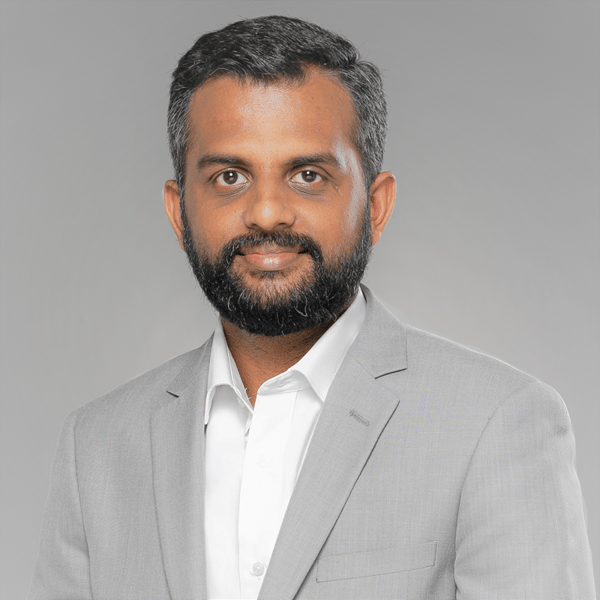
The way you sell AI to a factory is not the way you sell AI to anyone else. There is no product-led motion on the shop floor. There is a millwright with a torque wrench, a supervisor with a clipboard, and a training binder that has been photocopied so many times the diagrams look like weather maps. Siva Lakshmanan runs the company trying to replace the binder. He is unusually calm about this.
DeepHow is a nine-year-old, sixty-one-person, Detroit-headquartered AI company that turns expert operators into training video. The video is searchable, translatable, quizzable, and portable to a mobile phone. Customers include Stanley Black & Decker, Anheuser-Busch InBev, Foxconn, and Siemens. The company has raised twenty-three million dollars in total, most recently a fourteen-million-dollar Series A in April 2023. In November 2024 the founding CEO, Sam Zheng, handed the operating role to Lakshmanan. Zheng and his two co-founders had come out of Siemens' innovation program. Lakshmanan came out of an acquisition.
Two, actually. He was a client supply chain analytics leader at IBM's Global Consulting Group, where his group was instrumental in the ILOG integration after IBM bought that optimization-software house. In 2013 he joined Antuit.ai, an AI company focused on demand forecasting and supply chain planning, initially to build the Asia business. He became co-CEO in 2021, the same year Zebra Technologies acquired the company. At Zebra he ran strategy, AI, and product management for the Software Solutions group. In 2022, Supply & Demand Chain Executive named him a Supply Chain Pro to Know. He sits on the Forbes Business Council. He holds an MBA from IIT Madras and a computer science engineering degree from the University of Madras. That is the résumé. It is not the interesting part.
The Interesting Part
The interesting part is what Lakshmanan says when asked what he actually wants AI to do. He told Frost & Sullivan, in a line that will strike no one in Silicon Valley as flattering, that "the true win for AI in manufacturing is invisibility - it should just solve problems without fanfare." A frontline worker does not want a copilot. A frontline worker wants the machine to stop making the noise it started making twenty minutes ago. Lakshmanan spent a decade selling supply chain forecasting to CPG buyers; he has watched enough demos die on the vine to know that a factory floor is not a stage.
DeepHow's pitch rests on a demographic problem that will not go away. In the United States there are roughly thirteen million manufacturing workers spread across three hundred thousand factories producing about $2.3 trillion in output annually. In one of his first public statements as CEO, Lakshmanan noted the industry number that everyone in his target market already knew and no one had a good answer for: more than half of that workforce is eligible for retirement. When those workers leave, the procedures they carry in their hands and habits leave with them. There is no place to look them up because there was never a place to write them down.
Lakshmanan calls what he is building an "operational knowledge warehouse." It is a data-warehouse analog for the parts of work that live in humans. You capture the expert. A supervisor films the procedure on a phone. The platform structures the video into steps, generates a searchable transcript, translates the transcript into whatever languages the plant runs on, produces a standard operating procedure document, and wraps the whole thing in a comprehension quiz. The next hire watches the video, takes the quiz, and can search for a specific step the next time the line goes down. The retiring expert has now, in effect, been backed up.
The company's reported customer outcomes are unusually specific for a Series A. Under DeepHow's leadership, customers have reported roughly twenty percent gains in overall equipment efficiency, five hundred thousand dollars in weekly cost savings, seventy percent reductions in turnover, and, most striking, the elimination of fatal safety incidents at deployed sites. Those numbers were public before Lakshmanan arrived. His job is to make them repeat.
The Stack
DeepHow's technology stack is broad in a way that flags a company that has done enterprise sales before. Google Cloud with BigQuery, Cloud Run, and GKE. PyTorch, Hugging Face, MLflow, Weights & Biases, BentoML on the model side. Terraform, Helm, ArgoCD, Datadog, New Relic on the ops side. Temporal Cloud for workflows. In early 2025 the company announced a collaboration with NVIDIA on the Video Search and Summarization Blueprint, the reference architecture NVIDIA published for multimodal video AI. The partnership is a tell. It lets DeepHow position itself as physical AI infrastructure, not just an LMS with a video ingest button, and it puts a hyperscaler's logo on slides that have to sit in an industrial buyer's committee for six months.
The customer roster is a bigger tell. Stanley Black & Decker, Anheuser-Busch InBev, Foxconn, Siemens, Emerson. These are the buyers you get when your product actually plugs into a plant, and they are the buyers you keep by not breaking anything. Lakshmanan spent his career at the enterprise end of that market. He knows what a five-percent uptime dip does to a beverage co-packer's quarter. This is not a founder discovering the industrial buyer for the first time. This is a hire made to scale the sales motion after the founders proved the product.
Geography
Lakshmanan lives in Frisco, Texas. DeepHow is headquartered in Detroit. He splits time. Detroit is a natural home for a shop-floor AI company; the customer base is walking distance. Frisco is a natural home for a family and a Delta hub. That the CEO lives four states away from the office is, in 2026, unremarkable. That the office is in Detroit at all, rather than in the Bay, is more interesting. DeepHow has always been a manufacturing company that happened to do AI, not an AI company that decided to try manufacturing. Lakshmanan appears to agree with the emphasis.
The Career Reading
Three chapters, three integrations. At IBM he worked on ILOG. At Zebra, on Antuit. At DeepHow, on the transition from a founder-led product company to a repeatable go-to-market. Each chapter has been about turning a specialized industrial capability into something that could be sold and installed at scale. Read that way, DeepHow is on-brand. The company has product-market fit and pilot momentum. What it does not yet have is the sales, partnership, and operational rigor of a Zebra or an IBM. That is the gap Lakshmanan was hired to close.
Ask him why he took the job and he does not answer with equity or title. He points at the outcomes. On a public LinkedIn post announcing his move, he wrote that work becomes fulfilling for him "when I see the impact of my work" on customers and communities. Read cynically, it is a stock line. Read against his career, it is a description of the pattern. He has, at every stop, worked on the boring, high-consequence parts of enterprise software: supply chain planning, demand forecasting, standard work capture. None of it is going to end up in a keynote alongside a robot dog. All of it saves a plant manager a quarter.
What To Watch
Three things to watch on DeepHow under Lakshmanan. First, whether the NVIDIA partnership converts into meaningful pipeline; hyperscaler blueprints are marketing, but they are also lead generation. Second, whether the company's expansion into pharmaceuticals, life sciences, energy, and field services holds the same OEE and turnover metrics it has produced in discrete manufacturing. Third, whether the "operational knowledge warehouse" phrase catches on. Categories are made by consistent naming. Category leaders capture the deals that founders of feature companies never see. Lakshmanan is trying to make one.
It is possible he will fail. Categories rarely coalesce on the schedule the CEO would prefer. But the base rate for people who have taken a company through a Zebra-scale acquisition and want to try again is a small number, and Lakshmanan is in it. The shop floor is a hard place to sell software. It is also, at the moment, the last place in the enterprise where there is a large amount of undigitized human expertise, a workforce that is aging out, and a room full of executives who would prefer not to be the one who let it walk out the door. That is DeepHow's addressable market. And, as of November 2024, it is Siva Lakshmanan's job.