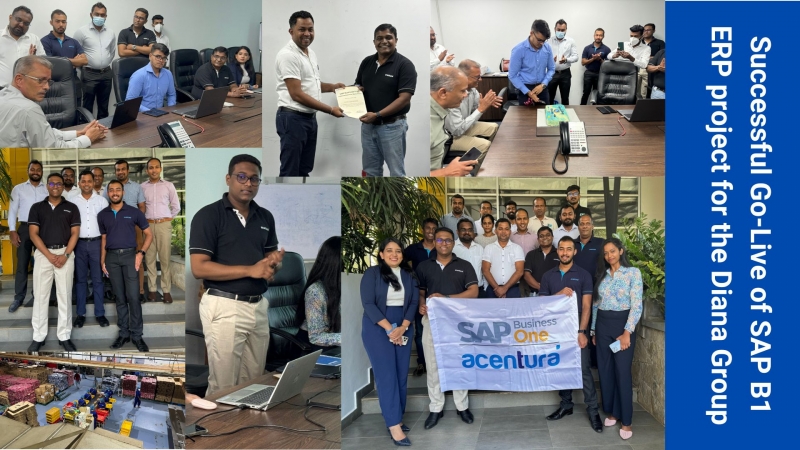
At Diana Group, a Sri Lankan biscuit and chocolate manufacturer, the arrival of SAP Business One came with a second deliverable: 44 people trained to use it. Acentura’s announcement celebrated both the software going live and the candidates receiving their certificates. It is a small detail in a company update. It is also a useful way into understanding the company.
- Acentura implements ERP, connects systems, builds software and supplies engineering teams.
- Manufacturing is a particularly concrete part of its pitch, from production schedules to shop-floor visibility.
- Its work includes industry-specific tools, such as Brew One for tea businesses.
- A Tempest-led minority investment adds an international expansion chapter.
Enterprise software has a peculiar problem. Buying it can be a relatively tidy transaction. Making it fit a working business means confronting the purchasing rules, exceptions, spreadsheets and habits accumulated over years. Acentura operates in that less tidy territory. It configures the platform, connects the applications, tests the result and helps people take over.
Forty-four reasons to look past the software
Diana’s rollout makes the point without needing a spectacular savings claim. Training belongs inside the implementation. Someone must know how to enter the transaction, interpret the report and recover when the process goes sideways. The certificates are a reminder that the customer’s operating capability is part of what gets delivered.
Other named engagements give this work a little more shape. Acentura announced a SAP Business One go-live with Finetech Consultancy in November 2023. In November 2025, it described signing Anura Group’s Project NexCore, also powered by SAP Business One. These are different stages of customer work: a system entering use and a programme beginning.
The wider customer base includes manufacturers, telecom operators, insurers, finance businesses, learning providers and software companies. Acentura reports more than 50 global clients and 200 delivered projects, serving more than 11 countries. Those are company-reported counts; the named rollouts are the more useful starting point for understanding the work.
A factory has three versions of the truth
Think of the three questions a manufacturer must answer. What have we bought and sold? What should we make next? What is actually happening on the floor? An ERP system, a planning tool and a manufacturing execution system address different parts of that puzzle. Their answers need to meet.
Acentura brings SAP and Acumatica into the ERP conversation, RELEX into planning, and LYNQ into manufacturing execution. Its planning services describe modelling capacity, material availability and changing production constraints. The selling point is the combined implementation: helping the customer connect the record of the business with the plan and the work.
That puts Acentura among systems integrators and specialist implementation partners. Buyers can also choose separate vendors for each job or build an internal team. Acentura’s proposition is breadth with industry context. The trade-off to examine is practical: can one delivery team demonstrate enough depth in each critical part of your particular operation?
The tea bag has a back office
Brew One is where the company’s pitch becomes pleasingly specific. Built on SAP Business One for tea businesses, it covers auction purchasing, supplier deliveries, quality records, blending, packing and export documents. Tea grading and tasting appear alongside contracts and payments. The product follows the material through the business.
A generic inventory entry cannot tell the whole story of a blend. Brew One’s described workflow connects quality specifications with recipes and orders, then tracks production and packaging batches. For a buyer, the useful demonstration would follow one real order all the way through. The awkward exception is often more revealing than the polished dashboard.
“Our operating model is very high touch when it comes to customers.”Chandana Ranasinghe, CEO, in a CEO Insights interview
The capability came in layers
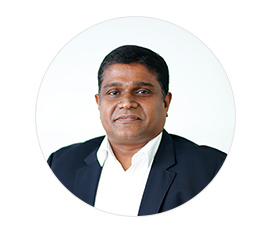
The company traces its roots to 2014. Founder and CEO Chandana Ranasinghe describes Acentura as a 2019 spin-off of Auxenta; Auxenta Digital Labs announced the Acentura name in March 2021. His background includes software testing at Virtusa and process improvement at apparel manufacturer Brandix. Software quality and factory processes are both familiar territory.
In an interview, Ranasinghe identified early positioning and meeting customer expectations as challenges. He described moving into enterprise solutions and building stronger operational delivery. His account emphasised customer feedback, distributed development teams and testing practices. It suggests an organisation shaped by delivery demands, although it should not be read as an independently measured performance record.
That delivery business extends beyond ERP. Acentura offers custom applications, API integration, quality assurance, cloud migration and ongoing support. Its staffing offer includes contractual placements with an option to hire the people later. Customers can buy a project, continuing operational help or additional engineering capacity, depending on the problem.
Check the system before replacing it
SAP Clinic is a compact expression of the same approach. It examines licensing, system usage, compliance, support coverage and optimization opportunities. The listed outputs include a licence report, a usage analysis and a risk assessment. For a business already paying for SAP, that is a sensible question to ask before expanding the installation.
The buying discipline is equally concrete. Separate platform costs from configuration, data migration, integrations, training and continuing support. Agree on acceptance tests and who owns each process. If records are unreliable or nobody can settle conflicting departmental requirements, adding connected software will still leave the underlying disagreement to resolve.
Now take the delivery business abroad
In early January 2026, a Tempest PE Partners-led consortium acquired a significant minority stake in Acentura, according to reporting published in May. The disclosed plan includes overseas sales partnerships, financial planning and closer monitoring of operating measures. Expansion will test whether the company can carry its delivery approach into more markets.
The lesson a reader can borrow is modest and useful: follow the handoff. Follow a tea purchase into a blend, a production plan onto the floor, a software installation into a person’s working day. Acentura’s proposition becomes easiest to understand at those points. The 44 trainees at Diana Group belong in the story because they are where the system starts becoming a business tool.