A wildlife collar sends a signal. A ranger submits a report. Somewhere between those two events and a useful screen lies a surprisingly difficult software problem. EarthRanger, the conservation platform, needed to make information from different devices arrive, combine and display faster. GIGA IT supplied engineers to help improve that machinery. The work is a useful introduction to a company whose most interesting output often sits behind somebody else’s interface.
- Latin American engineers join client teams during overlapping U.S. working hours.
- Clients can buy individual specialists, a dedicated team or responsibility for an entire project.
- The work stretches from conservation data pipelines to industrial automation and clinical software.
Consider what the conservation assignment actually involved. GIGA IT’s case studies describe integrating GPS devices, smart collars and ranger observations. The stack includes Python, Django and Google Cloud. In a January 2025 client review, Ai2 engineering manager Chris Jones described work on Gundi, an integration platform supporting EarthRanger: a Cloud Run and Pub/Sub pipeline, plus activity logs that let users see what the system was doing.
That last detail deserves attention. A pipeline transports information; an activity log helps people trust the journey. The customer reported a stable platform as integrations and users increased. Here is the company’s proposition in miniature: add engineering capacity where an existing operation has become difficult to extend.
The distance that matters is a working day
GIGA IT traces its beginnings to 2008 and founder Santiago Alcain, now its president. Its own history starts with industrial environments and a first customer in Colombia. Today Eduardo Gonzalez is CEO. The industrial inheritance helps explain a service menu that puts software development alongside automation, engineering design and edge computing. Code has to coexist with machines, established processes and people who cannot simply stop working while it changes.
The commercial arrangement is deliberately practical. GIGA IT LLC provides a U.S. contracting entity, while engineers work across Latin America. Its stated advantage is overlapping working hours, English communication and engineers joining the client’s repositories, planning meetings and reviews. Geography becomes a coordination tool: the person who can answer a question is awake when the question becomes urgent.
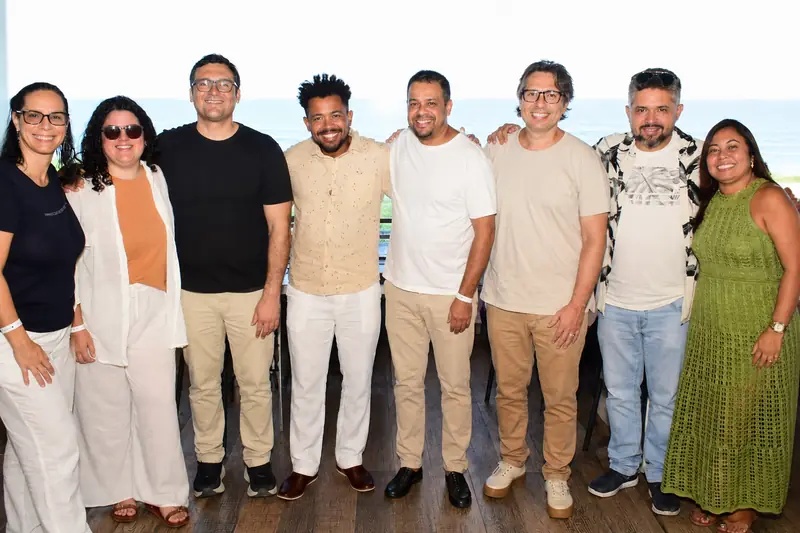
There are three ways to buy that help. Staff augmentation adds specialists under the customer’s management. An AI engineering team supplies a cross-functional group aligned with a roadmap. End-to-end delivery puts GIGA IT in charge from architecture through production. These arrangements allocate different responsibilities, so choosing among them matters more than the vocabulary suggests.
First, make the process less ridiculous
The Guidewire case supplies the sharpest illustration. According to GIGA IT, a monthly financial closing workflow took three hours and involved fragmented controls, manual work and multiple validation layers. The team redesigned the sequence, clarified responsibilities and removed friction. Then it applied automation using a stack listed as Automation Anywhere, Workato, Python and SAP.
The reported result was a reduction from 180 minutes to 15. That is a specific workflow, rather than a claim that an entire company’s accounting department closes its books in a quarter of an hour. The distinction matters. So does the sequence: simplify the work before making software do it faster.
At Tenaris, the bottleneck was different. Industrial assets generated continuous telemetry, but centralized processing delayed action. GIGA IT describes moving signal analysis and anomaly detection toward the equipment, while keeping secure synchronization with cloud systems. The engineering choice follows the problem: some decisions belong close to the machine.
Healthcare brings another constraint. In its Atlantic Health System case, GIGA IT describes building an application with OpenAI models, optical character recognition and Epic connectivity. The task was integrating patient-access and clinical workflows across fragmented systems. These examples place the firm among engineering services providers paid to make existing operations work better, with AI forming one part of the implementation.
The price of somebody else’s capacity
This is a services business: customers pay for engineering capacity, teams or agreed delivery. A historical CoinFabrik review reported spending about $60,000-$70,000 on frontend development support in 2020. That figure describes one engagement, not a current package price. It offers a more useful clue than a generic promise of cheaper outsourcing: even a small external team is a meaningful operating commitment.
The alternatives include internal hiring, freelance marketplaces and other nearshore providers. GIGA IT’s own comparison guide discusses BairesDev, Toptal and Turing. Its case rests on combining a U.S. contract, Latin American delivery, technical oversight and a path from one engineer to a larger team. Buyers should test those features against their particular needs.
“Their flexibility and transparency set them apart.”
Marcos Barrena, procurement client, in a Clutch review
The brief can break before the code
The older reviews contain a useful warning. One industrial customer said requirements gathering sometimes lacked depth and could affect deliverables. A procurement customer wanted more formal reporting. Neither criticism requires a dramatic failure story to be instructive. Technical ability cannot compensate indefinitely for an unclear brief or a customer who cannot see progress.
GIGA IT’s current delivery process describes discovery, architecture planning, short iterations, automated tests and controlled releases. It also calls for agreement on decision rights, escalation and success metrics. Buyers can copy that discipline: name the owner, agree what success means and make progress visible before expanding the team.
The same reasoning limits where staff augmentation fits. GIGA IT recommends it when a customer already has technical leadership and a clear roadmap. Extra developers need someone to decide what they should build. Its careers page, meanwhile, emphasizes learning, regular reviews and at least fifteen paid days off for full-time employees. The connection is straightforward: continuity depends on retaining people who understand the system.
For a prospective client, the useful first conversation starts with the obstruction: delayed data, too many handoffs, an understaffed team. Bring the existing architecture and the decisions nobody currently owns. GIGA IT’s most persuasive work begins at that level of detail. A collar’s signal still has to reach a ranger. Somebody has to make the journey dependable.