Consider an insurance claim. Before anyone gets paid, information has to travel: from a policy to a customer record, from a broker to a carrier, from a claims screen to the rules governing it. Each step looks ordinary. Together, they create a surprisingly demanding software problem. This is the territory Tanisha Systems occupies: the business machinery that must keep moving while someone improves it.
- The work: custom applications, modernization, cloud services, and IT consulting.
- The delivery: local engagement combined with offshore resources, plus staffing and recruitment.
- The surprise: a connection to LoveVivah, an Indian matrimonial platform.
The business behind the build
Founded in 2002, Tanisha is a privately held services business. Founder and president Gorav Aggarwal appears in both its corporate story and the story of LoveVivah. The company’s core offer is practical: assemble technical people, build or repair applications, and help clients operate the result. Application modernization and business process outsourcing sit beside custom development.
The recruiting piece matters. Tanisha’s LinkedIn description puts staffing, recruitment process outsourcing, and payroll alongside application development. A buyer can approach this kind of supplier with two different needs: an existing team needs more people, or a business needs somebody to deliver a defined project. Those requests may sound similar in a meeting. They create different obligations when the deadline arrives.
“We deliver software solutions determined by business need.”
Tanisha Systems’ company statement
Read that statement literally. A service company earns its place by adapting to a client’s circumstances. Its expertise must include the application, the surrounding systems, and the people who will use it. Tanisha sells that combination. Its commercial center is client engagements for engineering, consulting, and outsourcing, with the scope shaped around the assignment.
The interesting work is in the plumbing
Tanisha’s insurance offering makes the proposition concrete. It lists policy administration, quote systems, underwriting, claims, compliance, and carrier-broker integration. These are connected activities. Changing the claims application without understanding the policy data can move a bottleneck from one screen to another. The appeal of a supplier with industry knowledge is that it should recognize the connections before writing the replacement.
Healthcare adds another set of connections. Tanisha describes custom electronic medical records, electronic health records, HL7 integrations, pharmacy benefit portals, and links to legacy systems. Its banking practice lists payments, credit card systems, trading systems, and data migration. These are advertised areas of expertise, rather than a single packaged product that every customer receives.
Existing systems
Data + integration
Cloud operations
That is also where its market position becomes clearer. Tanisha belongs among enterprise IT services and talent suppliers. Its case rests on a flexible mix of people, domain knowledge, and delivery locations. Buyers comparing it with another provider should examine who understands their particular workflow and who will own the finished work. A longer technology list cannot settle either question.
Then there is the marriage business
The unexpected turn is LoveVivah. Tanisha’s locations page calls it a subsidiary; LoveVivah identifies Tanisha Systems Pvt. Ltd. as its owner and manager. The Google Play listing names Tanisha Systems, Inc. as the app developer. Those are distinct legal names, connected by an unusually tangible consumer product.
LoveVivah makes the abstract language of trust and security easier to see. Its own account describes identity documents, phone and email checks, and information from social profiles. Its 2016 relaunch incorporated Aadhaar verification. The design asked people to do more work before participating, on the premise that a matrimonial service needed confidence in who was on the other side.
There is a useful product lesson here, without turning it into a victory lap. Adding verification creates effort for the user. It can make sense when identity is central to the transaction. LoveVivah’s privacy policy also places responsibility on users to verify information and does not guarantee the authenticity of uploaded documents. A verification feature has a boundary; good product judgment includes understanding it.
A delivery model has to be managed
Tanisha’s office list gives its engagement model physical form. It names locations in the United States, Canada, Mexico, and India, including development centers in Gurugram, Noida, and Hyderabad. The company describes combining local onsite and offsite resources with offshore operations. The intention is to bring client proximity and delivery capacity into the same engagement.
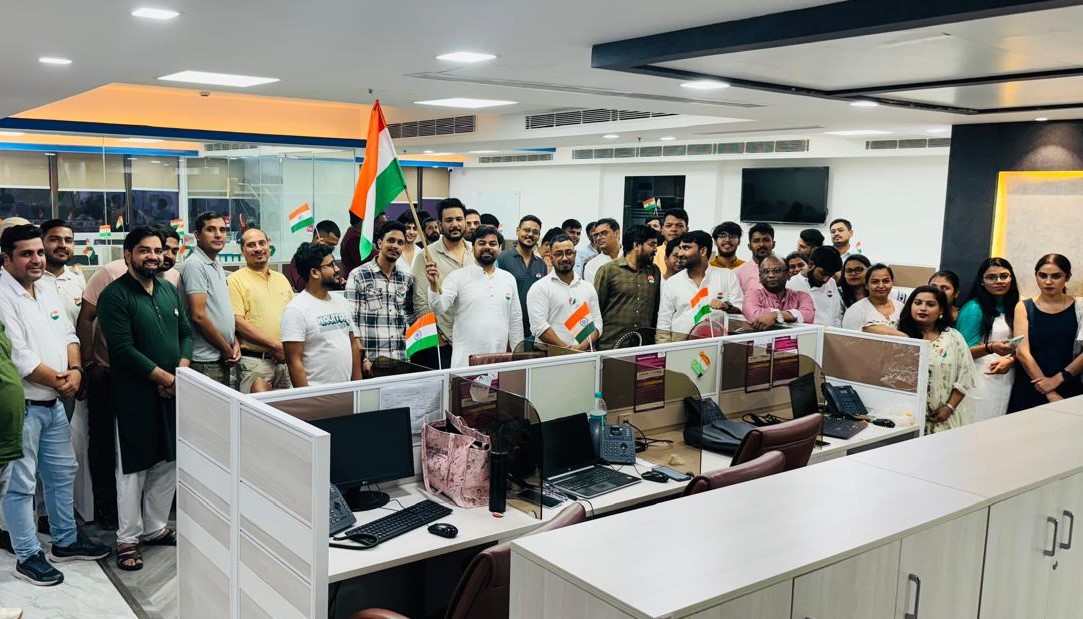
Its culture page adds an interesting operating detail: teams are allowed to make decisions as though each were a small company, within organizational guidelines. That is an employer’s stated policy. In a distributed services business, the idea has practical appeal. A team that understands the client can resolve a small question before it becomes a large queue.
But discretion requires agreement about the job. Local contact and offshore capacity become useful together when requirements, decisions, and acceptance tests travel clearly. That is a buyer’s inference from the model, rather than a measured result from a Tanisha engagement. The coordination deserves as much attention as the engineering skills.
Buy the outcome you can describe
A sensible conversation with Tanisha starts with a narrow problem: connect this claims workflow, migrate this application, or supply these missing skills. Then specify who approves changes, what must keep working, and how completion will be demonstrated. Ask for a proposal that separates development, integration, testing, support, and client responsibilities. The price becomes more meaningful when the boundaries are visible.
The same discipline helps explain when the model is a poor fit. A buyer who can meet the need with an existing product should compare that route before commissioning custom work. A buyer unable to provide business rules or a decision-maker will struggle to direct an outside team. Those are purchasing conditions, not allegations about this company.
Tanisha’s appeal is the possibility of bringing several kinds of work together: finding people, understanding an industry, building applications, and supporting them afterward. The question for a prospective client is wonderfully specific. Can this team explain how your business process works, and show exactly what it will change?