Consider the lawyer opening a case file. The problem begins before any argument is made: scanned forms, handwritten notes, dates buried in pages, and another document that seems to contradict the first. A fluent chatbot can add another voice to this crowded room. Something more useful would help the lawyer find the evidence, inspect it, and get on with the case. That distinction is a good way into Accubits.
- Custom software, AI and blockchain for businesses and public bodies.
- Specific workflows: legal records, video archives, wallets and automation.
- Selected contracts link payment to an agreed, measurable result.
The company sells engineering and consulting across an unusually broad menu. But its interesting question is quite narrow: what makes technology worth paying for? Its customer work supplies concrete answers. Its newer commercial offers try to put the answer into the invoice.
01 The capabilities found a customer
Accubits dates its beginnings to 2012, in Kerala’s startup ecosystem. The initial approach was product-led. In a 2018 Inc42 account, co-founder Aharsh described the difficulty plainly: “none of our products was finding any traction.” The company added services alongside products. Blockchain development helped it find an opening.
That is a revealing change of unit. A product asks many customers to recognize the same problem. A service business can begin with one customer who already has a problem and a budget. Accubits could apply its technical capabilities to that customer’s circumstances rather than wait for its own packaged idea to catch on.
Inc42 reported a $30,000 seed investment in 2016 from a US-based investor. It was a modest reported cheque, not evidence of a vast financing machine. By 2018, the company had won a Frost & Sullivan award for a blockchain consumer application in logistics and supply chain. The service business was acquiring reference points.
02 The answer needs a return address
Return to the legal file. Accubits’s CaseScribeAI project tackles document ingestion, handwriting recognition, classification and summaries for practices handling Veterans Affairs disability, Social Security and personal-injury cases. The work includes an interactive PDF viewer, editable facts and search across both document text and extracted information.
Those details matter because the workflow does not end when the model writes a paragraph. Someone must check the paragraph, correct a fact, and locate the underlying record. A useful interface makes those actions possible without sending the user back into a scavenger hunt.
For DIFC Courts, Accubits describes a conversational layer integrated into an existing case-management system. Its account emphasizes document references, role-based responses and audit logs. The design makes answers inspectable. That is a more meaningful distinction than another claim that an assistant can sound human.
These are company-published project descriptions. They show what Accubits says it built; they should not be read as independent proof that every deployment produces the same gains. Still, they make the company’s expertise tangible: language models connected to document pipelines, permissions, interfaces and the systems people already use.
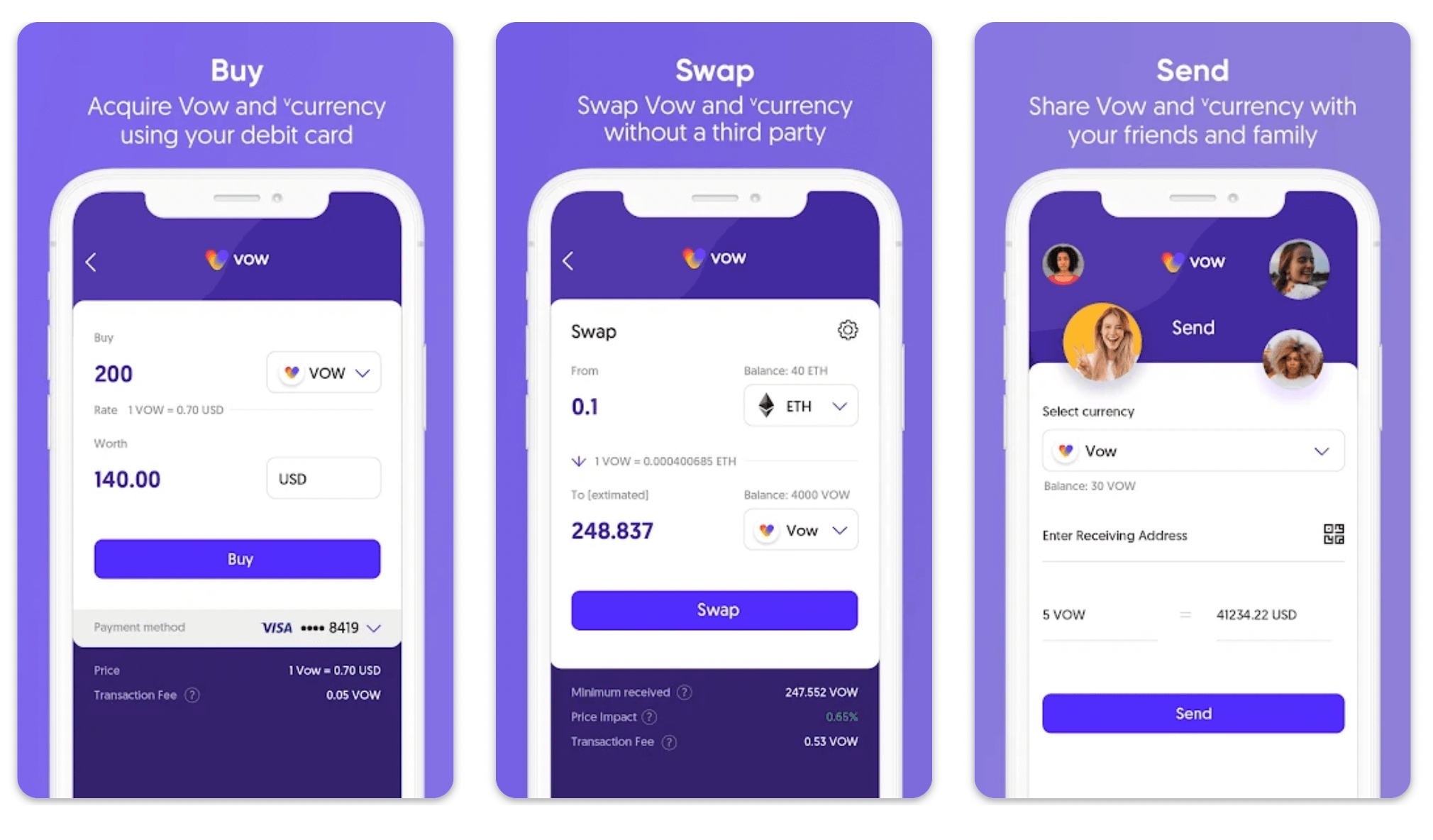
03 Three buttons, a lot of plumbing
The blockchain work has a similarly practical face. For Vow, Accubits describes building a native cryptocurrency and wallet capable of storing, sending, swapping and spending its currencies. The product presentation boils that complexity down to familiar verbs. Someone still has to make the plumbing work underneath them.
Elsewhere, Searchyf turns multimedia into something searchable, using capabilities such as object identification and scene classification. A media archive can be queried by what appears in the footage. The shared idea is reducing the distance between having information and being able to use it.
The company also collaborated with Bud Ecosystem on GenZ models, including a 2023 release designed to handle text and images together. That work adds a research strand to the implementation business. A model release and a finished customer application are different achievements, however. The latter still needs a clear task, usable data and a way to judge whether the output helps.
This places Accubits between a software consultancy and a builder of reusable tools. It can sell a custom implementation, adapt an existing capability, or combine several components. An internal engineering team, another development firm, or suitable off-the-shelf software remains an alternative. The deciding question is how much of the customer’s workflow needs tailoring.
04 Put the number in the contract
Its Outcome as a Service offering changes the commercial conversation. Accubits describes agreeing on a metric, measuring its starting point, building and operating the system, then verifying the result. Possible targets include processing time, cost per transaction and manual effort. Payment depends on the particular contract.
- 01BaselineMeasure today
- 02AgreeDefine success
- 03BuildRun the system
- 04VerifySettle by terms
The service page describes several structures, including an outcome fee and gainshare. A separate pay-when-it-works guide describes software subscriptions beginning after acceptance and AI agents billed for agreed completed outcomes. Buyers need to distinguish those offers: an outcome-linked fee does not automatically mean an entirely free build or that every payment waits for success.
“No baseline, no outcome contract.”
Accubits · Outcome as a Service
The price therefore begins with a definition. Which event counts? Who measures it? What happens when the input is incomplete? Accubits says an outcome must be independently verifiable. It also says open-ended research and work without a measurable baseline are poor fits for this model.
05 Borrow the ruler
Its careers materials call employees “Accubiens” and describe cross-team workshops and access to learning platforms. There is a sensible connection to the business here: a firm moving between legal records, visual search and financial software needs people who can keep learning across disciplines.
The same discipline appears in its GenAI cost-optimization service: model selection, caching, batching and resource allocation are assessed against useful work. A cheaper request is not much help if it fails the task. The performance requirement belongs beside the cost target.
The practice readers can copy is straightforward. Choose one repeatable workflow. Record its starting performance. Define an acceptable result and the evidence needed to verify it. Then discuss technology and payment. Accubits’s early experience suggests that technical ability becomes a business when it meets a problem somebody recognizes. Its current proposition asks both sides to write down what solving that problem would actually mean.
Accubits website ↗ · Company news ↗ · Engineering blog ↗ · GitHub ↗
LinkedIn ↗ · X ↗ · Instagram ↗ · Facebook ↗
Watch the work
▶ The eight-week development pilot ↗▶ Conversational data analytics demo ↗