In April 2022, a health camp near Bahawalpur supplied an unusually practical test of a software company’s purpose. Xeven Solutions brought its INNOVA telemedicine system to a community with limited access to care. Local health workers helped residents connect with clinicians in the UK, US, and UAE. More than a hundred patient histories were taken. The consequential thing about the software was where it allowed a conversation to happen.
- The work: custom AI, applications, and automation for organizations.
- The second bet: five proprietary platforms, from learning to business operations.
- The useful lesson: design the handoff to people as carefully as the technology.
That episode makes a useful starting point for understanding Xeven. Artificial intelligence companies tend to explain themselves through capabilities: language models, agents, prediction. A patient waiting for advice experiences something simpler. Can the right person see the right information, in time to help? Between those two descriptions sits a considerable amount of work.
01 A connection is a product
Founder and CEO Irfan Malik established Xeven in 2016. Its current company history identifies Lahore as headquarters and describes a progression from software services toward proprietary platforms. Healthcare remains a recurring thread. In the camp, point-of-care devices and video consultations worked alongside local health workers. The system depended on more than a screen. People had to help collect information, interpret needs, and guide patients toward treatment or referral.
The first obstacle in that story was access. A working consultation required an arrangement around the application. That distinction matters when evaluating Xeven’s present AI ambitions: a feature becomes useful only when someone can actually use the service containing it.

02 The awkward work between systems
A separate telemedicine engagement shows what that arrangement can cost. In a published client account, a medicine-and-technology company reported spending about $30,000 on a March-June 2020 project. Xeven integrated medical equipment with custom software, working around incompatibilities with software development kits. The engineering problem was the connection between pieces that were supposed to cooperate.
Today, the services menu includes AI strategy, language tools, predictive data systems, web and mobile development, and device integration. Customers can commission a product or bring engineering talent into their own teams. Healthcare organizations are an evident fit; enterprise teams and founders are also targets. Xeven occupies the space between an internal development department and a collection of ready-made software subscriptions.
Listed minimum project size on Clutch. Its advertised hourly range is $25-$49. Scope, integration, and support determine the actual bill.
The distinction is useful for buyers. Custom development makes sense when existing tools cannot accommodate an important workflow. It also gives the buyer decisions to make about maintenance and ownership. A narrow requirement already served by an ordinary application may offer little reason to commission a bespoke system.
Its ambitions extend into banking. A company newsletter describes a Bank of Punjab partnership aimed at improving customer experience and internal processes. The attraction for a business customer is straightforward: a supplier familiar with an industry can ask better questions before writing code. The buying test should be equally concrete. Ask which process changes, which systems must connect, and how the team will measure the result.
03 Five products, one proposed journey
Xeven now presents two related businesses: a client-services studio and an ecosystem of products it owns. This is a meaningful change in emphasis. A commissioned application answers one customer’s requirements. A proprietary platform tries to make a repeatable business out of a recurring problem. The company is pursuing both, asking its own products to demonstrate what its engineering teams can build.
- 01LearnHope to Skills
- 02AssessTaqwi AI
- 03GrowFomax
- 04ConnectOmniReacher
- 05OperateCovis
A company-proposed sequence, not a measured customer funnel.
Hope to Skills supplies learning pathways, assessments, and practical training. Taqwi AI addresses recruitment with verified profiles, mock interviews, and application scores. Fomax combines content creation, publishing, analytics, and planning for brands and creators. OmniReacher handles calling campaigns. Covis brings leads, proposals, agents, and team planning into a workspace for service businesses.
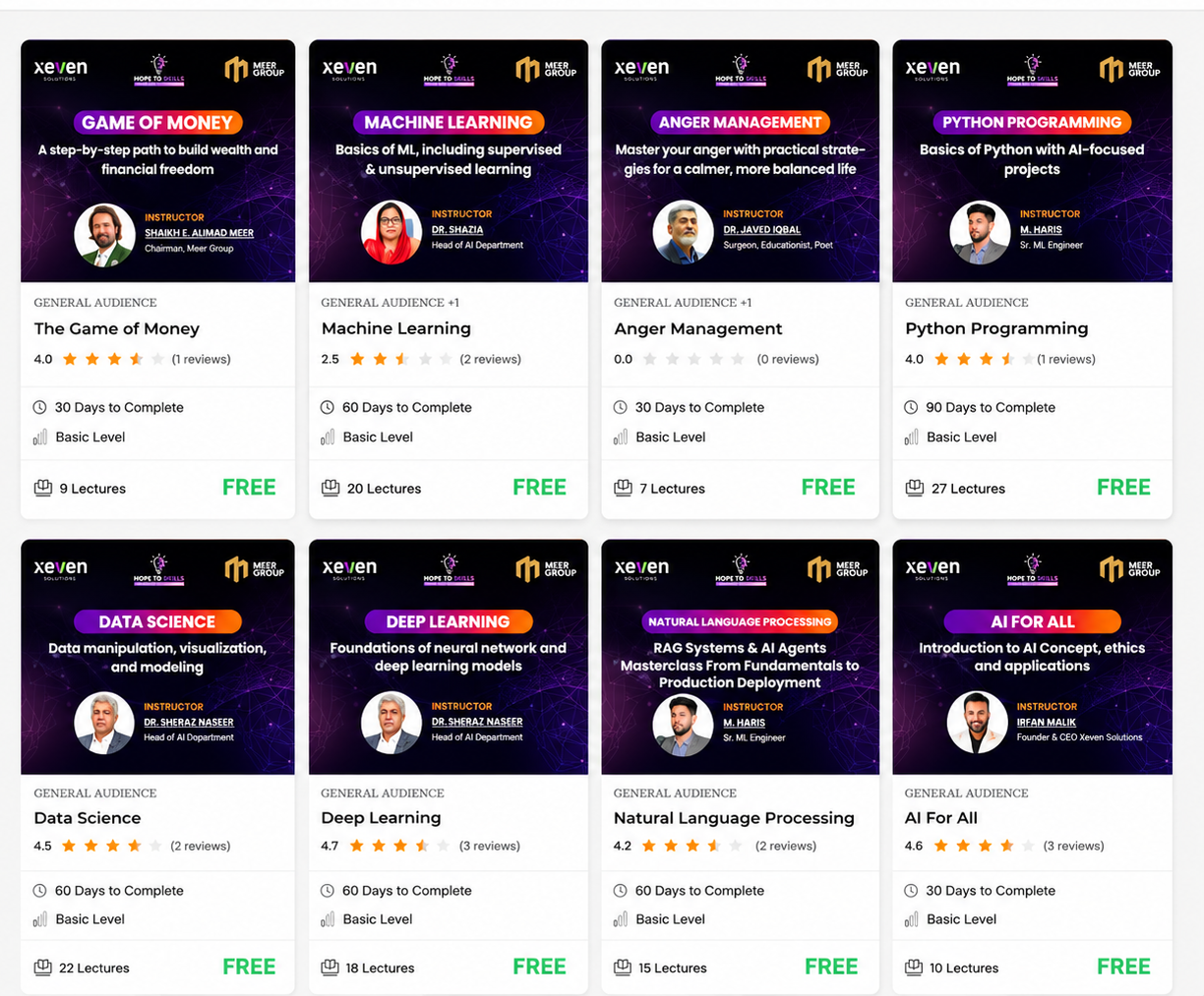
The catalog provides a small surprise. Alongside Python and machine learning sit anger management and financial skills. That assortment makes the company’s language about human potential less abstract. Its proposed customer journey extends beyond installing software into preparing people to work with it. Whether customers follow the whole sequence is a separate commercial test.
04 Two missed calls, then a person
One of the portfolio’s most revealing details is almost comically mundane. OmniReacher describes a rule that escalates to a human after two unanswered AI attempts. It also provides calling windows, retry spacing, scripts, and outcome tracking. These are the decisions that turn a voice agent into an operational process. Someone has thought about the unanswered phone.
“Our mission is not to replace humans. It’s to empower them.”
Xeven Solutions · company website
That rule offers a concrete expression of Xeven’s stated philosophy. A buyer can ask to see the escalation working, inspect the recorded outcomes, and compare human and automated performance. The result is a more useful conversation than debating whether an agent sounds impressive. The unit of judgment becomes a completed task.
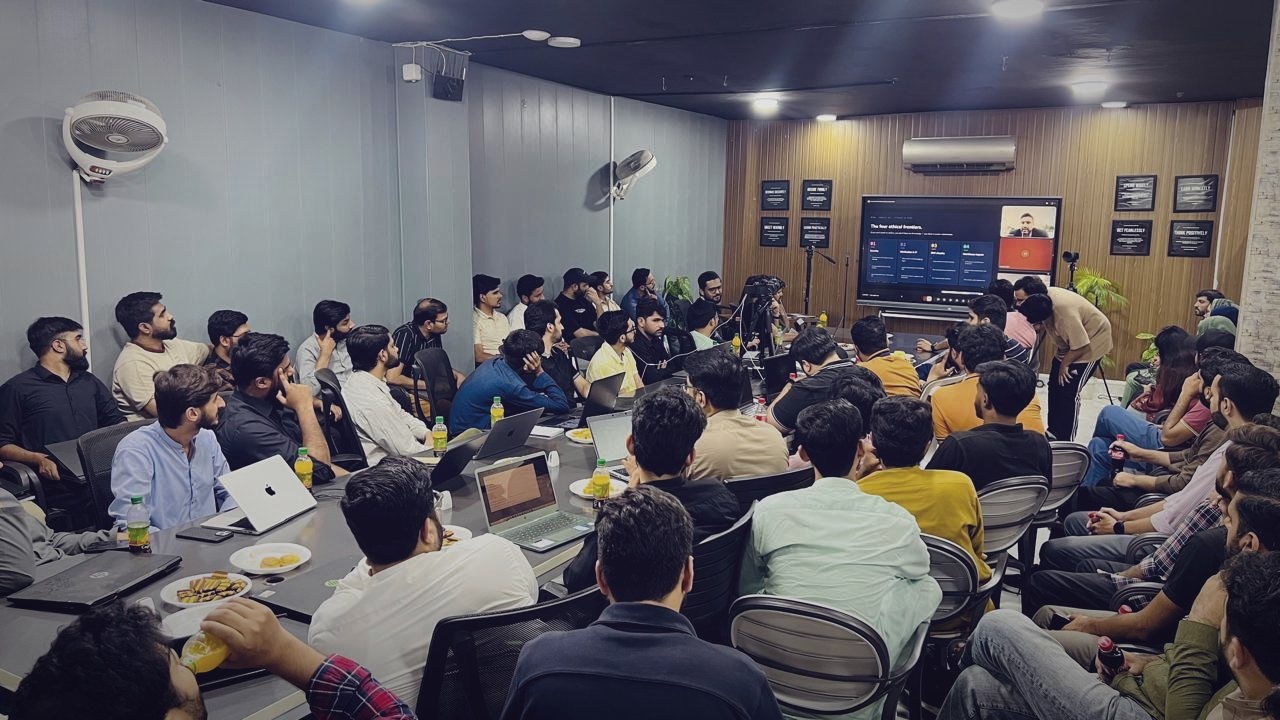
For Xeven, that operational detail is also a competitive argument. Buyers comparing development firms can inspect the company’s product interfaces and documented workflows, then ask how those experiences translate to their project. Owning software gives Xeven something specific to demonstrate. It does not, by itself, establish that every platform or client deployment performs equally well.
05 Copy the handoff
There is an appealing discipline here for anyone planning an AI project. Pick one workflow. Identify who starts it, which information it needs, what counts as completion, and who takes over when automation stalls. Then test the whole route. Xeven’s own services process includes discovery before design and deployment. Its careers materials emphasize learning and shared responsibility; its internship updates describe practical project presentations.
This approach depends on access to usable information and people willing to own the result. A hiring score still needs scrutiny. A clinical tool still needs qualified judgment. An unanswered call still needs an appropriate next step. The camp near Bahawalpur makes the point tangible: the value arrived when a patient and a clinician could finally speak.