Consider the insurance claim. Before anyone gets paid, a document must become data, the data must reach the right system, and somebody must deal with the awkward case that refuses to fit. In Funavry’s portfolio, a project called Easy Claim tackles that sequence. Its feature list includes an interface for human intervention. Among the promises of automation, that little escape hatch is the detail to remember.
- Funavry builds custom software and connects it to business operations.
- Its range runs from AI document processing to ERP and virtual training.
- The buyer’s job: define the workflow, the exceptions and what success means.
It suggests a useful way to read this company. Funavry works across fashionable technologies, but its more revealing assignments concern the ordinary mechanics of an organization. A claim needs checking. A factory needs records. A training instructor needs control over what happens next. The technology becomes interesting when it encounters those obligations.
01 / The factory is part of the story
Founded in 2018, Funavry sells engineering and IT services to business customers. Its offering spans custom applications, design, integration, maintenance and automation. Healthcare organizations, retailers, financial businesses and public-sector customers appear among its target industries. The arrangement is familiar: a client brings a problem; an outside team supplies the people and technical work to build a response.
The range is what catches the eye. Its published work includes a manufacturing ERP project called POD and Heat Master, software for a building-insulation business. The latter brings personnel and financial processes into the same picture as reporting obligations. These assignments put a less photogenic side of digital transformation beside the company’s AI and immersive-technology work.
Read that combination as a clue to its market position. Funavry wants a place between an early product idea and an operating enterprise. It offers the breadth to build an application, connect existing systems and keep the application running. For a buyer, the potential attraction is continuity across those jobs. Whether that breadth is useful depends on the actual assignment.
02 / Someone still needs the controls
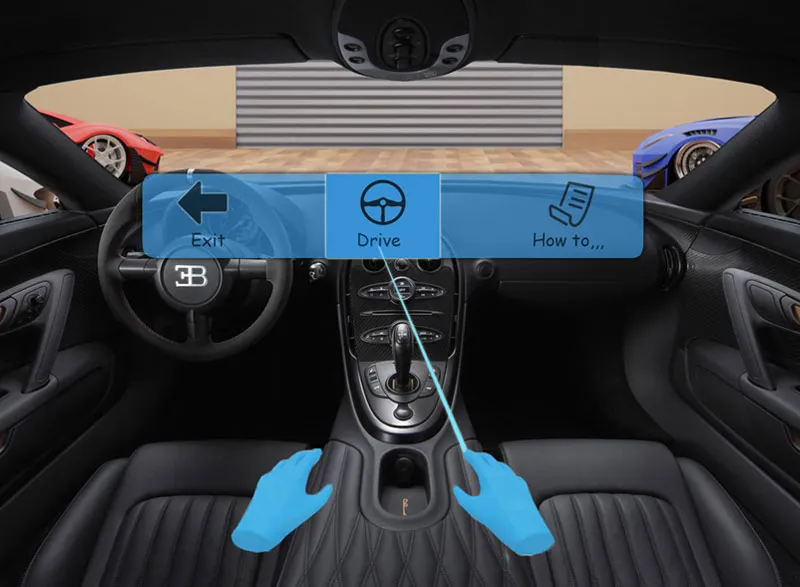
Simutual, its virtual training project, makes the same point in a different setting. Funavry describes simulations with live instructor control and coordination among participants. The simulated environment is only one part of the work. A training session also needs someone to direct it, participants who can interact, and a way to organize their experience.
That is the connective tissue between a virtual classroom and an insurance workflow: each has a person responsible for what happens. Funavry’s service descriptions extend through requirements, testing, deployment and maintenance. Those stages matter because software enters an existing arrangement of people, permissions and habits. An attractive screen can conceal a difficult handoff.
- 01CaptureBring information in
- 02InterpretMake it usable
- 03ConnectReach the next system
- 04ReviewHandle the exception
Editorial illustration of the integration problem, not a measured Funavry process.
03 / Trust crosses the ocean first
For an overseas client, the engineering question comes with a management question. Can another team become part of the business without making the business harder to manage? Funavry publishes a revealing testimonial from Zain Amin, identified as Napollo Software Design LLC’s chief marketing officer. He describes an initial reluctance to take development offshore.
“Initially we were skeptical going offshore”
Zain Amin, Napollo CMO, in a testimonial published by Funavry
His account credits transparency, an open culture and technical breadth with building confidence. It is a customer endorsement selected by the supplier, so treat it as that. Still, the concern is recognizable. When development happens at a distance, visibility into decisions becomes part of the service. A client needs to know what is being built and how disagreements will be resolved.

04 / The price is in the scope
Funavry’s business model follows the work: development engagements, implementation, integration and ongoing support. Its named portfolio entries describe different assignments. A company shopping here is buying engineering capacity and delivery responsibility, with the terms shaped by what needs building.
TechBehemoths lists an hourly service range of $30 to $70. Use that as a directory indication. A project budget has to account for the hours, specialist skills, infrastructure and continuing support the assignment requires. A modest hourly rate can still produce a substantial bill if the brief keeps expanding.
Maintenance changes the calculation too. Once an application becomes part of daily operations, a small modification can touch several teams. A buyer should decide who approves changes, who watches for failures and who pays for updates. Those questions belong in the original conversation because the relationship can continue long after the first version ships.
The sensible comparison therefore starts with the problem. A standard package may already meet it. A specialist integrator may suit a tightly bounded ERP job. An internal team may make sense when the work requires constant product decisions. Funavry’s broad offering becomes more relevant when several capabilities must come together and the buyer can describe how they connect.
05 / A practical next move
Its international ambitions also have a specific marker. A February 2025 Tech Destination Pakistan newsletter records an agreement with Transformation Path Consulting at LEAP to explore Saudi digital transformation and automation opportunities. That is a concrete business-development step. It gives a regional relationship a name and a purpose.
For a prospective customer, the more immediate step is smaller. Pick a workflow with a visible owner and a recurring annoyance. Record how it works today. Decide what information the software needs, which systems it must reach, and who takes over when it gets something wrong. Agree on a result that can be checked.
For example, a useful pilot might follow one document from arrival to review. The acceptance test could ask whether required fields reach the intended system and whether an exception reaches a named person. That is an illustrative buying approach, rather than a reported Funavry engagement. Its advantage is that both sides can inspect the same outcome.
This approach needs cooperation from the business. It becomes difficult when nobody owns the process, information is inaccessible or every department expects a different outcome. A supplier can write the application; the buyer still has to settle those decisions. Funavry’s portfolio offers a useful reminder of where to begin: with the claim, the ledger or the instructor waiting for something to work.