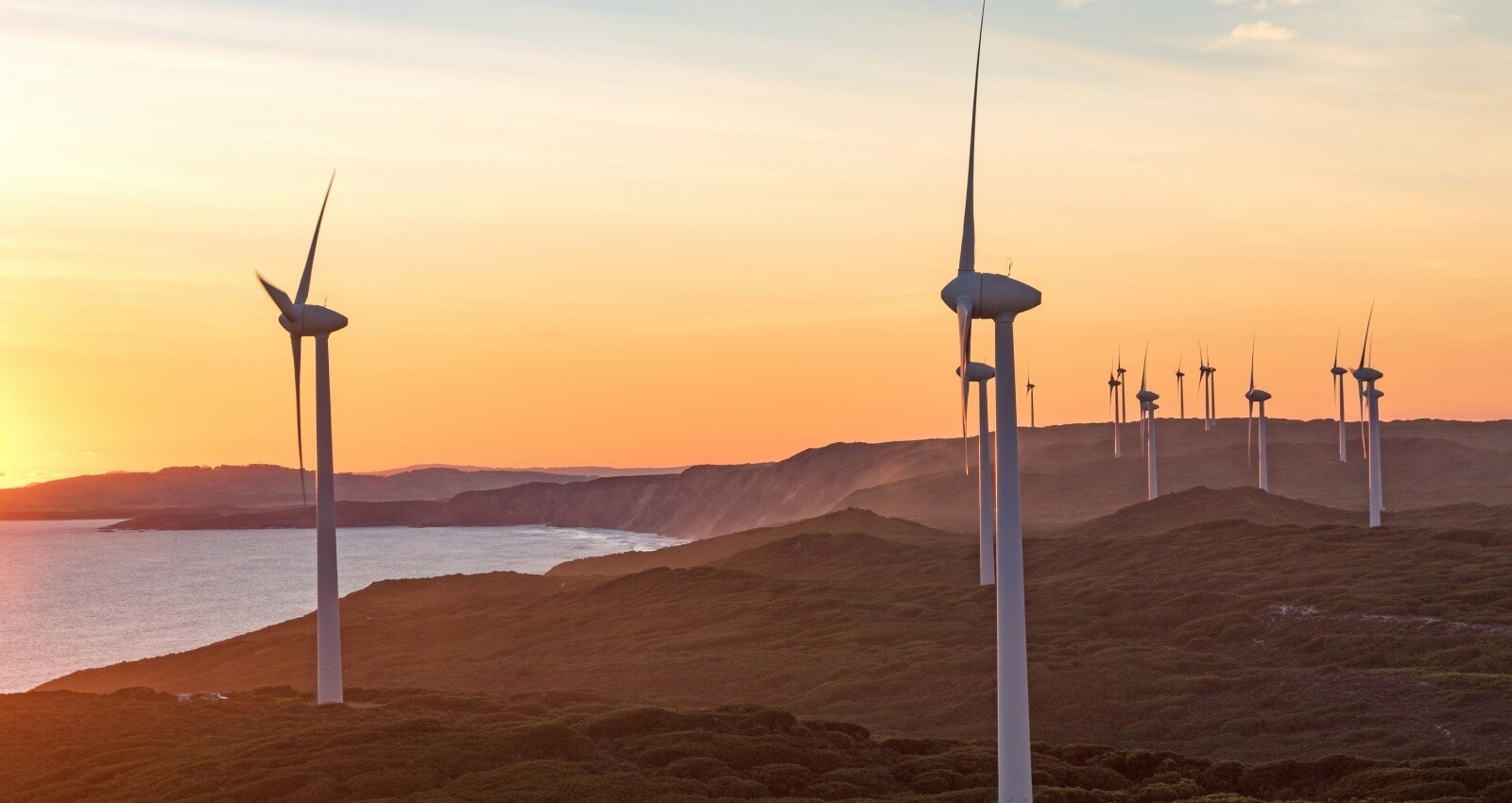
A wind farm at sunset is a reassuring sight: tall white towers, turning blades, an orderly answer to a messy energy problem. Move closer and the question changes. Is that line on the blade a harmless mark or a hairline crack? Somewhere between the handsome landscape and the maintenance ticket sits Zeitview, a company whose history turns on learning how much work remains after a photograph has been taken.
- Inspects energy and infrastructure using drones, aircraft, and robots.
- Combines AI analysis with human review and maintenance software.
- Expanded into oil and gas by acquiring Insight M in February 2026.
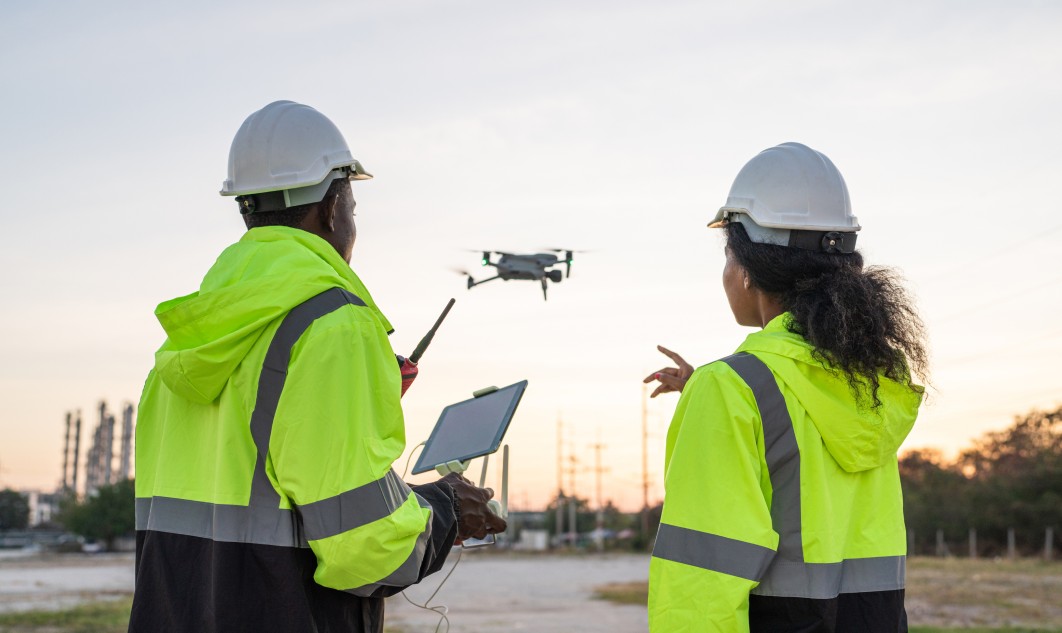
Its buyers own things that are expensive to neglect: solar plants, commercial roofs, electricity networks, wind turbines. Zeitview collects evidence about their condition, identifies problems, and organizes findings so an operator can choose the next repair. The compelling part is that the flying machine has gradually become just one tool in a much larger operation.
First came the haystack
Dan Burton encountered the possibilities of aerial imagery while serving as a Marine infantry officer in Iraq and Afghanistan. He and Eli Tamanaha founded DroneBase in 2014. The company joined Y Combinator’s Winter 2015 batch; that April, investor Fred Wilson described it as a business-to-business marketplace for drone services. Customers could obtain aerial data without assembling an aviation operation themselves.
That solved a real procurement problem. But delivering more pictures left another task on the customer’s desk: interpreting them. In his explanation of the 2023 Zeitview rebrand, Burton described the early work as “building the haystack.” Customers increasingly needed help finding the consequential defects inside it. The name change made that shift explicit. The company would follow the inspection problem wherever the appropriate sensors could take it.
“Our company spent our first few years ‘building the haystack’”Dan Burton, on the shift beyond data capture
The useful thing is a repair queue
Consider solar. Zeitview’s Solar Insights brings imagery, thermal findings, and inspection records into a shared system. An operator can examine inverter, string, and module problems, estimate their effect on lost production, and compare successive inspections. A maintenance team gets a way to rank work across a portfolio, rather than treating every suspicious panel as equally urgent.
SMA’s published testimonial describes using Zeitview to scale inspections across North America, with both drones and crewed aircraft supplying coverage. That detail explains the business better than a drone photograph does. The unit being served is the customer’s portfolio. The collection method can change with the size and requirements of the job.
- 01 Capture
- 02 Analyze
- 03 Review
- 04 Prioritize
Different sensors. A consistent path to the maintenance team.
Commercial buildings present a related problem. Property Insights lets users filter imagery, review flagged anomalies, and assemble reports. Roofs and pavement may belong to different sites and budgets, but comparable inspection records make them easier to assess together. Construction monitoring extends the visual record to the period before an asset begins operating.
A 2019 account of its Stockpile Reports partnership shows the earlier machinery underneath that proposition. The relationship grew from a small number of drone flights to API integration and hundreds of flights nationwide. Standardized collection made the partner’s own service easier to expand. It is a useful reminder that scaling an inspection business involves repeatable requests, dependable field execution, and records that another system can actually ingest.
The person after the algorithm
There is a revealing pause in Zeitview’s current workflow. After machine analysis comes review by certified analysts. Findings reach customers with location, severity, and supporting evidence. Customers can use Zeitview’s collection teams, supply their own data, or combine the two. The software therefore has to organize work performed by people and equipment it does not necessarily employ or own.
Its published wind research shows why inspection remains demanding. Hairline cracks can be barely visible, while much existing research concentrates on more obvious defects. The researchers introduced a dataset drawn from turbine inspections and described a deployed detection pipeline. That is a concrete version of the AI challenge here: recognize the quiet warning in a very large image.
A company built around mixed portfolios
Solar specialists offer credible alternatives. Raptor Maps, for example, provides solar inspection analytics, geospatial asset records, and tools for field teams. Zeitview’s pitch is broader coverage across asset categories. Its July 2024 purchase of Clearsight assets from Constellation added utility inspection capabilities, including transmission, distribution, and substations. For owners with several kinds of infrastructure, fewer separate inspection relationships can be attractive.
In March 2025, Zeitview announced $60 million in financing led by Climate Investment. It also reported more than 200,000 assets inspected across 80 countries in 2024. Those figures describe capital and operating activity, respectively. They suggest the scale of the undertaking without telling a buyer what a particular inspection will cost.
across 80 countries, as reported by Zeitview
The commercial arrangement combines service orders with hosted software. Its terms describe monthly or annual SaaS subscriptions and a possible setup fee; inspection fees sit in agreed orders or statements of work. A useful buying exercise is to specify the assets, collection scope, analysis, reporting, and follow-up required, then judge the quotation against the maintenance decisions it supports.
The sensor changes with the question
February 2026 brought another expansion: Zeitview acquired methane-detection company Insight M. Aircraft-based surveys of oil and gas infrastructure joined the portfolio. Detecting a methane plume requires different equipment from photographing a roof, yet the operating question remains familiar: where is the consequential problem, and which response comes first?
A June 2026 collaboration offers a more granular example. Zeitview helped Quantified Energy deploy autonomous electroluminescence inspection at Acciona Energía’s Red-Tailed Hawk solar plant in Texas. The teams inspected a selected section of 18,125 modules using Ingeteam inverters. Electroluminescence exposes cell-level defects that ordinary visual inspection and thermography can miss. The inspection method mattered because the suspected defects demanded it.
There is a practical caution inside the Texas example, too. The plant’s stated capacity was 458 MWp, but the reported inspection covered a selected section, rather than every module on the site. Each inverter section took approximately two hours. Those boundaries matter when evaluating a demonstration: the right question is how the measured scope translates into the next job’s equipment, access, staffing, and schedule.
That is the useful lesson to copy: start with the decision, then choose the evidence and the instrument. It also defines the limit. A visual survey cannot expose every hidden defect; a platform cannot perform the repair. Zeitview becomes useful when reliable collection, appropriate analysis, and a team able to act meet in the same workflow. The photograph begins the conversation. Someone still has to pick up the work order.