Youssuf Fayez needed to put his furniture somewhere for a few months. It was a modest request with an immodest amount of administration attached. A truck had to be hired. People had to be found to move the furniture. A fixed storage space had to be rented. Before a single chair could enjoy its temporary retirement, its owner had acquired a small logistics project.
Fayez had spent his career trading bonds and equities. He now runs WheeKeep, the Saudi portable storage company he co-founded. The connection between those two lines of work begins with his own possessions and a question about why keeping them required so much effort. A sofa, it turns out, can give rather consequential career advice.
“Not something I ever saw myself doing.”
Youssuf Fayez, on moving from trading into storage
A sofa with career advice
His account of the problem is practical. Storage involved arranging several services, handing belongings between them and accepting uncertainty about where everything would end up. He questioned the repeated handling and the conditions in which items would sit. His furniture needed space; he needed a process he could understand.
It is an appealingly ordinary beginning for a company. There is no need to decorate it with a dramatic revelation. Anyone who has moved house knows how quickly one task acquires dependents. Find somewhere for the furniture, then find a vehicle, then arrange the people, then agree on a time. Each answer produces another question.
WheeKeep’s response gathers those jobs into a sequence. A unit arrives at the customer’s location. Belongings are packed inside it. The customer locks it. The company collects the unit and stores it until it is wanted again. Packing help is available. The same unit can also be moved to a new address.
The detail that matters is continuity. The box that arrives at the door is the box that goes into storage. Furniture does not need to be unpacked into a different space on arrival. Fayez’s original irritation is still visible in the design: make fewer arrangements, and keep the belongings together.
From the trading desk to the loading bay
The change of occupation is striking because the things being managed have become so physical. Bonds and equities can be bought and sold without a crane turning up outside anyone’s house. A storage unit needs a vehicle, an accessible location and people who can get it into position. The customer will notice if any of those details have been overlooked.
Fayez’s education includes the University of Reading’s ICMA program, listed on his LinkedIn profile for 2009 to 2010. His name also appears among the 2010 IFID certificate holders. It is a small, concrete marker of the finance chapter that preceded WheeKeep.
The two occupations invite an interesting comparison, though a finance background alone explains no company’s success. Both involve commitments about assets. In storage, those commitments become unusually tangible. Someone wants a table returned without damage. Someone else needs equipment available for the next job. A missed appointment has an address and an owner.
Established in Jeddah in 2020, WheeKeep gives Fayez a different kind of daily proposition to defend. Its service has to make sense in a customer’s driveway, office or work site. The idea is easy to describe. The delivery is where it meets the world.
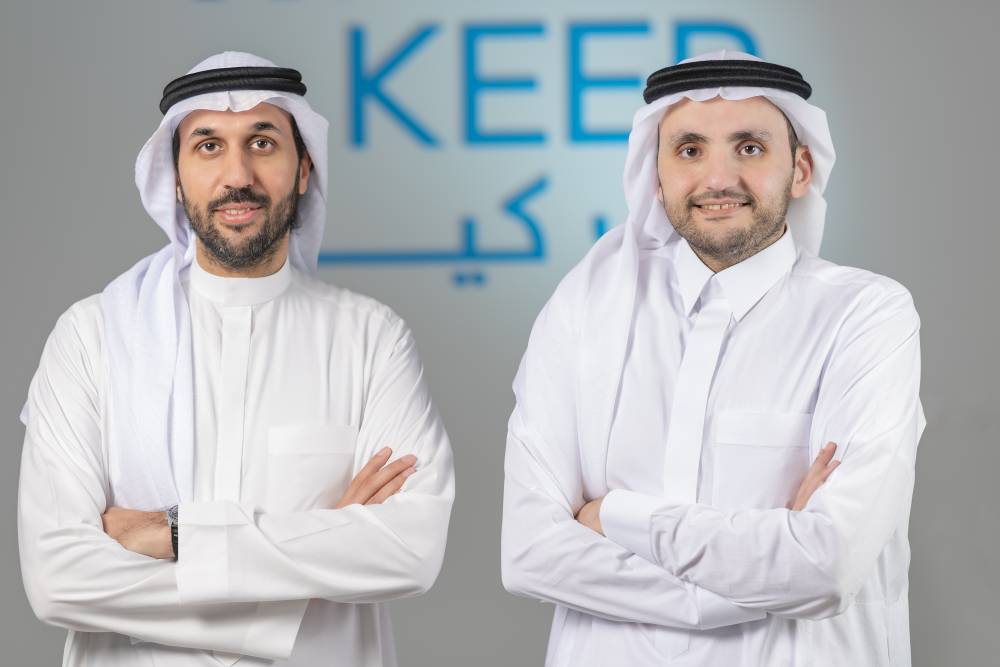
The key stays with the customer
A padlock is a useful piece of product explanation. WheeKeep’s customer holds the key while the company moves and stores the unit. It separates two responsibilities in a way that can be seen: the operator handles the container, and the customer controls the lock.
The company offers a choice about the labor, too. Customers can load at their own pace or ask for packing assistance. That distinction matters. A person who enjoys arranging boxes may want time; a person in the middle of a move may want the job taken off their hands. Convenience can mean different things at the same front door.
- 01Deliver
Unit to your door - 02Load & lock
Packing help optional - 03Keep
Store the sealed unit - 04Return
Delivery on request
There are variations on the journey. An on-site unit stays at the customer’s property. A moving service takes belongings onward. Business storage accommodates stock, documents and equipment. These uses share the container, but the reason for renting it changes from one customer to another.
The distinction is worth keeping in view when looking at Fayez’s company. Someone clearing a room for renovation has a different timetable from a retailer holding seasonal inventory. An event business needs equipment between engagements. The service sequence has to be simple enough to explain while allowing for those different arrangements.
For businesses, WheeKeep describes dedicated account management, commercial rates and invoicing with payment terms. A unit can stay at the premises or go into the company’s facility. Those arrangements make the customer relationship more specific than a generic offer of extra space. A business needs to know how the rental fits its purchasing process as well as where its equipment will be kept. The business service puts those administrative details beside the physical ones. Fayez’s company has to handle both kinds of movement: the container on the road and the order through a customer’s office.
The app adds another layer of coordination. WheeKeep’s Android listing describes booking a unit, arranging its return and moving it to a new address. Fayez’s name appears on the listing. Software helps organize the journey; the things taking that journey remain satisfyingly resistant to being digitized.
Eight million dollars, and the work that follows
In 2024, WheeKeep secured an $8 million Series A led by FinTech Collective, with domestic and international investors participating. The funding was intended to support growth across Saudi Arabia and the broader Gulf Cooperation Council markets.
Led by FinTech Collective.
Saudi and wider GCC expansion planned.
For Fayez, the announcement connected capital with geographic expansion, technology improvements and customer service. Those aims belong together in a business like this. A new location needs more than an announcement. Units must be available, collections must be arranged and the return service must work when the customer needs it.
The company’s current public description identifies facilities in Jeddah and Riyadh. That gives the growth story an everyday scale: two places where units are kept, and customers in two cities expecting them to arrive. Wider expansion remains an ambition described with the funding, rather than a reason to imagine a map already filled in.
The financing also links an operator of storage units in Saudi Arabia with a US venture investor. It is an unusual enough combination to catch the eye, particularly given Fayez’s earlier financial career. Yet the service is judged through much smaller encounters. An investment can fund the next stage; a customer still wants the right unit at the agreed location.
A handshake where homes are sold
Later that year, Fayez announced a partnership with Almajdiah at Cityscape Global 2024. The collaboration was intended to give Almajdiah’s clients access to mobile storage and logistics services. It placed WheeKeep alongside a property business, close to circumstances in which customers may need to move or temporarily make room.

The fit is easy to understand without inventing a customer story. Housing transactions and furniture movements follow related calendars, and those calendars can disagree. A property may be ready before everything can move in. A renovation may require a room to be emptied. Storage serves the interval.
For the founder who began with his own furniture, the partnership is a recognizable extension of the same problem. His public announcement emphasizes access to storage and moving services. The business connection is concrete: reach people through an organization already involved in their homes.
Build for the place you are in
In August 2026, Fayez described another decision shaping WheeKeep: manufacturing its units in-house. His explanation begins with local demand. He identifies businesses, smaller enterprises, seasonal stock and projects as important uses, alongside individual customers. He also points to the demands placed on stored goods by Saudi weather.
He reported four unit variations and the launch of freezer units capable of reaching -20°C. The manufacturing choice, in his account, gives the company control over developing those products. The photograph accompanying his update makes the point rather directly: a blue unit with refrigeration equipment is a physical answer to a particular storage requirement.
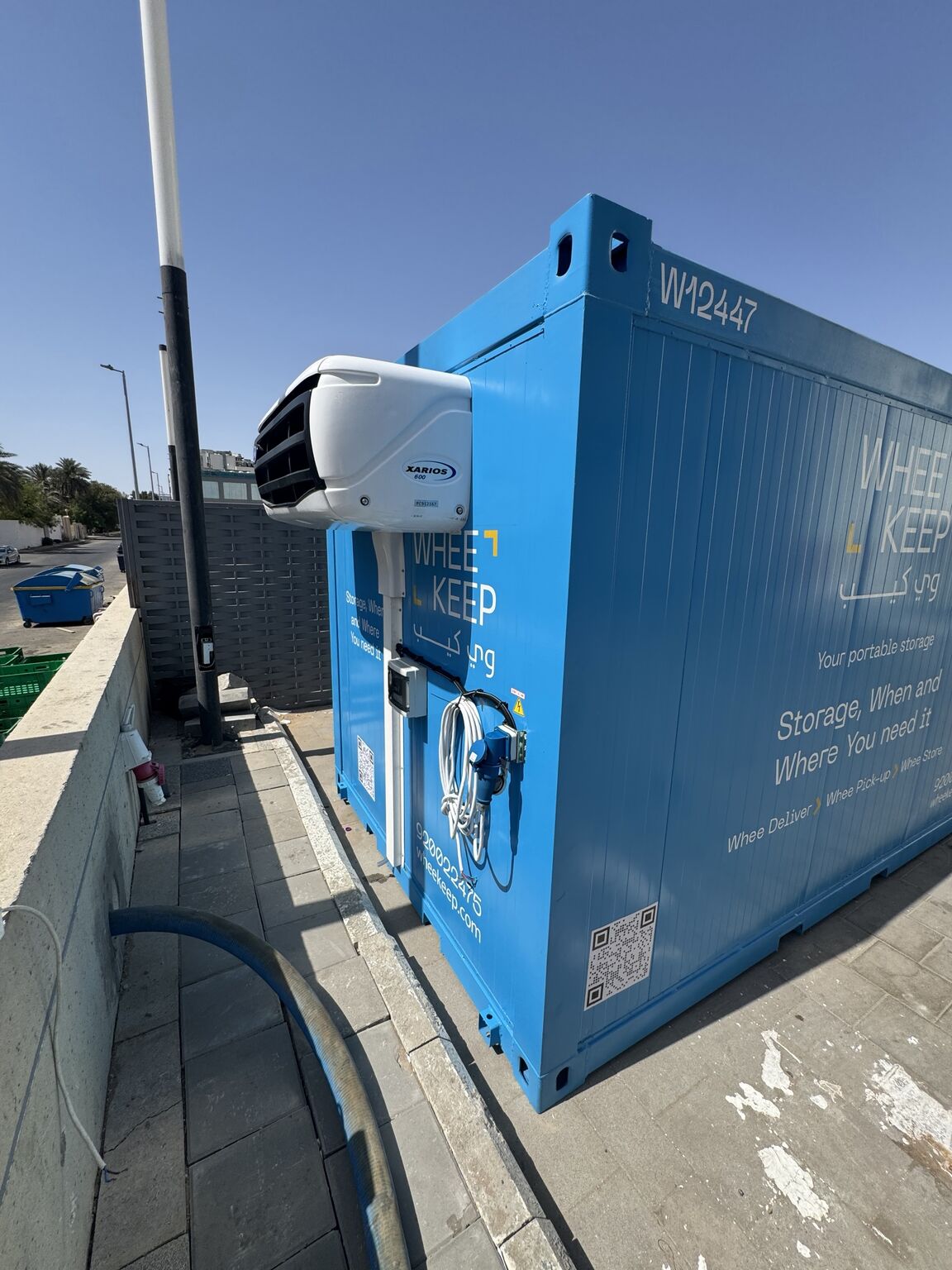
That choice adds another dimension to his career change. The founder now has a business that designs and produces equipment as well as delivering a service. Manufacturing control carries practical responsibilities. The useful question is whether the resulting unit suits the items, location and customer it was designed to serve.
Fayez’s own explanation keeps returning to those questions. What size is needed? What protection is appropriate? Which customers are asking for space? His manufacturing update presents the company as working outward from the answers. It is a more specific account of ambition than a promise to grow: build something that fits the job.
The household origin and the business demand can coexist. Furniture introduced him to the inconvenience. Stock, equipment and projects widen its applications. The change does not require a more glamorous founding anecdote. The original one already contains the essential task: belongings need somewhere to go, and the owner needs a workable way to get them there.
Fayez once traded assets whose prices could change while they stayed on a screen. His present business deals with assets that require a truck. The furniture that started the story needed temporary accommodation. In the process of looking for it, its owner found a longer occupation.
Follow the furniture
More on Fayez and the business he co-founded.