The printing press was in the wrong business. At Emerald Packaging in California, an HP Indigo 20000 was being tested inside an established packaging operation. The technology largely did what it was supposed to do. Finding a comfortable place for it in the existing factory proved harder. The machine was close to being sent back. Instead, it helped become the starting point for ePac.
Virag Patel entered the project with something a promising machine could not supply: experience running a packaging business. He had worked with Jack Knott for years. Their fellow founder, Carl Joachim, brought a background in digital printing and marketing. Emerald’s CEO, Kevin Kelly, exchanged the beta press for equity in the new company. Formation papers were signed in 2015; the first plant opened in Wisconsin in 2016.
There is a pleasing economy to this origin. A piece of equipment that struggled to fit one company became the basis for another. The difference was the work it would be asked to do, and the customers whose orders would matter. Patel’s career at ePac has been spent making that difference function on the factory floor.
The inconvenient customer
Packaging is full of decisions that sound modest until someone has to pay for them. A new flavor needs a new design. A local retailer wants an order before a seasonal promotion. A young brand has a product ready, but needs a bag that looks as considered as the product inside. None of these ambitions necessarily arrives with the volumes that make a large production run economical.
For a small business, the price of a pouch is only part of the arithmetic. The money committed to unused packaging matters, too. So does the time between deciding to launch and receiving something that can go on a shelf. A warehouse full of bags is a rather expensive expression of confidence in a sales forecast.
Patel understood the industry from inside. Before ePac, his roles at Exopack and later Coveris covered procurement, international strategy, marketing and acquisitions. His education included a finance degree from Clemson University and an international-business MBA from Thunderbird. Those experiences placed both the manufacturing problem and the financial consequences within reach.
In 2018, he described his founding wager with unusual directness: “The future will be made up of small, local brands”. The company would put smaller plants near customers and use digital printing to serve their orders. The attraction was a market that the industry’s drive toward bigger equipment and larger runs had made difficult to accommodate.
“The future will be made up of small, local brands”
Virag Patel, 2018
The press could print from digital files without the printing plates used in conventional workflows. That made changes and shorter runs easier to consider. It also created room for a customer to try something without committing to an enormous quantity. For Patel, the opportunity involved the whole transaction: how much a brand had to buy, how long it waited and how readily it could return.
When ePac announced its Boston expansion in 2018, Patel pointed to local brands facing waits of six to twelve weeks. He wanted the plant to become part of the region’s business infrastructure. It was a practical description of proximity. A packaging supplier could sit within the same commercial community as the companies trying to reach their next customer.
A factory with a coffee-chain logic
An idea about local customers can become complicated very quickly when the company serving them goes international. Every new plant introduces people, equipment and another set of practical decisions. Patel, working as COO, helped build the operating infrastructure behind ePac’s expansion. A company selling consistency has to arrange for consistency somewhere.
In a 2022 interview, he reached for Starbucks as an analogy. Across locations, a customer expects a recognizable standard of quality. He described ePac’s plants in similar terms: standardized equipment and a familiar scale and feel. It was an accessible way to explain a manufacturing ambition that could otherwise disappear beneath a small avalanche of technical vocabulary.
The coffee comparison has limits, of course. A pouch has to survive production, filling and shipping. Its colors must behave, its layers must work together, and its seal must hold. But the analogy captures the customer’s expectation: changing location should not make the product feel like a fresh experiment. Familiar processes help a growing network keep its promises.
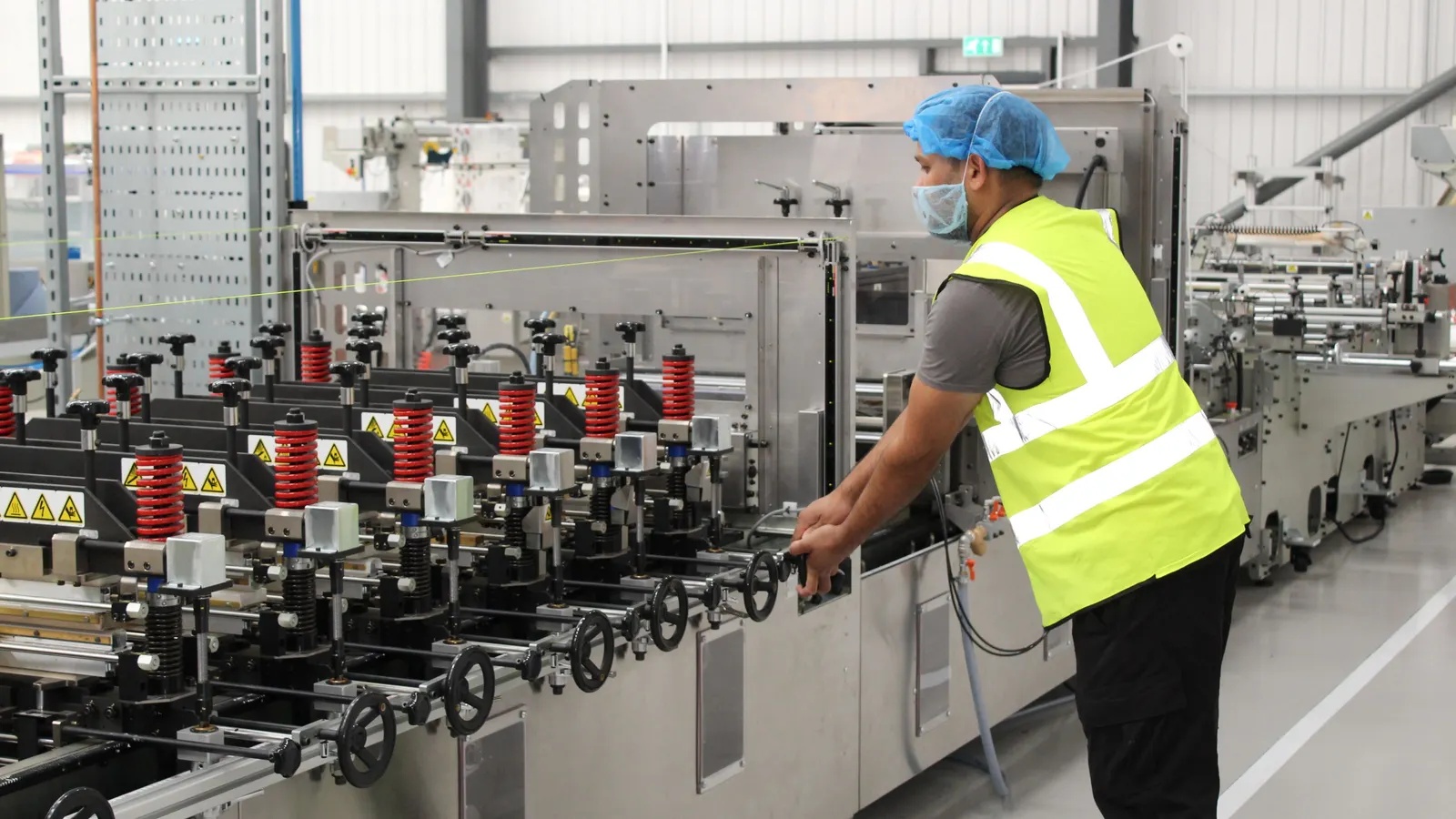
Standardization also needed room for revision. In a 2020 capacity announcement, Patel explained that ePac had initially planned two HP Indigo 20000 presses per plant. The company was adding a third press and more downstream equipment at many locations. The repeatable factory was becoming a larger repeatable factory as customer demand developed.
Then the links between factories became a product in their own right. In November 2022, ePac introduced ePacONE, short for One Network Everywhere. The proprietary platform connected production across sites. Its purpose was to let the network operate with the coordination of a shared manufacturing system, rather than leave each facility to manage every order in isolation.
artwork + order
connected production
print + finish + ship
Conceptual workflow illustration. Production begins after artwork approval.
The distinction matters to a brand whose needs change as it grows. A local business may become a regional supplier, then sell across several markets. A network gives its packaging partner more places to do the work. Patel’s operating challenge was to make those places useful together, while preserving the straightforward buying experience that attracted smaller customers in the first place.
The operator gets the keys
In October 2022, Patel appeared with HP executives as ePac announced the purchase of 50 new Indigo presses. The order was intended for new and existing facilities around the world. It was a visible expression of the company’s commitment to digital production, with Patel still serving as COO.
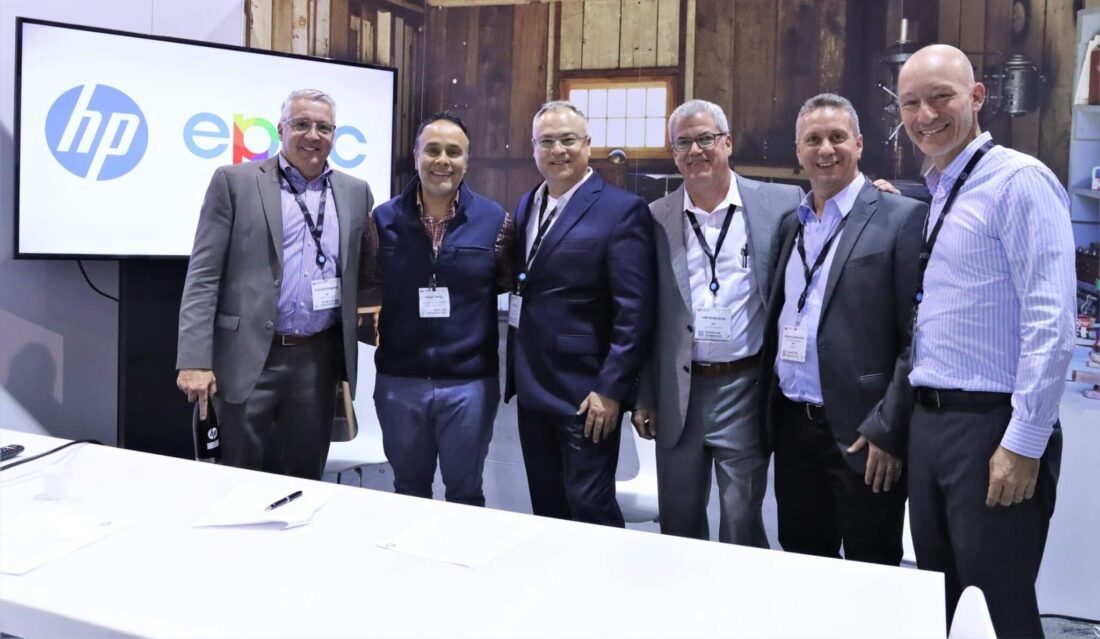
The following July, the title changed. Knott stepped down as CEO on July 13, 2023; Patel’s appointment was announced five days later. Knott described the move as a handover to someone equipped to run the next phase of the business. His endorsement was personal and specific: “I couldn’t think of a better person to transfer the CEO position to”.
There was continuity in the appointment. Patel had helped create ePac and had already carried much of the responsibility for operations. Becoming CEO extended that responsibility across the business. Knott would remain in an advisory role. The handover recognized the work of the founder who had been occupied with making the system run.
That work soon included contraction within an expanding story. In 2024, ePac described a reassessment under financial pressure across the packaging industry. It consolidated US manufacturing from 15 plants to 11. The company also reported that units produced had risen 30 percent in 2023, even as growth slowed. Those figures measure different things, and their coexistence is revealing.
More output did not require keeping every location. The digital infrastructure allowed ePac to reorganize production, while continued investment went into technology and new capabilities, including flat-bottom pouches. For a CEO whose earlier job was operations, this was familiar territory: capacity has to serve the business that actually arrives, with its changing products and costs.
- 2016First Wisconsin plant opens
- 2022ePacONE connects production
- 2023Patel becomes CEO
- 2024US plants consolidate from 15 to 11
- 2026Butterfly acquisition; new HP agreement
A bigger room for the small order
Butterfly Equity acquired ePac in January 2026. The investment firm specializes in food and beverage, an ecosystem that includes many of the brands ePac serves. Patel’s leadership team remained in place and retained a significant ownership interest. The transaction added a new owner while keeping the operating team involved in the company’s future.
A month later, HP announced an approximately $50 million commercial agreement over three years, covering equipment, consumables and services. New Indigo 200K presses would join a fleet already exceeding 50 HP Indigo presses worldwide. The amount describes the agreement across those categories; it is a commitment to the production system as well as the machines.
Patel’s next factory blueprint is taking shape in Phoenix. In September 2026, he described the forthcoming site as ePac’s new flagship. New products change the space required: flat-bottom equipment, he explained, takes up substantially more room than a standard pouch machine. The facility has to accommodate the work the company expects to do next.
He also acknowledged that improving the customer experience remains unfinished work, particularly where artwork and design require human conversation. Automation can move a job through a system; customers still need to agree on what that job should produce. His brief description of the company’s attitude was “We embrace change.”
That returns the story to its opening machine. Patel joined a venture that gave a press another setting and a different set of customers. A decade later, the factories themselves are being reconsidered. The small order has led him into a large, continuing exercise in organization. Somewhere at the end of it is a brand waiting for its bags, with a product ready and a shelf to reach.