Before Karam Rajab put his name to Saudi-inspired furniture, he spent years learning Arabic calligraphy. A friend from elementary school remembers the two of them attending classes together, drawn to the same art. The recollection is a small, useful detail in a career that would later include engineering, business development and an online shop selling dinnerware. Long before there was a sofa to deliver, there was a line to get right.
Calligraphy offers a pleasing opening to this story. It demands attention to form, but a childhood interest need not explain an entire adult life. Rajab’s later choices have their own evidence: a systems engineering degree, work at SABIC, business study and the company he co-founded with Ibrahim AlHowaish. Eventually, his name appears in the design credits for Baytonia’s Sahara collections. The early interest and the later work belong in the same picture, even if the line between them is not perfectly straight.
He is now the co-founder and CEO of a business concerned with what people bring into their homes. Its evolution raises a question that follows Rajab from technical study to commercial partnerships: what has to happen between a good idea and an object someone can actually use?
A room is also a system
In May 2013, Rajab completed a master’s degree in systems engineering at the University of Maryland. His scholarly paper examined component-based modeling and implementation for heating, ventilation and air conditioning. The subject was a building system, considered through its constituent parts. It belongs to an engineering world in which the connections among components deserve as much attention as the components themselves.
His subsequent career included SABIC. By 2017, he was listed as a scientist there and a judge for the MITEF Saudi startup competition. That combination placed him in two different settings: an industrial business and a forum evaluating entrepreneurial proposals. Later professional roles crossed into business development. His education also crossed that boundary, taking him to Prince Mohammad Bin Salman College of Business & Entrepreneurship in 2017 and 2018.
Read together, those steps suggest a useful way to approach his retail work. Furniture presents an object to the customer, while a business must manage everything around it. There is a supplier, a listing, a place to keep the product and a way to get it into a room. A sofa can be admired in isolation. A furniture company has to work through the connections. Engineering and retail have more to discuss than their wardrobes might suggest.
First, the dinnerware
Baytonia began as a bootstrapped online retailer selling dinnerware. Rajab and AlHowaish expanded the offering into furniture and other homeware. This origin has the merit of being specific. It begins with a category people can picture on a table, rather than an ambition broad enough to furnish the entire economy.
In May 2023, the company announced its first seed round, led by Khwarizmi Ventures with participation from angel investors. The amount was undisclosed. The stated purpose was to expand services and product offerings across Saudi Arabia. Rajab was CEO; AlHowaish was COO. Their business had moved beyond selling its own goods to providing a marketplace for other sellers, alongside its home brand.
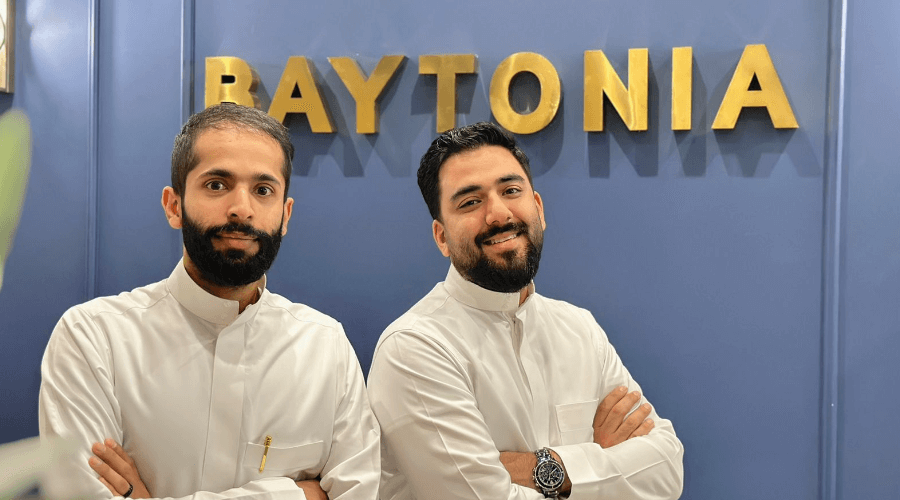
The financing milestone is one way to describe that change. The more tangible description sits in the service offering: pickup, listing, storage, assembly and delivery. Those are modest words for a considerable amount of coordination. A customer sees a choice of furniture. A seller needs a workable path from stock to sale. Each side has reasons to care about what happens after the photograph has done its job.
- 01Pickup
- 02Listing
- 03Storage
- 04Assembly
- 05Delivery
A sketch should pay its way
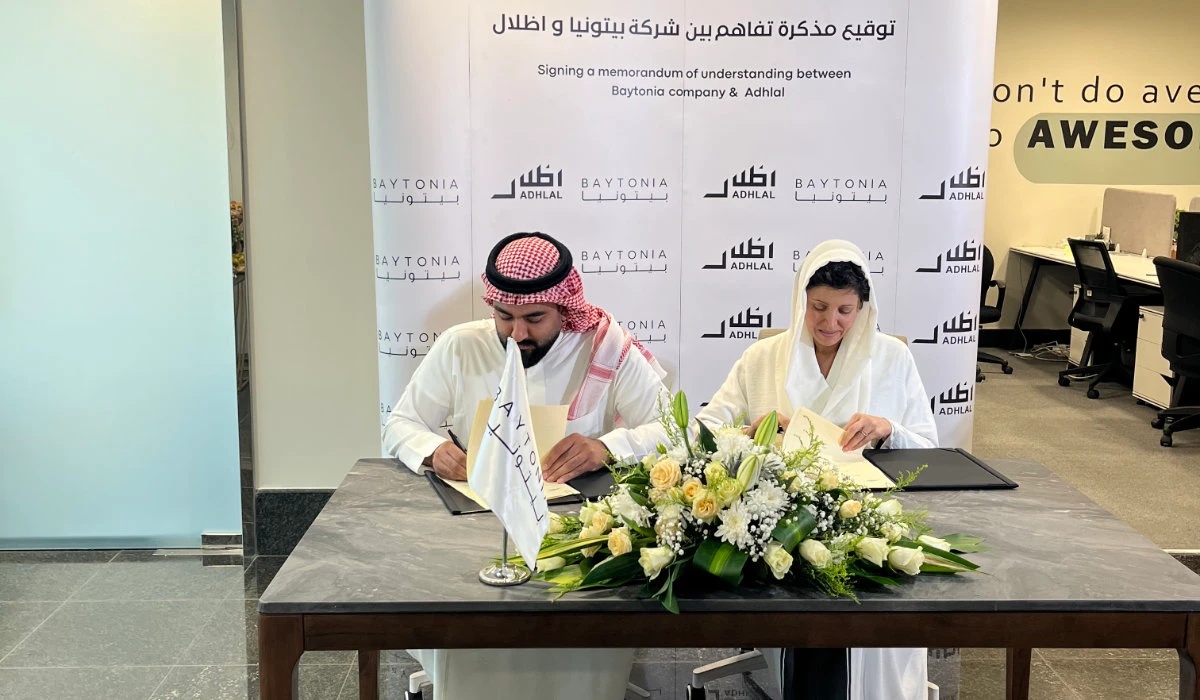
In August 2023, Baytonia entered a collaboration with Adhlal, the design consultancy founded by Princess Nourah Al-Faisal. The memorandum of understanding was signed in Jeddah. Its intended activities included research, learning experiences and competitions. Rajab’s emphasis was on helping local talent turn creative work into a livelihood.
There is a practical distinction between admiring a designer’s work and helping that designer sell it. Rajab discussed connecting artists with industry, supporting production at scale and opening sales channels. He included artists, interior designers, product designers and architects in the opportunity he described. These are different professions, but they share an interest in having their work reach beyond the presentation stage.
“ensuring their artistic endeavors become sustainable livelihoods”Karam Rajab, August 2023
The ambition gives his marketplace role a particular meaning. A retail platform can provide an audience; its surrounding services can help carry the work further. The agreement brought Adhlal’s design connections into that commercial setting. It made the distance between creative training and a customer’s purchase part of the conversation.
The pattern comes home
Rajab’s involvement in design extends to the product itself. Baytonia credits him with work on its Sahara collections, created to bring Saudi heritage into contemporary furniture. The page also names Hala Mshakhes, a product designer from Effat University, as assistant designer.
Among the references are the engraved doors of Diriyah and the decorative traditions of Aseer. The Miftaha collection takes inspiration from Miftaha in Aseer and uses red associated with Al-Qatt Al-Asiri. Such references give the furniture a regional vocabulary. A cabinet can carry an idea about place while continuing to perform the thoroughly ordinary task of holding things.
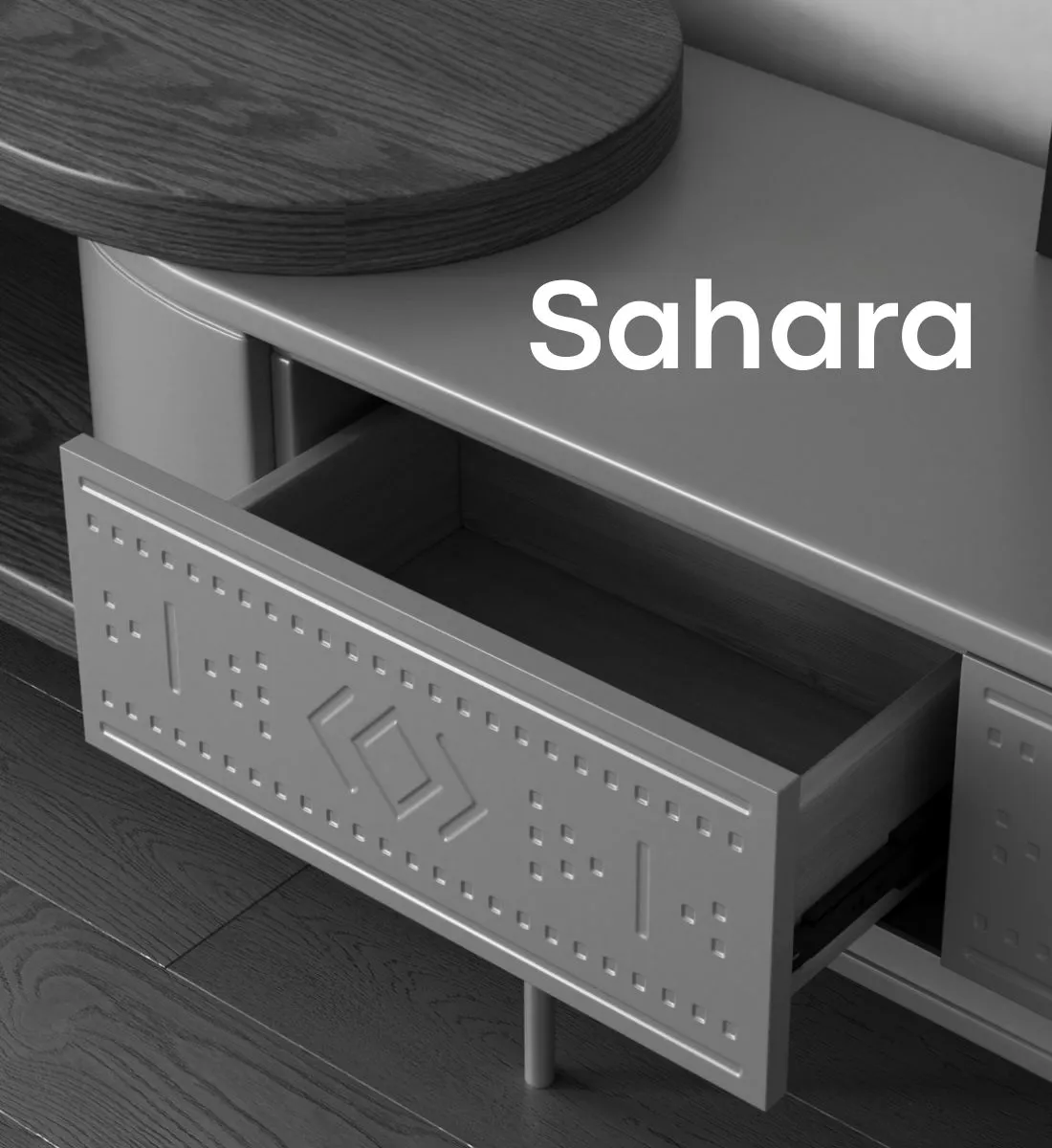
This work makes the childhood calligraphy recollection interesting without requiring a grand theory of destiny. Rajab has participated in making objects as well as moving them through a market. Form and function share space in his public career. The furniture offers a visible example of what he has said he wants to support: products suited to Saudi life, made with an awareness of local creative traditions.
At the judges’ table
Rajab’s activities also place him among people developing new ideas. At Designathon 2024, he served on a judging committee in the entrepreneurship track concerned with living well, while Baytonia participated as a knowledge partner. His public response to the event welcomed the chance to connect with creative minds.
A competition is a different encounter with design from a retail sale. It creates a setting for proposals, evaluation and discussion before an object necessarily has a customer. For a founder who wants to help local designers reach the market, participation puts him near the earlier stages of that work. It also returns him to a role he had held in the startup world years before.
He has appeared in wider retail discussions too. At the December 2023 Saudi Retail Forum, he joined a conversation about taking Saudi domestic retail brands into international markets, alongside executives and founders from other consumer businesses. The subject widened the frame beyond Baytonia’s own catalogue. It placed home furnishings in a conversation about what Saudi businesses could carry outward.
His comments about marketing offer a smaller glimpse of what he pays attention to in business. In a public testimonial for marketing strategist Muhammad Eltiti, Rajab praised regular reporting that showed how the company’s marketing money was working. He also valued practical help through the process. The emphasis is revealing in a limited, concrete way: he wanted to understand what the spending was doing, rather than simply receive a campaign and hope for the best.
There is another perspective from inside Baytonia. Team member Dana Shahwan has publicly thanked Rajab and AlHowaish for trust, support and opportunities to develop her abilities across different roles. Her account concerns her own experience, but it adds people to a story otherwise easy to tell entirely through products and partnerships. The founders’ work includes the company’s team as well as its catalogue. A customer meets the finished service; employees encounter the choices that produce it.
An online business opens a door
By late 2024, Baytonia was preparing a physical presence in Riyadh. In May 2025, the company announced that its first showroom in the capital had opened. For a business that began online, this adds another way for people to encounter its furniture. A screen is useful for comparing objects. A showroom allows the object to occupy actual space in front of the customer.
Rajab had also described Baytonia’s participation in Restatex earlier in 2025, connecting with real estate developers and discussing furnishing services. Those conversations extend the business from individual purchases toward the needs of people shaping properties. The room becomes part of a larger project, with furniture entering the discussion alongside the building it will inhabit.
There is a quiet continuity across these moves. Rajab’s work brings him into contact with engineers, founders, designers, investors and property developers. Each handles a different part of the journey. The person drawing the cabinet and the person arranging its delivery need different skills, but the customer eventually depends on both.
The calligraphy classes provide an appealing first detail. The showroom supplies a recent, physical one. Between them sit a degree, an industrial career, dinnerware, a co-founder and a series of practical commercial choices. Rajab’s stated ambition for local designers can be judged in similarly concrete terms: whether their work gets made, reaches a room and supports the making of the next piece. A sketch has possibilities. A piece of furniture has somewhere to be.