A presidential debate offers many opportunities for embarrassment. Most belong to the candidates. A few belong to the people trying to put their words on screen. In September 2024, Yair Amsterdam recalled Verbit's work on the Trump-Biden debate and the complaints that followed. Viewers sympathized with the captioner or accused the captioner of doing a poor job. The presumed person at the keyboard, he explained, was AI.
“It's quite a tough job,” Amsterdam said. He also argued that the automated captions had been more accurate than a human's would have been. That was his assessment, rather than an independently established score. The anecdote is revealing because it puts his business in a rather unforgiving room. Nobody pauses a presidential debate so the captions can catch their breath. The words arrive, and the system has to deal with them.
Amsterdam, Verbit's CEO and a board member, has spent much of his working life dealing with what happens after a software demonstration ends. A demo can choose its moment. A customer cannot always choose the speaker, the accent, the background noise or the hour at which something fails. His career makes more sense when viewed from that less glamorous end of technology: the part expected to keep working.
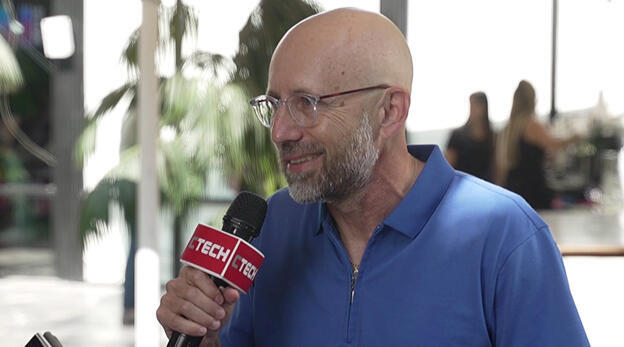
The operator gets the uncomfortable chair
He joined Verbit in 2022, serving as chief operating officer and then president. In February 2024 he became interim CEO after founder Tom Livne stepped down. The appointment became permanent on June 26. This was a succession in the middle of a commercial problem: cheaper AI tools were putting pressure on the transcription business, and the company had gone through layoffs.
Amsterdam's answer was to move customers toward technology-based transcription and build applications that could produce useful business insights from the resulting text. At the time of his permanent appointment, he said cash burn had fallen and the company had growth plans. Those were statements about the plan in June 2024, with all the uncertainty a plan carries. A chief executive inherits the obligation to make such verbs acquire a past tense.
The board already knew him as an operator. Rob Schwartz, a Verbit director and managing partner at Third Point Ventures, publicly backed his vision for the company when the permanent appointment was announced. That distinction matters. Running an existing operation and deciding what it should become are related jobs, but the second can require changing the assumptions that made the first successful.
An education in keeping things running
Before Verbit, Amsterdam worked at Verint, Ex Libris and ProQuest. His route included software development, support and supply-chain responsibilities. At Ex Libris he oversaw areas including cloud operations and global support; at ProQuest his remit included content operations and customer experience. These are jobs where an elegant idea is only the beginning of the obligation.
One small episode makes the background concrete. In October 2017, Ex Libris announced ISO 22301 certification for business continuity management. Amsterdam, then its COO, spoke about the significance for operations and data centers worldwide. Business continuity rarely receives the applause reserved for a product launch. Its audience tends to notice it most when it is absent. A service that works on an ordinary Tuesday is expected; one that survives an extraordinary Tuesday has earned its keep.
His academic training took a different starting point: chemical engineering at the Technion, followed by an MBA at Ben-Gurion University. He graduated summa cum laude from both. His biography also identifies him as a long-distance runner and triathlete. That detail makes an appealing footnote beside a career in operations, though a finishing line should not be recruited as evidence for a management theory. Sometimes a runner is simply a runner.
The record has to arrive while the room is talking
By July 2024, Amsterdam was discussing live analysis alongside Hila Geva, then Verbit's vice president of research and development. Their conversation covered the possibility of comparing testimony with documents during proceedings and surfacing contradictions for legal professionals. They also discussed keeping people involved in the process. The pairing matters: the executive's ambition had to meet the engineering team's account of how a product would behave.
There is an obvious attraction to receiving a useful prompt while a conversation is still happening. A question suggested tomorrow may be an excellent question asked a day too late. There is also an obvious burden. A system can make an observation look authoritative merely by displaying it neatly. Amsterdam's remarks about legal applications have repeatedly returned to care, accuracy and the limits of the software's role.
A transcript therefore has two clocks. One measures how quickly the words appear. The other measures whether someone can still act on them. His shift toward live insights is an attempt to bring those clocks closer together. It also raises the standard for the product: making text available and making an observation worth interrupting someone for are different levels of responsibility.
A second chair, with no vote
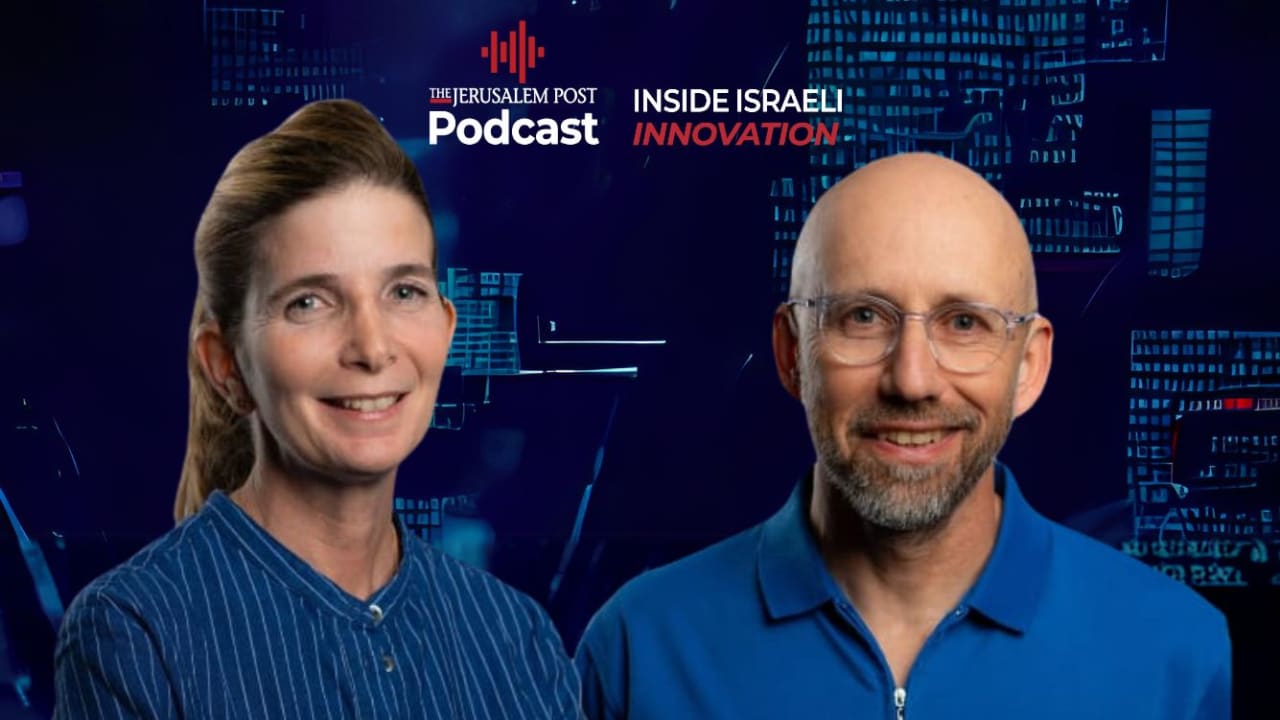
In his December 2025 interview with James Spiro, Amsterdam described Legal Visor as a supporting presence for lawyers. “It doesn't make any decisions,” he said. The platform transcribes and offers insights; responsibility remains with the professional using it. Features discussed included voice signatures, multilingual support and the ability to flag inconsistencies in testimony.
That framing is more interesting than an extravagant promise to automate a profession. It leaves the difficult judgment where it already belongs and asks whether the surrounding work can be made easier to follow. Amsterdam also distinguished the legal product from ordinary meeting transcription, pointing to functions such as real-time editing. A deposition has particular requirements; a familiar interface does not automatically satisfy them.
The expression “second chair” gives the software a modest seat in a consequential room. It suggests assistance, attention and a capacity to keep track. It gives a user something more useful than the fiction of an all-knowing machine: a role they can understand. The practical question becomes whether the assistance deserves the space it occupies on the screen.
“It doesn’t make any decisions.”Yair Amsterdam, on Legal Visor
The caption becomes a rehearsal
On February 18, 2026, AltaClaro and Verbit announced DepoSim, a deposition simulator. AI agents take the parts of witness, opposing counsel and court reporter. The lawyer conducts a spoken practice session and receives feedback against a training rubric. The partnership turns speech technology toward rehearsal, a use that makes Amsterdam's move beyond transcription easier to picture.
The underlying problem is pleasantly unromantic. Practice requires other people's time. Traditional mock depositions can involve hired actors or off-site programs; coordinating them limits repetition. A simulator offers another attempt without assembling the room again. It can vary a witness's personality and the difficulty of an exchange. An overly talkative virtual witness at least has the virtue of being available when requested.
A published demonstration used a fictional greeting-card franchise dispute. The simulated opposing counsel objected to questions, and the feedback identified particular moments in the transcript. That is the important link back to Verbit's original business. The captured words become a way to examine a performance, rather than merely preserve it. A record can support the next attempt as well as document the last one.
In June 2026, Brownstein Hyatt Farber Schreck announced that it was deploying DepoSim across its litigation associate class. The firm's description emphasized repeatable practice and feedback delivered within minutes. Adoption does not by itself prove improved advocacy, but it does put the idea inside an actual training program. The experiment has moved beyond a launch announcement and into people's working schedules.
A schematic of DepoSim's training loop, not a measure of learning outcomes.
Speech takes a different route to the audience
Legal training is one branch of the strategy. Media localization is another. In September 2025, Deepdub and Verbit announced a partnership combining Verbit's captioning platform with Deepdub's expressive text-to-speech technology. The proposed workflow takes captioned content into dubbed audio. It treats the written record as an intermediate step on the way to audiences.
There is an almost comic reversal here. A company built around turning voices into text helps turn text back into voices. The reversal has a practical purpose: a producer who already has captions also has material that can feed a localization workflow. The partnership's announcement described automated dubbing from captioned media and cloud deployment through an API. The engineering details matter because another handoff is another place for work to stall.
Meanwhile, Verbit's July 2026 newsletter described Captivate Post Plus, which adds professional human quality control to AI-generated media captions. The same strategy can make room for automation and review at different stages. For Amsterdam, the choice has become a product question: which kind of work does this customer need done, and where should the experienced person enter the process?
A library returns to the story
The latest turn brings the work back to education. On September 9, 2026, Vanderbilt Law announced that DepoSim would be offered to students starting in the fall semester. Access would include courses and independent use through the law library. Students could question simulated witnesses, encounter objections and receive feedback on how they handled the exchange.
For an executive whose earlier responsibilities included library software and scholarly content operations, that is a satisfying connection. The tools have changed, but the setting contains a familiar purpose: helping people use information to learn. The library in this chapter offers access to an opportunity to practice, as well as to a body of material to read. The university described itself as the first law school bringing DepoSim into legal education.
The distinction between a company aspiration and a user's activity becomes especially clear here. Capturing, understanding and applying speech can sound abstract on a slide. A student asking a follow-up question after an unexpected answer gives the verbs a recognizable shape. The lesson still belongs to the student. Technology supplies a room in which to try it again.
Curiosity is a working instruction
Asked what skill young professionals should develop in AI, Amsterdam answered with a single word: curiosity. He encouraged continued learning and experimentation with the tools. It is a useful answer from an executive whose own role has involved changing what a transcription company sells. Curiosity offers no immunity from a difficult market. It does offer a reason to keep testing the next possibility.
His public story now spans an operator's succession, the pressure of live captions, legal assistance, rehearsal and dubbing. The connection is the work people might do with words once they can get hold of them. A caption may help someone follow a debate. A transcript may help someone revisit a question. A simulation may help someone ask a better one. Amsterdam's next results will depend on how well those individual experiences work, one room at a time.