A garbage truck is an unusually effective distraction. It arrives with a hydraulic groan, swallows the contents of a bin, and leaves. The customer sees a problem disappear. WM sees a material stream entering a system it can collect, sort, bury, and, in some cases, turn into fuel. The interesting transaction happens after everyone has stopped looking.
- The route: recurring collection serves homes, businesses and cities.
- The destination: processing and disposal add another layer of fees.
- The afterlife: recovered materials and landfill gas become products.
That distinction helps explain a company with $25.204 billion in 2025 revenue. WM sells the practical work of making unwanted material somebody’s responsibility. Its customers range from a household putting out a cart to a hospital managing regulated waste. The promise is easy to understand. Delivering it requires trucks, land, permits, machines, trained people, and buyers for whatever survives the journey.
“2025 was a year of disciplined execution for WM.”Jim Fish, CEO · January 2026
The destination is part of the product
The company’s family history begins in Chicago, where Harm Huizenga collected rubbish for a fee in 1893. His grandson Wayne Huizenga joined Dean Buntrock and Larry Beck to establish Waste Management in 1968. The enterprise became public in 1971. Its own account emphasizes an early decision: connect collection with the management of the landfills receiving the waste.
Consider what that changes. A hauler needs somewhere to unload. An integrated operator can connect the customer, the route, the transfer station, and the disposal site. Each step requires coordination; ownership gives WM more control over that coordination. The business’s expertise lives in routing, maintenance, environmental compliance and keeping physical operations working, day after day.
Republic Services and Waste Connections offer substantial alternatives, alongside municipal services and local haulers. WM’s distinction is the breadth of its connected network and service portfolio. Scale is useful when a customer operates across locations. For a single shop, the decisive questions may still be local availability, pickup reliability and the terms on the bill.
The blue bin needed a better contract
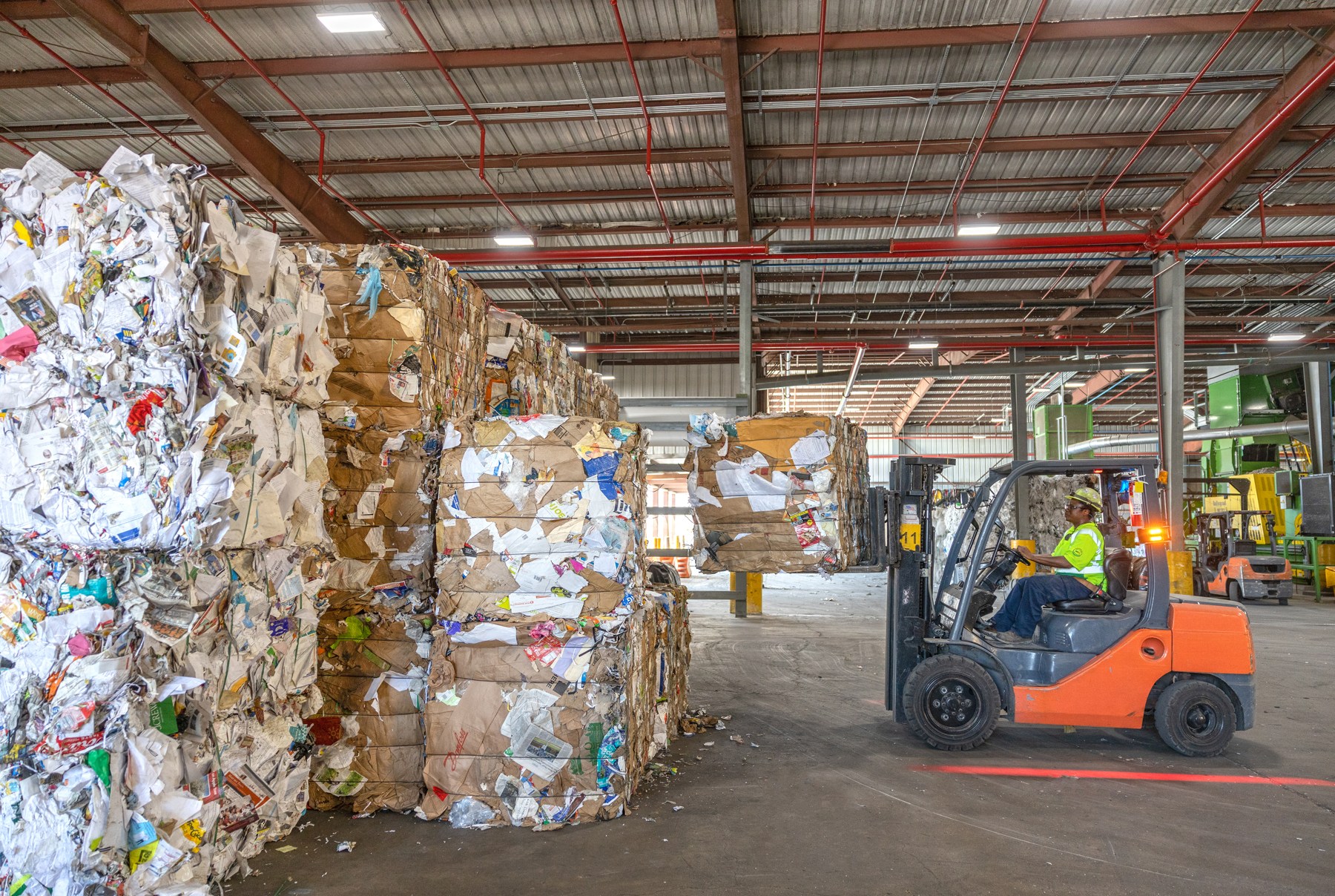
Recycling adds a complication: the material has a price, and that price moves. A customer’s desire to recycle does not guarantee that recovered paper will cover the cost of collecting and sorting it. In its 2018 sustainability appendix, WM traced a change in approach to weak commodity prices in 2012.
The response was contractual. Customers would pay processing fees, with remaining material value shared between the parties. It was a way to put the cost of the work into the agreement. China’s subsequent restrictions on imported recyclables made quality and export access harder problems, but the weakness in depending on commodity proceeds had already appeared.
Equipment is the other half of the answer. At Sacramento’s recycling and transfer station, WM describes a $29 million investment in automation and recycling technology. Sixteen optical sorters help separate material into commodity streams. The facility can process up to 121,000 tons annually. Recycling, viewed from this end, looks like a manufacturing operation with unusually unpredictable incoming inventory.
The landfill has another customer
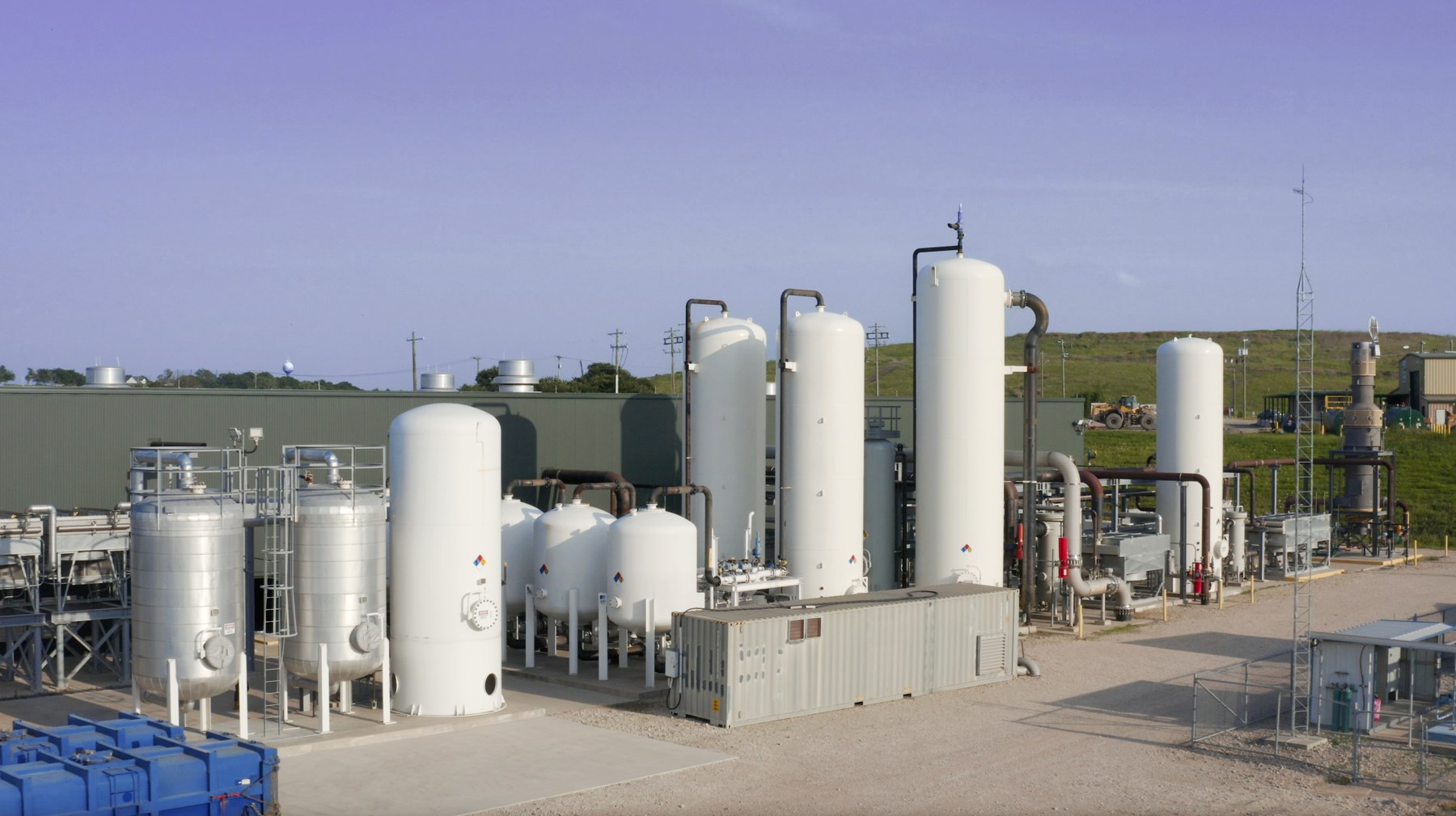
Buried organic material decomposes and produces gas containing methane. WM uses wells to collect landfill gas, then treats it for beneficial uses. Some gas generates electricity. Further processing can make renewable natural gas suitable for a commercial pipeline. Suddenly, the disposal site has an energy customer as well as a waste customer.
- 01Organic waste
decomposes - 02Wells collect
landfill gas - 03Treatment
upgrades gas - 04RNG enters
the pipeline
There is a pleasing circularity here: a collection business can produce a fuel used by natural-gas vehicles. But the economics require more than a pleasing diagram. WM says proximity to energy infrastructure makes these projects more cost effective. Gas availability, treatment requirements, fuel prices and renewable-fuel credits matter. Capturing useful methane also does not make landfill emissions disappear.
The spending makes the ambition concrete. In April 2025, WM described approximately $3 billion of planned sustainability growth investment over 2022-2026, targeting 39 new or upgraded recycling facilities and 20 new company-owned RNG facilities. Its current sustainability reporting extends remaining RNG projects into 2027. These are construction programs with schedules, rather than a change of vocabulary.
A $7.2 billion move into the hospital
WM’s November 2024 purchase of Stericycle carried an enterprise value of approximately $7.2 billion, including debt. It added regulated medical waste and secure information destruction. A hospital needs more than an ordinary collection route: its material requires specialized handling. The acquisition applies WM’s logistics and operating capabilities to another recurring, essential service.
People are part of that operating equation. Through Guild, WM’s Your Tomorrow benefit includes select tuition-paid programs for eligible employees, spouses and dependents aged 18-26. The detail is revealing. A business dependent on dependable frontline work has a reason to make staying attractive to the worker’s family, too.
For customers, the portfolio creates choices rather than one universal product. A renovation may call for a roll-off dumpster; an office may need regular collection and confidential document destruction. WM’s digital account tools help manage schedules and bills. Service coverage still depends on the address, and the material determines which handling route is appropriate.
The price is equally specific. Container capacity, pickup frequency, processing and disposal costs belong in the conversation. WM’s residential subscription terms allow several kinds of charge adjustments. A prospective customer should read those provisions as carefully as the initial quote. Convenience is valuable; knowing what it includes is valuable too.
What survives the sales pitch
The practical lesson is to design the destination before celebrating the collection. A business arranging recycling can ask which materials are accepted, what processing costs, and where the output goes. At home, WM’s guidance is concrete: keep accepted recyclables empty, dry and loose. In June 2026 it added another rule: keep batteries out of both recycling and trash.
The company is still changing. Second-quarter 2026 revenue rose 4% even as collection and disposal volume declined 1.8%, partly reflecting the previous year’s wildfire cleanup. John Morris is scheduled to succeed Jim Fish as CEO in January 2027. He will inherit an organization whose everyday task remains familiar: arrive, empty the bin, leave. Its advantage depends on how much useful work it can do afterward.