Jon Vander Ark has a joke about his résumé. A Harvard law graduate who became a consultant and then entered the waste business, he describes a career that his family could regard as a steady decline. The joke works because the credentials seem to point one way and the garbage truck another. His subsequent career suggests that the distance between them is shorter than it looks.
Before he ran Republic Services, Vander Ark helped write a book about how businesses grow. Before he became chief executive, he worked in marketing and operations. Today, part of his job involves giving a discarded plastic bottle a commercially useful future. The thread through these occupations is a question about customers: what do they need, and what would it take to provide it reliably?
The sales book came first
Vander Ark earned a Bachelor of Arts at Calvin College, now Calvin University, and a Juris Doctor at Harvard Law School. He went on to become a partner at McKinsey & Company. In 2012, he co-authored Sales Growth: Five Proven Strategies from the World’s Sales Leaders with Thomas Baumgartner and Homayoun Hatami. The subject was organized commercial effort: how companies find opportunities and build the capacity to pursue them.
The project grew from conversations with sales leaders about growth after the economic crisis. The authors kept interviewing, then turned what they learned into a book. In an interview that year, Vander Ark discussed businesses that deliberately set aside resources to identify opportunities. He also described marketing and sales teams working from shared information about customers. A good relationship with a buyer mattered; so did a system that helped employees understand the buyer.
That background makes his next move less surprising. Republic hired him in January 2013 as executive vice president and chief marketing officer. He arrived with experience studying how companies persuaded customers to choose them. He was now working for a company whose promise would be tested outside homes, businesses and municipal buildings, on a schedule that customers had every reason to remember.
Republic’s account of his early work includes a more customer-focused service approach, a selling method organized around customer priorities, and a tablet-based pricing tool called Capture. These are prosaic details, which makes them useful. A corporate transformation can sound rather grand until someone has to quote a price. Vander Ark’s initial assignment included improving the tools used at that moment.
A promotion measured in routes
His responsibilities widened into operations, including oversight in the eastern and western United States. He became chief operating officer on January 1, 2018. The job brought engineering, fleet management and environmental compliance within his remit. A sales strategy could propose better service. The operating role required a practical account of how trucks, people and facilities would deliver it.
In late 2017, he described the lesson he had carried from consulting: companies that put customers near the center of their decisions tended to do well. He had encountered approximately 50 industries over 12 years. Waste collection presented its own difficulty. At millions of collections a day, even an apparently tiny failure rate could leave a meaningful number of customers disappointed. A reassuring percentage offered little comfort to the household waiting for its pickup.
His technology interests already had a long horizon. He saw promise in electric powertrains while acknowledging the demands of refuse collection: repeated stops, turns and trips through difficult operating environments. Technology had to survive the route. That is a useful filter for a business in which equipment spends much of its working life encountering conditions absent from the presentation announcing it.
- 2013Sell the serviceChief marketing officer
- 2018Run the operationChief operating officer
- 2019Oversee the businessPresident
- 2021Set the directionPresident & CEO
Republic named him president in April 2019. The appointment gave him oversight of operations, sales, marketing and business development. Donald Slager remained CEO. When Republic announced Slager’s retirement in March 2021, it described a succession process developed over several years. Vander Ark became CEO on June 25, retained the presidency and joined the board. His route to the top had passed through both the promise and its delivery.
The coffee machine belongs in the strategy
There is a revealing smaller story from his time as president. Asked about employee retention in 2019, Vander Ark discussed investment in workplaces. Republic had built a new facility in Lewisville, Texas. Elsewhere there had been refurbishment. At some locations, improvement meant fresh paint in the break room or a new coffee machine. The list brought the conversation down from corporate policy to the room where somebody starts a shift.
“Sometimes employee needs are pretty basic.”
Jon Vander Ark, 2019
A coffee machine is an agreeable object to find in a discussion of leadership. It resists grandeur. It also makes a point that can disappear in a budget: employees notice whether their surroundings receive attention. Vander Ark said these investments had played a part in retention, while making clear they were only one contributor. He was describing practical improvements rather than offering a universal explanation for why people stay.
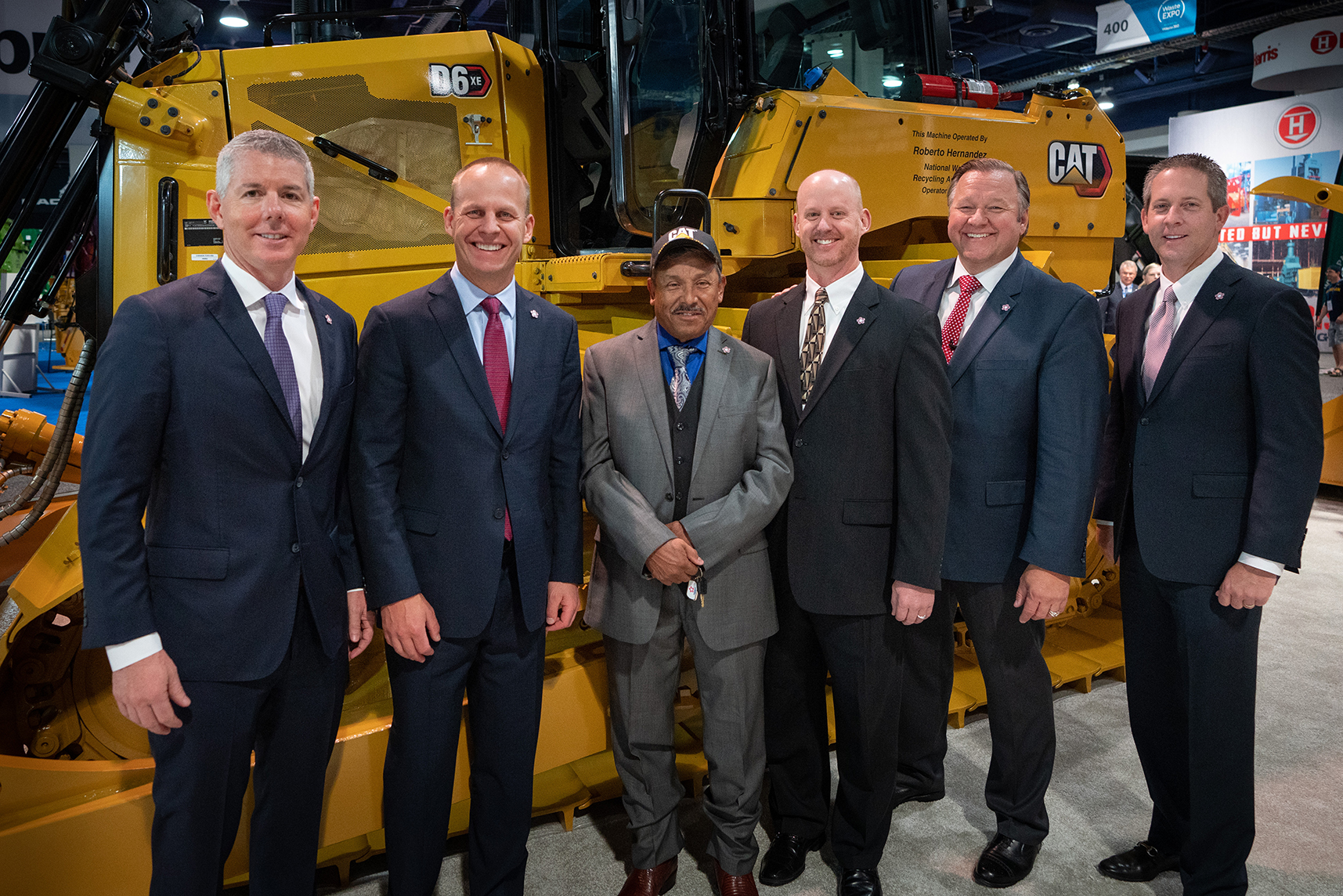
His public work extends beyond Republic. He serves on the board of Lennox International and is listed by Republic as a board member of Chances for Children, which supports communities in Haiti. Those connections sit alongside an executive career spent considering how large organizations serve people whose needs are often quite specific. The scale may be corporate; the experience arrives one workplace or one customer at a time.
What happens after the blue bin
The CEO role brought larger choices about the business Republic should become. On May 2, 2022, the company completed its acquisition of US Ecology. The announced transaction value was $2.2 billion, including debt net of acquired cash. It expanded Republic’s environmental solutions footprint in the United States and Canada and added expertise in specialty waste handling.
The customer logic was direct. A manufacturing business can produce several waste streams with different handling requirements. Republic wanted to offer a broader set of services through one provider. At announcement, the company estimated a cross-selling opportunity of $75 million to $100 million. That was an expectation, with work still required to turn an expanded offering into customer revenue. Buying capabilities creates possibilities; operating them together is the next assignment.
Plastics presented another version of the customer problem. A collected bottle still needs processing before it becomes useful material for a packaging manufacturer. Republic opened its Las Vegas Polymer Center in December 2023. The facility was expected to produce more than 100 million pounds of recycled plastics each year. Coca-Cola was identified as a customer, with supply scheduled to begin in January 2024.
The details matter because the recycling bin can conceal the industrial work that follows. Collection gathers material. Further processing determines what buyers can make from it. The Las Vegas investment placed Republic further along that chain. For an executive whose early career centered on sales, the presence of a buyer is a telling detail: recovered material needs a specification, a market and someone prepared to purchase it.
In March 2025, Republic and Blue Polymers celebrated the opening of their Indianapolis complex. Its facilities were designed to work together to produce more than 175 million pounds of recycled plastics annually. PET, commonly used in beverage bottles, would be shredded and washed into recycled flake. High-density polyethylene and polypropylene would be sorted by type and color for further processing at Blue Polymers.
That figure describes intended capacity. It is useful as an account of what was built to be possible, while actual output remains an operating question. The distinction suits the larger story of Vander Ark’s career. An opportunity becomes a plan, the plan becomes a facility, and then the daily work begins. Even a circular economy has a decidedly linear list of jobs to finish before lunch.
The next collection is still due
By July 2026, Republic was reporting $973 million in sustainability investments made during 2025. They included nine new renewable natural gas projects, the Indianapolis complex, construction beginning on a third Polymer Center, and an electric collection fleet exceeding 180 trucks. Charging infrastructure supported the fleet at 32 sites. The dates are worth keeping straight: these were the previous year’s investments, reported the following summer.
during 2025
at year-end 2025
Republic’s August 2026 second-quarter results put those projects alongside the wider business. The company reported approximately $860 million invested in acquisitions during the first half of the year and raised its full-year financial guidance. The environmental investments belong within that operating and financial picture. They are commitments made by a company still responsible for delivering services while adding new ones.
Vander Ark has described visiting business units on his own, putting on boots and talking with managers and drivers. The habit provides a fitting final image for a career that began with research into growth and moved progressively closer to the work required to produce it. The book, the pricing tool, the break room and the polymer center all concern people making something function. The bottle may get another life. Somebody still has to collect it.
Continue the conversation
- Republic Services leadership
- Jon Vander Ark on LinkedIn
- The 2012 sales-management interview
- The 2017 operations interview
- The 2019 conversation about people and recycling
- The CEO succession announcement
- The Indianapolis complex opening
- A conversation about leadership, 2025
- 2025 investment update, released July 2026
- Watch: WasteExpo conversation, 2022