A cardboard packing container has a fairly unromantic job. It protects something valuable, arrives at a factory, and becomes somebody else’s problem. At General Motors’ stamping plant in Marion, Indiana, Waste Management helped give that problem another destination. Recovered packaging and other cardboard became material for an acoustic product used in the 2010 Buick LaCrosse. Harry Lamberton, then a Waste Management vice president, was the named contact for the case study.
The episode makes a useful doorway into his career. A box has served its purpose. Someone still has to decide what follows. The same question turns up in ash from power plants, in a company preparing its next leadership team, and in the outdoor places people expect to be cared for without thinking much about who does the caring. Lamberton’s working life has moved among those responsibilities.
There is a modest pleasure in the cardboard example: packaging gets a second assignment inside the car. The work required General Motors, Waste Management, and a supplier, with a recovery plan linking the stamping plant to another manufacturing facility. It was a coordinated project. Lamberton’s place in its public record illustrates the industrial environmental-services world in which he worked.
A city connected by water
Long before those executive roles, there were paths beside Rock Creek and the Potomac. Lamberton grew up in Washington, D.C. Years later, introducing himself as a new director of Friends of the Chicago River, he recalled exploring those waterways and enjoying the green spaces around them. What stayed with him was their connection to the wider city.
He described an appreciation for “how those waterways and related greenspace connected the entire city.” That is a precise memory: paths and water giving a city continuity. In 2019, when he joined the Chicago organization’s board, he was a Waste Management area vice president and a Chicago resident. He expressed enthusiasm about contributing to the river’s improvement and the responsible development of its shorelines.
Today, Friends of the Chicago River still lists him among its directors. The connection belongs in his story because it puts a personal recollection beside a public commitment. A river has banks, neighbors, and a long list of people with an interest in what happens next. Looking after it brings an executive’s responsibilities into a place that can be walked through.
From English to environmental services
Lamberton graduated from the University of New Hampshire in 1990 with a bachelor’s degree in English language and literature. He also earned an MBA at Emory University’s Goizueta Business School. An English degree and a business degree are an interesting pair on the résumé of someone whose work would involve industrial customers and environmental operations.
His Waste Management assignments ranged across several parts of the business. He was an Upstream vice president from 2006 to 2008, a Manufacturing & Industrial Segment vice president in 2009 and 2010, and a Southern Group vice president in 2011 and 2012. A professional biography also identified him as a Certified Hazardous Materials Manager. The sequence puts industrial, regional, and environmental responsibilities in the same career.
In January 2011, Duke University scheduled him to speak on sustainability goals at Waste Management. The setting was a university seminar room; the subject was a company’s operating ambitions. It offers an early example of another recurring connection in his record: moving between the business of environmental services and conversations about what those services should accomplish.
- 2006-08Upstream
Waste Management - 2013Energy services
Waste Management - 2022President
Yellowstone - 2023CEO
Yellowstone
Ash with somewhere to go
In November 2013, Waste Management announced an American Electric Power contract covering three plants in Texas and Oklahoma. Its Energy Services division would provide coal-combustion-product marketing and onsite landfill management. FlyAshDirect, part of that division, would market fly ash for reuse, including in construction materials such as concrete.
Lamberton, identified as the division’s vice president, explained the two possible destinations. Ash could be sold to the construction industry; material that was not reused would go to landfill. The three plants together produced roughly 700,000 tons of coal-combustion products. That figure described their output, rather than a promise that every ton would be recycled.
AEP’s 2013 contract covered Mount Pleasant and Vernon, Texas, and Oologah, Oklahoma.
About 700,000 tons of coal-combustion products produced collectively.The business involved finding markets as well as managing disposal. A by-product does not acquire a customer simply because it can be useful. Someone has to organize the route between the producer and the buyer. The ash contract puts a specific commercial task behind the larger idea of reuse.
That same year, Waste Management acquired Summit Energy Services and Liquid Logistics in Williston, North Dakota. The businesses added capabilities for customers working in the Bakken, including well-site maintenance, construction, erosion control, and related services. Waste Management retained their 140 employees. Lamberton explained that the purchases brought expertise the company could also use in other regions. The people and their skills were part of what the transaction added.
Sixteen months beside the next chair
In January 2022, Lamberton joined Yellowstone Landscape as president. By May 2023, he was taking the CEO role. Tim Portland, the previous CEO, moved to executive chairman, while Timothy Sherman became chief financial officer. Yellowstone said its board had begun preparing for its next executive generation more than two years before the announcement.
The transition had a period of working together built into it. Portland used an aviation analogy to describe the previous sixteen months: he had been leading, with Lamberton increasingly helping to fly the company. One hopes the corporate airplane had fewer scheduling complications than a commercial one. The serious point was continuity. Portland would remain involved, and Lamberton welcomed that continuing partnership.
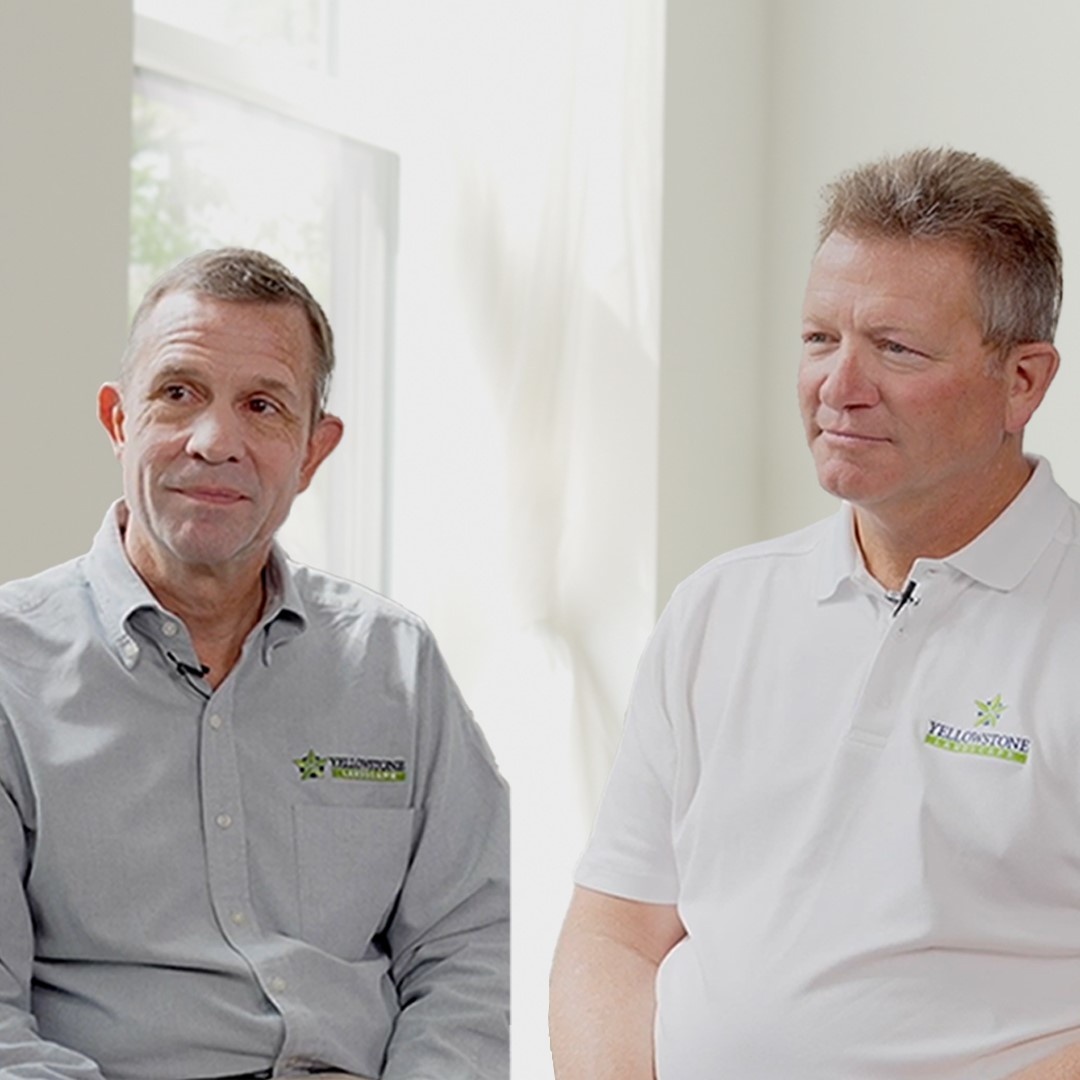
Lamberton brought a long waste-services career into a business working on landscapes. He saw similarities between the industries and stressed the importance of operations in the field. Branches needed room to respond to their markets. The statement gives his move a practical explanation: familiarity with the organization of service could travel from one kind of work to another.
Yellowstone ranked fourth on Lawn & Landscape’s 2023 Top 100 list, with $539 million in 2022 revenue. That was the company’s scale as he moved toward the CEO role. The number establishes the size of the assignment; the shared handover establishes how the people at the top prepared for it.
The customer has an opinion
Landscaping introduced a particularly visible version of service. Customers can look out of a window and form an opinion about the work. In a 2025 discussion of landscape styles, Lamberton observed that a client’s judgment depends on personal preference. Technical knowledge matters, but the desired result also belongs to the person using the space.
A formal entrance, a naturalistic planting, and a tropical resort landscape make different promises. Yellowstone’s discussion of design emphasized listening to customers and fitting choices to a site and its budget. Lamberton’s observation sits comfortably in that conversation: the provider has to understand what the client wants before deciding what a good result should look like.
“a client’s opinion of their landscape is all about personal preference”
Harry Lamberton, on landscape design
Who gets a future in the field?
His public remarks also return to the people entering the business. At Yellowstone’s 2024 Office Manager Meeting, Lamberton discussed women coming into landscaping, including people arriving from other industries. He spoke about technology becoming a larger part of the work and about the attraction of working outdoors with nature. He wanted more women to see a future in the industry and its leadership.
In 2025, he welcomed interns and graduates joining Yellowstone’s Manager in Development program. The enthusiasm was directed at people beginning a career. It is a small but useful detail alongside executive appointments and contracts: he was also paying attention to the point where somebody first decides that this work might be for them.
His university connection adds another setting. Lamberton served as a final-round judge in UNH’s Social Venture Innovation Challenge in December 2022. Student proposals included a seaweed-based approach to reducing methane from cattle and a process for renewable jet fuel. He praised the finalists’ choice of meaningful problems and the thought they put into plans for tackling them.
UNH also lists him on its Sustainability Advisory Board. The board brings together volunteers from different fields to advise the university’s sustainability work and support its resources. For a graduate returning with operating experience, the conversation has changed sides: students bring proposals, and an executive helps assess what they might become.
What happens next
In an early-2026 Yellowstone video, Lamberton described performance through several measures. He wanted the organization and its service to improve. Investing in the team, seeing it grow, supporting safe work, communicating with customers, and building relationships all belonged in his account of a successful year.
His subsequent role is listed as CEO of Percheron Capital’s Waste Management Platform, returning his career to waste services. The earlier chapters remain instructive: industrial materials that needed a destination, branches that needed to respond, and colleagues preparing to carry a business forward.
The childhood waterways supply a quieter closing image. Lamberton remembered how they connected a city. Across his working record, the same practical question keeps reappearing: who will take responsibility for the next part of the journey? A packing container, a power-plant by-product, a local branch, a new graduate. Each has somewhere to go. Getting it there takes work.
Read, watch, follow
- 2023 leadership announcement and video ↗
- Lamberton’s 2026 leadership video ↗
- AEP fly-ash contract ↗
- General Motors materials-recovery case study ↗
- Career biography ↗
- 2019 Chicago River board introduction ↗
- UNH student venture competition ↗
- Friends of the Chicago River ↗
- UNH Sustainability Advisory Board ↗
- 2023 transition coverage ↗
- Energy-services acquisitions ↗
- Women in landscaping: video remarks ↗
- Interns and graduate development ↗
- Landscape design and customer preferences ↗
- Current platform-role listing ↗
- Percheron Capital ↗
- Harry Lamberton on LinkedIn ↗
- Yellowstone Landscape on YouTube ↗