A factory can look perfectly calm while a small crisis gathers inside a pipe, tank or waste stream. The public sees a building. The operator sees pressure, residue, deadlines and the expensive arithmetic of lost production. Somewhere between those views sits the company Dean Wallace helped build: crews, vacuum trucks, waterblasting equipment and response plans prepared for work that is easy to ignore precisely because somebody keeps doing it.
Wallace co-founded Superior Environmental Solutions with Chester Yeager in Cincinnati in 1999. Their premise was plain enough to fit on a work order. Industrial customers needed environmental and cleaning services that were responsive, specialized and cost-effective. The opportunity lived far from the fashionable edge of business. It was physical, regulated and local. It involved chemical plants, food processors, manufacturers, utilities and the difficult spaces where ordinary maintenance ends.
The company known as SES grew around that need. Its services came to include industrial vacuum cleaning, high-pressure waterblasting, hydro excavation, emergency response, waste transportation and disposal. Those terms have the charm of a municipal handbook, which is partly the point. Wallace built in a category where competence is more persuasive than theatre. When a production line is waiting, nobody asks whether the service provider has a clever origin myth. They ask who is coming, what equipment is arriving and whether the job will be done safely.
A biologist walks into an industrial market
Before the trucks and transactions, Wallace studied biology at DePauw University from 1987 to 1991. Public records do not offer a neat cinematic leap from lecture hall to industrial cleanup, and none is needed. Biology trains attention on systems: how parts interact, how stress travels and how an intervention in one place changes another. Environmental services makes those relationships concrete, sometimes muddy and often time-sensitive.
By 2016, SES operated from 10 locations across Ohio, Kentucky, Michigan, Indiana and Pennsylvania. Wallace was its president, and the company served markets ranging from chemical manufacturing and food production to refining, transport infrastructure and waste treatment. The menu was broad, but the operating idea remained local. A regional network could keep specialized crews and equipment close enough to respond while giving each branch more capability than an isolated shop could afford.
“The small companies have their niche. However, they don't have the infrastructure that is required to grow.”Dean Wallace, 2016
That observation is the cleanest window into Wallace's strategy. A niche is valuable knowledge: how to clean a vessel, handle a material or work around an active plant. Infrastructure turns that knowledge into a repeatable company. It means training, dispatch, equipment, safety procedures, reporting, customer coverage and enough financial room to say yes when the call comes from another state.
The map kept widening
Capital arrives; the founders stay
In 2017, Rosewood Private Investments recapitalized SES. Wallace and Yeager retained a significant ownership position and continued to lead. This was not the familiar founder exit with a ceremonial handshake. The transaction gave the business a financial partner while keeping the operators who knew its customers and field reality in place.
The sequence that followed helps explain what the capital was for. SES acquired Resource-One in 2020, adding recycling, waste management and product destruction. Wallace described the fit through shared values, safety, customer service and complementary capabilities. In February 2021, SES added Hydro Technology, an industrial and environmental cleaning business with five facilities in Michigan and Ohio. The acquisition expanded both the service set and the map.
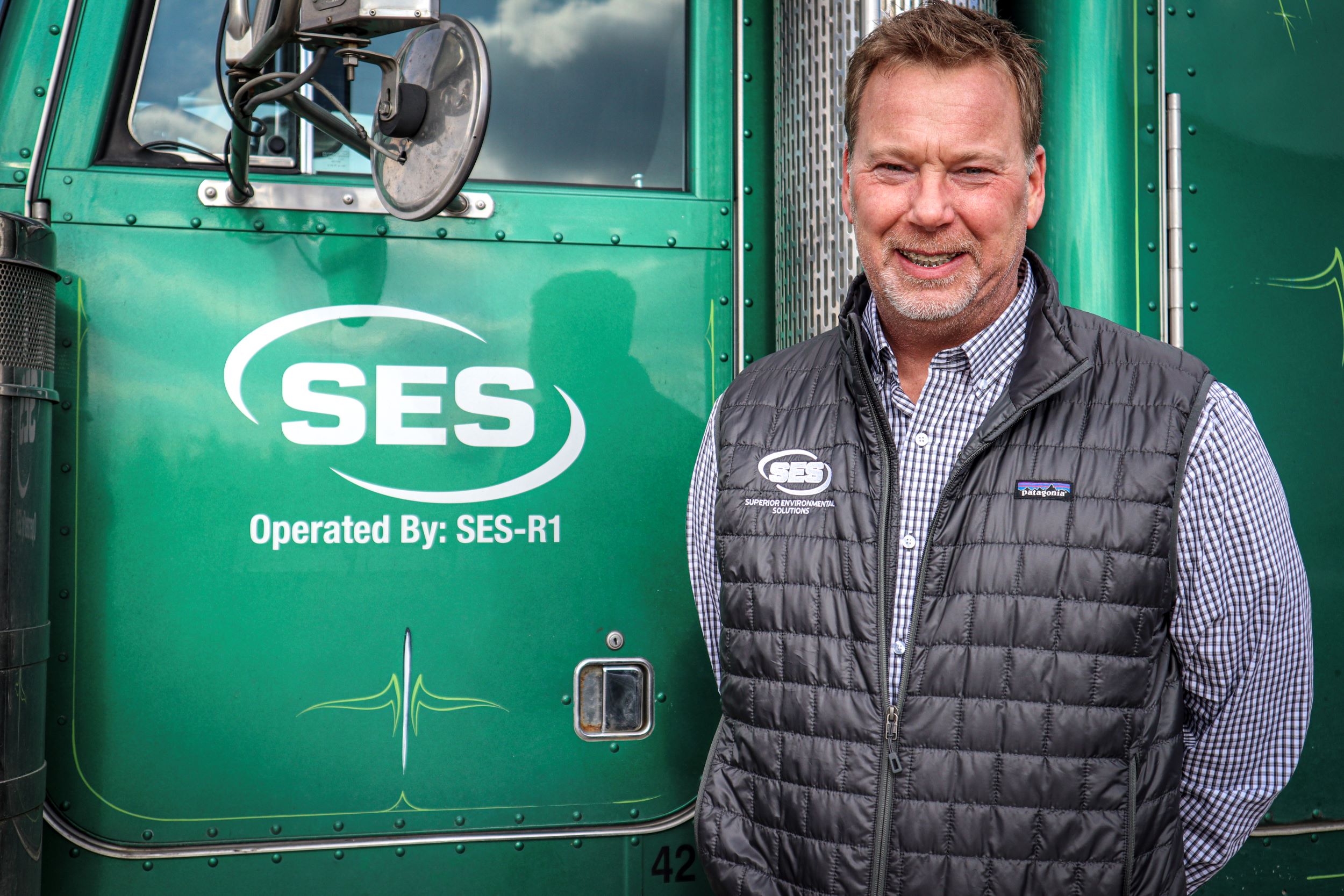
Wallace's public language around Hydro Technology was tellingly personal. He said he had been fortunate to meet many of its employees, then praised their dedication to safety and customer service. Acquisitions can be drawn as boxes moving across a slide. In a field-service business, the boxes have keys to trucks, habits learned on customer sites and opinions about how a job should run. Integration succeeds or fails at that human scale.
Safety appears repeatedly in the company's account of itself. That is neither decorative nor surprising. High-pressure water, hazardous materials, confined spaces and emergency sites offer very little tolerance for improvisation. Safety is a duty to workers and customers, but it is also the operating permission on which growth depends. A larger footprint only helps if every new crew can meet the standard attached to the name on the truck.
The handoff is part of the build
Two months after the Hydro Technology announcement, SES disclosed a planned succession. Wallace would move from chief executive to vice chairman, concentrating on organic growth and acquisitions. John Stevens, who had joined as chief operating officer in 2017, would become CEO and take daily responsibility for the business.
The choice of successor matched the work. Stevens had been responsible for field operations, safety and human resources, and had worked to streamline operations and introduce performance measures. The company was not handing the keys to a stranger with a taste for slogans. It was promoting an operator already familiar with the machinery, literal and organizational.
“We have worked diligently to build a world class team to lead the company now and into the future.”Dean Wallace, 2021
A planned handoff asks something uncomfortable of a founder. The skills that make a company possible - urgency, personal authority, the reflex to decide - can eventually crowd the institution they created. Wallace's move acknowledged a different test. Could the company keep operating under another leader while he supported strategy from a different seat?
Wallace and Chester Yeager found SES in Cincinnati.
Rosewood recapitalizes SES; the founders retain ownership and continue leading.
Resource-One and Hydro Technology broaden services and reach.
Wallace becomes vice chairman; John Stevens becomes CEO.
Rosewood sells SES to Palladium Equity Partners.
The handoff held. In 2023, Rosewood sold SES to Palladium Equity Partners. At that point the company reported more than 500 employees across more than 25 locations in 10 states. Public professional listings now identify Wallace as former CEO and co-founder. The company continued making acquisitions under Stevens, evidence that the growth apparatus did not depend on a single nameplate.
What the quiet businesses teach loudly
Wallace's record offers no need for invented quirks or polished founder folklore. The interesting material is already there. He spent more than two decades in a business whose output is often the absence of an event: no prolonged shutdown, no unmanaged spill, no piece of equipment left dangerously fouled. Success can look like ordinary production resuming on schedule.
Consider what it takes to make that ordinary outcome repeatable. A branch needs the right machine, but equipment alone cannot read a site. Someone has to scope the assignment, identify the material, select the method, prepare the crew, coordinate transport and document what happened. Emergency response adds a clock. Confined-space work adds another layer of planning. Waste disposal extends responsibility beyond the customer's gate. Each service may appear as a separate line on a website; in practice, they meet inside the same operating system.
That helps explain why Wallace's comment about infrastructure matters. A skilled local provider may understand one plant exceptionally well. A regional platform has to preserve that judgment while making it available across branches and customer types. Too little structure, and growth strains the specialist. Too much distance from the field, and structure becomes paperwork with tires. SES expanded by adding adjacent capabilities and local teams, a pattern visible in the Resource-One and Hydro Technology deals. Recycling and product destruction sat beside transport and disposal. Waterblasting capacity arrived with more locations. The additions made the service network denser rather than merely making the corporate chart wider.
Three ideas travel well beyond environmental services. First, specialization and scale are not enemies. A company can preserve technical knowledge while building the shared infrastructure that lets it travel. Second, acquisitions are operational events before they are financial ones. The values Wallace emphasized - safety, service, fit - become meaningful only when the joined teams behave as one. Third, succession deserves the same deliberate design as expansion. A company is sturdier when its founder can change roles without turning the change into a crisis.
There is also something pleasantly unfashionable about the story. SES did not need to persuade consumers to form a new habit. It needed to earn repeated trust from organizations with difficult jobs. The moat was not mystery. It was response time, local density, equipment, trained people and the accumulated confidence that the crew would understand the site when it arrived.
This kind of company also changes the meaning of visibility. Consumer founders can measure attention in followers and impressions. An industrial operator is often most visible to a plant manager at an inconvenient hour, when a shutdown or spill has converted reliability from an abstract virtue into a schedule. Wallace's public footprint is modest compared with the company he built. That ratio feels appropriate. The work asked SES to be conspicuous when needed and quietly competent the rest of the time.
Wallace saw small specialists with real expertise but too little infrastructure. He spent years building the bridge between those two conditions. The result was not merely a bigger company. It was a system for making hard, necessary work reliably available - and, eventually, a system that could continue after he left the chief executive's chair.