The peculiar thing about a perfect collision repair is that nobody is supposed to notice it. The panel gaps behave. The paint forgets where it began. The sensors return to their quiet vigilance. A customer collects the keys and drives away with one less problem. In this trade, the applause is often a car that looks agreeably uneventful.
Earl Johnson IV came to that invisible craft from a world that makes movement visible by the second. He spent his career trading global equities, first at Raymond James, then Citadel, then D1 Capital Partners, where he helped launch the firm and led global equity trading. Markets flash. Prices announce themselves. Risk is compressed into numbers and watched as it moves.
Then, in 2025, Johnson co-founded Collision Partners with William Nicholson and stepped into an industry of frame machines, paint booths, calibration tools and customers having exceptionally bad Tuesdays. The career change looks abrupt only from a distance. Move closer and the line becomes clear: Johnson had been learning how capital behaves, but he had also spent ten summers learning how an operating business breathes.
Ten summers before the ticker
Johnson grew up around a multigenerational family enterprise in industrial construction, cranes and rigging, with operations across the South. For ten summers he worked inside it. The setting was less abstract than a trading floor. Crews had to arrive. Equipment had to perform. Leadership showed up in schedules, safety and whether people trusted the person making the call.
He also watched the questions that every enduring family business eventually confronts: Who leads next? What is worth preserving? What happens when the company is sold? Collision Partners describes that period as Johnson's early education in operations, leadership and succession planning. It is also the useful backstory to a founder who now asks independent shop owners to consider a new chapter for businesses carrying their names.
At the University of North Carolina at Chapel Hill, Johnson studied Management and Society, a degree title that now reads like foreshadowing. He graduated in 2011 and built his early career around equities. Raymond James developed the foundation. Citadel brought him into a large, complex investment operation. At D1, he helped with a beginning: the firm's launch as a family office and its growth into a global investment firm.
Trading does not make someone a body-shop operator. It does teach habits that travel well: price risk without pretending it has disappeared, understand liquidity, build systems for fast decisions and remain humble when reality revises the model. Collision repair supplies its own version of that discipline. Damage that looks cosmetic can reach deeper. A modern vehicle is a network of materials, electronics and safety systems wearing a handsome coat.
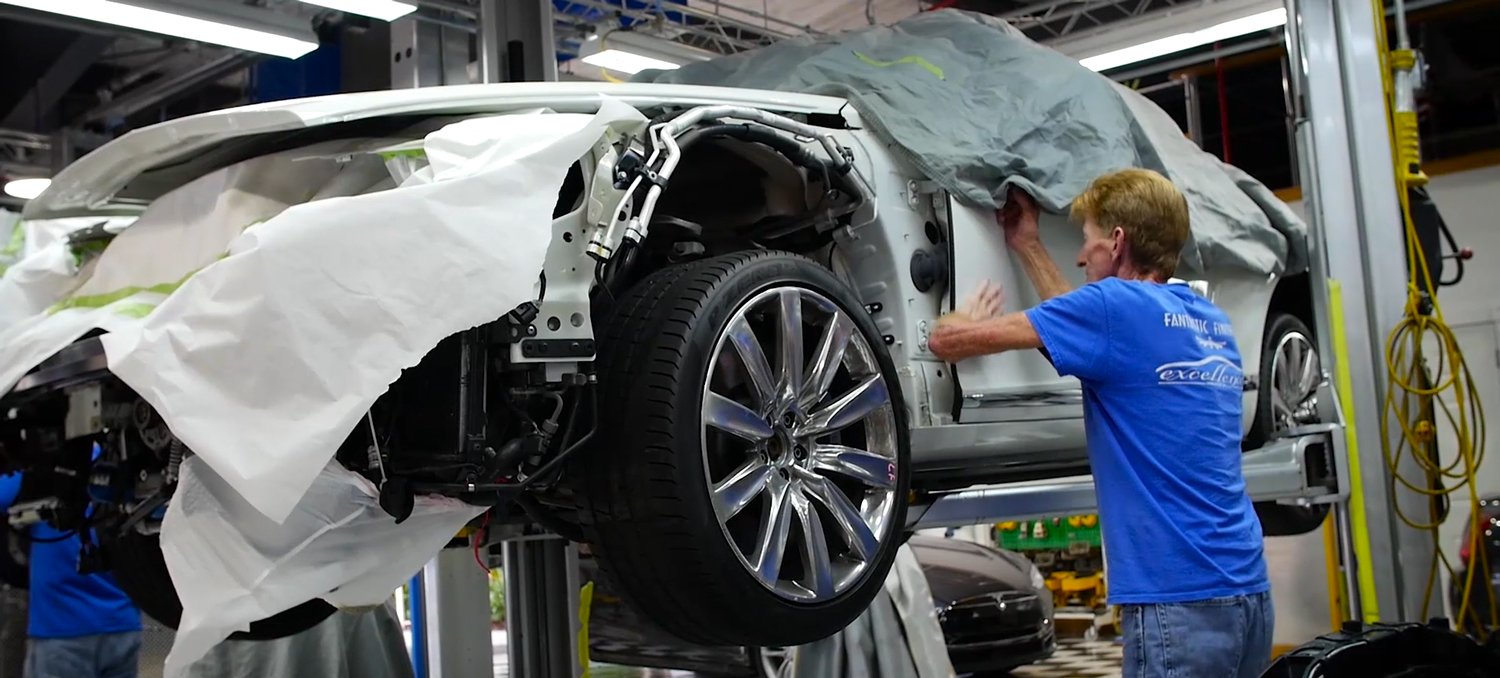
The customer arrives carrying more than a dent
Collision repair has a social contract hiding inside the repair order. The driver may know very little about structural materials or calibration. The shop knows a great deal. That imbalance makes trust unusually valuable. It also makes quality difficult to fake for long. Dealerships notice. Manufacturers set certification requirements. Technicians notice which owners buy the proper equipment and training. Customers discover whether promises survive contact with the insurer, the parts delay and the final inspection.
Johnson's thesis begins there. Collision Partners says it chooses independent operators with strong cultures, OEM credentials and hard-earned relationships. The platform brings capital, reach and operating support. The local business keeps its name, its connection to the market and a stake in what comes next. The phrase for the model is “Local at Scale,” four tidy words covering an untidy management challenge.
“Collision Partners' approach to Fantastic Finishes and Chassis Master is rooted in partnership - preserving the reputation, relationships, and operational strengths that make the businesses extraordinary.”Earl Johnson IV, January 2026
Scale naturally pulls toward sameness. One accounting system is easier than three. Shared purchasing may be better than isolated buying. Training, recruiting, finance and technology can become stronger when a platform supports them. But the habits that made an individual shop trusted may resist centralization. The estimator who remembers a dealership's standards, the technician who catches the second-order problem, the owner whose phone number is still in a customer's contacts: these are not redundancies waiting to be removed.
The useful test is not whether headquarters can make a shop more consistent. It is whether consistency helps the repair without making the business generic. Johnson's public language repeatedly circles reputation, culture and operator influence. Those are pleasant words in any acquisition announcement. Their consequence becomes real only after the deal, when a centralized process meets a local exception and somebody has to decide which one yields.
Three shops and a visible pattern
Collision Partners began its public acquisition story in January 2026 with two Florida businesses: Fantastic Finishes in West Palm Beach and Chassis Master in Miramar. Russ Swift, the founder of Fantastic Finishes, joined the platform as director of strategic operations, an equity partner and a builder beyond his original shop. Scott Woodard, whose collision-repair career spans more than four decades, joined to work on integrations.
The personnel choices sharpened the strategy. Johnson was not simply collecting locations. He was collecting judgment, then giving it work to do across the company. A good operator became part of the product. In a labor-intensive trade where process lives partly in manuals and partly in experienced eyes, that distinction matters.
In July came K&M Collision of Hickory, North Carolina, founded by Kevin and Meredith Bradshaw in 1991 and carried forward by their sons. The shop brought more than 30 OEM certifications across luxury, electric and exotic brands. The transaction made the Bradshaw family significant shareholders. Michael Bradshaw became executive vice president of collision operations and joined the Collision Partners board. His brother Kyle became K&M's general manager.
“Our partnership is centered on preserving what makes K&M special while giving Michael, Kyle, and the broader K&M team the opportunity to help shape what this platform becomes.”Earl Johnson IV, July 2026
There is a quiet piece of symmetry in that structure. Johnson watched succession and sale inside his own family's industrial company. He now builds transactions for families facing their version of the same passage. Selling an operating business is financial, but it is rarely only financial. A founder is also negotiating with memory, loyalty and the fear that an acquirer will repaint the sign before learning why customers walked through the door.
The wager hidden inside the slogan
Collision Partners is young. Its thesis has had months, not decades, to meet reality. The early pattern is nevertheless legible. Buy selectively. Favor certified repair operations with durable dealership and manufacturer relationships. Keep strong local brands. Ask proven operators to own part of the platform and improve it. Build shared capability around them.
Johnson's job has also changed in a way no market terminal can summarize. At D1, he led a trading function inside an investment organization. At Collision Partners, he oversees strategy, growth and culture. The last noun may be the demanding one. Strategy can live in a deck. Growth can appear in the location count. Culture turns up when the paint booth is backed up, a new process feels clumsy and the experienced employee wonders whether the new owner understands the old shop.
His stated aspiration is to make Collision Partners a place known for repair quality and for being a desirable employer. Those aims are connected. Modern collision work requires technicians who can keep pace with changing materials, scanning, calibration and manufacturer procedures. Equipment matters. Training matters. Retention matters. A platform cannot promise exacting work while treating the people who produce it as interchangeable parts.
This is where Johnson's two educations meet. Markets taught him that capital moves toward opportunity and away from unpriced risk. The family business taught him that a company is also a web of people, histories and expectations. Collision Partners is an attempt to use the first lesson without insulting the second.
The body shop makes a fitting laboratory. Every repair begins with damage and ends, if all goes well, with continuity. The car returns looking like itself. The cleverness disappears beneath the finish. Johnson is trying something similar with ownership: change the structure, add strength underneath and let the good local business remain recognizably its own.
It is an elegant wager, but elegance does not complete a repair. Execution does. The proof will arrive bay by bay, hire by hire and acquisition by acquisition. A spreadsheet can tell Johnson what he paid. The shops will tell him what he managed to preserve.