The Body Shop Roll-Up Betting Everything on Doing It the Carmaker's Way
Jerod Guerin left a decade at Service King to build Quality Collision Group - 100-plus OEM-certified collision centers across 13 states, assembled shop by shop, with new manufacturer parts and no shortcuts.
In a strip-mall trade where the fastest way to make money has long been to fit a cheaper aftermarket bumper and move on, Quality Collision Group built a company around the opposite instinct. Fix the car the way the manufacturer says to. Use new original-equipment parts. Recalibrate the safety systems before the customer drives off. Then do it in more than 100 shops across 13 states. The wager, unfashionable in an industry known for corner-cutting, is that quality is the actual moat.
The company is run from McKinney, Texas, in the Dallas-Fort Worth Metroplex, and it was started in October 2020 by Jerod Guerin, who spent more than a decade as a senior executive at Service King before deciding the industry needed a different kind of operator. Backed by Susquehanna Growth Equity, Guerin began not with a splashy national rollout but with a single Pennsylvania body shop, Brandywine Coach Works. Six years later the map has filled in coast to coast.
01 / The ideaFix it like the factory would
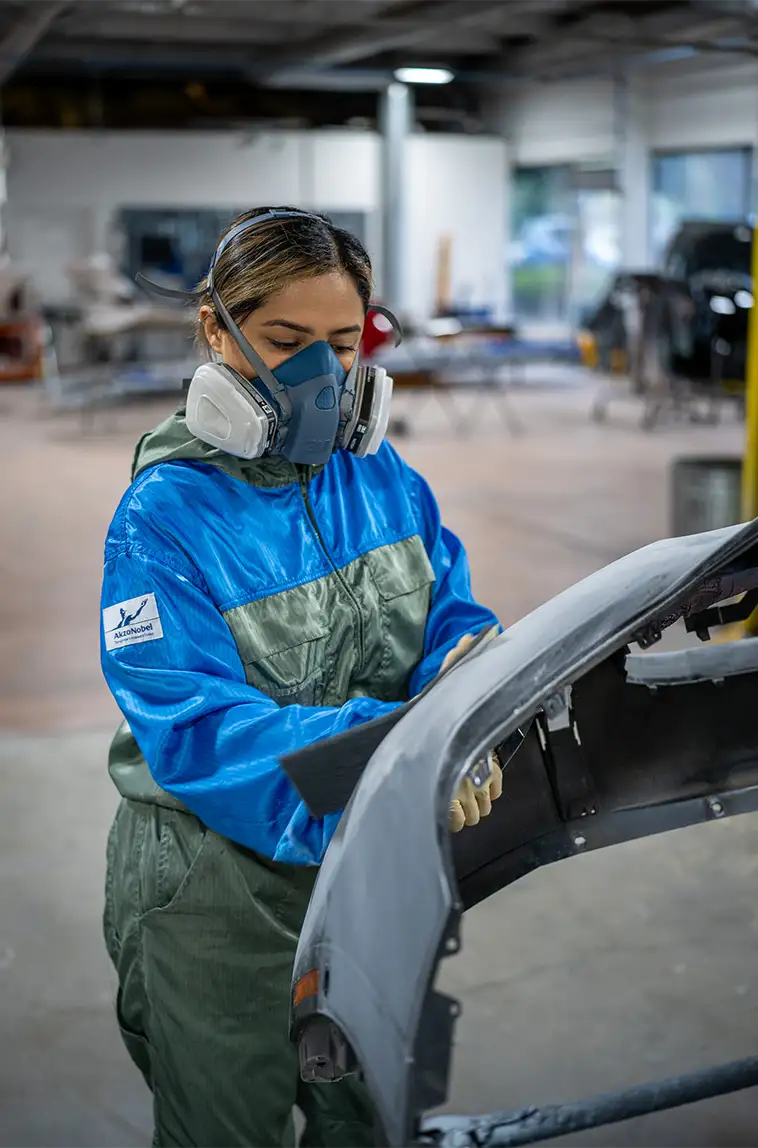
Modern cars are computers wearing sheet metal. A late-model sedan bristles with cameras, radar, and sensors that steer, brake, and warn - the bundle the industry calls ADAS, for advanced driver assistance systems. Repair one carelessly and the paint might look fine while the forward-collision radar points a few degrees off. That is not a cosmetic problem. It is a safety one.
Quality Collision Group's answer is to treat manufacturer certification as the price of admission rather than a marketing badge. Its shops follow OEM repair procedures, install new manufacturer parts, and calibrate the safety systems to spec after the work is done. "Following manufacturer repair procedures and utilizing new parts from your vehicle's manufacturer make for a quicker and better repair," Guerin has said - a line that doubles as the whole thesis.
02 / What they doEverything a bent car needs
The work runs the full menu of collision repair: structural and body repair, refinishing and paint matching, aluminum repair, paintless dent removal, and auto glass. Layered on top is the newer, harder stuff - ADAS calibration and advanced vehicle technologies, plus certified repair for electric vehicles. One of its Raleigh shops, Relentless Collision, became the first Mercedes-Benz EV-certified facility in North Carolina.
That certification wall is unusually tall here. The group is credentialed to repair roughly 34 brands, and the list reads like a valet stand at a five-star hotel: Aston Martin, Audi, Bentley, BMW, Jaguar, Lamborghini, Land Rover, Lexus, Maserati, Mercedes-Benz, Tesla, Toyota, and two dozen more. Each program comes with its own required tooling, training, and procedures.
Why the badge matters
Manufacturer certification is expensive to earn and easy to lose. It requires brand-specific equipment, trained technicians, and audited procedures - which is exactly why it functions as a competitive moat and a reason insurers and automakers route work to certified shops.
03 / The businessA roll-up that adds instead of cuts
The growth engine is a private-equity-backed buy-and-build. Rather than opening greenfield shops, Quality Collision Group acquires the best OEM-certified independents and regional operators in each market. What is notable is what it does not do afterward: it largely keeps the local names, keeps the technicians, and pours money into infrastructure, tools, and training. The standards go up; the sign over the door usually stays.
That restraint is the tell. Most PE roll-ups optimize for near-term margin and hollow out the culture; the churn shows up in the parking lot as technicians leave. Quality Collision Group reports the reverse - roughly 90% teammate retention and an average tenure near eight years. In a trade with a chronic technician shortage, keeping people is not a soft metric. It is the supply chain.
04 / The mapOne shop to thirteen states
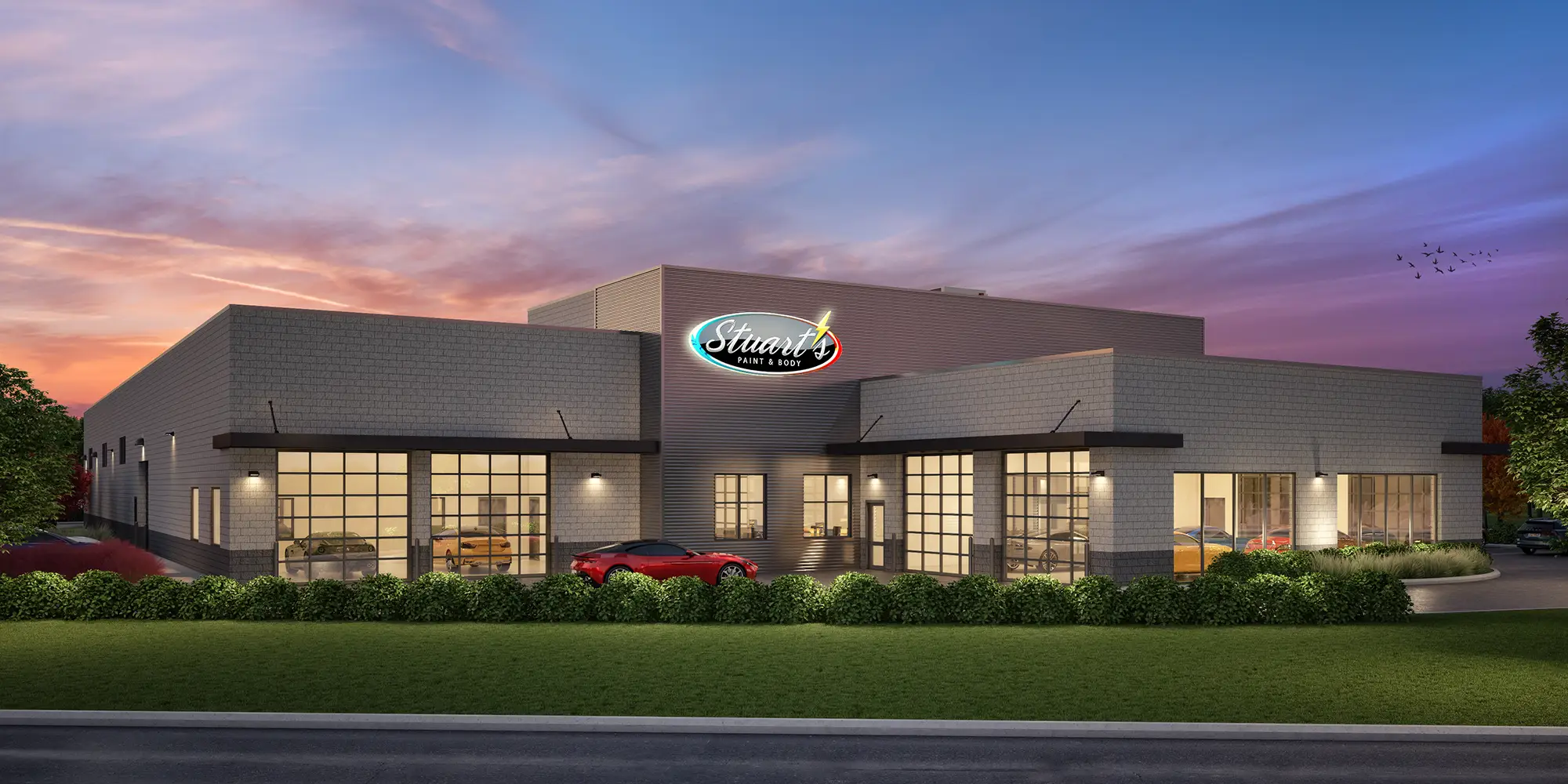
The expansion reads as a steady march rather than a land grab. From Brandywine in Pennsylvania, the group moved into North Carolina (Relentless and Triangle Collision), the Midwest (Schaefer Autobody Centers and Minnesota's LaMettry's), the Mountain West (Utah's Cascade Collision), and its home turf of Texas (Stuart's Paint & Body, and later Hance's Uptown Collision in Plano). In late 2025 it entered Florida - its 13th state - through 1st Class Auto, and in 2026 pushed further into California with Tracy Collision.
Approximate location counts, illustrative of growth trajectory.
05 / The founderAn Army vet who jumps out of planes
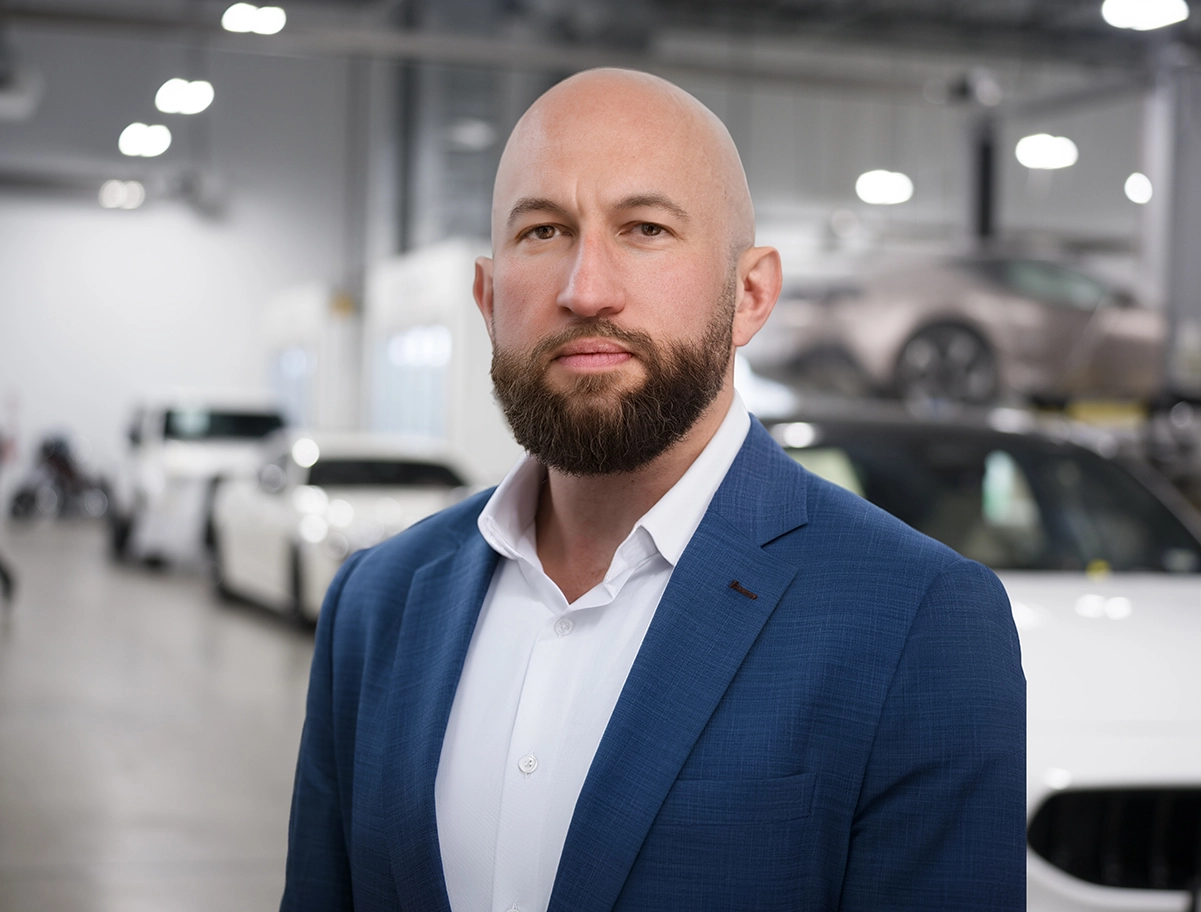
Guerin is not a stock executive-headshot. He is a U.S. Army veteran from a multi-generational military family, a licensed skydiver, a bass guitarist, and a chess player, with a well-documented loyalty to the Dallas Cowboys and the Red Hot Chili Peppers. He was named to IE Magazine's 10 Best CEOs of 2023 and sits on the Forbes Business Council. The through-line from the resume to the company is discipline: build it methodically, and do the parts nobody sees.
06 / The fieldWhere it fits in a consolidating market
Collision repair is consolidating quickly, and the big names - Caliber Collision, Gerber Collision & Glass, Crash Champions (which absorbed Guerin's old employer, Service King), Classic Collision, and Joe Hudson's - have mostly chased scale. Quality Collision Group is making a narrower bet: that certification, luxury and EV capability, and a reputation for correct repairs will matter more as cars get more complex and insurers get pickier about who touches them.
The scoreboard, in numbers
100+ locations · 13 states · ~34 OEM certifications · ~1,000 teammates · ~90% retention · ~8-year average tenure · estimated ~$260M annual revenue (approximate). Backed by Susquehanna Growth Equity since the 2020 launch.
07 / The takeawayWhat you can copy
For anyone building in a fragmented, unglamorous industry, the playbook here is legible. Pick a standard the incumbents skip because it costs more - here, OEM-certified, new-parts repair. Grow by buying the best local operators instead of the cheapest, and keep their names and their people. Invest in the boring infrastructure - tooling, training, calibration bays - that customers never see but safety depends on. It works when the standard is genuinely hard to copy and customers (or insurers) will pay for it. It works less well where buyers only shop on price, or where certification confers no real advantage.
08 / TimelineThe short history
- 2020Platform launches with Brandywine Coach Works in Pennsylvania, backed by Susquehanna.
- 2023Southeast expansion; Guerin named an IE Magazine 10 Best CEO.
- 2024Midwest and Texas scale-up - Schaefer, LaMettry's, Cascade, Stuart's.
- 2025Enters Florida (13th state) via 1st Class Auto; leadership bench deepens.
- 2026Crosses 100+ shops with Hance's Uptown and Tracy Collision.