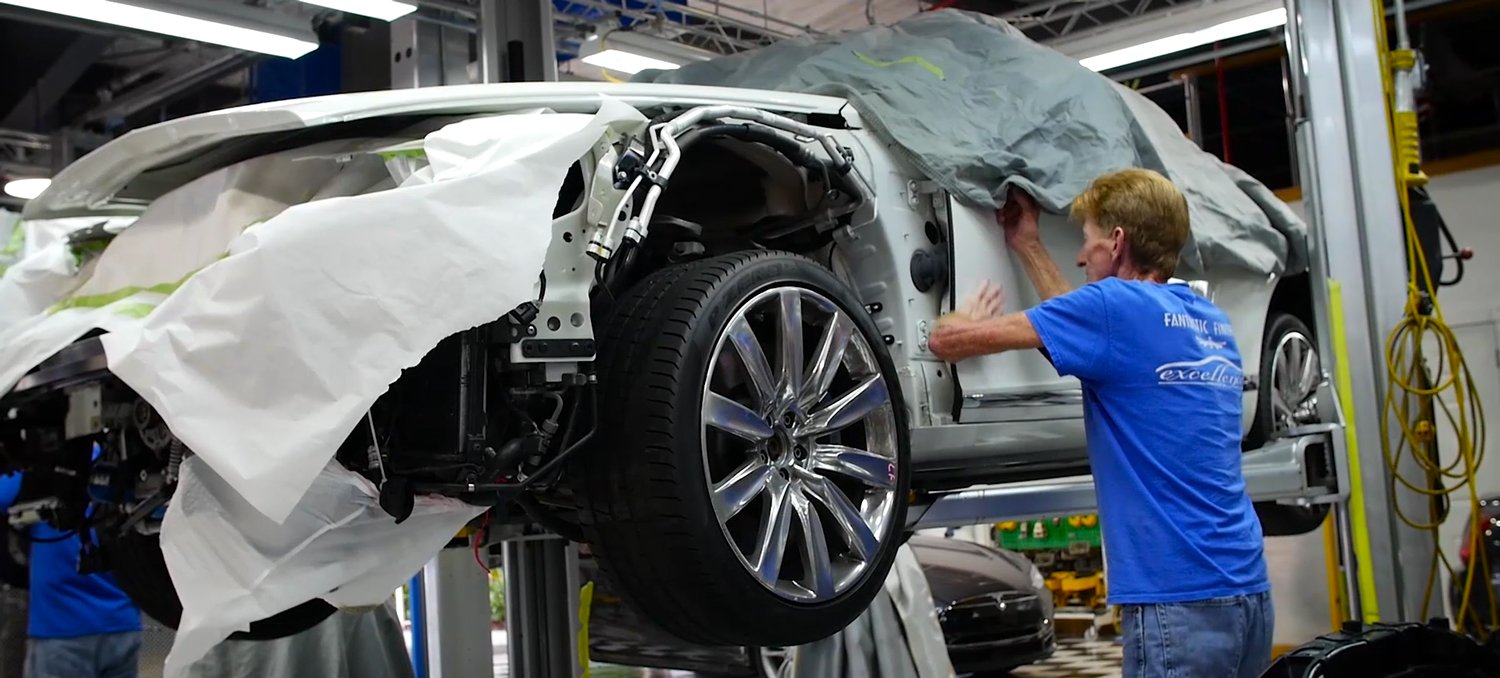
The smartest thing Collision Partners may have bought is a sign. Not the sheet metal or the paint booth behind it, but the name customers have repeated to one another for decades: Fantastic Finishes in West Palm Beach, Chassis Master in Miramar, K&M Collision in Hickory. In a business where the purchase happens after a bad day and the product is largely invisible once it is done correctly, familiarity carries unusual weight. Collision Partners has completed three acquisitions since the start of 2026 and left all three names on the door.
That makes the young company easier to understand. Founded in 2025 by CEO Earl Johnson IV and COO William Nicholson, the Raleigh-based platform buys select independent collision-repair shops, plugs them into shared capital and operating infrastructure, and asks the best operators to help build the larger group. Johnson came from global equity trading at D1 Capital Partners and Citadel. Nicholson brought experience in acquisitions, multi-unit operations and post-deal integration. Neither is pretending that a spreadsheet can straighten a chassis. Their wager is that disciplined capital becomes more useful when paired with people who already know how.
01 / The job underneath the paint
A body shop is now a safety-and-software business
A repaired bumper can look perfect while the car behind it is wrong. Cameras may need calibration. Aluminum demands its own tools and contamination controls. Structural adhesives, weld patterns and replacement procedures vary by manufacturer. The Society of Collision Repair Specialists treats published automaker procedures as the repair baseline because skipping them creates safety and liability exposure. The boring phrase “OEM-certified” is therefore doing serious work.
Collision Partners has aimed at shops that can handle that complexity. Fantastic Finishes, founded by Russ Swift as a one-person operation in 1986, built its name on luxury and specialty vehicles from Audi to Rolls-Royce. Chassis Master carries a multi-generational South Florida history and eleven manufacturer certifications. K&M, begun by Kevin and Meredith Bradshaw in a family garage in 1991, holds more than 30 certifications across luxury, electric and exotic brands.
The customer is the driver, but the commercial web is broader. Dealerships refer work. Automakers certify facilities. Insurers route claims through direct-repair programs. Fleets need cars returned to service. Collision Partners says it wants a mix of luxury OEMs, dealerships, selected insurance programs, fleets and repeat customer-pay business. That mix is intended to keep no single referral pipe in complete control.
02 / Why this market, why now
Thirty thousand shops, and a long line of buyers
Collision repair is large, local and still fragmented. Public industry estimates put North American annual revenue around $50 billion and count more than 30,000 U.S. repair locations. Roughly 23,900 are single shops. That fragmentation has attracted national chains, private-equity-backed groups and newer regional platforms. Yet size alone does not solve the hardest problems: recruiting technicians, maintaining certifications, managing insurer tension and performing the same safe repair across different locations.
The consolidation canvas / public industry estimates
The market turned choppier just as Collision Partners arrived. Acquisition volume slowed, claim patterns softened and operators sharpened their focus on margins. Smaller acquisition platforms nevertheless became more active while the biggest consolidators eased back. That gave a selective newcomer room to make three visible bets rather than chase a map full of dots.
The prices were not disclosed, so the most revealing cost is organizational. Collision Partners has to fund the acquisitions, equipment and shared staff while paying an integration tax that does not show up in a press-release photo. Every new shop adds a separate culture, insurer mix, repair system and local rhythm. The first thing likely to fail in a careless roll-up is trust: technicians leave, founders disengage, customers notice, and the very cash flow a buyer modeled begins to wobble.
03 / The mechanism
Centralize the plumbing, not the personality
Collision Partners calls its approach “Local at Scale.” The compact version is simple: preserve what the customer sees and share what the customer does not. A local shop keeps its name, team and reputation. The platform contributes finance, transaction execution, recruiting, process design, integration help and a larger network of relationships. Exceptional sellers keep equity and, in several cases, take jobs at the parent.
At shop level, the product remains practical: damage analysis, structural repair, refinishing, glass work, calibration and the negotiation required to get an insurer-approved estimate to match the manufacturer's procedure. At parent level, the product is leverage. A location can reach training, equipment capital, finance talent and operating specialists that would be expensive for one owner to assemble alone. The customer should experience fewer handoffs and a correctly repaired car; the shop owner should gain resources without becoming the manager of an anonymous branch. That is the bargain. It also gives Collision Partners two audiences to satisfy at once - the driver holding the keys and the entrepreneur still watching the sign.
Keep local
- Name on the door
- Customer trust
- Operator judgment
- Shop culture
Share at scale
- Capital and finance
- Integration systems
- Training and hiring
- Commercial reach
Look at the personnel moves. Swift became Director of Strategic Operations and an equity partner after selling Fantastic Finishes. Forty-one-year industry veteran Scott Woodard joined to work on integration. After K&M joined in July, the Bradshaw family became significant shareholders. Michael Bradshaw moved into the Executive Vice President of Collision Operations role and onto the board; his brother Kyle became K&M's general manager. The acquired expertise did not retire. It moved upstairs, while staying close to the shop floor.
This was also what changed sellers' minds. Swift said the team convinced him it would preserve the standards, people and reputation he had spent decades building. Michael Bradshaw described K&M as personal - the place where his family learned the work and one another. Equity and operating authority made the promise concrete. A buyer asking a founder to surrender a life's work offers cash. A buyer asking that founder to shape the next company offers a second act.
04 / The useful theft
What another operator can copy tomorrow
Collision Partners' most portable idea does not require an acquisition fund. Any multi-location service company can separate identity from infrastructure. Customers care about the familiar technician, the trusted name and the quality of the result. They rarely care which team closes the books, negotiates software or designs the monthly dashboard. A good central office strengthens the former by quietly improving the latter.
The five-line copybook
- Write down the local assets that must survive a deal before negotiating the deal.
- Give the best seller a meaningful role, measurable authority and continuing upside.
- Centralize one invisible function at a time, starting where errors are expensive.
- Define quality with observable procedures, training and checks - not adjectives.
- Diversify referrals before scaling locations, so growth does not deepen one dependency.
There is a useful discipline in the company's narrowness, too. Its first deals were not distressed shops needing a heroic turnaround. They were respected businesses with complex capabilities and operators worth retaining. That makes the buy-and-build model more expensive up front, but it reduces the fantasy that headquarters can manufacture reputation after closing.
05 / Where it breaks
Local autonomy has a speed limit
The model will not work everywhere. Local brands can coexist only if repair quality is consistent enough that one failure does not stain the whole group. Shared systems must produce real help rather than requests for more spreadsheets. Equity must feel meaningful after dilution. And a highly selective acquisition strategy needs a patient source of capital, because excellent shops have choices and do not sell on command.
The local name carries trust, the operator wants a second act, repair standards are measurable, and central support removes work from the shop.
The shop needs a turnaround, headquarters overrules craft without context, systems arrive faster than training, or every location runs a different safety standard.
Collision Partners is still too young for a victory lap. Three acquisitions make a thesis visible; they do not prove that it compounds. The next test is whether practices learned at K&M, Fantastic Finishes and Chassis Master travel without turning into bureaucracy. The company must show that “local” remains more than packaging once shared purchasing, reporting and performance targets press inward.
Still, the starting insight is sound. In collision repair, the repaired car should forget the crash. The customer should not have to forget the shop. Collision Partners is building its company in the narrow space between those two memories - scaling the machinery behind the work while leaving the trusted name where people can see it.
Explore / Official and related links