The propellant grain is the part of a rocket motor that politely declines to look important. It sits inside the casing, a precisely shaped block of energetic material, while the nozzle, the plume and the speeding hardware enjoy the photographs. Yet this unobtrusive ingredient can keep a factory waiting for weeks. Will Edwards built Firehawk around the conviction that the wait is the opportunity.
His route to that conviction did not begin in a propulsion laboratory. In 2019, Edwards was living in Santa Monica and working in HR software. He had graduated from the University of Arkansas in 2015, patented an electronic flash-card and quizzing system while at university, then founded MetKnow around the technology. The company became a Microsoft intellectual-property partner in 2018. The work was busy and legitimate. It simply did not feel consequential enough to him.
The patent is a revealing prehistory. It concerned remembering people: software would present identifying information, test the user and reinforce what had not stuck. Before Edwards was managing motors, he was thinking about how information moves through a human organization. His public record from those years also includes organizing 1 Million Cups, a community program for entrepreneurs, and volunteer work with a children's hospital and his former school, Cascia Hall Preparatory School. None of it resembles a conventional apprenticeship in aerospace. Together, it sketches an operator learning to explain ideas, convene people and keep a scorecard.
At the same time, a crop of commercial-space companies was making hardware feel newly available to founders. Edwards watched Relativity Space, Astra and ABL and found their work, in his own modest verdict, "incredibly cool." His father, Steve Edwards, had spent years on Capitol Hill and was living in Oklahoma. Steve introduced his son to Ron Jones, an inventor working on 3D-printed fuel for hybrid rocket engines. Jones needed operating and fundraising help. Edwards understood enough engineers from software to know how often an excellent technical idea arrives without its own translator.
A family introduction, then a hard correction
The three became Firehawk's founding group. Steve eventually returned to his previous work; Will and Jones kept going. Their first product thesis was a hybrid rocket engine, combining solid fuel with a liquid oxidizer. It offered interesting capabilities, but it also asked defense customers to change an existing system architecture. The answer from the market was plain enough to improve the plan.
Defense procurement carries an enormous memory. A missile is embedded in launchers, qualifications, maintenance routines, technical data packages and production lines. A technically clever engine that disturbs those relationships may create more work than relief. Firehawk's early pitch treated the whole supply chain as the thing to disrupt. Its customers showed the founders that the sharper move was to leave the recognizable architecture alone and change the slow process within it.
“We cut production from about 60 days to roughly six hours.”Will Edwards, 2026
The revised idea was solid propellant made through an additive process. Traditional solid propellant is mixed, cast into molds and cured. The chemistry and the geometry demand patience. Firehawk developed a thermoplastic feedstock with energetic material mixed in, then extruded it into the grain shape. The company could point to a motor already in service and propose a compatible grain made through different manufacturing physics. No grand redesign was required at the front door.
The short yellow mark is almost too small to see. That is rather the point. Figures reflect Edwards's description of the two production cycles.
The material had to earn the boast
A useful process still needs useful chemistry. Firehawk began with potassium perchlorate, which Edwards described as less sensitive to heat and easier to extrude safely. Military customers, however, expected the performance associated with ammonium perchlorate. The team kept working. It recruited specialists with experience at Raytheon, Lockheed Martin, Northrop Grumman and Nammo, and eventually developed a formulation it could print with the more demanding oxidizer.
That sequence explains the slightly comic image that followed Edwards through early conferences. He walked around carrying what a podcast host compared to Lego plastic, making the case that it could become rocket fuel. People laughed. The object did look closer to a toy than to the traditional image of energetics manufacturing. But it also made the proposition tactile: a standardized feedstock, an extrusion process and a shape produced on demand. The demo reduced a large industrial claim to something that could sit in a hand.
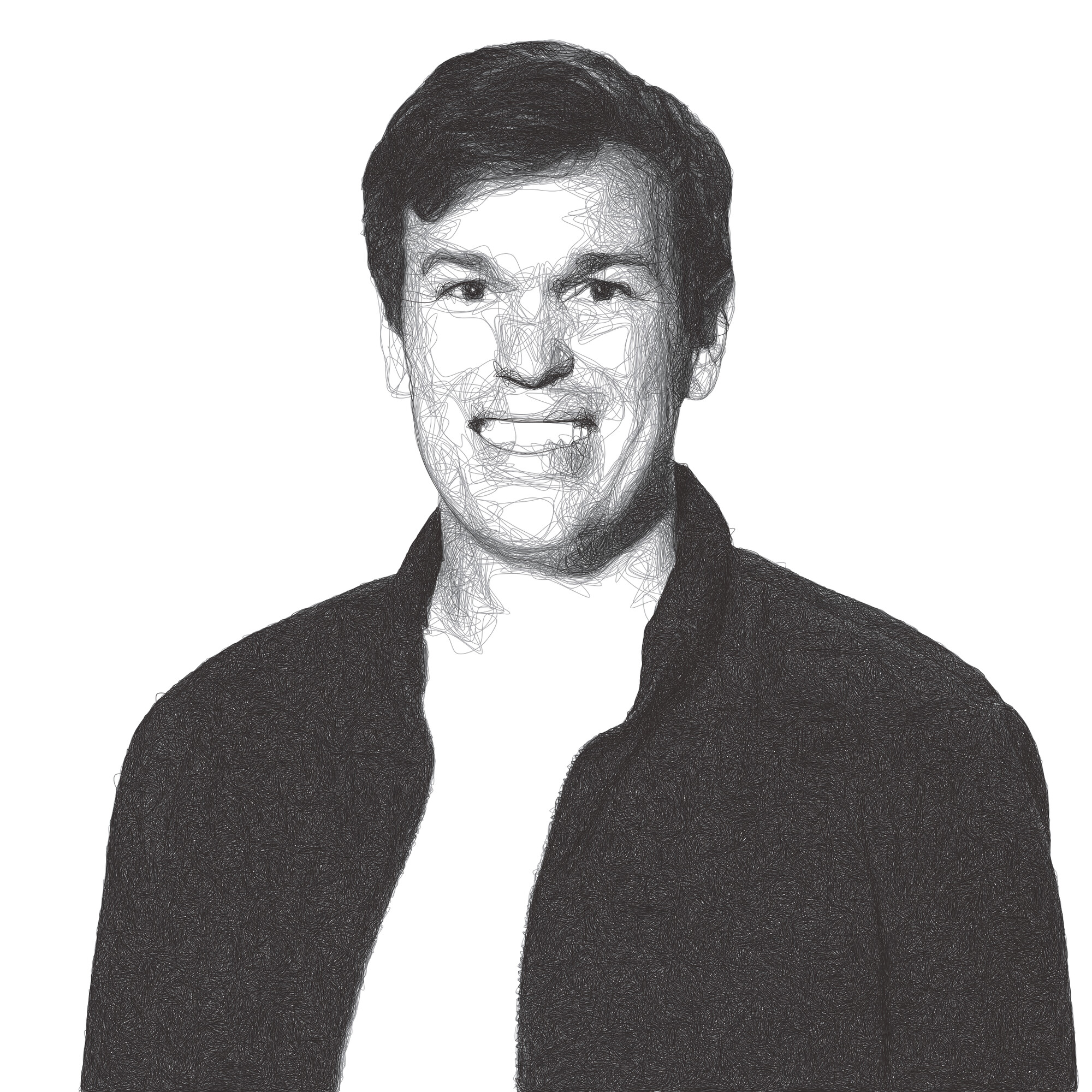
The other useful object was the failed first product. The hybrid engine did not disappear from Firehawk's work, but the rejection taught Edwards how to place innovation inside a conservative market. A customer can resist a proposed solution while caring intensely about the underlying problem. Founders often respond by adding more features or a more theatrical demonstration. Firehawk moved down a layer. The constraint was not a prettier complete missile. It was repeatable access to the material that makes one move.
Build from the ingredient outward
Edwards describes Firehawk as a sequence. Produce propellant at high volume and low cost. Use that capability to make motors. Once the motors work, integrate complete rocket systems. The order is the business model. Control the input that governs the schedule, then expand into the products that consume it.
By 2026, that sequence had acquired a three-state map. Research and development was centered in Texas. Lawton, Oklahoma, was becoming the energetics-production center. A facility acquired in Crawford, Mississippi, added system integration. Edwards said the Mississippi site arrived with annual capacity around 50,000 missiles and was being expanded toward 120,000. For Lawton, he discussed nearly two million pounds of propellant production the following year. These were company projections, but their scale revealed which argument he wanted Firehawk to win: throughput.
The capital followed the same transition. Firehawk's oversubscribed $60 million Series C, announced in 2025 and led by 1789 Capital, was framed as the bridge from research and prototyping into production. Draper Associates, Decisive Point, Stellar Ventures and European investor Presto Tech Horizons participated. The European connection suited Edwards's larger ambition: distributed propellant manufacturing near allied demand, including future capacity in Europe and the Indo-Pacific.
There had been earlier institutional signals. RTX Ventures, the venture arm associated with Raytheon Technologies, invested in Firehawk in 2022. Two years before that, Edwards joined Kepler Aerospace and Kepler SpaceCore as a rocketry adviser and advisory-board member, with responsibility described around rocket-technology development in Midland, Texas. Forbes also selected him for its 2021 Manufacturing & Industry 30 Under 30 class. Awards and advisory titles do not make propellant burn correctly, but they show how quickly a founder from software learned to operate inside a field with long technical memories and exacting gatekeepers.
He is notably skeptical of defense startups that promise to build everything from tip to tail before mastering the constrained component. The complete weapon makes a better stage prop and a worse starting assumption. Components, he argues, are where volume and revenue live. Firehawk has set its sights accordingly on systems with demand measured in hundreds of thousands of units, not boutique production runs.
“Producing components is sexy because that is how you make money.”Will Edwards
The operator's job is translation
Edwards does not present himself as the chemist behind every formulation. His operating identity is translation. Software taught him how to work with engineers and, as he put it, help them sell themselves properly. At Firehawk, that means connecting grain geometry and binder chemistry to the impatient language of schedules, factory footprints and cost. Jones's propulsion work needed a fundraising and operating counterpart. Edwards found a role where understanding the technical detail mattered, but making it legible mattered too.
There is some Tulsa and Texas texture around the edges. Edwards is from Tulsa, according to his public biography, and Firehawk is headquartered in the Dallas area. One Christmas, the company gave everyone a cowboy hat. Edwards's explanation was irresistibly practical: if the team would keep firing rockets in the Texas desert and building motors in Oklahoma, everyone needed one. Corporate gifts tend to strain for metaphor. This one merely required a brim.
His public writing has grown more direct as the company has matured. In 2025 he argued that the defense conversation was over-indexed on drones while underestimating munitions depth. He later wrote that propellant was the place to start. Both arguments return to the same operator's instinct: trace the glamorous system backward until the queue appears. Then stand beside the queue and count.
Firehawk still has to prove that its process can deliver the quality, economics and reliability required at the volumes Edwards describes. Rocket manufacturing does not award points for an attractive chart. Qualification is slow because failure is brief and expensive. Yet that tension is precisely what makes his story useful. The company did not discover an industry with no resistance. It discovered where the resistance lives and chose to build there.
The first Firehawk pitch asked customers to adopt a different engine. The better pitch asks them to imagine a familiar motor arriving before the calendar has grown a beard. Edwards's wager is that industrial capacity can begin with a humble block of material, printed quickly, repeated faithfully and manufactured close to the people who need it. Rockets may own the sky. The business begins inside the casing.