A satellite is an expensive way to discover that a battery dislikes vacuum. The glamorous bits - the camera, the radar, the laser link - tend to win the illustrations. But a spacecraft still needs something to route power, survive radiation, store energy through eclipse and decide what to do with the data. Ibeos built those less photogenic things in northern Virginia, then offered them with the sort of menu more familiar to a catalog than a traditional aerospace development program.
The company, founded in 2013 as Cubic Aerospace, chose an awkward patch of market terrain. At one end sat inexpensive CubeSat boards built for short, forgiving missions. At the other sat bespoke avionics designed for geosynchronous satellites and national-security programs, with long schedules and matching invoices. Ibeos tried to carry the reliability habits of the second group into the economics of the first.
The black-box department store
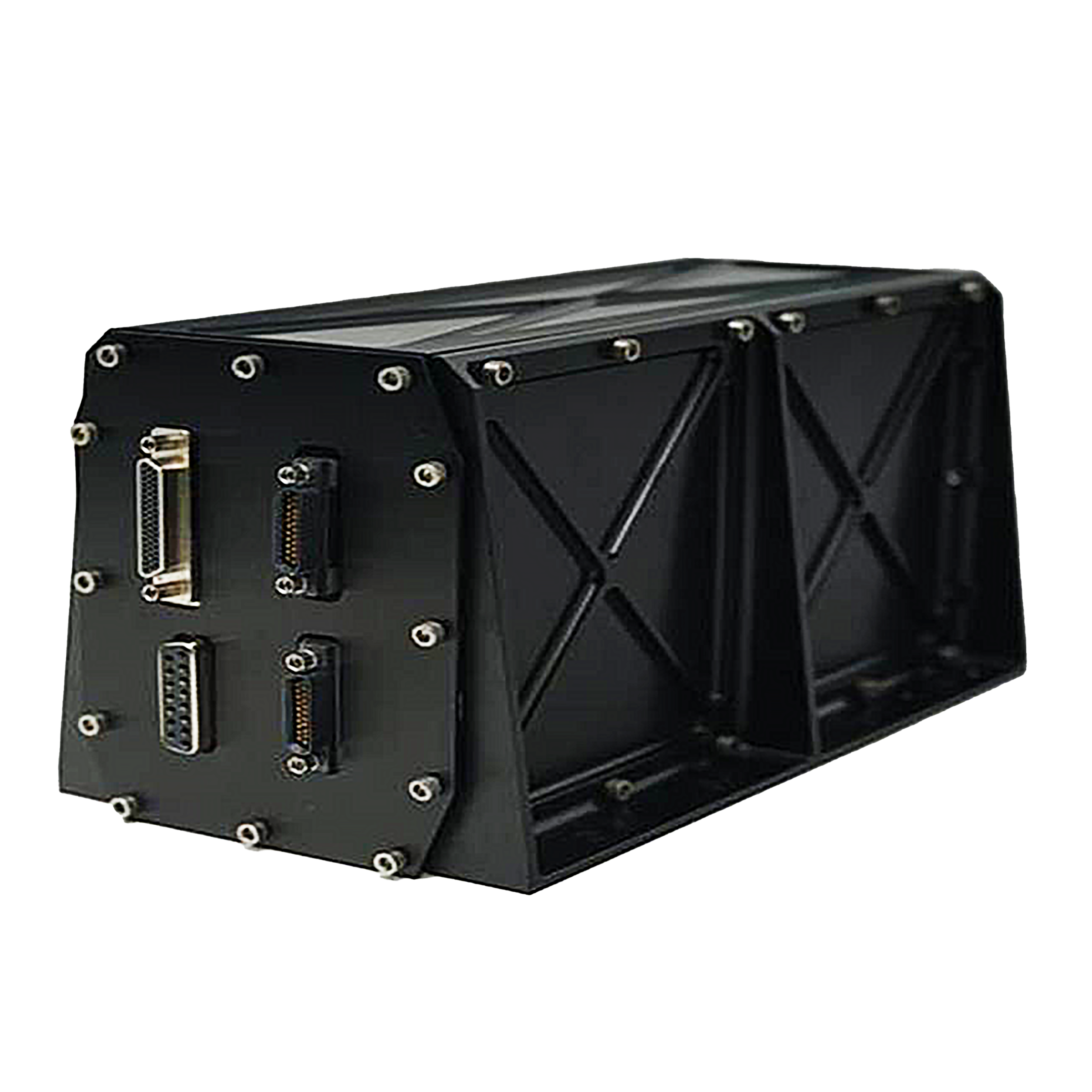
Ibeos sells three main families of hardware: power distribution, batteries and computers. Its Modular Power System scales from 500 to 2,000 watts and lists up to 98 percent conversion efficiency. Its battery range stretches from 45 watt-hours for a small satellite to a 50-volt modular system topping out at 1,237 watt-hours. Its computing shelf includes the Genie flight computer, the Ryzen-based EDGE-1100 payload processor and the in-development CORE-250 built around the NASA-sponsored Microchip High-Performance Spaceflight Computing processor.
Those specifications tell only half the story. Ibeos also publishes the procurement furniture around the box: datasheets, user manuals, mechanical interface documents, CAD files and quote requests. Buyers get a known starting point. If the connector, radiation level, mounting pattern or protection circuitry does not fit, Ibeos sells a modified version. If nothing fits, the company offers clean-sheet design, analysis, prototyping, qualification and manufacturing.
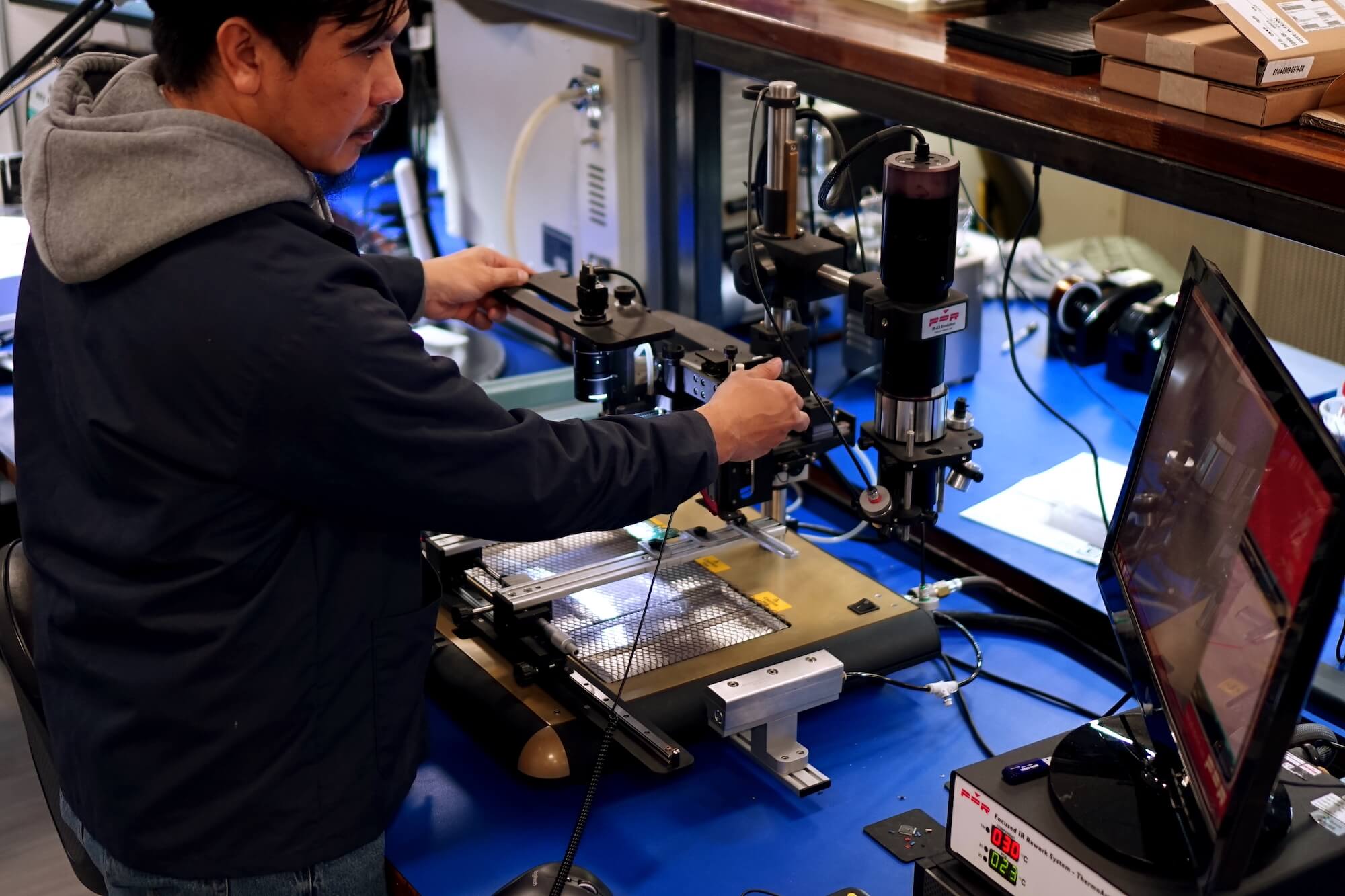
That hybrid is the business model. Standard hardware makes each sale less like a science project. Custom engineering captures missions that almost fit. In-house thermal-vacuum, thermal-cycle and burn-in equipment shortens the distance between a design decision and evidence. Government SBIR awards - six public Phase I and II awards totaling about $2.75 million - helped mature power and computing ideas without requiring Ibeos to finance every experiment from product revenue.
Why orbit makes ordinary electronics strange
A processor on Earth can reboot, phone home or be swapped under warranty. A processor in orbit meets charged particles, temperature swings and a repair policy best summarized as “no.” Radiation may flip a bit, corrupt memory or damage a component. Wasted electrical energy becomes heat, and getting rid of heat in vacuum is a design problem rather than a fan setting. Even a battery heater needs controls that will behave after months in storage and years of cycling.
Ibeos' answer is not to make every part invulnerable. It combines radiation-aware component selection, protective circuitry, testing and system design. The 150-watt CubeSat electrical power subsystem, for example, lists tolerance to 30 krad total ionizing dose and single-event survival above a specified energy threshold. The EDGE-1100 packages an AMD Ryzen system into a radiation-tolerant 3U SpaceVPX board that NASA's 2026 avionics survey lists for LEO and GEO operations.
“Our customers are looking for a trusted partner of choice who can deliver more complete interoperable electronics solutions without added risk or complexity.”Daniel Hibbard, president of Trident Space Electronic Systems
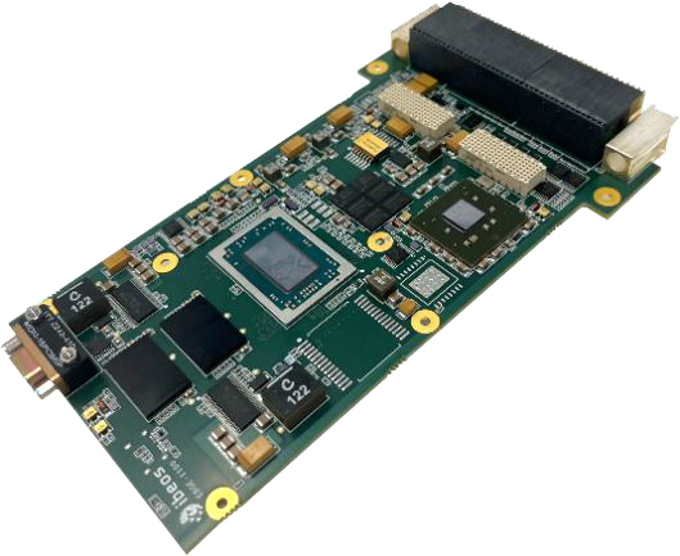
The practical payoff is edge computing. A sensor can produce more information than a spacecraft can economically downlink. Processing on board lets a mission compress imagery, extract a target, classify an event or discard empty frames before radio time becomes the bottleneck. NASA's HPSC program says future missions need autonomy and computing that legacy processors cannot supply. Ibeos' CORE-250 is its bet on that transition: eight RISC-V cores, high-speed networking, a terabyte of flash and more than 250 GFLOPS of half-precision performance, with engineering units currently slated for the second quarter of 2027.
Who buys the box nobody sees?
Ibeos names categories rather than a parade of customer logos: satellite manufacturers, prime contractors, government agencies, major defense and aerospace electronics suppliers, and commercial operators. NASA and the Air Force Research Laboratory appear on its customer page. Its products suit teams building operational constellations, national-security spacecraft and missions beyond low Earth orbit - buyers for whom a cheap failure is still a failure.
The competitive set changes by aisle. GomSpace, AAC Clyde Space, EnduroSat and ISISPACE sell small-satellite subsystems. Innoflight, Ramon.Space and KP Labs compete in onboard computing. Moog and larger avionics suppliers arrive when the mission and budget grow. The other alternative is internal development: hire the specialists, create the test program and own every late-night anomaly yourself.
Ibeos differentiates through the middle position. It is more productized than a custom engineering house, more configurable than a fixed catalog and more obsessed with radiation and lifetime than the cheapest CubeSat stack. This is useful only if enough of a design can repeat. A mission with a novel bus voltage, extreme radiation requirement, unusual thermal envelope and incompatible interfaces can erase the schedule advantage. At that point, “customizable” quietly becomes “custom,” and the old aerospace cost curve returns.
A market for fewer seams
A satellite operator does not experience power, computing and networking as separate brochure categories. They meet at interfaces: voltage rails, data buses, thermal limits, software drivers and fault responses. Every supplier boundary gives the integrator another pair of documents to reconcile and another anomaly whose owner may be unclear. That makes a broader component platform valuable even before it produces a technological breakthrough. The product is partly the box and partly the reduced coordination around the box.
This is where Ibeos fits after the sale. Trident already brought mission-data processors, network processors, storage, compression and command-and-control capability. Ibeos added the upstream power supply, energy storage and another set of flight computers. The combined company can approach a proliferated constellation program with several interoperable assemblies instead of one isolated board. It can also spread factory systems and quality processes across more units. None of that makes integration disappear. It changes who is paid to absorb it.
The constraint the deal exposed
Ibeos had products, specialized engineers and demonstrated battery output; Trident had broader networking and mission-processing products, operational scale, high-volume production capability and investment resources. The acquisition announcement reads less like a rescue than a recognition that integrated spacecraft electronics are easier to sell and manufacture from a larger platform.
Trident acquired Ibeos on March 9, 2026, for an undisclosed price. Existing programs continued. The combined shelf now spans FPGA, GPU and general-purpose processing, payload control, networking, compression, storage, batteries and power supplies. For a customer, the promised benefit is fewer vendors and fewer integration seams. For Trident, it is a way to sell a larger share of each spacecraft's electronic nervous system.
“Bringing the two companies together allows us to leverage our core strengths, scale together, and increase agility.”John Bevilacqua, Ibeos founder and CEO
The part worth copying
The reusable lesson is not “start a satellite battery company.” It is to locate the expensive repeat in a custom market. Ibeos turned recurring spacecraft needs into modules, exposed enough technical detail for a buyer to evaluate them, and preserved an engineering layer for the exceptions. The same pattern can work in robotics, industrial controls, medical devices or energy equipment: a qualified core, documented interfaces and paid variation around the edges.
Steal this operating system
- Productize the requirements that repeat across customers.
- Publish the interface documents that let technical buyers self-qualify.
- Keep prototype and qualification tools close to the design team.
- Charge for modifications instead of hiding them inside every base product.
- Use non-dilutive R&D money where the market wants capability before volume exists.
Conditions matter. The playbook works when buyers share standards, qualification evidence carries over and customization does not poison the common design. It fails when every customer demands ownership of the intellectual property, every interface is novel, volumes never rise or certification must restart from zero. It also requires patience. Ibeos spent 13 years between founding and acquisition, building the sort of credibility that arrives one test report and one flight unit at a time.
That is the amusing truth of space hardware. The finished satellite may cross the sky at thousands of miles per hour. The company behind its survival advances through interface drawings, thermal chambers and boxes full of carefully matched cells. Ibeos made that slow discipline easier to purchase. Trident bought the bench, the catalog and the people who knew why the box had to be boring.