A drone is an excellent way to see over a hill. It is also an excellent way to discover how many things must work before a person can see over a hill. The aircraft needs power. The operator needs a useful picture. The software needs permission to run. Somewhere, somebody needs to make another motor. Darkhive has built its business around that less photogenic list.
- Tactical aircraft, connected to the tools military users already know.
- Secure software delivery designed to keep field equipment adaptable.
- A production strategy that now includes an Army depot.
The San Antonio company, founded in 2021 by John Goodson and Steven Turner, makes small uncrewed aircraft and the infrastructure around them. Its original audience included military and public safety personnel who needed situational awareness without an elaborate production of their own. The ambition: let people see danger before walking toward it.
01 / The operator has enough to carry
Goodson previously served as a Navy combat technician supporting SEAL teams. His experience with tactical drones in Afghanistan informs the company’s account of its origins. On Darkhive’s LinkedIn culture page, he describes developing alongside the people who use the equipment, with an unusually expensive permission granted to the engineering team:
“Start over” is an acceptable response no matter where we are in the process.John Goodson · Darkhive’s culture page
That attitude matters because the first obstacle can appear before takeoff: a tool asks too much of its user. Darkhive’s early Yellowjacket design addressed portability with a small, lightweight, 3D-printed airframe and Android control. In 2023, Goodson discussed an intended selling price around $5,000. Treat that as a historical design target, rather than a current quotation. Affordability is part of the brief; the purchase order still needs its own arithmetic.
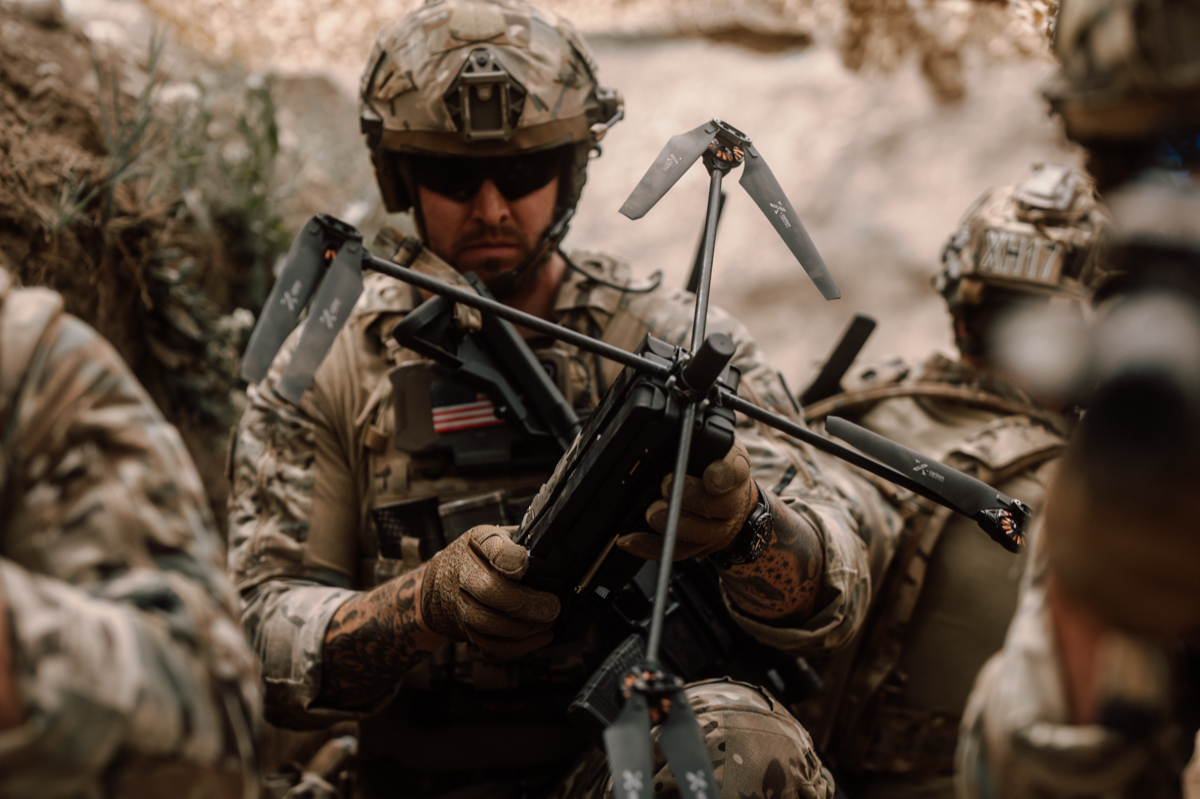
The family now includes the Obelisk multirotor and Revenant fixed-wing aircraft. Broodbox supplies mobile command and control, while Redqueen explores voice interaction. The names suggest an insect colony with a systems administrator. Their practical connection is a desire to reduce the work between requesting information and receiving it.
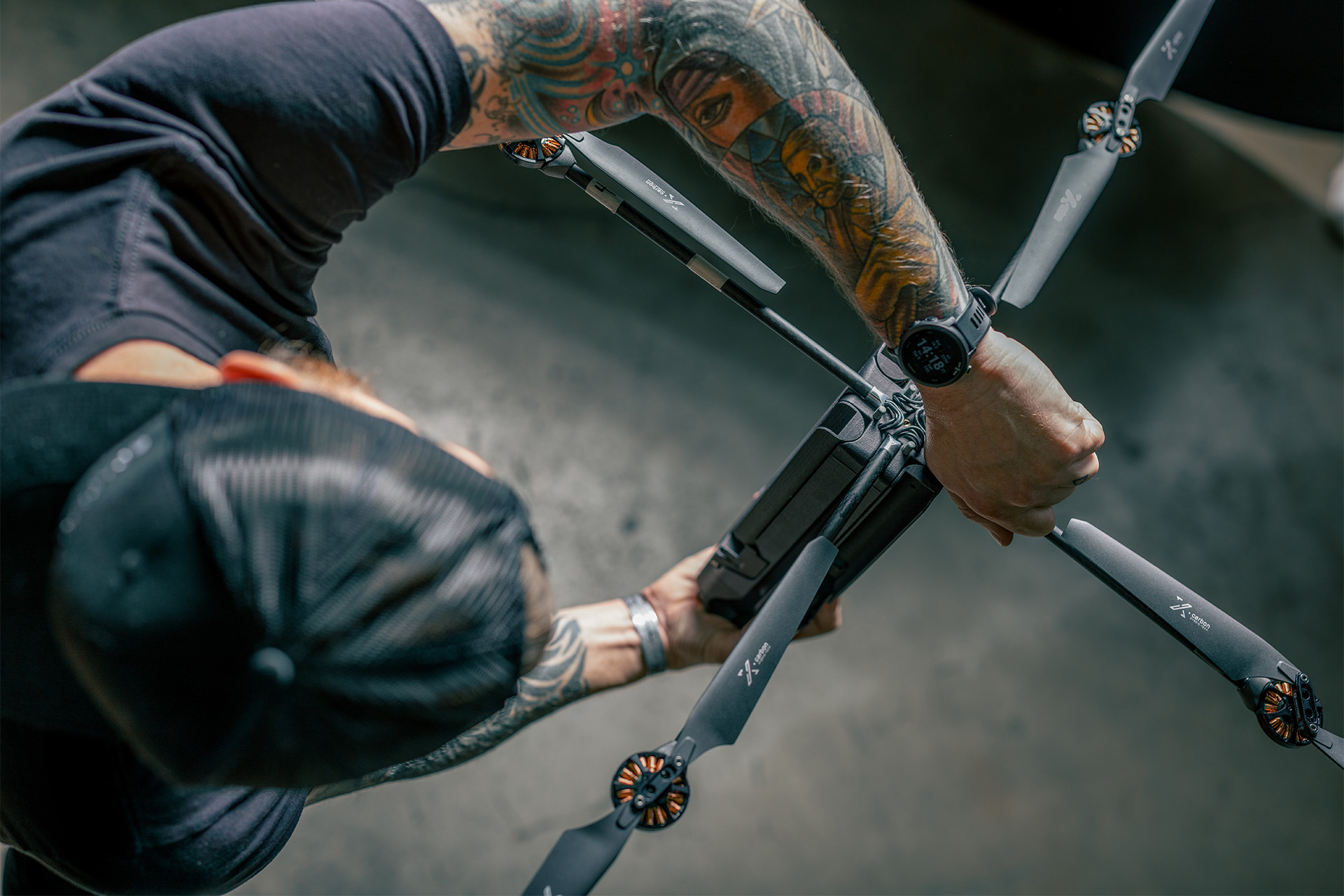
02 / Keep the map. Add the aircraft.
Darkhive connects its hardware and software to the Team Awareness Kit, or TAK, an operational environment already familiar to military personnel. The design choice is consequential. Every unfamiliar interface creates another thing to learn and another place to make a mistake. Putting aircraft interaction inside an existing tool makes integration part of the product, rather than a chore handed to the customer.
The work has attracted research funding. In October 2023, Darkhive announced an AFRL Phase II award of $1,249,350 for tactical voice command and control on Android TAK. Its earlier HI-DOS research described a government-owned framework with interfaces for different voice-processing algorithms. The proposal addressed an ordinary, awkward task: hearing coordinates over a radio, writing them down, then entering them into a device.
This is where the company’s robotics, perception and software security expertise meet. A hands-free command is only helpful if it works in the intended environment and produces the intended action. The research framework allows algorithms to be tested and exchanged. Open interfaces provide room for other builders to contribute; they also make compatibility somebody’s continuing responsibility.
03 / The update is part of the aircraft
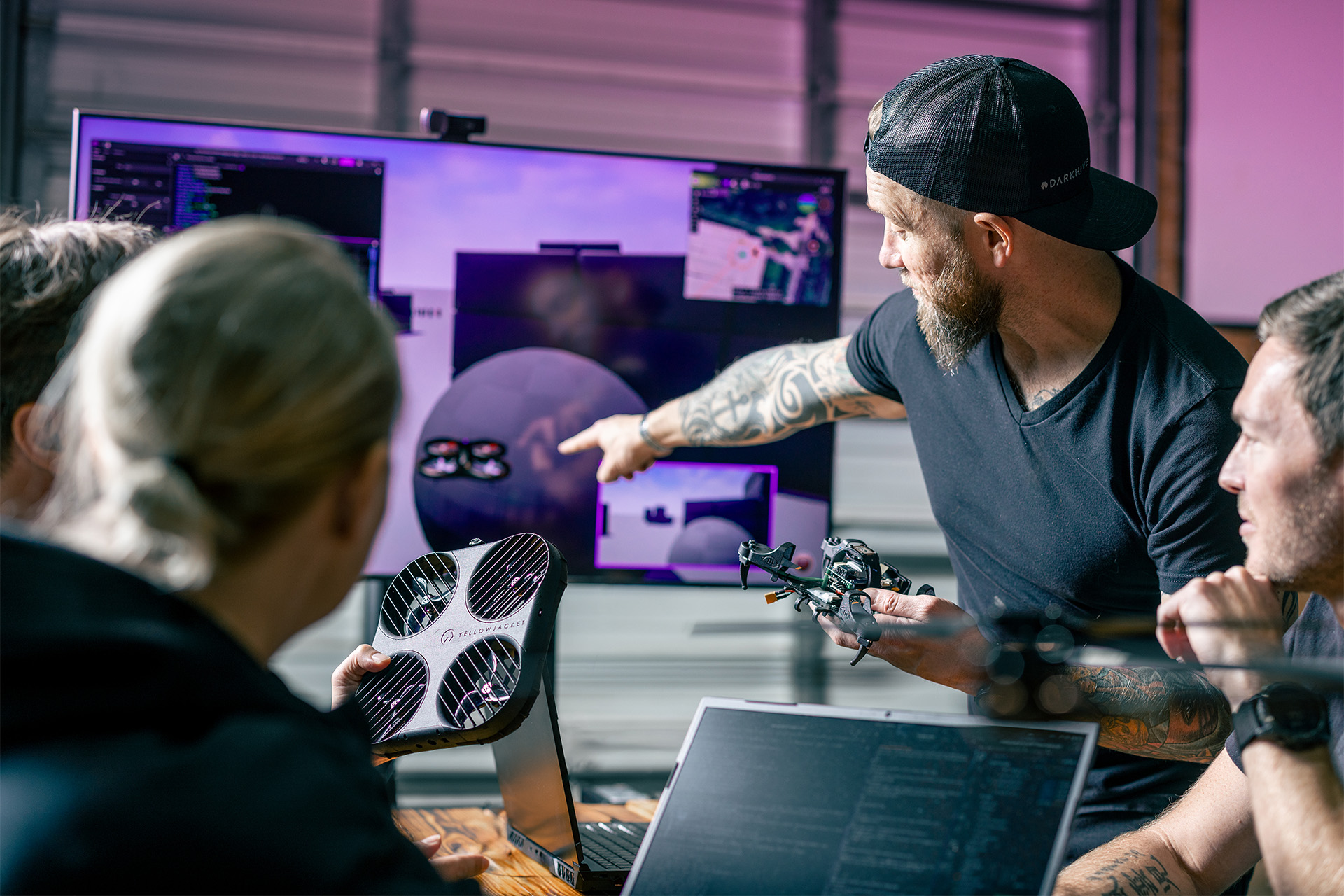
Fleetforge tackles another friction point: delivering software to equipment outside the comfortable confines of a development office. Its research lineage describes building, testing, securing and deploying autonomy capabilities across drone fleets. The current company offering extends that idea to edge-device management and an accredited continuous delivery platform. Darkhive says adaptations can happen in hours rather than months. That is the company’s stated capability, not a universal delivery guarantee.
The commercial logic reaches beyond selling an airframe. Darkhive’s disclosed work combines government-funded development, autonomy integration, hardware delivery and production services. In July 2023, a $5 million Air Force Phase III contract funded integration and testing of autonomy software on multiple aircraft platforms. A company that can work across platforms has more ways to be useful than one dependent on a single vehicle purchase.
04 / Money buys time. Motors buy flight.
The funding sequence is substantial: a $4 million seed in 2023, a $21 million Series A in 2024, then a $30 million Series B in May 2026. Crosslink led the seed, cybersecurity specialist Ten Eleven Ventures led the A, and RTX Ventures led the B. The three disclosed rounds total $55 million. They finance a company; they do not measure its sales.
In March 2026, Darkhive announced a $49.7 million APFIT award for rapidly adaptable mission systems, emphasizing tactical compute and connectivity. It called the award the largest in that program’s history. The distinction deserves care: this is a government program award, separate from investment capital, and its announcement should not be reduced to a shopping list of drones.
The more revealing development arrived on a factory floor. Darkhive advised Tobyhanna Army Depot on brushless DC motor assembly lines, marked by a July ribbon cutting. Its COO, Karen Coombs, previously led supply chain operations for Amazon Robotics. That background fits a business discovering that production expertise belongs beside flight expertise.
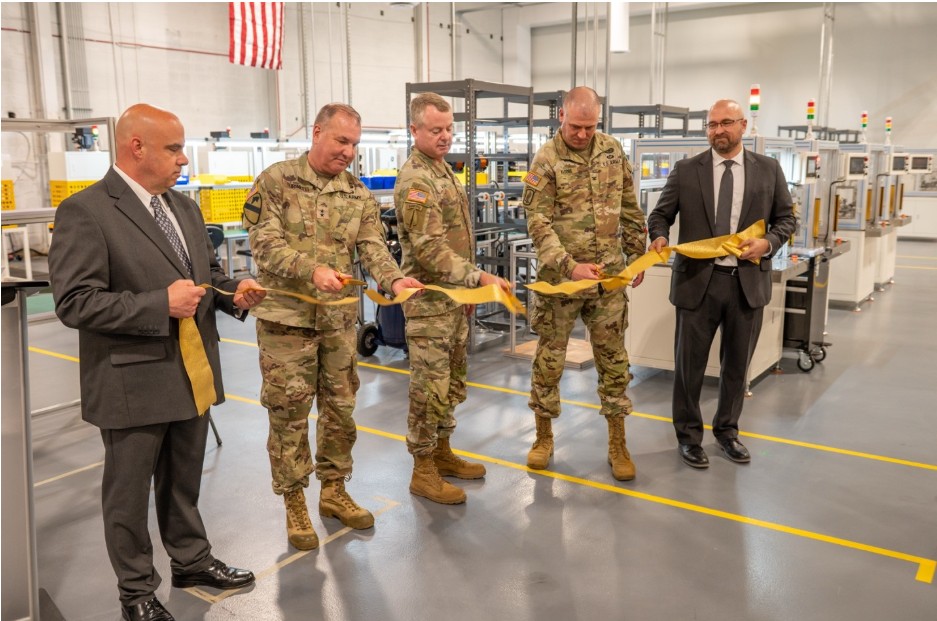
An August Army account of the cooperative arrangement explains the mechanism: Darkhive can lease and operate within depot facilities, using established equipment and production capacity. The depot gains a commercial partner and opportunities to produce components. The arrangement makes existing industrial infrastructure part of the growth plan, instead of requiring every capability to begin inside a startup’s walls.
05 / Copy the constraint
Darkhive occupies a crowded defense autonomy market alongside alternatives such as Skydio, Shield AI and XTEND. Its distinctive proposition combines cost-conscious aircraft, open interfaces, secure delivery and manufacturing support. Buyers still have to evaluate range, endurance, payload, operating conditions and integration needs. A compact reconnaissance system cannot substitute for every kind of aircraft; an open interface cannot make a lost communications link reappear.
The useful lesson for other builders is concrete. Design around tools users already carry. Make updates an operating capability. Find production partners before demand outruns the workshop. Darkhive’s story moves from a person needing a view over a hill to the less glamorous people and processes that keep that view available. A drone can be impressive in the air. Being useful tomorrow requires considerably more company.