The odd thing about the modern space economy is that getting to orbit has become almost routine while moving around once you arrive still resembles asking a cathedral to change parking spaces. A rocket drops a satellite near its assigned address. The satellite makes modest corrections, guards its fuel and generally stays put. Portal Space Systems was founded around a blunt observation: launch had improved, but spacecraft had not kept pace.
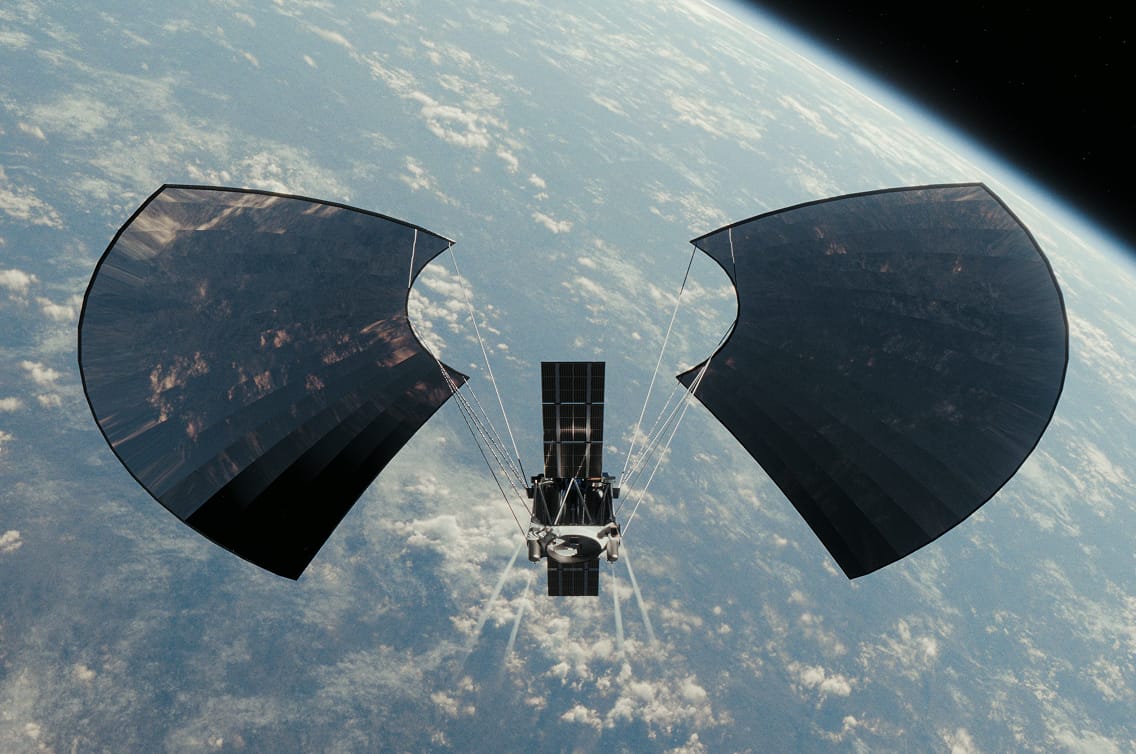
Portal, based in Bothell, Washington, wants to build vehicles rather than static assets. Its smaller Starburst is designed for responsive work inside an orbital neighborhood. Its flagship Supernova is pitched as a 500-kilogram-payload spacecraft able to move between low Earth orbit, geostationary orbit and cislunar space. The target number attached to Supernova is 6 kilometers per second of delta-v - a measure of how much a spacecraft can change its velocity over a mission. More delta-v means more choices.
The productA satellite with errands
The useful way to understand Portal is not as an engine startup, though propulsion is the technical centerpiece. It is an orbital logistics company building its own trucks. Defense customers could use those trucks to inspect an object, reposition a sensor, shadow a threat or deliver a payload on a short timeline. Commercial operators could service constellations, extend a satellite's life or move cargo. Science missions could get payloads toward the Moon without buying an entire bespoke spacecraft.
That flexibility is the point. A conventional satellite bus is optimized around one payload and one orbit. Portal wants a shared vehicle architecture that can be reconfigured late, retasked in minutes and, eventually, refueled. The company advertises payload swaps in less than 24 hours. If the hardware performs as designed, a customer buys options as much as transportation.
“Spacecraft today on orbit move kind of like hot air balloons. We have essentially a fighter jet equivalent in our spacecraft.”Jeff Thornburg, CEO and co-founder
The mechanismSunlight goes in. Hot ammonia comes out.
Solar thermal propulsion is old enough to have accumulated decades of papers and young enough not to have become ordinary flight hardware. Portal's version, called FLARE, starts with deployable mirror concentrators. They focus sunlight onto a receiver and charge a thermal battery. That stored heat surrounds the HEX thruster, a 3D-printed component combining heat exchanger and nozzle. A storable monopropellant - Portal has identified ammonia - passes through, expands and exits at high speed. Nothing combusts.
This places Portal between two familiar propulsion choices. Chemical engines deliver high thrust but consume propellant quickly. Electric thrusters are efficient but push gently, making large changes slow. Solar thermal aims for a useful blend of thrust and efficiency. The 3D-printed HEX reduces interfaces and moving parts, while the thermal battery lets the vehicle maneuver without waiting for the mirrors to heat it from cold at the exact moment a customer calls.
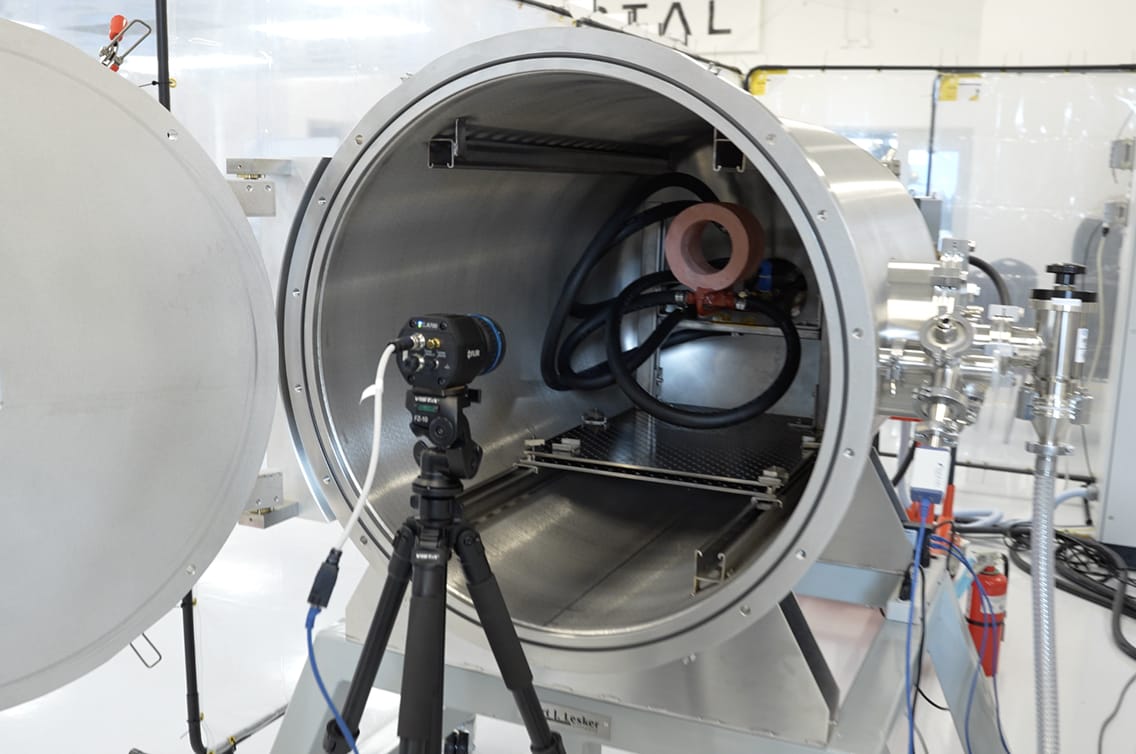
Portal completed a full-power thermal-vacuum test at operational performance in 2025. That is meaningful ground evidence. It is not the same as operating in orbit. The company's critical flight computer and power system later earned flight heritage through Mini-Nova, but the full FLARE propulsion system is scheduled to make its in-space debut aboard the first Supernova in 2028.
The founder's turnNuclear performance, fewer permission slips
Jeff Thornburg is unusually well matched to the problem. Before Portal, he worked across the Air Force Research Laboratory, Aerojet, NASA and SpaceX, where he helped shape the Raptor engine architecture and led propulsion work. He later held senior roles connected to Stratolaunch, Ursa Major and Amazon's Project Kuiper. He had initially been interested in nuclear thermal propulsion. Cost and regulatory complexity changed his mind. The sun offered heat without putting a reactor on the vehicle.
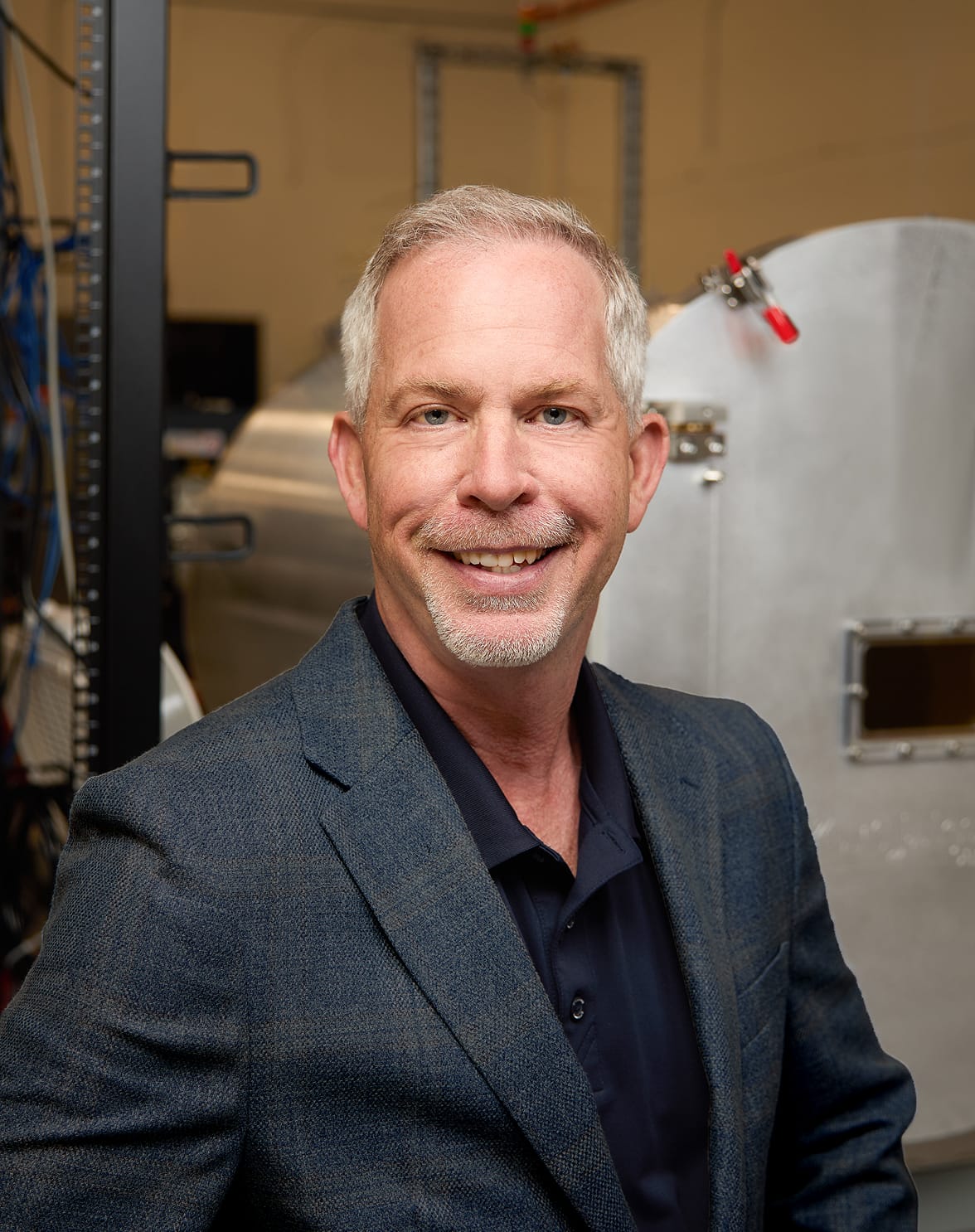
Thornburg founded Portal in 2021 with COO Ian Vorbach and engineering chief Prashaanth Ravindran. Their first problem was not a broken valve. It was disbelief. Some investors heard the pitch and filed it under Star Trek, Star Wars or Buck Rogers. The founders spent roughly two years talking with prospective defense and commercial users. Those conversations, followed by Space Force contracts, changed the argument from “would anyone want this?” to “how quickly can it fly?”
The first public schedule did not survive contact with aerospace development. When Portal emerged from stealth in 2024, it was targeting a late-2025 Supernova flight. The company instead flew avionics on Mini-Nova, added Starburst as an intermediate free-flying vehicle and has now contracted a dedicated 2028 Falcon 9 mission for Supernova. That is a three-year shift for the flagship. It is also a more legible test ladder.
How Portal is buying down risk
Put the flight computer and power system in orbit as hosted hardware. Prove the nervous system before asking it to drive.
Demonstrate a free-flying spacecraft, proximity operations, rapid retasking and about 1 km/s of targeted maneuverability.
Fly the larger vehicle and operate FLARE in space. This is where the central propulsion claim meets orbital reality.
The moneyCustomer discovery with a contract number
Portal's financing tells a useful story about building hardware for government buyers. It raised approximately $1 million in 2021, then entered the Space Force through Small Business Innovation Research awards. A 2024 Phase II award carried a value of $1.7 million. By the time Portal emerged from stealth, it reported more than $3 million in Defense Department work. Later that year it was selected for a $45 million STRATFI, a program designed to combine government and private funding around strategic technology.
The company then raised a $17.5 million seed round in April 2025 and a $50 million Series A in April 2026. Geodesic Capital and Mach33 led the Series A, with Booz Allen Ventures, ARK Invest, AlleyCorp and FUSE participating. These figures describe money raised and strategic support, not what a Supernova costs. Portal has not published vehicle pricing or revenue.
What did the early government money buy besides hardware? Access. SBIR meetings connected a three-person team to actual Space Force users, sharpened the specification and gave private investors evidence that a customer cared. Portal grew to roughly 45 employees, and its new Bothell manufacturing site is designed for up to 28 spacecraft a year. This loop - paid discovery, technical milestone, investor signal, larger contract - is the most copyable part of the company.
The propulsion trade space
Conceptual comparison, not test data. Portal's combined performance claim still requires full in-space validation.
Who paysDefense first, services next
The immediate buyer is likely a government program that values response time more than the lowest possible bus price. A vehicle able to move a sensor, inspect another object or change orbit after a threat appears has obvious defense utility. Civil agencies and science teams may value fast payload delivery and low-cost lunar insertion. Commercial operators become more plausible as constellations and stations create maintenance work.
Portal is already stretching from product sales into services. Its partnership with Australia's Paladin Space combines Starburst with Paladin's Triton capture payload for debris removal. The commercial premise is clever: catching one piece of junk is a demonstration; catching many objects with one maneuverable vehicle can become a service. Starlab has signed a letter of intent to integrate the offering into future station operations.
The 2028 Motus Via Sol mission adds another line of business. Portal has contracted a Falcon 9, while Maverick Space Systems will integrate the payload stack and sell spare ESPA-class and “cake-topper” capacity. Because Portal's vehicles can maneuver after deployment, rideshare customers may be less constrained by the rocket's drop-off orbit. In effect, Portal is using its own mobility to make the launch manifest more flexible.
The edge - and the catchWhen the idea works
Portal differs from orbital tugs and conventional buses by treating maneuverability as the base architecture, not an accessory. Starburst and Supernova share more than 80 percent of their systems, allowing the smaller craft to qualify components for the larger one. Refuelability could stretch vehicle life beyond the propellant loaded at launch. A payload-agnostic design could let one production line serve inspection, logistics, science and defense.
The conditions matter. Solar thermal propulsion needs sunlight, deployable optical hardware, precise thermal management and propellant that behaves across repeated cycles. Mirrors add area and operational choreography. A customer that only needs station-keeping may prefer a cheaper conventional bus. A mission demanding continuous thrust in shadow, a tiny spacecraft envelope or proven heritage today will look elsewhere. And if launch prices fall faster than servicing demand grows, brute-force replacement may beat elegant mobility for some commercial fleets.
Most of all, Portal must close the gap between ground performance and orbital proof. Starburst-1 is the next hinge. Supernova in 2028 is the larger one. Until then, the company has evidence, contracts and an intriguing machine - not yet a proven new category.
What builders can steal
- Start with the bottleneck created by somebody else's success. Cheap launch exposed expensive orbital immobility.
- Turn grants into customer discovery, not just runway. Portal used SBIR work to meet users and refine the vehicle.
- Split one heroic demonstration into a ladder. Fly avionics, then the smaller platform, then the flagship propulsion system.
- Share architecture across products. Starburst can create heritage for Supernova instead of becoming a separate engineering island.
- Know the failure condition. If customers do not pay a premium for response time, the clever engine is solving an engineering problem rather than a business one.