The trouble with a perfect sentence is that someone still has to believe it. Will Crain has made a career in the territory between what organizations want to say and what their audiences need to hear. At AMD, where he leads CEO communications, that territory now sits inside a company selling the computing technology behind the AI conversation. Before arriving there, he had already put a warning into print about the risks of letting AI polish a leader’s voice.
It is an interesting professional crossing: from advising on how executives communicate about technology to working inside a technology company. Crain’s route runs through a long tenure at Edelman, responsibility for three Texas offices, and a North American CEO advisory assignment at Weber Shandwick. The job titles become increasingly specific. The question at the center of them remains wonderfully awkward: when an executive speaks, what makes the words worth listening to?
Three cities on the business card
In October 2023, Edelman named Crain General Manager of Edelman Texas. The remit covered Austin, Dallas and Houston. The firm was bringing its Texas operations together, alongside a similar consolidation in California. For Crain, the appointment attached a regional management responsibility to a career already grounded in corporate communications.
Three office locations make a useful corrective to the abstract language of reputation. There were actual places in this assignment, actual teams and a defined operating footprint. Edelman described the changes as a way to bring its capabilities and approach to market together. Crain would oversee the Texas operations while Jonathan Jordan took the corresponding California role.
The detail matters because a communications career can disappear behind its own vocabulary. Strategy, positioning, counsel: respectable words, each capable of concealing a small country. Austin, Dallas and Houston are harder to wave away. They make the scale of the management assignment legible. Before Crain’s work narrowed around the CEO’s voice, his responsibilities included running a regional agency business.
The long goodbye, then a narrower brief
When Crain announced his move to Weber Shandwick in 2024, he looked back on 13 years at Edelman. His departure message emphasized the colleagues who had supported him and the work accomplished with teams and clients. A career announcement has room for a victory lap. His gave considerable space to the people who had shared the track.
His new position was Head of North America CEO Communications Advisory. The change brought executive communication explicitly to the front of the title. A regional agency manager and a CEO adviser face different assignments, even when the underlying craft travels with them. One role carries an operating geography; the other identifies a particular kind of client and a particular kind of counsel.
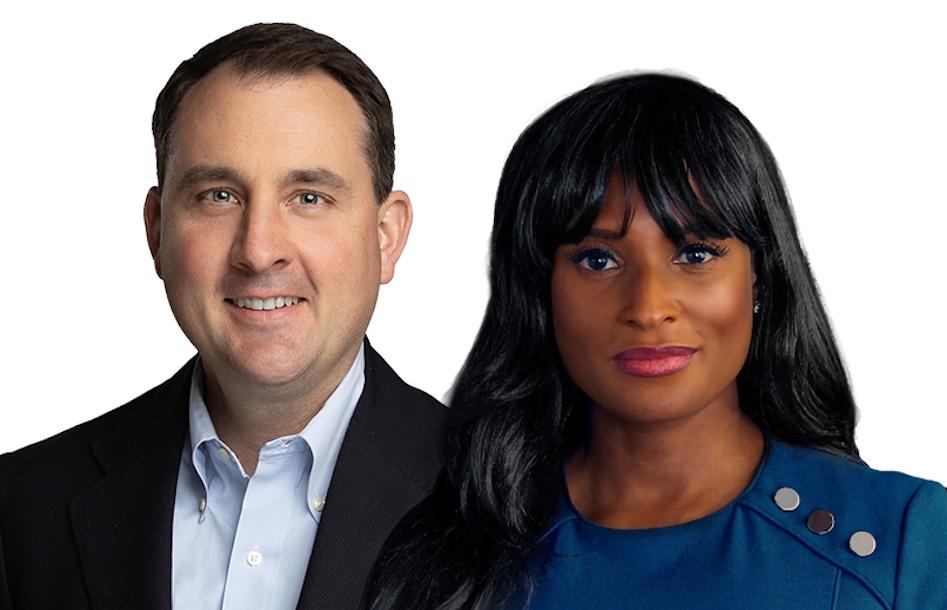
Crain arrived as Contessa Kellogg-Winters stepped into an executive visibility leadership role. Their appointments placed CEO advice and executive visibility alongside each other in the corporate affairs business. It is an instructive pairing. Having something useful to say and finding the right setting in which to say it are neighboring tasks. A microphone solves only the second problem.
A credit line with a shopfront behind it
One concrete piece of Crain’s agency record appears in the credits for eBay’s Retail Revival campaign. He is listed as an Edelman senior vice president. The campaign received a Gold Honor in Retail & E-Commerce at the third Shorty Social Good Awards. The distinction belongs to the campaign and its team; the credit places Crain among its contributors.
Retail Revival began in Akron, Ohio, in 2018, offering local businesses help selling through eBay. The program combined training, individual support and a store subscription. More than 100 businesses joined the pilot. Its communications included stories about the city and its sellers, as well as opportunities to put Akron products in front of shoppers elsewhere.
That is a useful scene in a career otherwise described through executive titles: a local shop getting access to a much larger marketplace. The campaign linked a technology platform’s ambitions to recognizable businesses and a particular city. Corporate storytelling had something tangible to point toward. There were products on sale, merchants learning a platform and a commercial proposition someone could actually test.
His published author biography describes a practice spanning corporate and financial communications, executive positioning, public affairs and issues management. Those disciplines bring different kinds of material to an adviser’s desk. Financial communication asks for attention to the business account. Public affairs brings policy into view. Executive positioning concerns the leader’s place in a wider conversation. The range helps explain why the later public appearances cover such varied ground.
Technology, consumer goods and retail also appear in that biography’s account of his experience. The common professional task travels between sectors, while the subject matter changes. That breadth belongs in the story alongside the succession of employers: a communications adviser’s work can be organized around an audience or a problem as well as an industry.
The chief executive meets a crowded room
Crain’s public appearances at Weber Shandwick covered subjects where an executive’s audience is anything but uniform. The August 2024 AEJMC conference program listed him on a Philadelphia panel about corporate and CEO activism in a polarized communications environment. Fellow panelists included Roger Bolton, Gregg Feistman and Matthew Ragas, with Kathy R. Fitzpatrick moderating.
The subject introduces a complication that no amount of immaculate punctuation can remove. A corporate position enters a world of competing expectations. The program put an agency practitioner in discussion with people working across professional and academic settings. It treated CEO speech as something open to examination, with consequences beyond the moment of delivery.
By early 2025, another professional agenda brought a different set of audiences into the room. In-House Connect listed Crain alongside Kate Bullinger, Matthew Warner and Joe Mantone for a March 4 webinar on merger and acquisition communications. The participants’ backgrounds spanned organizational change, law, communications and financial journalism.
The announced topics included employees, investors, customers and regulators, along with cultural integration and the alignment of legal and business messages. A transaction can be described in one announcement. Understanding it is distributed across many readers, each carrying a different question. The event’s breadth makes clear why a CEO communications assignment can reach well beyond preparing a polished statement.
The uncomfortable number was 17
Weber Shandwick’s 2025 C-suite research gave these discussions a numerical backdrop. In a survey of 200 business leaders, just 17 percent felt their communications and public affairs functions were equipped for the environment they faced. At the same time, 78 percent expressed optimism about their business prospects. Confidence in growth and confidence in preparation were traveling at different speeds.
Crain’s public response focused on practical preparation. He discussed geopolitical capabilities, staff development and technology adoption as areas for communications leaders to address. The assignment he described involved helping organizations manage risk and create value. Eloquence, on its own, was receiving no special exemption from the demand to be useful.
His professional calendar reflected that broader discussion. A Weber Shandwick account of its 2025 Davos activity named him among the team on the ground. PRovoke’s North America program also announced a session with Crain and Sheila Mulligan on the changing role of the chief communications officer. Executive communication was being discussed alongside the organization’s ability to understand its surroundings and respond.
When the machines admire the message
In June 2025, Crain and Jim O’Leary coauthored an essay about AI in CEO communications. They examined a feedback loop: machines analyze executive language while executives use machines to help prepare it. A message can become pleasing to the systems inspecting it while growing less useful to the humans expected to trust it.
“Say what you mean. Own the hard truths.”Jim O’Leary and Will Crain, June 2025
Their recommendations kept the business’s actual performance in view and reserved a place for human judgment. The interest here is the tension inside the craft. Tools can help refine expression. A leader still has to account for the substance. There is a certain comic possibility in computers congratulating other computers on a beautifully phrased outlook while the audience waits for an answer.
A new employer, an existing question
Crain’s next move took him to AMD. He announced that he had joined to lead CEO communications, describing his enthusiasm for its high-performance and AI computing work. He also thanked former colleagues, naming Susan Howe, Jim O’Leary, Karen Pugliese and Sheila Mulligan among those whose leadership and partnership he valued.
AMD’s chair and CEO is Lisa Su. Its business spans processors, graphics, adaptive computing and AI accelerators. This gives Crain’s latest role a specific industrial setting: the company’s executive communication takes place around products and technology that customers must evaluate, buy and use. Technical capability and the explanation of that capability meet in the same corporate story.
His career now brings an external adviser’s experience into one organization’s continuing conversation. The thread is visible across the appointments, campaign credit, panels and published argument: attention to the people receiving the message. A sentence may be finished when its writer saves the document. Its real working life begins when somebody else reads it.