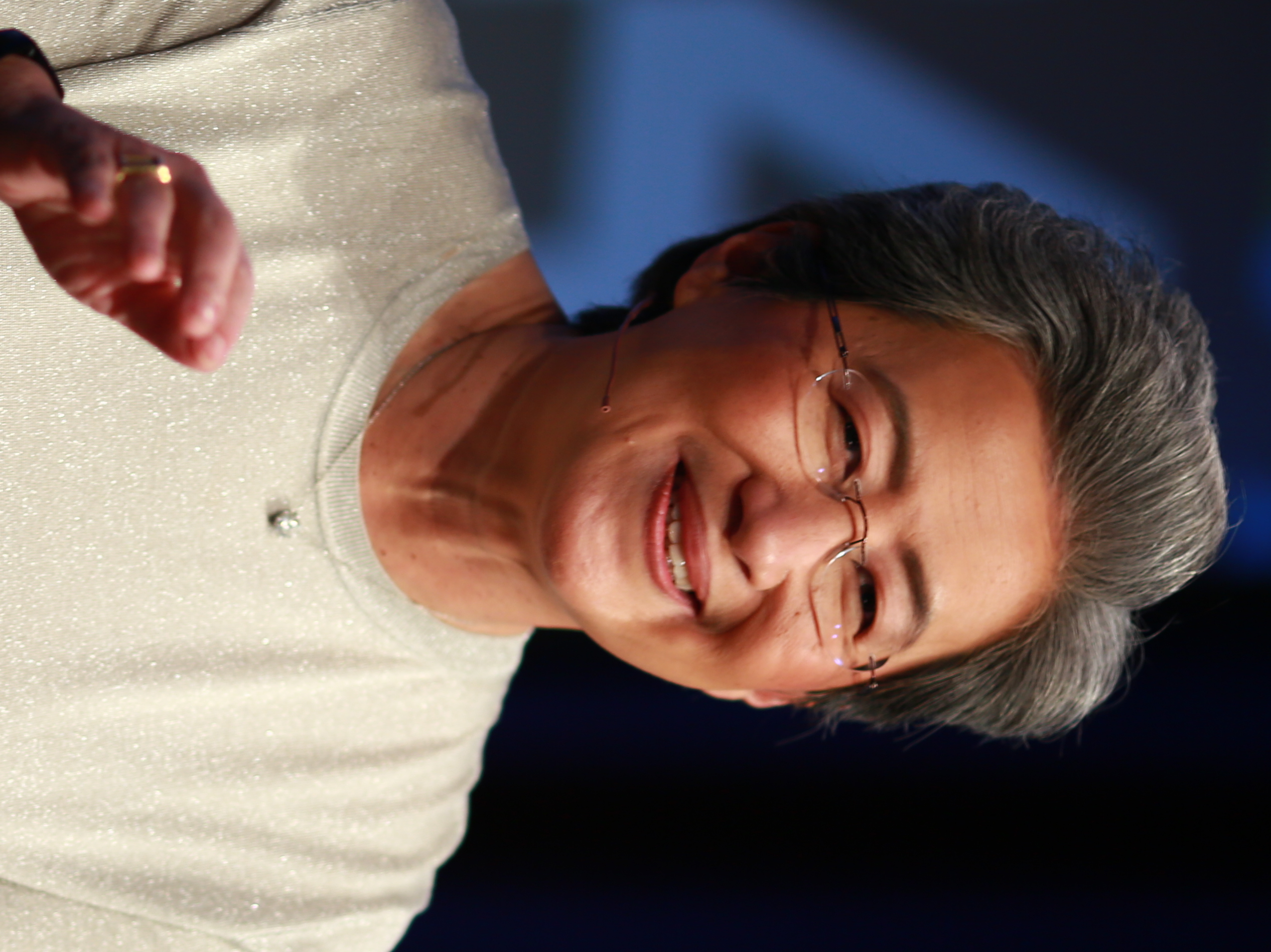
The Chip Doesn't Fall Far From Taiwan
Lisa Tzwu-Fang Su immigrated to America from Taiwan at age 2. Her mother and Nvidia CEO Jensen Huang are first cousins, which makes family reunions either very awkward or extremely lucrative, depending on how you measure success in Silicon Valley. One runs the AI darling that can't make enough chips. The other runs the comeback kid that's eating Intel's lunch. Both are worth billions. Both are reshaping computing. Only one boxes with a trainer.
Su didn't arrive at the top of the semiconductor food chain by accident. At the Bronx High School of Science, she was already reverse-engineering how things worked. By the time she hit MIT in 1986, she had a simple philosophy: pick the thing that scares everyone else. Electrical engineering scared everyone else.
"It seemed like the hardest major," she'd later explain, as if difficulty were a feature, not a bug. She earned three degrees from MIT — bachelor's, master's, PhD — all in electrical engineering. Her dissertation? "Extreme-submicrometer silicon-on-insulator (SOI) MOSFETs." Translation: she was making transistors smaller than anyone thought possible.
Copper. The Move That Changed Everything.
Before AMD, before the headlines, before Time magazine named her CEO of the Year, Lisa Su did something that changed the entire semiconductor industry. She helped replace aluminum interconnects with copper ones. This sounds technical because it is. It's also the kind of unglamorous, brutally difficult work that separates people who talk about innovation from people who actually do it.
At IBM, where she spent 13 years climbing from engineer to VP of the Semiconductor Research and Development Center, Su led teams that made chips faster, smaller, more efficient. Copper conducts electricity better than aluminum. Simple physics. Insanely hard engineering. The industry said it couldn't be done at scale. Su's teams did it anyway.
"Run toward the hardest problems. This approach has helped me to learn a tremendous amount from both success and failure."
— Lisa SuThe Turnaround Nobody Saw Coming
When Lisa Su became CEO of AMD in October 2014, the company was circling the drain. Stock price: around $3. Market sentiment: terminal. Intel dominated. Nvidia was rising. AMD was the punchline, the cautionary tale, the has-been that never quite was.
Wall Street analysts used words like "uninvestable." Industry observers wrote obituaries. The smart money had moved on. Lisa Su had other ideas.
She didn't pivot. She didn't rebrand. She didn't do a listening tour or hire consultants to tell her what she already knew. She did something radical: she focused on making great products. Ryzen processors that actually competed with Intel. Radeon graphics that powered gaming. EPYC server chips that put AMD back in data centers. And she made a bet — a huge, all-in bet — on custom chips for gaming consoles.
PlayStation 5. Xbox Series X. Both run on AMD silicon. Millions of units. Recurring revenue. Market validation. Suddenly AMD wasn't just surviving. It was winning.
The 5 Percent Rule
Su's leadership philosophy centers on incremental improvement. Not moonshots. Not Hail Marys. Consistent, compounding progress. Five percent better every quarter adds up. Over a decade, it multiplies. The math is simple. The discipline is not.
She asks candidates in job interviews: "Why are you here? What risks have you taken?" She doesn't want pedigree. She wants hunger. She doesn't want safe players. She wants people who run toward hard problems.
The Woman In The Room
Lisa Su is one of the few women CEOs in the semiconductor industry. She's also one of the few CEOs, period, who holds a PhD in electrical engineering. She could design the chips her company sells. She understands the physics, the materials science, the manufacturing tolerances measured in nanometers. When she talks about transistor density and process nodes, it's not a script. It's her life's work.
But she's also the CEO who stayed at her mother's hospital bedside for three months when she fell gravely ill — running a $66 billion company from a New York hospital, traveling constantly, never missing a beat. Family first. Always.
She's married to Daniel Lin, a medical doctor. They have one son. Despite the private jets and the board meetings and the keynotes at CES, Su makes time. She shows up. She's present.
And she boxes. After becoming CEO, she started training with a boxing coach. It's not about the punches. It's about the discipline. The focus. The willingness to get hit and keep moving forward.
Career Timeline
Leadership By Getting 120 Percent
Su doesn't believe in leaving potential on the table. "Our jobs as leaders are to get 120 percent out of our teams," she's said. Not 100. Not "good enough." One hundred and twenty.
But here's the thing: she doesn't treat people like machines. She treats everyone as an individual. Different people need different things to be successful. Some need autonomy. Some need structure. Some need coaching. Some need space. Su's gift is knowing which is which.
She doesn't talk to fill a room. When she speaks, it's because she has something profound to say. In meetings, she listens. In presentations, she cuts to the core. No jargon. No corporate speak. Just clarity.
The Cousin Connection
Here's a fact that absolutely nobody talks about enough: Lisa Su's mother and Jensen Huang's mother are sisters — making Lisa Su and Jensen Huang first cousins. AMD and Nvidia are fierce competitors in graphics, AI chips, and high-performance computing. Family dinners must be fascinating.
Both immigrated from Taiwan as children. Both rose to lead major semiconductor companies. Both are billionaires reshaping the AI revolution. And both, presumably, get asked awkward questions at family reunions about who's winning.
The AI Bet
When everyone started losing their minds about artificial intelligence in 2022 and 2023, AMD was ready. Not because Su predicted ChatGPT. But because she'd been building the infrastructure — the chips, the architecture, the roadmap — for years.
AMD's Instinct accelerators compete directly with Nvidia's data center GPUs. EPYC processors power cloud infrastructure. The company didn't pivot to AI. It was already there, quietly grinding, building products that could handle the compute-intensive workloads that AI demands.
In 2025, Time named Su one of the "Architects of AI" for its Person of the Year issue. Not because she invented large language models. But because she built the silicon that makes them possible.
What She Believes
Su is a pragmatist. She solves problems. She doesn't get distracted by hype or headlines or what venture capitalists are excited about this week. She focuses on multi-year strategies. Great products. Great customer relationships. Solid engineering.
She's a member of the National Academy of Engineering and the American Academy of Arts & Sciences. She serves on President Trump's PCAST advisory council. She's received the Carnegie Corporation Award and the Franklin Institute Award. She's been recognized by every major business publication on earth.
But here's what she actually believes: Run toward the hardest problems. Get 120 percent out of your team by treating everyone as an individual. Say something when you have something profound to say. Build relationships for life. Dream big.
It's not complicated. It's just hard.
The Fight Continues
Lisa Su is 56 years old. She's been CEO of AMD for over a decade. She's transformed a failing company into a semiconductor powerhouse. She's worth $1.3 billion. She's one of the most powerful women in the world.
And she's still running toward problems.
Intel is fighting back. Nvidia is dominant in AI. The semiconductor industry is brutally competitive, capital-intensive, and unforgiving. One bad product cycle can cost billions. One misstep can erase years of progress.
Su knows this. She's lived it. She inherited a company on life support and brought it back from the dead. She's not afraid of hard. She picked electrical engineering because it was the hardest major. She joined AMD when it was "uninvestable." She asks candidates what risks they've taken because she's taken plenty herself.
The CEO who boxes. The engineer who fixes things. The leader who gets 120 percent. The woman who stayed at her mother's bedside for three months while running a $66 billion company. The pragmatist who dreams big. The Taiwanese immigrant who broke through the Silicon Ceiling.
Lisa Su is not done. Not even close.