In June 2023, Iska Saric had an unusual question to answer. Elon Musk had floated a cage match with Mark Zuckerberg. Zuckerberg had responded on Instagram with an invitation to name a location. People wanted to know whether the exchange was serious. Saric, speaking for Meta, supplied six words: “The story speaks for itself.”
It was an admirably compact contribution to a spectacle that had no shortage of contributors. Two technology executives were discussing a fight. The internet was doing what the internet does when offered two technology executives discussing a fight. Saric’s sentence confirmed the meaning of the post and left the theatrical flourishes to the principals.
A spokesperson’s name often appears at precisely this point in a story: below the celebrity, beside the answer, and just before the reader moves on. Yet that sentence sits at the end of a much longer career. Saric had already explained consumer brands, worked around Google hardware, led communications at Essential and represented Carbon. By the time the proposed fight arrived, she had spent years answering questions about other people’s plans.
“The story speaks for itself.”
Iska Saric, on Zuckerberg’s response to Musk, June 2023
A captain before the CEO’s office
There is an earlier version of Saric’s name in Penn’s rowing history: Iska Hain. Her university roster gives London, England, as her hometown and places her on the women’s team as a senior in the 2007-08 season. The school she attended before Penn was the American School in London. The geography of her early public biography runs through London and Philadelphia, well before the Bay Area.
In 2007, she received second-team All-Region recognition from the Collegiate Rowing Coaches Association. In 2008, she was one of Penn’s three women’s rowing captains, alongside Liz Hathaway and Libby Mulligan. These are specific distinctions, attached to a team and a season. They put her in a setting where leadership had a physical expression: a boat had to move with several people contributing to the same effort.
Rowing offers an almost irresistible metaphor for communications. Timing matters; so does coordination. But a sporting result need not serve as a secret decoder ring for an entire adult life. The co-captaincy is interesting on its own terms. Before Saric’s work involved the public presentation of a technology executive, she had held a leadership position among teammates at a university.
All-Region
and Libby Mulligan
The rowing chapter continued into her professional life. She has also participated in competitive masters rowing at the Bair Island Aquatic Center, with that activity dating from June 2021. Her earlier volunteer work included Big Brothers Big Sisters of America in 2010 and 2011. Those commitments add texture to a biography otherwise organized around employers. They place her among people gathered for purposes beyond a product announcement or an executive appearance, and keep the university years connected to a life that continued after the final collegiate season.
California, initially by way of a shop window
Her early communications work included Abercrombie & Fitch. In September 2010, she was quoted as a spokesperson for the company in a story about a new Hollister store in Winnipeg. The subject was a familiar retail proposition: selling a version of southern California through clothes, atmosphere and a shop in a Canadian mall.
That assignment belongs in the same career as the later technology work. A consumer brand has a story about how life should feel. A device maker has a story about what a product can do. In either case, someone must turn a company’s account of itself into an answer another person can understand. The products change; the audience still has questions.
Saric’s subsequent Google work put her much closer to the machinery. In September 2016, with an October product event approaching, she declined to describe the forthcoming devices in detail and directed a reporter toward the announcement. It was the familiar dance of a launch calendar: curiosity arrives early, while the company has chosen a particular day for the reveal.
The answer depended on where you bought the phone
A month later, the question was more technical. Could buyers unlock a Pixel phone’s bootloader? Saric confirmed that phones purchased from the Google Store would ship with an unlockable bootloader. For customers interested in modifying the device’s software, the point of purchase was consequential. A seemingly small qualification carried useful information.
This is a less glamorous example of communications than a billionaire’s proposed fight, and a more revealing one about the range of the job. A product answer has to preserve distinctions. A customer reading it may act on those distinctions. The difference between a broad reassurance and a precise statement can be the difference between buying the right device and discovering an unwelcome limitation.
It also widens the picture of Saric’s experience. Her work has involved consumer language and technical detail, anticipation before a launch and clarification after it. The questions do not all arrive in the same register. Some ask what the future looks like. Others ask whether a particular purchase will let its owner do a particular thing.
For Pixel buyers who wanted an unlockable bootloader, where the phone was purchased mattered.
Phones, factories, then Meta
Essential and Carbon followed Google in her career. At Essential, she held the head of communications role. At Carbon, she worked as director of communications. The sequence moved her through different versions of the technology business: a consumer device company, then a business built around digital manufacturing.
In June 2019, Carbon and Arkema announced a partnership involving advanced materials and digital manufacturing. Arkema was investing $20 million in Carbon’s growth funding round. Saric was named as Carbon’s media contact. The announcement concerned a combination of software, hardware and materials, with the practical ambition of changing how polymer products were made.
That amount belonged to the partnership, not to Saric’s personal balance sheet or an individual achievement. Her place in the announcement was the communications role. It is a useful glimpse of the work nonetheless: translating a collaboration between industrial companies into something customers, business readers and journalists could follow.
Her move to Meta brought executive and technology communications together. The scope eventually included CEO communications, placing her alongside the public conversation around Zuckerberg. The setting could hardly be more different from explaining a new shop or a phone’s software options. The earlier assignments supplied a varied professional background for the later one.
A name among the collaborators
Her Meta work also intersects with the company’s research communications. In October 2022, Meta included Saric among the multidisciplinary contributors credited in its announcement about Hokkien speech translation. The project addressed a language without a widely used standard written form, a challenge for translation systems accustomed to learning from large amounts of text.
The distinction was easy to lose in a sweeping account of artificial intelligence. This particular system concerned speech, and at that stage it translated one sentence at a time. A clear explanation had to hold the promise and the limitation together. Its ambition was considerable; its working boundaries were equally relevant to understanding what had been built.
Saric’s inclusion in that group adds another concrete point to her career. The credits put many names beside one announcement, reflecting the collective nature of the undertaking. For someone whose work is communications, it is an apt setting: an explanation reaching the public with a substantial team behind it.
Six thousand people, one conversation
In September 2024, Zuckerberg appeared with Acquired’s Ben Gilbert and David Rosenthal at San Francisco’s Chase Center. The live conversation took place on September 10 before an audience of 6,000; the episode followed on September 18. It ranged across company strategy, Facebook’s earlier years and the future of artificial intelligence, virtual reality and augmented reality.
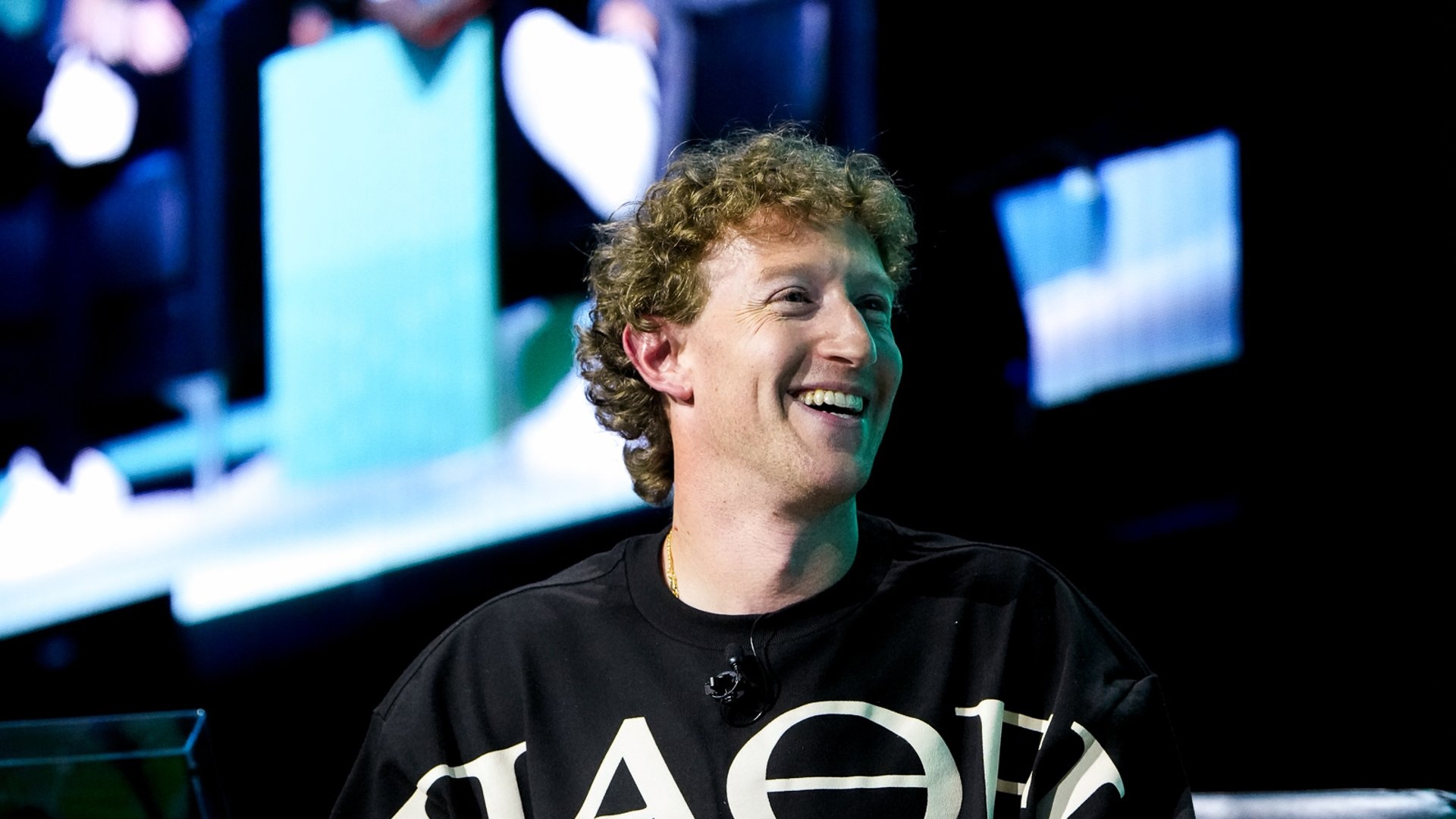
Saric publicly acknowledged working with the two hosts on the event and conversation. The detail matters because it makes some of the work behind an executive appearance visible. The audience experiences an interview. Around it sits a collaboration among people responsible for the guest, the questions, the production and the occasion.
The contrast with the cage-match response is instructive. One moment called for a sentence. Another made space for an extended discussion. Executive communications encompasses both formats. Brevity can settle the immediate question; a longer encounter can give an audience room to hear how someone thinks. The task changes with the occasion, even when the executive is the same.
A reputation travels ahead of you
That same summer, Saric contributed insights to Nikhyl Singhal’s episode about personal branding, alongside Microsoft executive Annie Pearl. The discussion distinguished everyday reputation from the impression held by people who do not know someone directly. It also considered career-defining roles, professional relationships and the mistaken assumption that everyone needs to become an online personality.
These are useful questions to put beside Saric’s own work. Communications professionals help public figures reach people who will never meet them. Their own careers, meanwhile, depend partly on people understanding work that happens outside the spotlight. The visibility of the client and the visibility of the practitioner follow different patterns.
There is a pleasing complication here. A person can help shape a widely heard conversation without becoming its main character. Saric’s public acknowledgment of collaborators provides one glimpse of that arrangement. Her history across companies provides another. The job title gives the destination; the individual assignments show the distance covered.
The six-word answer remains a good place to begin because it leaves so much room for the rest of the story. Behind it are a university crew, consumer brands, devices, manufacturing technology and work on a public conversation at an arena. A short statement can occupy a very small space on the page. The person responsible for it has had a much larger life.