Before the pictures, there was a mirror. The idea was to put it in a salon and let customers see a different hair color before committing to the dye. In Ahmed Abubakar’s account, that early experiment went nowhere. The brothers behind Vyro turned to a smaller job: changing photographs on a phone. The distance between those two ideas helps explain the company they eventually built.
- Vyro makes ImagineArt, a creative suite for images, video and audio.
- Its business shifted from mobile advertising to web subscriptions in 2023.
- The current bet is reusable production: fewer handoffs between an idea and a campaign.
The mirror that went nowhere
The founders are three brothers: Ahmed, Abdullah Rafique and Zain Ul Abedien. Abdullah remembers starting Vyro in September 2018, during university. Ahmed dates their first Google Play release, Auto Blur Photo Editor, to July 2019. Those dates describe something familiar to anyone who has built software: beginning a company and shipping its first useful product are separate events.
Photo editing gave them problems people already understood. Blur a background. Remove an object. Improve a photograph. Each task had an obvious before and after. Generative AI would later make the outputs more elaborate, but the early work had already taught the team to package technical capability into something a person could actually use.
Vyro’s company profile now lists San Francisco as headquarters and Islamabad as another location. The product grew from that Pakistani technical base toward customers who did not need to know where it was made.
“There were flaws in everything except our effort.”Abdullah Rafique, co-founder
Leaving the app store meant owning the plumbing
In 2023, Vyro moved toward web-based generative AI services and subscription revenue. Stripe’s account of the transition reveals the practical complication. Apple and Google had handled much of the financial machinery for the mobile apps. On the web, charging customers across countries meant dealing with recurring billing, taxes, payment failures and fraud.
The payment integration took five days, according to Stripe. Its case study reports a 40% improvement in revenue recovery over two months and 300% revenue growth from 2023 to 2024. Those figures describe different things: collecting more money already owed is distinct from winning new business. Both matter when a subscription company pays to serve customers every time they generate content.
Improvement in revenue recovery over two months, reported by Stripe. A billing result, not a measure of subscriber growth.
The switch also changed the relationship with users. Advertising rewards attention; subscriptions require people to keep finding enough value to renew. In Vyro’s case, the product expanded from isolated edits into a place where creators could generate, revise and assemble several kinds of media.
The financing story follows the same practical logic. In his December 2025 interview, Ahmed described a bootstrapped business and discussed raising money for its next phase. By October 2026, NSTP, the science park connected to the company’s origins, reported more than $30 million in annual recurring revenue. ARR describes the subscription run rate; it should not be read as cash collected, profit, or a company valuation.
A picture is only the first handoff
ImagineArt occupies a busy stretch of creative software. A buyer might consider Midjourney for images, Runway for video, or Canva and Adobe for broader design work. ImagineArt’s proposition is to put multiple models and media types inside one working environment. The customer buys access to a process as well as access to generation.
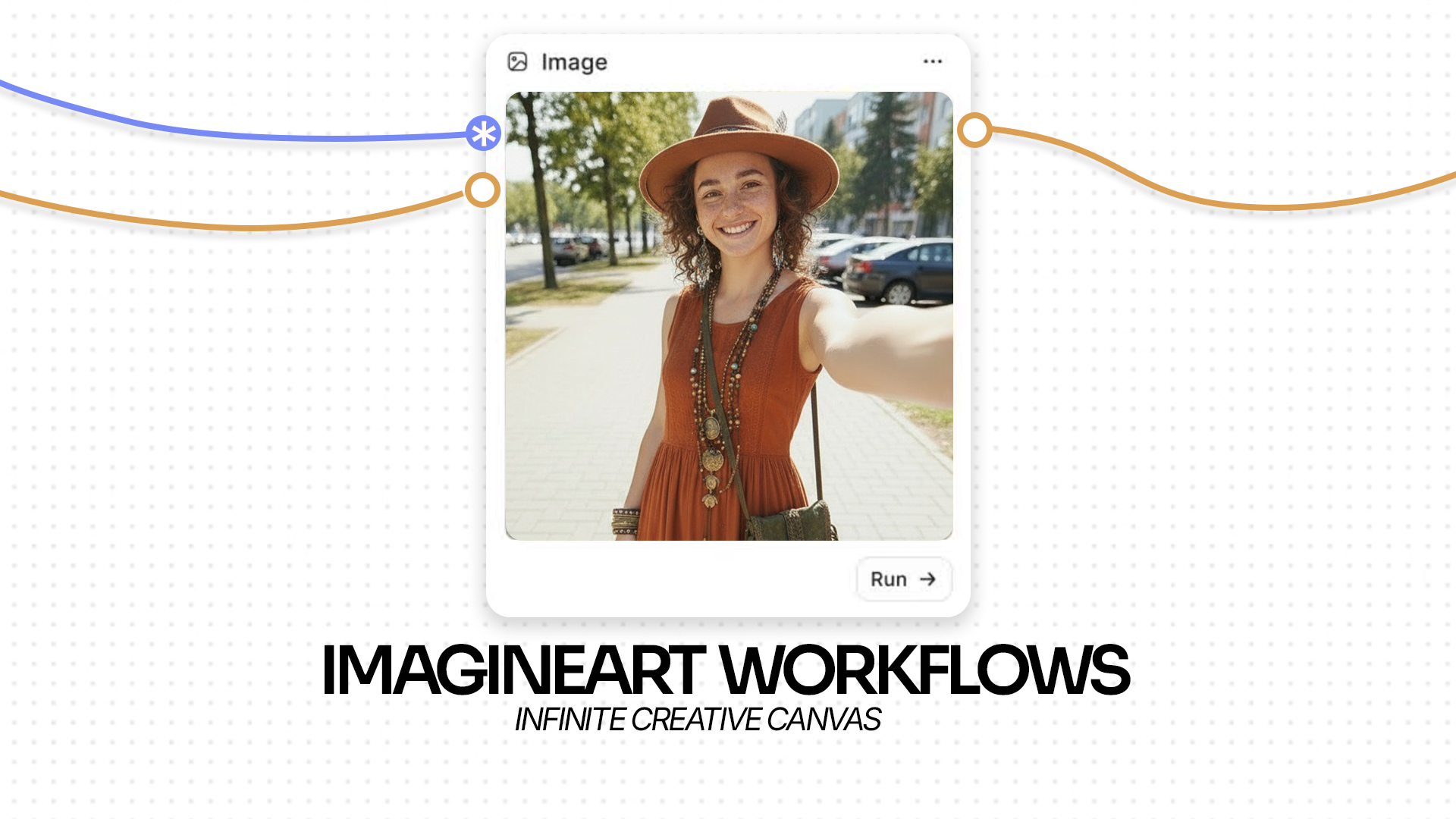
Workflows, announced in November 2025, makes that proposition visible. Prompts, reference images and results become connected steps on a canvas. A useful sequence can be saved and reused. For a recurring campaign, that means the work done on Tuesday can become a starting point for Wednesday rather than another lost conversation with a generator.
Google Cloud’s customer account describes the machinery underneath: Gemini for reasoning and text tasks, Veo for video, Nano Banana for imagery, and BigQuery for bringing analytics together. It reports that Google models account for more than half of ImagineArt’s API costs. That is an expense allocation, not a disclosed dollar budget. The business depends partly on tools it buys from other companies.
A lamp, a camera, and a production bottleneck
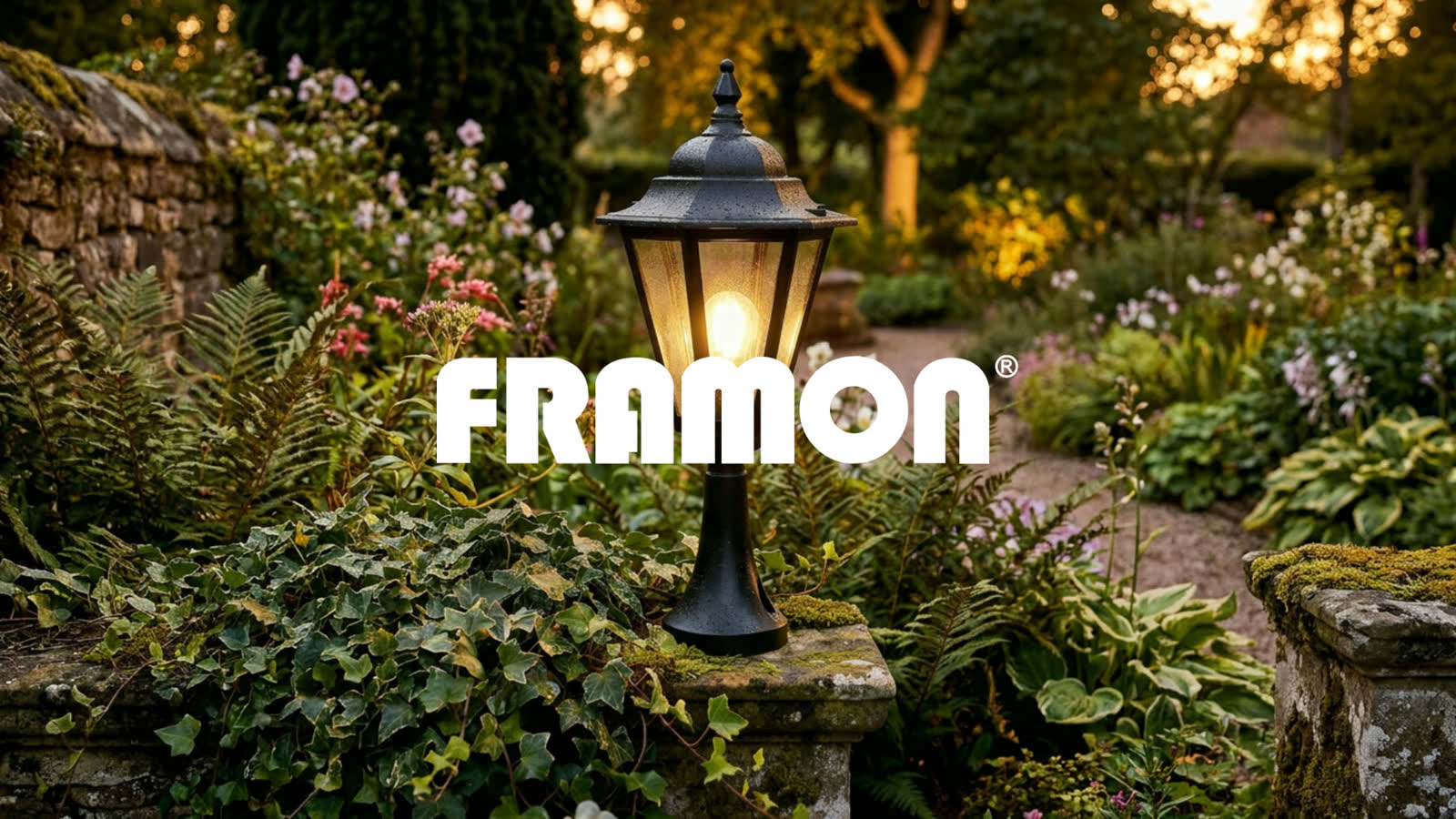
Consider Framon, an Italian lighting manufacturer. Its small marketing team has catalogues, brochures, social posts and custom presentations to make. In ImagineArt’s published case study, work that once took at least a day moved to a few hours, and the team stopped relying on outside freelancers for commercial imagery. A lamp catalogue gives the software a concrete job.
Buzz Lab offers a different example. The agency films real footage first, then uses ImagineArt to extend or enhance it. Its case study reports moving from roughly one visual per two-hour session to more than 60. That is a vendor-published customer account, not a universal productivity forecast. Its useful detail is the production method: keep the real material that anchors the brand, then multiply the variations.
- 01Brief + references
- 02Generate + edit
- 03Human review
- 04Finished formats
For an individual creator, the entry point is modest. The documentation offers a free tier with 100 daily credits. Start with a prompt or reference, generate an image, then try editing or animation. Teams can share credits and collaborate. The meaningful price is the cost of an acceptable finished asset: failed attempts and review time belong in that calculation alongside the subscription and generation credits.
The next problem is choosing
By September 2026, ImagineArt was addressing the consequence of abundant output: deciding what deserves to run. A partnership with Brainsuite added Creative Analyzer to Workflows, with access arriving in stages. It predicts creative effectiveness and breaks scores into factors such as attention and branding. The announcement explicitly leaves strategy, message choice and audience fit to the marketer.
The founders’ operating habits are equally revealing. Zain describes arguing through product choices with Abdullah until they reach a decision. Ahmed’s 2025 company-summit account emphasizes small autonomous teams and a larger learning budget. The copyable idea is concrete: stay close enough to the work to decide what to build, what to repeat and what to kill.
For a buyer, begin with one recurring task. Supply references, count revisions, inspect the final asset and include human review in the cost. A workflow helps when that task repeats. It can disappoint when the brief keeps changing, precise product details drift, or documentary truth is essential. A generated garden cannot establish how a lamp performed in a real one. Vyro’s opportunity depends on knowing which job the customer actually needs done.