The meeting was supposed to take twenty minutes. Then the software kept giving people reasons to stay. At a demonstration for Figma employees, Weavy showed how AI-generated images and videos could be compared, edited, and connected into a working process. The audience wanted more. The session ran to an hour. In the little economy of the office calendar, borrowing forty minutes from a roomful of colleagues is an achievement.
Lior Albeck was one of the four founders behind the tool. By the time Figma announced its acquisition on October 30, 2025, Weavy had been in existence for roughly a year. It had found a receptive audience for a practical proposition: people making images for a living need to keep working on them after the first pleasing result.
The deal makes a convenient opening. Albeck’s earlier career makes the opening more interesting. Years before a visual canvas and generative models, there were tax refunds. Then came a marketplace populated by freelancers. Look across those jobs and a recurring problem comes into view: useful expertise can be surprisingly difficult to turn into a process other people can use.
Before the canvas, the tax return
In 2015, Albeck was co-founder and vice president of marketing at Finupp, alongside Asaf Regev and Dani Silberstein. The business offered a cloud-based service to help people obtain tax refunds. A person might be entitled to money and still face enough paperwork, uncertainty, or expense to leave it unclaimed. Finupp’s opportunity sat in that distance between having a right and being able to exercise it.
At the time, the company reported helping 11,000 people obtain more than a million shekels in refunds. It was a small business with a concrete task. The result could be counted in money returned to users, a refreshingly straightforward measure in a technology story. No one needed to debate whether the refund had captured the spirit of the brief.
Finupp was later acquired by Meitav. Albeck’s public education record also places him at Tel Aviv University from 2013 to 2016, with Dean’s list recognition. His startup work and university years overlapped. The early record presents a founder already occupied with the untidy business of making a service usable, while attending university.
- 2015Finupp
Tax-refund software - Before 2024Fiverr
Seller-side leadership - 2024Weavy
Co-founder & CEO - 2025Figma Weave
Acquisition announced
A marketplace full of working creatives
At Fiverr, Albeck’s roles included Executive Director and Head of Marketplace Supply. His work concerned the seller side: the people and agencies offering their abilities through the marketplace. That is a different vantage point from looking at creative work as a succession of finished pictures. A marketplace also contains briefs, expectations, delivery, and the practical business of earning another commission.
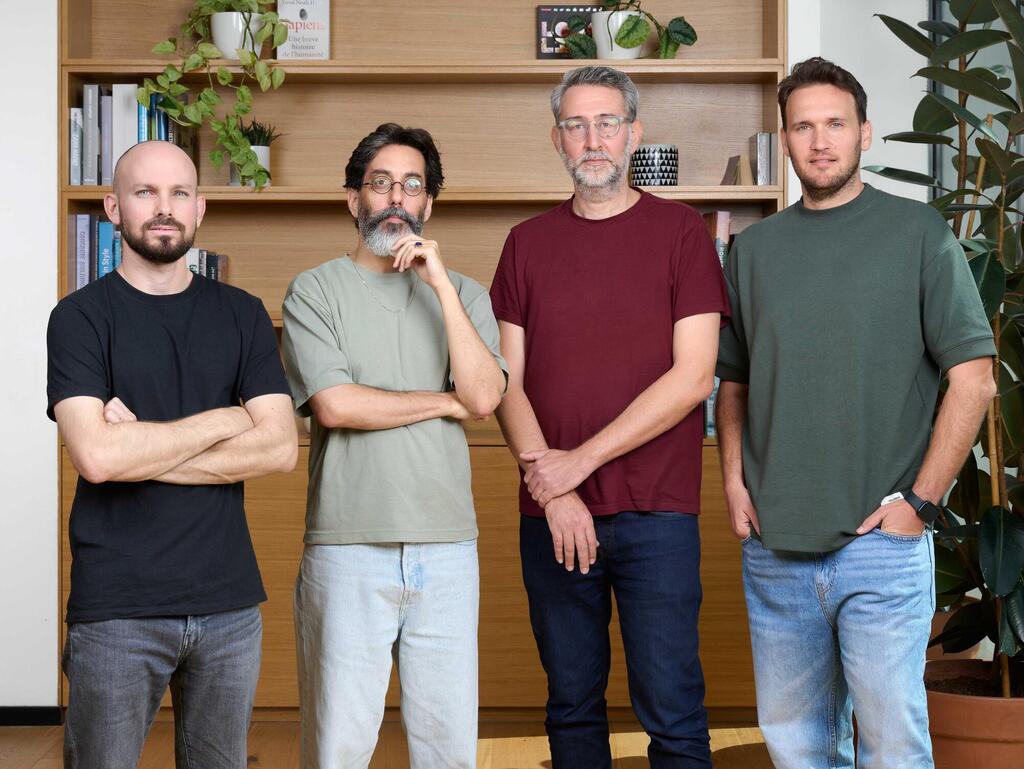
The connection matters without needing to invent a private revelation. Albeck had worked on a platform used by creative professionals before he helped build a tool for them. His new colleagues brought further experience from inside production. Jonathan Gur-Zeev had worked as an animator. Itay Schiff’s background included visual effects, creative direction, and running a motion graphics studio. Jonathan Alumot became Weavy’s chief technology officer.
Together, Albeck, Alumot, Gur-Zeev, and Schiff founded Weavy in 2024. Four founders make a crowded line on a pitch deck. They also brought several views of the same working day: the creative decision, the technical implementation, the person paying for the result, and the person expected to deliver it. The product would have to make sense across those perspectives.
The client will have notes
Albeck described a gap between generating an attractive visual and getting the specific result a professional needs. That distinction contains a substantial amount of professional life. An image can be attractive and still be wrong for its assignment. The color may need changing. A product may need to remain recognizable. The next version may need to resemble the previous one.
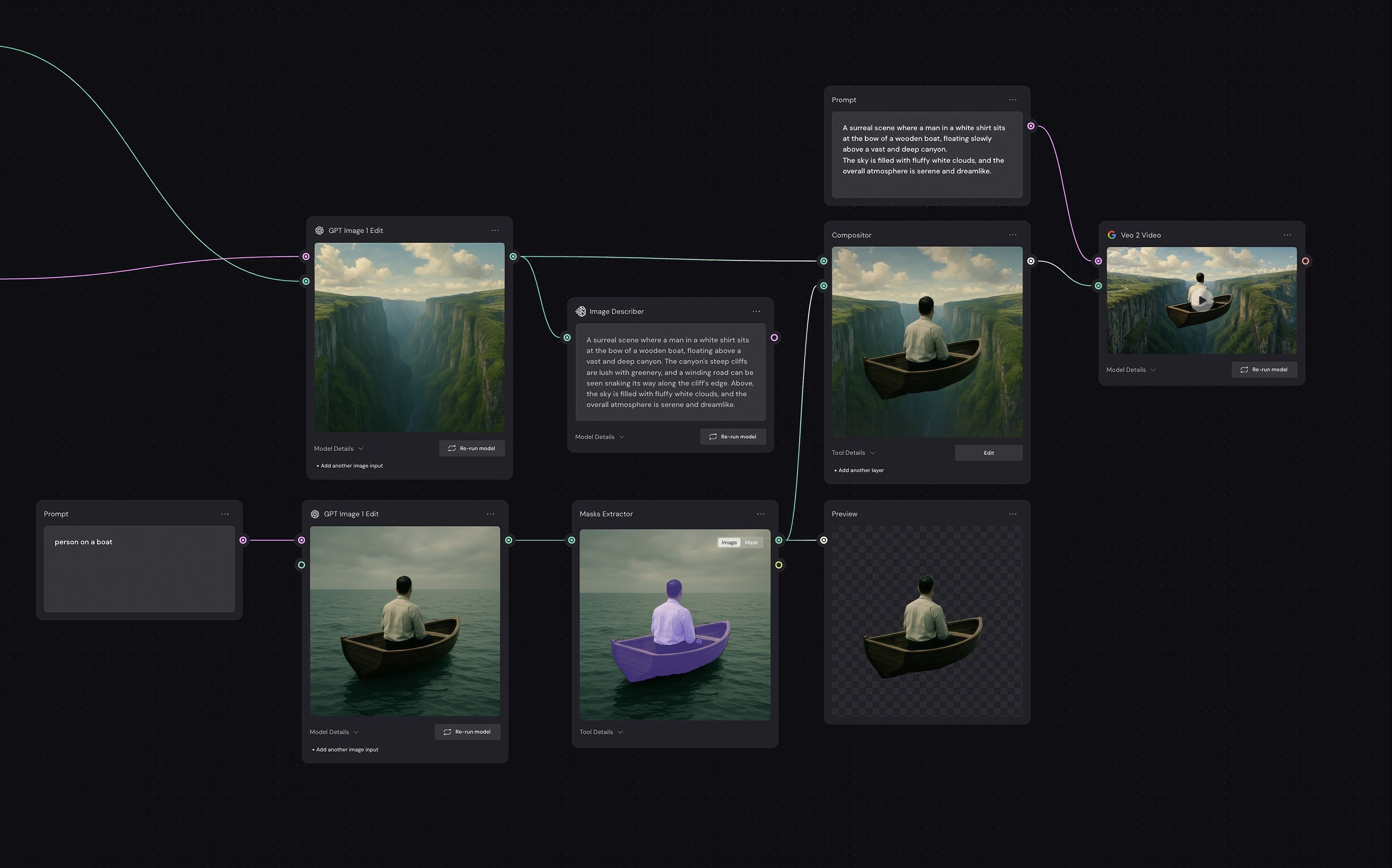
Weavy’s response was to put generative models and editing tools in a visual workspace. The user could connect steps, inspect the process, and build on earlier outputs. A node is simply a step with connections. Arrange enough of them and the canvas begins to describe how the work gets made. The arrows have a job; they are doing more than giving a presentation an air of authority.
That approach treats an effective process as something worth keeping. If the steps remain visible, another person can follow them. If a step changes, the workflow provides a place to make that change. The useful unit becomes larger than a single image: a method for reaching a result, with decisions a professional can revisit.
“Working with AI to generate beautiful visuals is easy, but making it do exactly what you want is very difficult.”
Lior Albeck
An investor tries the product
Ben Blumenrose of Designer Fund initially had reservations. Another AI design tool was arriving in an already busy category. There were four founders. Their Fiverr connection did not immediately settle his questions about a creative software company. A trusted introduction persuaded him to look. The product changed his assessment, and Designer Fund invested.
His recollection of working with Weavy provides a few glimpses of the company’s habits: frequent releases, attention to community members, and willingness to use feedback and data. He also remembered WhatsApp exchanges with Albeck early in the morning and late at night. An investor’s recollection is one perspective, but these details describe actual working behavior rather than a founder biography assembled from adjectives.
The community was part of the distribution story, too. In an interview with Entrée Capital’s Nir Sabato, Albeck discussed a product whose committed users brought it into their companies. That puts a demanding professional in an influential position. Win a place in that person’s work, and colleagues may encounter the tool through something more persuasive than an advertisement: a process that someone they know already uses.
In his interview about creative workflows, Albeck described two tracks for development: capabilities the team considered necessary for professional production, and requests coming directly from users. The arrangement gave the roadmap room for both a longer view and immediate friction. A small improvement could matter to someone in the middle of a job, even when it made a modest announcement. It is an unglamorous detail with a practical consequence: feedback has somewhere to go.
There is a certain discipline in that route. The software has to survive contact with an assignment. It has to remain useful when the demonstration ends and the person with the deadline returns to the file. Enthusiasm gets the first experiment started. A repeatable method gives the next person a reason to try.
A young company chooses its next home
In June 2025, Weavy publicly announced a $4 million seed round led by Entrée Capital, with Designer Fund, Founder Collective, and Fiverr founder Micha Kaufman participating. By October, Figma was announcing the acquisition. On a calendar, those announcements sit close together. They should not erase the earlier work, or suggest that the founders assembled a company in the space between two press releases.
Entrée’s account describes discussions with Albeck about strategy, going to market, and whether to continue independently or pursue a sale. The choice had consequences beyond a new corporate name. An independent company sets its own course and carries the burden of building its reach. Joining a larger platform offers a different setting for the same product ambition.
Albeck explained the decision in terms of admiration for Figma and the opportunity to realize Weavy’s vision. The two businesses had a shared interest in creative tools people could use together. Figma introduced the product as Figma Weave, with plans to extend its media generation and editing capabilities. For the founders, the next chapter would happen inside a company already familiar to many of their intended users.
June$4 million seed round announced
OctoberFigma acquisition announced
The next person opens the file
On October 8, 2026, Albeck appeared in the program for a New York event organized by AREA 17 and Industrial Color. The subject was human contribution in a world of rapidly adopted AI. His biography listed him as Director of Product for Figma Weave. The former startup CEO was now part of a conversation involving leaders from creative and consumer businesses, including Pentagram and L’Oréal.
A reusable workflow also raises a question about how expertise moves through an organization. An experienced person may know which steps produce the desired result, but a colleague still needs a usable way to follow them. Making the steps visible gives that conversation a shared object. People can point to a decision, change an input, or preserve a method for another assignment. The promise depends on the working details holding together. That is the territory Albeck chose for Weavy: the space between knowing how to do something and helping a team do it consistently.
The change of title is a useful place to leave him. Acquisitions provide a date that makes a career easy to summarize. Product work continues in smaller increments: a tool made clearer, a useful request answered, a process that another team can adopt. Those increments rarely command the same attention as a transaction.
Albeck’s path from Finupp through Fiverr to Weavy gives those ordinary tasks some continuity. A refund has to reach the person entitled to it. A freelancer has to deliver work that meets a brief. A creative team has to make a result it can revise and repeat. Software earns its place somewhere in that practical sequence. Eventually, the next person opens the file. The work should still make sense.
Follow the work
Profiles, product notes, and conversations.
- Explore Figma Weave ↗
- Lior Albeck on LinkedIn ↗
- Lior Albeck on X ↗
- Watch: Designing Demand, with Nir Sabato ↗
- Dylan Field introduces Figma Weave ↗
- The Figma demo and acquisition conversation ↗
- Read Albeck’s creative workflow interview, pages 60-64 ↗
- Watch the October 2026 New York discussion ↗
- Listen: TrashTech’s Albeck interview (Hebrew) ↗
- Entrée Capital on the decision to join Figma ↗